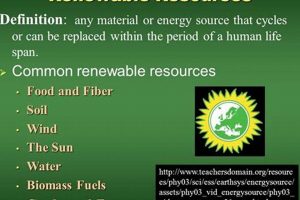
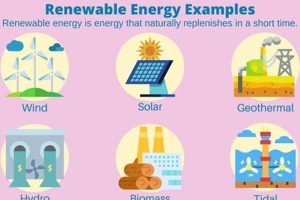
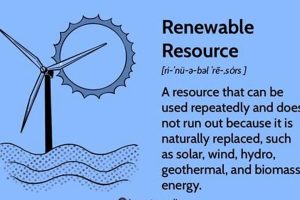
A naturally replenishing energy source is derived from processes that are virtually inexhaustible. Sunlight, wind, flowing water, and geothermal heat exemplify these sources. Their constant regeneration distinguishes them from finite reserves like fossil fuels, ensuring a sustainable supply for the long term.
The adoption of these energy options offers significant environmental advantages, mitigating pollution and reducing reliance on finite reserves. Historically, societies have harnessed such sources, like using wind for sailing and water for milling, but modern technologies now allow for far more efficient and widespread utilization. This transition promotes energy security and mitigates the environmental impact associated with conventional power generation.
The following sections will delve deeper into specific types of these energy sources, exploring their technological advancements, economic viability, and potential for integration into existing energy infrastructure. The challenges and opportunities associated with widespread adoption will also be addressed, providing a comprehensive overview of the role that these sustainable sources play in shaping a future energy landscape.
Guidance for Harnessing Sustainable Energy Options
The effective implementation of naturally replenishing energy options requires careful planning and strategic investment. The following guidelines offer insights into maximizing the benefits and addressing the challenges associated with their adoption.
Tip 1: Conduct Thorough Resource Assessments: Prior to investing in a specific technology, perform comprehensive assessments of the available resource. For solar projects, evaluate irradiance levels, while wind energy endeavors require detailed wind speed data. Geothermal potential necessitates subsurface geological surveys.
Tip 2: Prioritize Energy Efficiency Measures: Before expanding supply, focus on reducing demand through energy efficiency upgrades in buildings, transportation, and industrial processes. Lowering consumption reduces the overall scale of infrastructure needed.
Tip 3: Diversify the Energy Portfolio: Relying solely on a single option exposes the energy system to variability and risk. A diversified portfolio utilizing multiple sources, each contributing to the energy mix, enhances resilience.
Tip 4: Invest in Energy Storage Solutions: Address the intermittency of solar and wind power by incorporating energy storage technologies such as batteries, pumped hydro, or thermal storage. This allows for the decoupling of energy production and consumption.
Tip 5: Establish Supportive Regulatory Frameworks: Governments play a critical role in incentivizing investment through policies such as feed-in tariffs, tax credits, and renewable portfolio standards. Clear and stable regulations reduce investment risk.
Tip 6: Promote Community Engagement: Successful implementation relies on community buy-in and support. Engaging local stakeholders in the planning process can address concerns and maximize the social benefits associated with these projects.
Tip 7: Foster Technological Innovation: Continuous research and development are essential for improving the efficiency and reducing the cost of sustainable energy technologies. Investing in innovative solutions will drive future progress.
Adhering to these guidelines will facilitate the responsible and effective utilization of these valuable energy streams, contributing to a more sustainable and resilient energy future.
The subsequent sections will explore specific case studies and advanced technologies that are shaping the future landscape. Further understanding will enhance the effectiveness of these energy resources.
1. Replenishment Rate

The replenishment rate is fundamental to the definition of resources considered naturally renewing. It signifies the speed at which a given resource is restored by natural processes, dictating its long-term availability. Solar energy, for instance, exhibits a near-instantaneous replenishment rate, as sunlight is constantly available. Conversely, geothermal energy, while ultimately derived from Earth’s core, has a replenishment rate influenced by geological processes occurring over extended timescales. The rate at which these resources are replenished directly influences their classification as naturally renewing and the potential for sustainable utilization.
The relationship between the replenishment rate and the sustainable management is critical. Resources with rapid replenishment rates, such as wind and solar, are more amenable to large-scale exploitation without risking depletion. Slow replenishment rates, however, demand careful monitoring and limited extraction to prevent resource degradation. Over-extraction of groundwater, for example, can lead to aquifer depletion, diminishing the long-term availability of this resource. Therefore, understanding and respecting the replenishment rate is crucial for maintaining the integrity and longevity of natural resources.
In summation, the replenishment rate is an intrinsic characteristic determining the viability and sustainability. It governs resource management strategies and influences the technologies employed for their extraction and utilization. The degree of rapid or slow, must always be considered in developmental aspects. Accurate assessment and responsible management of rates are essential for harnessing resources effectively and ensuring their availability for future generations. Ignoring these consideration can lead to devastating results for the environment.
2. Environmental Impact

The environmental impact associated with energy production is a critical consideration when evaluating the viability of energy sources. Unlike conventional fossil fuels, renewable options offer the potential to significantly reduce or eliminate negative environmental consequences.
- Reduced Greenhouse Gas Emissions
The utilization of solar, wind, and geothermal resources produces minimal or no greenhouse gas emissions during operation. This contrasts sharply with the combustion of fossil fuels, which releases substantial quantities of carbon dioxide, methane, and other gases that contribute to climate change. The displacement of fossil fuels with these sources directly mitigates the risks associated with global warming and its related effects.
- Minimized Air and Water Pollution
Conventional power plants release pollutants such as sulfur dioxide, nitrogen oxides, and particulate matter into the air, contributing to respiratory problems and acid rain. Similarly, coal mining and oil drilling can contaminate water sources with heavy metals and other toxins. Renewable energy facilities, such as wind farms and solar arrays, generate electricity without releasing these harmful pollutants, resulting in cleaner air and water.
- Land Use Considerations
While often considered environmentally benign, renewable energy projects can have land use implications. Large-scale solar farms and wind farms require considerable land area, potentially impacting habitats and agricultural land. Careful planning and site selection are essential to minimize these impacts, along with strategies such as co-locating renewable energy facilities with existing infrastructure or developing offshore wind farms.
- Resource Depletion and Waste Generation
Unlike fossil fuels, renewable energy sources are not subject to depletion. However, the manufacturing of renewable energy technologies, such as solar panels and wind turbines, requires raw materials and can generate waste. Responsible sourcing of materials, efficient manufacturing processes, and robust recycling programs are crucial for minimizing the environmental footprint of renewable energy technologies throughout their lifecycle.
The favorable environmental profile constitutes a key advantage, driving the transition toward a sustainable energy future. By minimizing greenhouse gas emissions, reducing pollution, and carefully managing land use and resource consumption, naturally replenishing resources offer a pathway to a cleaner, healthier, and more sustainable planet. Continued innovation and responsible implementation are essential for maximizing the environmental benefits and mitigating potential drawbacks associated with these technologies.
3. Energy Security

Energy security, defined as the uninterrupted availability of energy sources at an affordable price, is intrinsically linked to naturally replenishing resource utilization. A nation’s reliance on imported fossil fuels renders it vulnerable to geopolitical instability, price volatility, and supply disruptions. Diversifying the energy portfolio with indigenous sources mitigates these risks, strengthening national energy security.
The integration of solar, wind, hydro, and geothermal power enhances energy independence. Germany’s Energiewende, for example, aims to reduce reliance on imported fossil fuels by expanding renewable energy capacity. Similarly, Iceland’s near-complete dependence on geothermal and hydropower for electricity generation provides a high degree of energy autonomy. These examples underscore the tangible benefits of renewable resource deployment in bolstering national energy security. Furthermore, decentralized renewable energy systems, such as rooftop solar panels and microgrids, enhance resilience by reducing dependence on centralized power grids vulnerable to disruptions.
In conclusion, renewable resource development is a strategic imperative for enhancing energy security. While challenges such as intermittency and grid integration remain, the long-term benefits of reduced import dependence and increased energy independence outweigh these obstacles. Investment in renewable energy technologies is not merely an environmental imperative but also a crucial step towards safeguarding national economic and security interests.
4. Technological Advancement

Technological advancement serves as a pivotal catalyst in the widespread adoption and enhanced efficiency of naturally replenishing energy options. Innovation across diverse fields, ranging from materials science to energy storage, directly influences the viability and competitiveness of these sustainable alternatives to conventional fossil fuels.
- Improved Materials and Efficiency
Advances in materials science have led to the development of more efficient and durable solar panels. Thin-film solar cells, for example, utilize novel materials to achieve higher energy conversion rates compared to traditional silicon-based panels. Similarly, advancements in wind turbine blade design, employing lightweight and stronger composite materials, enable turbines to capture more wind energy at lower wind speeds. These improvements directly reduce the cost of energy generation, making naturally replenishing resources more economically attractive.
- Enhanced Energy Storage Solutions
The intermittent nature of solar and wind power necessitates effective energy storage solutions. Significant progress has been made in battery technology, with lithium-ion batteries becoming increasingly affordable and capable of storing large amounts of energy. Furthermore, alternative storage technologies, such as pumped hydro storage and compressed air energy storage, are being developed and deployed to provide grid-scale energy storage. These advancements enable the decoupling of energy production and consumption, improving the reliability and stability of naturally replenishing energy systems.
- Smart Grid Technologies
The integration of naturally replenishing energy sources into existing power grids requires intelligent grid management systems. Smart grid technologies, including advanced sensors, communication networks, and control algorithms, enable real-time monitoring and optimization of energy flows. These technologies facilitate the seamless integration of distributed generation sources, improve grid stability, and enhance overall system efficiency. The implementation of smart grid infrastructure is crucial for accommodating the increasing penetration of naturally replenishing energy sources into the energy mix.
- Artificial Intelligence and Data Analytics
Artificial intelligence (AI) and data analytics play an increasingly important role in optimizing the performance of naturally replenishing energy systems. AI algorithms can be used to predict energy production from solar and wind resources, enabling better grid management and resource allocation. Data analytics can also be used to identify potential maintenance issues in renewable energy facilities, reducing downtime and improving operational efficiency. These technologies empower operators to make informed decisions, maximizing the output and reliability of natural energy systems.
In conclusion, continuous technological advancement is essential for unlocking the full potential of naturally replenishing energy options. Innovations in materials science, energy storage, smart grid technologies, and AI are driving down costs, improving efficiency, and enhancing reliability. Further investment in research and development will accelerate the transition toward a sustainable energy future, powered by clean and abundant renewable resources.
5. Economic Viability

Economic viability is a critical determinant in the widespread adoption of resources considered naturally renewing. It directly influences whether these sources can effectively compete with established fossil fuel-based technologies. Without economic competitiveness, the environmental and energy security benefits associated with resources considered naturally renewing remain largely unrealized on a large scale. The economic viability encompasses multiple factors, including initial capital costs, operational expenses, and long-term revenue streams. Projects must demonstrate a favorable return on investment to attract the necessary financial backing.
The declining cost of solar and wind energy exemplifies the impact of economic viability on renewable resource deployment. Technological advancements, economies of scale, and supportive government policies have driven down the price of these technologies, making them increasingly competitive with conventional power generation. For instance, solar photovoltaic (PV) costs have decreased dramatically over the past decade, leading to a significant increase in solar capacity installations globally. Similarly, the levelized cost of energy (LCOE) for wind power has fallen substantially, making it an attractive option for utilities and independent power producers. These cost reductions have been instrumental in accelerating the transition to a cleaner energy system. However, economic factors also include the location where the solar panel is at and if its cost effective or not.
In summary, economic viability is an indispensable component of natural resources. The ability to compete economically with conventional energy sources is crucial for driving widespread adoption and achieving meaningful environmental and energy security benefits. Continued innovation, supportive policies, and strategic investments are essential for ensuring the economic competitiveness and long-term sustainability of these resources. While challenges exist, the trajectory of declining costs and increasing efficiency suggests a promising future for economically viable renewable energy.
6. Resource Availability
Resource availability directly influences the feasibility and scalability of naturally replenishing energy deployment. The geographical distribution and temporal consistency of these resources significantly impact their suitability for widespread energy generation.
- Geographic Distribution
The distribution of resources is inherently uneven across the globe. Solar irradiance, for example, is highest in regions near the equator, while wind resources are concentrated in coastal areas and mountainous regions. Geothermal potential is localized in areas with volcanic activity or tectonic plate boundaries. This uneven distribution necessitates localized assessment and tailored energy strategies, precluding a one-size-fits-all approach to naturally renewing resource implementation.
- Temporal Variability
Many of naturally replenishing resources exhibit temporal variability, influenced by daily, seasonal, and climatic patterns. Solar energy output varies throughout the day and year, depending on sunlight availability. Wind energy generation fluctuates with wind speed and direction. Hydropower production is subject to rainfall patterns and seasonal variations in river flow. This intermittency poses challenges for grid stability and requires the implementation of energy storage solutions or grid management strategies to ensure a reliable energy supply.
- Land Use Considerations
The availability of suitable land for energy infrastructure can be a limiting factor. Large-scale solar farms and wind farms require considerable land area, potentially competing with agriculture, forestry, and other land uses. Careful planning and site selection are essential to minimize land use conflicts and maximize the efficiency of resource utilization. Offshore wind farms offer an alternative to onshore development, reducing land use impacts but introducing additional logistical and environmental considerations.
- Accessibility and Infrastructure
The accessibility and existing infrastructure can impact the economic viability of resources. Remote areas with abundant resources may lack the necessary transmission infrastructure to transport energy to population centers. Upgrading or expanding transmission networks can be costly and time-consuming, potentially delaying the deployment of renewable energy projects. Proximity to existing infrastructure and transportation corridors can significantly reduce project development costs and improve economic feasibility.
Ultimately, the integration into existing infrastructure must be carefully assessed and matched to the inherent characteristics of the specific naturally renewing resources under consideration. Addressing these geographical, temporal, land usage, and accessibility challenges is paramount for achieving a sustainable and resilient energy system powered by clean, naturally renewing sources.
7. Sustainability

Sustainability constitutes the foundational principle upon which the viability of energy rests. It ensures that resources are utilized in a manner that meets current needs without compromising the ability of future generations to meet their own. This concept is inextricably linked to naturally replenishing sources, which, by their nature, offer a sustainable alternative to finite fossil fuels.
- Environmental Preservation
The core of sustainability lies in minimizing environmental degradation. Resources considered naturally renewing inherently reduce pollution, greenhouse gas emissions, and habitat destruction associated with fossil fuel extraction and combustion. The deployment of solar, wind, and geothermal technologies contributes directly to mitigating climate change and preserving ecological integrity, ensuring a habitable planet for future populations. Example is solar panel.
- Resource Conservation
Resources deemed naturally renewing are characterized by their continuous replenishment, which conserves finite reserves. Fossil fuels are finite resources that, once depleted, cannot be replenished within human timescales. The transition to naturally replenishing sources alleviates pressure on these finite reserves, ensuring their availability for applications where alternatives are limited and promoting responsible resource management. Example is hydroelectric.
- Economic Longevity
Sustainable energy systems foster long-term economic stability by reducing reliance on volatile fossil fuel markets and creating new industries. The development and deployment of energy technologies generate employment opportunities in manufacturing, installation, and maintenance. Furthermore, decentralized generation can empower communities and reduce energy costs, contributing to sustained economic growth. Example is wind generator.
- Social Equity
Sustainability encompasses the equitable distribution of resources and benefits. Energy sources, often deployed in marginalized communities, can provide access to clean and affordable energy, improving living standards and promoting social justice. Sustainable energy policies can also address historical inequities in resource access and environmental burdens, ensuring that all members of society benefit from the transition to a clean energy economy. Example is access to sunlight.
The interconnectedness of environmental preservation, resource conservation, economic longevity, and social equity defines the true essence of sustainability in the context of resources considered naturally renewing. By embracing these principles, societies can chart a course toward a resilient and equitable energy future, safeguarding the planet for generations to come. Future of this energy is a more reliable and clean environment.
Frequently Asked Questions
The following questions address common inquiries and misconceptions regarding naturally replenishing resources, providing clarity on their characteristics and applications.
Question 1: What fundamentally distinguishes renewable energy from non-renewable energy?
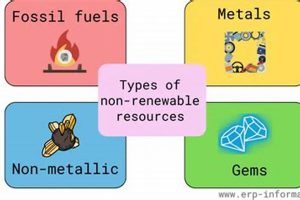
The crucial distinction lies in the replenishment rate. Resources considered naturally renewing are replenished by natural processes at a rate comparable to or faster than their rate of consumption. Conversely, non-renewable resources, such as fossil fuels, exist in finite quantities and cannot be replenished within a human timescale.
Question 2: Are renewable energy sources entirely free from environmental impact?
While generally exhibiting lower environmental impact than fossil fuels, renewable energy sources are not entirely without consequences. Large-scale solar farms and wind farms may require significant land area, potentially impacting habitats. Hydroelectric dams can alter river ecosystems. Careful planning and responsible implementation are crucial for minimizing these impacts.
Question 3: How does the intermittency of solar and wind power affect grid stability?
The variable nature of solar and wind power necessitates the implementation of energy storage solutions or advanced grid management strategies. Energy storage technologies, such as batteries and pumped hydro, can store excess energy generated during peak production periods for later use. Smart grid technologies enable real-time monitoring and optimization of energy flows, ensuring grid stability despite fluctuations in solar and wind output.
Question 4: What role does government policy play in promoting renewable energy adoption?
Government policies, such as feed-in tariffs, tax credits, and renewable portfolio standards, provide incentives for investment and deployment. These policies create a level playing field, making renewable energy technologies more economically competitive with established fossil fuel-based power generation. Additionally, regulations can mandate the integration of renewable energy into the energy mix, driving demand and accelerating the transition to a cleaner energy system.
Question 5: How does resource availability influence the economic viability of renewable energy projects?
Access to abundant and consistent resources directly affects the economic viability. Regions with high solar irradiance or strong wind speeds are more conducive to solar and wind power development. The cost of energy generation is lower in areas with readily available resources, enhancing the economic competitiveness of renewable energy projects. Thorough resource assessments are essential for determining the economic feasibility of renewable energy investments.
Question 6: Are resources considered naturally renewing a viable solution for meeting global energy demand?
Resources considered naturally renewing have the potential to meet a significant portion of global energy demand, but widespread adoption requires sustained investment, technological innovation, and supportive policies. A diversified energy portfolio, incorporating a mix of renewable energy sources and energy storage solutions, is crucial for ensuring a reliable and sustainable energy supply. Continued progress in reducing costs and improving efficiency will accelerate the transition to a future powered by resources considered naturally renewing.
In summary, these responses highlight the key aspects that shape the understanding of naturally replenishing resources, underscoring their potential and the challenges associated with their widespread integration into the global energy landscape.
The subsequent sections will explore advanced technologies and future trends shaping the resources segment.
Conclusion
This exploration has elucidated the multifaceted nature of naturally replenishing resources, moving beyond a simple definition to encompass crucial aspects such as replenishment rate, environmental impact, energy security, technological advancement, economic viability, resource availability, and, fundamentally, sustainability. Each facet contributes to a comprehensive understanding of the potential and challenges associated with these energy sources.
The transition towards a greater reliance on natural sources represents a critical imperative for ensuring long-term energy security and mitigating the adverse effects of climate change. Continued research, responsible implementation, and strategic policy initiatives are essential to fully realize the benefits and secure a sustainable energy future for subsequent generations.
![Guide to What Energy Resources Are Renewable [+Future] | Renewable Energy Solutions for a Sustainable Future | Clean & Green Power](https://pplrenewableenergy.com/wp-content/uploads/2026/03/th-516-300x200.jpg "Guide to What Energy Resources Are Renewable [+Future] Renewable Energy Solutions for a Sustainable Future | Clean & Green Power")