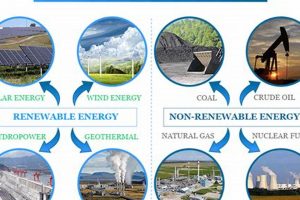
Identification of sources of power generation that are naturally replenished is a critical aspect of sustainable energy strategies. These resources offer alternatives to fossil fuels and contribute to mitigating climate change. Examples include technologies that harness power from the sun, wind, water, and the Earth’s internal heat. Recognizing and developing these alternatives is paramount for a secure and environmentally conscious energy future.
The adoption of these power sources presents numerous advantages. Environmental benefits include reduced greenhouse gas emissions and decreased air and water pollution. Economically, these resources can enhance energy security by diversifying energy portfolios and lessening dependence on volatile global fuel markets. Historically, advancements in technologies have made these methods increasingly efficient and cost-competitive, contributing to their growing adoption worldwide.
The following sections will outline specific examples of these naturally replenishing energy sources, detailing their mechanisms, applications, and potential for large-scale implementation. These descriptions will offer a clear understanding of how each source contributes to a more sustainable and resilient energy landscape.
Strategies for Renewable Energy Source Identification
This section offers guidance on recognizing and understanding naturally replenished energy sources. Implementing these strategies is essential for researchers, policymakers, and individuals seeking to promote sustainable energy practices.
Tip 1: Analyze Solar Energy Applications: Evaluate various solar technologies, including photovoltaics (PV) and concentrated solar power (CSP). PV systems convert sunlight directly into electricity, while CSP systems use mirrors to focus sunlight and generate heat, which then drives a turbine.
Tip 2: Investigate Wind Power Potential: Examine the operation of wind turbines and wind farms. Consider factors such as wind speed, turbine size, and geographic location to assess wind energy’s viability.
Tip 3: Study Hydropower Systems: Differentiate between large-scale hydroelectric dams and smaller run-of-river systems. Understand the environmental impact and potential of each approach.
Tip 4: Explore Geothermal Energy Exploitation: Research different methods of harnessing geothermal energy, including geothermal power plants and geothermal heat pumps. Assess the geographic limitations and potential for heating and electricity generation.
Tip 5: Understand Biomass Energy Conversion: Investigate the various forms of biomass, such as wood, crops, and organic waste, and the technologies used to convert them into energy, including combustion, gasification, and anaerobic digestion.
Tip 6: Review Emerging Technologies: Stay informed about developing renewable energy technologies, such as wave energy converters and tidal power systems. Evaluate their potential for future energy production.
Tip 7: Assess Environmental Impact: Conduct thorough environmental impact assessments for each energy source. Consider factors such as land use, water consumption, and emissions throughout the energy production lifecycle.
Successful identification and implementation of renewable energy resources require a comprehensive understanding of the available technologies and their environmental implications. A strategic approach will contribute to a more sustainable energy future.
The following conclusion will summarize the key benefits of utilizing such sources.
1. Solar Energy

Solar energy constitutes a critical component within the spectrum of naturally replenished energy sources. Its capacity to directly convert sunlight into electricity via photovoltaic (PV) cells, or indirectly through concentrated solar power (CSP) systems, establishes it as a versatile and scalable renewable option. The availability of solar irradiation across diverse geographical locations makes it a globally accessible resource. For example, large-scale solar farms in arid regions like the Mojave Desert in the United States demonstrate the potential of solar energy to contribute significantly to national energy grids. Its modularity allows for applications ranging from individual residential rooftops to utility-scale power plants, highlighting its adaptability and importance in diversifying energy portfolios.
The integration of solar energy into existing energy infrastructure presents both opportunities and challenges. The intermittent nature of sunlight necessitates the development of effective energy storage solutions, such as battery systems or pumped hydro storage, to ensure a consistent energy supply. Furthermore, the manufacturing of solar panels involves the use of certain materials that require responsible sourcing and recycling practices to mitigate environmental impacts. Despite these challenges, the ongoing advancements in solar technology, coupled with decreasing costs, are driving its increased adoption and integration into national energy strategies. Government incentives and policy support further accelerate the deployment of solar energy systems.
In summary, solar energy is a pivotal resource within the collection of naturally replenished options. Its ability to provide clean, sustainable power, its scalability, and its increasing economic competitiveness position it as a key element in the transition towards a decarbonized energy future. Understanding the practical application, benefits, and challenges associated with solar energy is fundamental to realizing its full potential in addressing global energy demands and mitigating climate change.
2. Wind Power

Wind power represents a crucial element within naturally replenished energy resources, harnessing the kinetic energy of air to generate electricity. This process, facilitated by wind turbines, converts wind’s mechanical energy into electrical energy. Wind power’s significance stems from its potential to mitigate reliance on fossil fuels, thereby reducing greenhouse gas emissions and contributing to a more sustainable energy landscape. The widespread adoption of wind energy is evident in numerous countries, exemplified by large-scale wind farms in regions with consistent wind patterns, such as the North Sea in Europe and the Great Plains in the United States. These installations underscore wind power’s capacity to contribute substantially to national energy grids and reduce carbon footprints.
The effectiveness of wind power is influenced by several factors, including geographical location, turbine technology, and grid integration. Areas with consistent and strong wind resources are ideal for wind farm development. Advanced turbine designs enhance energy capture and improve efficiency. Seamless integration with existing electrical grids ensures reliable distribution of wind-generated power. Furthermore, technological advancements in offshore wind turbine construction and deployment are expanding the potential of wind energy, enabling access to stronger and more consistent wind resources located farther from land. The practical application of wind power extends beyond large-scale wind farms, encompassing smaller, distributed wind systems that provide power to individual homes, farms, or businesses.
In conclusion, wind power holds a prominent position within the spectrum of naturally replenished energy sources. Its ability to generate clean electricity from a freely available resource makes it a vital component of strategies aimed at achieving energy security and mitigating climate change. Overcoming challenges associated with intermittency, grid integration, and environmental impact will be essential to fully realize wind power’s potential and contribute to a more sustainable energy future. Ongoing research and development in turbine technology and energy storage will continue to enhance wind power’s efficiency and reliability.
3. Hydropower

Hydropower represents a significant facet of naturally replenished energy sources. Its presence within that group stems from its utilization of the continuous water cycle to generate electricity. By harnessing the potential energy of water stored at higher elevations, hydroelectric dams convert that energy into mechanical energy through turbines, which in turn power generators to produce electricity. Hydropowers importance lies in its proven capacity to deliver a reliable and large-scale source of power with relatively low operational emissions. A prominent example is the Three Gorges Dam in China, illustrating hydropower’s ability to meet substantial energy demands while displacing reliance on fossil fuels. This capacity positions it as a vital component in strategies aimed at diversifying energy portfolios and reducing carbon emissions.
The environmental and social implications of hydropower are multifaceted and demand careful consideration. While operational emissions are minimal, the construction of large dams can lead to habitat disruption, displacement of communities, and alterations in river ecosystems. These consequences necessitate thorough environmental impact assessments and mitigation strategies during the planning and implementation phases of hydropower projects. Run-of-river hydropower, which minimizes water storage and reservoir creation, presents a less environmentally intrusive alternative. Moreover, advancements in turbine technology are enhancing efficiency and minimizing impacts on aquatic life. Integration of hydropower with other renewable energy sources, such as solar and wind, can provide a more stable and reliable energy supply by complementing their intermittent nature.
In summary, hydropower holds a crucial role within naturally replenished energy sources, delivering a significant contribution to global electricity production. Understanding both its benefits and associated challenges is critical for sustainable development. Ongoing research, technological innovation, and responsible management practices are essential to maximizing hydropowers potential while minimizing its environmental and social footprint, ultimately fostering a more sustainable energy future.
4. Geothermal Energy
Geothermal energy, a direct consequence of Earths internal heat, presents a unique and consistent resource among naturally replenished energy sources. Its inclusion within the array of renewable options stems from its ability to provide a stable and continuous energy supply, independent of weather conditions, unlike solar or wind power. This inherent stability distinguishes it and makes it a valuable component in a diversified renewable energy portfolio.
- Geothermal Power Plants
Geothermal power plants directly harness steam or hot water from underground reservoirs to drive turbines, generating electricity. These plants operate continuously, providing a baseload power supply. Examples include The Geysers in California, one of the largest geothermal complexes globally, demonstrating the potential for significant energy output from geothermal resources. The consistent operation of such plants enhances grid stability and reduces reliance on fluctuating sources like solar and wind.
- Geothermal Heating and Cooling
Geothermal heat pumps utilize the Earth’s relatively constant temperature at shallow depths to provide heating in winter and cooling in summer. These systems circulate fluid through underground loops, exchanging heat with the ground. This application is suitable for residential, commercial, and industrial buildings, offering an energy-efficient alternative to traditional heating and cooling systems. Wide-scale adoption of geothermal heat pumps reduces energy consumption and lowers carbon emissions associated with building operations.
- Direct Use Applications
Geothermal resources can be directly utilized for various applications without electricity generation. These applications include district heating, greenhouse heating, aquaculture, and industrial processes. Iceland, with its abundant geothermal resources, exemplifies this, utilizing geothermal energy extensively for space heating and various industrial purposes. Direct use applications enhance energy efficiency and reduce dependence on fossil fuels for heating and industrial needs.
- Enhanced Geothermal Systems (EGS)
Enhanced Geothermal Systems (EGS) represent an advanced approach to geothermal energy extraction, aimed at accessing geothermal resources in areas lacking naturally occurring hot water reservoirs. EGS involves creating artificial fractures in hot, dry rocks deep underground, injecting water to create steam, and then extracting the steam for electricity generation. This technology expands the geographic availability of geothermal energy, potentially unlocking vast untapped resources. Ongoing research and development in EGS technology are crucial for expanding geothermal energy’s role in meeting future energy demands.
The varied applications of geothermal energy, from baseload power generation to direct heating and cooling, demonstrate its versatility within naturally replenished energy sources. Its continuous availability, coupled with technological advancements like EGS, positions it as a crucial element in achieving a sustainable and diversified energy future. Integrating geothermal energy effectively into national energy strategies requires careful resource assessment, technological innovation, and responsible environmental management.
5. Biomass Conversion

Biomass conversion occupies a critical position within the framework of naturally replenished energy resources. It represents the process of transforming organic matter, derived from plants and animals, into usable forms of energy. These forms encompass electricity, heat, and liquid or gaseous fuels. The importance of biomass conversion stems from its capacity to utilize waste materials and sustainably grown crops to offset reliance on fossil fuels. For example, the combustion of wood pellets for residential heating, the anaerobic digestion of agricultural waste to produce biogas, and the fermentation of corn to create ethanol represent diverse applications of biomass conversion. Each demonstrates the potential to contribute to a more sustainable energy system. These examples show that biomass conversion is an integral component of a diversified renewable energy portfolio.
The integration of biomass conversion technologies presents opportunities for reducing greenhouse gas emissions, managing waste streams, and supporting rural economies. However, the sustainability of biomass conversion hinges on responsible sourcing and efficient conversion processes. Concerns regarding deforestation, land use change, and competition with food production necessitate careful management of biomass feedstocks. Furthermore, advanced conversion technologies, such as gasification and pyrolysis, offer the potential to enhance the efficiency and reduce the environmental impact of biomass utilization. Municipal solid waste management programs often incorporate waste-to-energy facilities, employing biomass conversion to reduce landfill volume and generate electricity. This convergence of waste management and energy production highlights the practical applications of biomass conversion in addressing multifaceted societal challenges.
In summary, biomass conversion serves as an essential element within the range of naturally replenished energy resources. Its successful integration into energy systems depends on sustainable practices, technological innovation, and comprehensive life cycle assessments. By addressing the challenges and maximizing the potential benefits, biomass conversion can play a significant role in transitioning towards a more sustainable and resilient energy future. Continued research and development efforts are crucial for optimizing biomass conversion processes and enhancing its contribution to climate change mitigation.
Frequently Asked Questions
The following section addresses common inquiries regarding sources of energy that are naturally replenished, offering clarity on their characteristics, benefits, and challenges.
Question 1: What are the primary examples of energy resources that are naturally replenished?
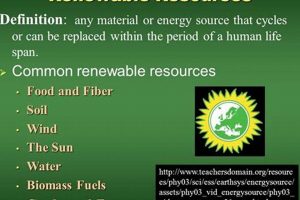
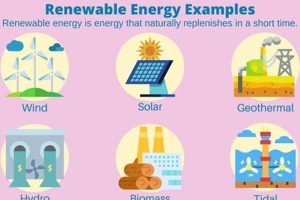
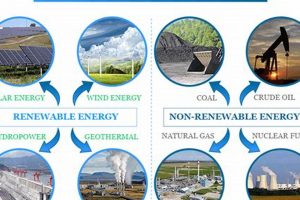
The primary examples include solar energy, wind power, hydropower, geothermal energy, and biomass.
Question 2: How does solar energy contribute to a sustainable energy future?
Solar energy reduces reliance on fossil fuels by directly converting sunlight into electricity, thereby decreasing greenhouse gas emissions.
Question 3: What are the key advantages of wind power?
Wind power harnesses kinetic energy from air movement, offering a clean and sustainable alternative to traditional power generation methods.
Question 4: How does hydropower function as a renewable energy source?
Hydropower uses the power of moving water, typically stored in reservoirs, to generate electricity, providing a reliable energy source.
Question 5: In what ways does geothermal energy differ from other naturally replenished sources?
Geothermal energy taps into Earth’s internal heat, providing a consistent energy supply irrespective of external weather conditions.
Question 6: What are the main considerations for sustainable biomass utilization?
Sustainable biomass utilization requires careful management of feedstocks to prevent deforestation, land use change, and competition with food production.
Understanding these frequently asked questions provides a foundational understanding of sources of energy that are naturally replenished and their significance in creating a more sustainable energy future.
The following section will explore the economic and environmental implications of these resources.
Naturally Replenished Energy Resources
This discussion has explored the fundamental role of energy sources that are naturally replenished in achieving a sustainable energy future. The analysis has encompassed solar energy, wind power, hydropower, geothermal energy, and biomass conversion, elucidating their mechanisms, benefits, and challenges. Each resource presents a unique contribution to reducing reliance on fossil fuels and mitigating climate change. The successful integration of these options necessitates careful consideration of technological advancements, environmental impacts, and economic viability.
The continued development and deployment of these naturally replenishing resources are essential for securing a stable and environmentally responsible energy supply. Strategic investments, policy support, and public awareness initiatives are crucial for accelerating the transition towards a diversified and decarbonized energy landscape. Recognizing the inherent limitations and maximizing the potential of each resource will be paramount in shaping a sustainable future for generations to come. The shift toward these energy sources is not merely an option, but a necessity for the long-term well-being of the planet.