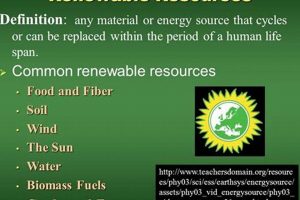
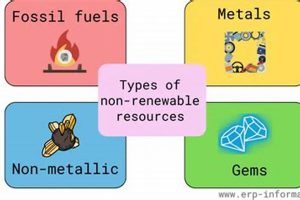
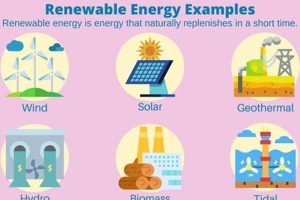
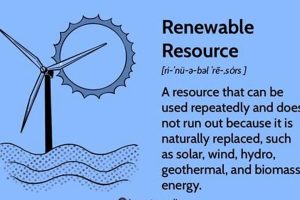
A clarification of energy sources that are naturally replenished on a human timescale, such as solar, wind, hydro, geothermal, and biomass. These sources stand in contrast to finite reserves like fossil fuels, which take millions of years to form. They are characterized by their ability to be used repeatedly without depletion, provided that they are managed sustainably.
The significance of these sustainable sources lies in their capacity to mitigate environmental impacts associated with traditional energy generation. Utilizing such sources contributes to reduced greenhouse gas emissions, lessened air and water pollution, and diminished reliance on politically volatile regions. Historically, civilizations have harnessed renewable forms of power, but modern technologies have greatly expanded the potential and efficiency of their utilization.
With a foundational understanding established, subsequent sections will explore specific types of these environmentally conscious power solutions in greater detail, examining their technical aspects, economic viability, and widespread application across various sectors. This article will also delve into the policy frameworks and technological advancements driving the adoption and integration of these sources into the global energy landscape.
Guiding Principles for Sustainable Energy Utilization
The effective integration and deployment of sustainable power options require strategic planning and informed decision-making. The following principles offer guidance toward responsible and impactful implementation.
Tip 1: Prioritize Long-Term Environmental Impact Assessments: Thoroughly evaluate the complete lifecycle environmental implications, including material sourcing, manufacturing, operational emissions, and end-of-life disposal, for any potential project. For instance, hydro projects must consider effects on aquatic ecosystems and sediment flow.
Tip 2: Optimize Grid Integration for Variable Sources: Implement advanced grid management technologies, such as smart grids and energy storage solutions, to accommodate the intermittent nature of solar and wind power. This ensures a consistent and reliable power supply.
Tip 3: Diversify the Energy Portfolio: Avoid over-reliance on a single type. Combining various technologies, like solar, wind, geothermal, and biomass, enhances resilience and reduces vulnerability to resource fluctuations or technological limitations.
Tip 4: Encourage Community Engagement and Education: Foster public understanding and acceptance through transparent communication and inclusive decision-making processes. Address potential concerns related to visual impact, noise pollution, or land use.
Tip 5: Invest in Research and Development: Support ongoing innovation to improve the efficiency, affordability, and reliability of existing technologies and to explore novel approaches. This includes advancements in energy storage, materials science, and smart grid infrastructure.
Tip 6: Establish Supportive Policy Frameworks: Implement clear and consistent policies, such as feed-in tariffs, tax incentives, and carbon pricing mechanisms, to incentivize investment and adoption. These policies should be designed to foster long-term stability and predictability.
Tip 7: Promote Energy Efficiency Measures: Complement renewable energy deployment with aggressive energy efficiency programs across all sectors. Reducing overall demand minimizes the scale of required supply and lowers costs.
Adherence to these guiding principles ensures a holistic and sustainable approach to transitioning towards cleaner energy sources, maximizing their benefits while minimizing potential drawbacks.
The subsequent sections will provide a comprehensive examination of the diverse types, their respective benefits and challenges, and the policy landscape influencing their implementation.
1. Replenishment Rate

The defining characteristic differentiating renewable energy resources from their finite counterparts is their replenishment rate. This rate, which represents the speed at which a resource is naturally restored, is crucial for determining the long-term viability of a given energy source. An energy source is classified as renewable when its replenishment rate is comparable to, or faster than, its rate of consumption. Sunlight, for instance, provides a consistent energy flux, and wind patterns are continuously generated by atmospheric dynamics, enabling sustained energy extraction. Conversely, fossil fuels have a negligible replenishment rate relative to human consumption, leading to depletion. The magnitude of the replenishment rate fundamentally dictates whether a resource can be considered sustainable.
The practical significance of understanding replenishment rate extends to resource management and technological development. Accurately assessing the available solar irradiance, wind speeds, or geothermal gradients informs the design and deployment of relevant energy technologies. For example, the placement of wind farms must consider the sustained average wind speed in a region to ensure consistent energy generation. Similarly, the efficiency of solar panels is directly related to the intensity of solar radiation. Furthermore, predicting variations in replenishment ratessuch as seasonal changes in solar insolation or drought conditions affecting hydroelectric powerallows for the development of strategies to mitigate energy supply fluctuations. This might involve energy storage solutions or the integration of multiple types of renewable resources to ensure a stable power output.
In summary, the replenishment rate is an indispensable criterion for categorizing and effectively utilizing renewable energy resources. A comprehensive understanding of this rate informs sustainable energy planning, technological innovation, and resource management strategies. While challenges exist in accurately predicting and managing fluctuations in replenishment rates, addressing these challenges is crucial for achieving a sustainable energy future. This necessitates continued research and development in resource assessment, energy storage, and grid management technologies.
2. Source Sustainability

Source sustainability is inextricably linked to the viability and definition of renewable energy resources. It addresses whether the harnessing of a resource compromises its future availability or negatively impacts the surrounding environment, thereby undermining its renewability. The long-term viability of solar energy, for example, depends not only on the continuous supply of sunlight but also on the environmentally responsible manufacturing and disposal of photovoltaic panels. Similarly, the sustainability of biomass energy is contingent on responsible forestry practices that prevent deforestation and soil degradation. The absence of source sustainability effectively nullifies the renewable character of an energy resource, transforming it into a depletable or environmentally damaging option.
The ramifications of neglecting source sustainability are evident in historical and contemporary energy projects. Unsustainable logging practices to fuel biomass power plants can lead to significant deforestation, negating the carbon neutrality benefits of the energy source and causing habitat loss. Similarly, improperly managed hydroelectric dams can disrupt aquatic ecosystems, leading to the decline or extinction of fish populations and alteration of water flow patterns, thereby diminishing the long-term power generation capacity. Conversely, examples of positive source sustainability practices include the use of recycled materials in the manufacturing of wind turbines and the implementation of strict environmental controls around geothermal power plants to prevent groundwater contamination. These practices ensure the resource remains viable for future generations.
Therefore, source sustainability is not merely an ancillary consideration but a fundamental attribute that dictates whether a given energy source qualifies as truly renewable. Ignoring this aspect can lead to unintended environmental consequences and the eventual depletion of what was intended to be a sustainable resource. Ongoing research, rigorous environmental impact assessments, and the implementation of best practices are essential to ensure the long-term sustainability of renewable energy sources and their contribution to a reliable and environmentally sound energy future. The failure to prioritize source sustainability jeopardizes the fundamental goals of transitioning to renewable energy, underscoring its critical importance.
3. Environmental Impact

The concept of environmental impact is inherently intertwined with the validity of defining energy resources as renewable. While these resources are generally perceived as cleaner alternatives to fossil fuels, their deployment is not devoid of ecological consequences. The magnitude and nature of these impacts necessitate careful consideration to ensure that the purported benefits of renewable energy are not offset by unforeseen environmental costs. Neglecting this aspect compromises the integrity of the term “renewable” as it implies long-term sustainability and minimal ecological disruption. For instance, large-scale hydroelectric projects, while generating significant power, can lead to the inundation of vast areas of land, displacing communities and disrupting ecosystems. The extraction of rare earth minerals required for manufacturing solar panels and wind turbines presents its own set of environmental challenges, including habitat destruction and potential water contamination. These examples underscore the importance of a comprehensive assessment of the lifecycle environmental footprint of any renewable energy technology.
A key element in understanding the connection lies in recognizing that renewable energy projects, despite their low or zero direct emissions during operation, involve environmental impacts during manufacturing, construction, and decommissioning phases. Wind turbine production requires substantial amounts of steel and concrete, contributing to carbon emissions. The transportation of components and the construction of access roads can fragment habitats. The siting of solar farms can compete with agricultural land use, necessitating careful planning to minimize ecological disruption. Moreover, the disposal of worn-out wind turbine blades and solar panels poses a significant waste management challenge. Therefore, evaluating the overall environmental impact requires a holistic approach that considers all stages of the energy production and consumption cycle. This necessitates the development of standardized methodologies for quantifying environmental impacts, allowing for informed comparisons between different energy sources and technologies.
In conclusion, environmental impact is not a peripheral consideration but a defining characteristic that must be rigorously assessed when classifying energy resources as renewable. A genuine commitment to renewable energy requires a proactive approach to minimizing environmental consequences at every stage of the energy lifecycle, from resource extraction to waste management. Failure to adequately address these impacts undermines the credibility of renewable energy and jeopardizes the achievement of long-term sustainability goals. Continued research, technological innovation, and robust regulatory frameworks are essential to ensure that the transition to renewable energy is genuinely environmentally beneficial and contributes to a sustainable future.
4. Resource Diversity

The incorporation of diverse renewable energy sources into a region’s energy portfolio fundamentally underpins the resilience and reliability associated with the comprehensive concept of renewable energy. This diversification mitigates the inherent intermittency and geographical limitations associated with relying on a single renewable resource.
- Geographical Distribution
Geographical distribution of renewable energy resources directly influences energy security and grid stability. A region reliant solely on solar energy may face challenges during extended periods of cloud cover or at night. Integrating wind power, which often complements solar availability due to different weather patterns, enhances energy supply continuity. Geothermal energy, being location-specific, contributes a consistent baseload power source in suitable regions. Diversifying geographically and technologically reduces vulnerability to localized resource limitations.
- Technological Redundancy
Technological redundancy provides a safeguard against unforeseen challenges associated with specific renewable energy technologies. Over-reliance on a single technology exposes the energy system to risks arising from technological failures, supply chain disruptions, or unexpected performance limitations. A diverse portfolio that includes solar photovoltaic, concentrated solar power, wind turbines, hydroelectric, and biomass provides alternative sources of power should one technology encounter obstacles. This redundancy ensures a more stable and adaptable energy system.
- Resource Complementarity
Resource complementarity leverages the synergistic interactions between different renewable resources to optimize energy generation and grid integration. For instance, hydropower, which can be rapidly dispatched, can be used to balance fluctuations in solar and wind power output. Similarly, energy storage solutions can capture excess energy generated during peak production periods and release it during periods of high demand or low renewable energy output. This integrated approach enhances the overall efficiency and reliability of the renewable energy system.
- Economic Stability
Economic stability is fostered by diversifying renewable energy investments across various technologies and geographical locations. Relying on a single type of renewable energy project exposes the energy sector to price fluctuations, policy changes, and technological obsolescence. A diversified portfolio, encompassing a range of renewable resources and technologies, reduces these risks and creates a more resilient and economically sustainable energy sector. This approach can also stimulate local economies by creating diverse job opportunities across various renewable energy industries.
Consequently, resource diversity is not merely an abstract concept but a practical strategy for building a robust and reliable renewable energy system. Integrating a variety of renewable energy resources, technologies, and geographical locations enhances energy security, mitigates risks, and promotes long-term sustainability. This holistic approach is essential for realizing the full potential of renewable energy and achieving a cleaner, more resilient energy future. Further expansion in diversity will promote competition in all types of renewable energies.
5. Technological Viability
Technological viability occupies a critical position in the evaluation of renewable energy resources, serving as a key determinant of their practical applicability and widespread adoption. Without technologically mature and economically feasible means of harnessing and converting renewable resources, their inherent renewability holds limited value in meeting societal energy demands. This section examines the facets of technological viability and their implications for renewable energy resources.
- Conversion Efficiency
Conversion efficiency directly influences the economic competitiveness of renewable energy technologies. High conversion efficiency translates to greater energy output per unit of resource input, reducing the required scale of infrastructure and associated costs. For example, advancements in photovoltaic cell technology have steadily increased solar energy conversion efficiency, making solar power increasingly competitive with conventional energy sources. Further improvements in conversion efficiency, particularly for intermittent resources like solar and wind, are crucial for enhancing their reliability and reducing the need for energy storage.
- Grid Integration Capabilities
Seamless integration of renewable energy sources into existing power grids is essential for ensuring a stable and reliable electricity supply. Many renewable resources, such as solar and wind, are inherently variable and can introduce fluctuations into the grid. Advanced grid management technologies, including smart grids and energy storage systems, are needed to accommodate these fluctuations and maintain grid stability. The technological viability of renewable energy sources, therefore, depends not only on their energy generation capabilities but also on their ability to be integrated effectively into existing energy infrastructure.
- Energy Storage Solutions
Energy storage technologies play a pivotal role in mitigating the intermittency challenges associated with many renewable energy sources. Storage solutions, such as batteries, pumped hydro storage, and compressed air energy storage, enable the capture of excess energy generated during periods of high resource availability and the release of that energy during periods of low availability or high demand. The development of cost-effective and efficient energy storage solutions is critical for ensuring the reliable delivery of renewable energy and for reducing reliance on fossil fuel-based backup power. The technological maturity and economic viability of storage technologies directly impact the overall viability of renewable energy systems.
- Materials Science and Durability
The long-term durability and resource efficiency of renewable energy technologies are directly linked to advancements in materials science. Materials used in solar panels, wind turbines, and other renewable energy devices must withstand harsh environmental conditions and maintain their performance over extended periods. Research into new materials that are more durable, corrosion-resistant, and require less energy to manufacture is crucial for improving the sustainability and economic viability of renewable energy technologies. Furthermore, advancements in recycling and end-of-life management of renewable energy components are essential for minimizing environmental impacts and ensuring the long-term sustainability of these technologies.
These interconnected elements collectively shape the technological viability of renewable energy resources. Continued advancements in these areas are essential for unlocking the full potential of renewable energy and achieving a sustainable energy future. The interplay of efficiency, grid compatibility, storage and material science will drive the expansion of Renewable Energy and its adoption.
Frequently Asked Questions Regarding the Definition of Renewable Energy Resources
This section addresses common inquiries and clarifies misunderstandings surrounding the precise definition and implications of renewable energy resources.
Question 1: Is nuclear energy considered a renewable energy resource?
No, nuclear energy is not classified as a renewable energy resource. Although nuclear power plants have low greenhouse gas emissions during operation, the uranium fuel they use is a finite resource. Additionally, the management of nuclear waste poses significant long-term environmental challenges, further disqualifying it under the renewable designation.
Question 2: Are all sources labeled “green” necessarily renewable?
The terms “green” and “renewable” are not interchangeable. While renewable resources are generally considered green due to their low environmental impact, some energy sources may be labeled green based on specific criteria, such as reduced carbon emissions, without being inherently renewable. Carbon capture and storage technologies, for example, can reduce emissions from fossil fuel power plants but do not transform the fossil fuel into a renewable resource.
Question 3: How does the definition of renewable energy account for the lifecycle environmental impacts of manufacturing and disposal?
A comprehensive definition of renewable energy resources considers the entire lifecycle, including the environmental impacts associated with the extraction of raw materials, manufacturing processes, transportation, installation, operation, and end-of-life disposal or recycling. A truly sustainable resource minimizes environmental harm across all stages, not just during energy generation.
Question 4: Why is resource diversity emphasized in the context of the renewable energy definition?
Resource diversity is crucial because it mitigates the intermittency and geographic limitations inherent in individual renewable energy sources. Reliance on a single type of renewable energy can lead to supply disruptions due to weather patterns or seasonal variations. A diversified portfolio of renewable resources enhances energy security and grid stability.
Question 5: Does the definition of renewable energy include energy conservation and efficiency measures?
While energy conservation and efficiency are essential components of a sustainable energy strategy, they are not, strictly speaking, sources of renewable energy. Instead, they reduce energy demand, thereby lessening the overall reliance on both renewable and non-renewable sources. Conservation and efficiency measures complement renewable energy deployment but are distinct concepts.
Question 6: How do policy incentives influence the economic viability and definition of renewable energy projects?
Government policies, such as tax credits, feed-in tariffs, and renewable energy mandates, play a significant role in shaping the economic viability and deployment of renewable energy projects. These incentives can reduce the cost of renewable energy, making it more competitive with traditional energy sources and stimulating investment in renewable energy technologies. However, these policies do not alter the fundamental definition of renewable energy; they merely facilitate its adoption.
In summary, the definition of renewable energy encompasses not only the continuous replenishment of resources but also the lifecycle environmental impact, resource diversity, and technological viability. A comprehensive understanding of these elements is essential for making informed decisions about energy policy and investment.
The following article section will explore specific examples of renewable energy technologies and their respective applications.
Defining Renewable Energy Resources
The preceding exploration has illuminated the multifaceted nature of defining renewable energy resources. The assessment has moved beyond a superficial understanding of merely replenishable sources, emphasizing instead the imperative consideration of lifecycle environmental impacts, technological viability, resource diversity, and long-term sustainability. A comprehensive definition acknowledges the interconnectedness of these factors, requiring rigorous scrutiny to ensure that purported renewable sources genuinely contribute to a sustainable energy future.
The ongoing transition toward cleaner energy systems necessitates a continued commitment to research, innovation, and responsible resource management. The accurate and nuanced understanding of what constitutes a renewable energy resource will be crucial for informing policy decisions, guiding investment strategies, and ultimately securing a resilient and environmentally sound energy supply for generations to come. Further adherence to strict environmental regulations will lead to environmental benefits in short time and future.
![Guide to What Energy Resources Are Renewable [+Future] | Renewable Energy Solutions for a Sustainable Future | Clean & Green Power](https://pplrenewableenergy.com/wp-content/uploads/2026/03/th-516-300x200.jpg "Guide to What Energy Resources Are Renewable [+Future] Renewable Energy Solutions for a Sustainable Future | Clean & Green Power")