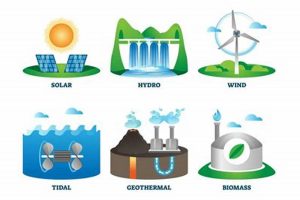
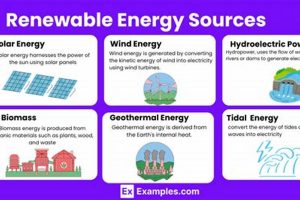
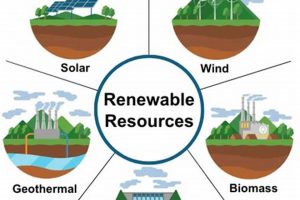
These are natural resources capable of replenishment within a human timescale. Unlike finite reserves that deplete with extraction, these sources possess the characteristic of being naturally restored. Examples include solar energy, wind power, hydroelectric power, geothermal energy, and biomass. The capacity for continuous regeneration distinguishes them from non-renewable alternatives.
Their significance lies in contributing to environmental sustainability and mitigating the effects of climate change. Utilizing such resources reduces dependence on fossil fuels, decreasing greenhouse gas emissions and air pollution. Historically, civilizations relied on rudimentary forms of these, like wind for sailing and water for milling grain. Modern technology has vastly improved the efficiency and scale of harnessing these energy sources.
The subsequent discussion will delve into the various types of these resources, their specific applications, and the challenges and opportunities associated with their widespread adoption.
Practical Applications of Continuously Replenishing Resources
The following points provide guidance on effectively integrating and managing resources capable of natural restoration.
Tip 1: Diversify Energy Portfolio: Integrate multiple resources into energy systems to ensure reliability and reduce reliance on single sources. Solar, wind, and hydro power can complement each other to provide a stable energy supply.
Tip 2: Invest in Energy Storage: Enhance the stability of the power grid by deploying energy storage solutions like batteries or pumped hydro. This addresses the intermittent nature of some options and allows for the utilization of excess power generated during peak production times.
Tip 3: Promote Distributed Generation: Encourage localized energy production through incentives for residential and commercial installation of solar panels and small-scale wind turbines. This reduces transmission losses and enhances grid resilience.
Tip 4: Implement Smart Grid Technologies: Utilize smart grid technologies to optimize energy distribution and demand management. Smart grids enable real-time monitoring and control, improving efficiency and reducing waste.
Tip 5: Support Research and Development: Invest in ongoing research and development to improve the efficiency and cost-effectiveness of harnessing technologies. This includes advancements in materials science, engineering, and energy storage.
Tip 6: Establish Supportive Policies: Governments and organizations should implement supportive policies, such as tax incentives and feed-in tariffs, to encourage investment and adoption. Clear and consistent regulations are crucial for long-term growth.
These strategies enable a transition to a more sustainable and resilient energy future, leveraging the continuous availability of natural resources.
The subsequent sections will address specific implementation strategies and potential challenges.
1. Sustainability

Sustainability, in the context of resources with replenishment capacity, signifies their ability to meet current energy demands without compromising the ability of future generations to meet their own needs. It is intrinsically linked to the concept of utilizing resources that naturally regenerate, ensuring a continuous supply while minimizing environmental degradation.
- Environmental Preservation
Sustainability necessitates minimal disruption to ecosystems. Unlike fossil fuels, which contribute significantly to pollution and climate change, resources such as solar and wind power produce minimal emissions during operation. Their sustainability relies on careful site selection to avoid habitat destruction and responsible disposal of equipment at the end of its lifecycle.
- Resource Availability for Future Generations
A core tenet of sustainability is ensuring that resources remain available for future use. Sources like geothermal energy, while renewable, can be depleted if extracted at rates exceeding their natural replenishment. Sustainable practices involve monitoring extraction rates and implementing management strategies to preserve the long-term viability of these resources.
- Social and Economic Equity
Sustainability encompasses social and economic dimensions. The transition to renewable sources must be equitable, providing access to affordable energy for all populations. Sustainable practices involve creating job opportunities in the renewable energy sector and ensuring that communities benefit from the development of projects.
- Technological Innovation
Sustained progress in the field depends on technological innovation to improve efficiency and reduce costs. Investing in research and development enhances the sustainability of resources. Advancements in energy storage, grid management, and materials science play a crucial role in maximizing the potential of replenishment sources.
These facets underscore the complexity of achieving true sustainability. The successful integration of renewable resources requires a holistic approach that considers environmental impact, resource management, social equity, and technological progress. Effective stewardship ensures that resources continue to contribute to a sustainable energy future.
2. Replenishment Rate

Replenishment rate is a central characteristic defining resources as renewable. It dictates the pace at which a natural resource regenerates, influencing its sustainable utilization and long-term availability. The rate governs how quickly these sources can be consumed without leading to depletion, a crucial factor in energy planning and environmental management.
- Solar Irradiance Recovery
Solar energy’s replenishment rate is essentially instantaneous, dictated by the daily cycle of solar irradiance. This continuous influx necessitates efficient capture and storage technologies to maximize utilization. Solar farms and photovoltaic panels rely on this daily replenishment to generate electricity, although weather patterns may introduce variability.
- Wind Speed Regeneration
Wind energy’s replenishment rate is determined by atmospheric conditions and weather systems. While wind patterns are relatively consistent regionally and seasonally, fluctuations occur. Turbine design and placement must account for these variations to optimize energy capture. Meteorological data and forecasting are vital for predicting and managing wind energy generation.
- Hydrological Cycle Restoration
Hydroelectric power depends on the hydrological cycle, which replenishes water reservoirs through precipitation and runoff. The replenishment rate varies with rainfall patterns, snowmelt, and river flows. Sustainable dam management requires careful consideration of these factors to ensure sufficient water availability for both energy generation and ecosystem preservation.
- Biomass Regrowth Cycles
Biomass replenishment rate depends on the growth cycles of plants used for fuel. Fast-growing crops and sustainable forestry practices are essential for maintaining a continuous supply of biomass. Managing harvest rates and promoting reforestation are key to ensuring long-term sustainability and avoiding deforestation.
These differing replenishment rates necessitate tailored strategies for resource management and energy infrastructure development. An understanding of the inherent restoration capabilities of each resource is paramount for achieving sustainable energy systems and mitigating environmental impact.
3. Environmental Impact

The environmental impact associated with resources capable of natural replenishment is a critical consideration in the transition towards sustainable energy systems. While often perceived as inherently benign, a comprehensive assessment reveals a nuanced relationship between these resources and the environment.
- Land Use and Habitat Disruption
Large-scale solar and wind farms require significant land areas, potentially leading to habitat loss and fragmentation. Hydropower projects can inundate vast areas, altering river ecosystems and displacing communities. Careful site selection and mitigation strategies are necessary to minimize these impacts. For example, offshore wind farms reduce land-based disruption, but may affect marine ecosystems.
- Resource Extraction and Manufacturing
The production of solar panels, wind turbines, and batteries involves the extraction of raw materials and energy-intensive manufacturing processes. These activities can generate pollution and greenhouse gas emissions. Sustainable sourcing and recycling of materials are crucial for reducing the environmental footprint. Life cycle assessments help to quantify the overall environmental impact of these technologies.
- Waste Management and Disposal
End-of-life disposal of renewable energy equipment poses a challenge. Solar panels contain potentially hazardous materials, and wind turbine blades are difficult to recycle. Proper waste management and development of recycling technologies are essential for minimizing environmental harm. Circular economy principles can guide the design and management of renewable energy systems.
- Impact on Wildlife
Wind turbines can pose a threat to birds and bats, while hydropower projects can impede fish migration. Careful siting, design modifications, and operational strategies can reduce these impacts. For example, bird diverters and fish ladders can mitigate the effects of wind turbines and dams, respectively. Ongoing monitoring and research are needed to assess and minimize wildlife impacts.
Despite these challenges, the overall environmental impact is generally lower compared to fossil fuels. By addressing these concerns through careful planning, technological innovation, and responsible management practices, the environmental benefits of these resources can be maximized. Their strategic deployment is crucial for mitigating climate change and promoting a more sustainable future.
4. Energy Security
Energy security, defined as the uninterrupted availability of energy sources at an affordable price, is intrinsically linked to the utilization of natural replenishment resources. Reliance on finite fossil fuels creates vulnerabilities due to geopolitical instability, price volatility, and finite supply. Diversifying energy sources with sustainable alternatives mitigates these risks, strengthening a nation’s or region’s energy independence. For example, countries heavily dependent on imported oil are susceptible to supply disruptions, while those investing in domestic solar, wind, or geothermal resources reduce their exposure to external market forces.
The incorporation of renewable resources enhances energy security by fostering a more decentralized and resilient energy infrastructure. Distributed generation, such as rooftop solar panels or community wind farms, reduces the strain on centralized power grids and lowers transmission losses. This localized production capability makes the energy system less vulnerable to large-scale disruptions caused by natural disasters or infrastructure failures. Germany’s Energiewende, a transition toward renewable energy, illustrates this principle by promoting decentralized energy production, thereby enhancing energy security despite phasing out nuclear power.
In conclusion, investing in sources with regenerative capacity is a strategic imperative for bolstering energy security. Reducing dependence on finite and geographically concentrated fossil fuels mitigates geopolitical risks and price fluctuations. The promotion of diversified, decentralized renewable energy systems enhances grid resilience and strengthens a nations energy independence. By prioritizing sustainability and harnessing the earth’s natural cycles, nations can achieve a more secure and stable energy future.
5. Economic Viability
Economic viability is a critical factor in the widespread adoption of sources with the capacity for natural replenishment. While their environmental advantages are widely recognized, the economic competitiveness of these technologies relative to conventional energy sources ultimately determines their market penetration and long-term sustainability.
- Initial Capital Investment
Renewable energy projects often require significant upfront capital investment for infrastructure development. Solar farms, wind turbines, and hydroelectric dams entail substantial construction costs, including equipment procurement, installation, and grid connection. Government subsidies, tax incentives, and innovative financing mechanisms play a crucial role in overcoming this barrier, reducing the initial financial burden on investors and developers.
- Operational and Maintenance Costs
While the initial investment can be high, the operational and maintenance (O&M) costs associated with renewable energy facilities are typically lower than those of fossil fuel-based power plants. Sources like solar and wind have minimal fuel costs, reducing their exposure to price volatility. However, O&M expenses, including component replacements, monitoring, and system maintenance, must be factored into the economic analysis. Regular maintenance schedules and predictive diagnostics can minimize downtime and ensure optimal performance.
- Levelized Cost of Energy (LCOE)
The levelized cost of energy (LCOE) is a key metric used to compare the economic viability of different energy sources. It represents the average cost of generating electricity over the lifetime of a power plant, taking into account capital costs, O&M expenses, fuel costs (if applicable), and financing costs. Declining technology costs and increasing efficiencies have led to significant reductions in the LCOE of these resources, making them increasingly competitive with traditional fossil fuels. Continued technological advancements and economies of scale are expected to further reduce the LCOE, enhancing their economic attractiveness.
- Market Integration and Grid Infrastructure
The economic viability of these sources is also influenced by market integration and grid infrastructure. The intermittent nature of solar and wind power requires grid enhancements to ensure reliable electricity supply. Investments in energy storage technologies, smart grids, and transmission infrastructure are essential for integrating these resources into the existing energy system. Effective market mechanisms, such as carbon pricing and renewable energy credits, can create a level playing field and incentivize the deployment of sources with replenishment capabilities.
The continued reduction in technology costs, coupled with supportive policies and infrastructure investments, is driving the economic viability of these resources. As they become increasingly cost-competitive with conventional energy sources, they play a pivotal role in achieving a sustainable and economically sound energy future.
6. Technological Advancements

Technological advancements are fundamental to expanding the accessibility, efficiency, and economic viability of resources capable of natural replenishment. Innovations across diverse engineering and scientific disciplines directly influence the performance and scalability of systems designed to harness these resources, thereby impacting their overall contribution to the global energy mix.
- Improved Material Science
Material science breakthroughs directly enhance the efficiency and durability of renewable energy technologies. For example, advancements in photovoltaic materials have led to higher energy conversion rates in solar panels. Similarly, the development of stronger and lighter materials for wind turbine blades allows for larger rotor diameters, increasing energy capture. These material improvements translate directly into greater power output and longer operational lifespans.
- Enhanced Energy Storage Solutions
Energy storage technologies address the intermittency challenges associated with many replenishment resources. Battery technology, pumped hydro storage, and compressed air energy storage systems are becoming increasingly sophisticated. These advancements enable the storage of surplus energy generated during peak production periods, allowing for a more consistent and reliable energy supply, even when solar or wind resources are limited. This is crucial for grid stability and the integration of a higher proportion of renewable energy sources.
- Smart Grid Technologies
Smart grid technologies optimize the distribution and management of electricity generated from sources with replenishment capabilities. Smart grids utilize advanced sensors, communication networks, and control systems to monitor and manage energy flows in real-time. This enables a more efficient integration of renewable energy sources into the grid, reduces transmission losses, and enhances grid resilience. Furthermore, smart grids facilitate demand-side management, allowing consumers to actively participate in balancing energy supply and demand.
- Advanced Manufacturing Processes
Advanced manufacturing processes contribute to lower production costs and improved quality of renewable energy technologies. Automation, precision engineering, and lean manufacturing techniques streamline production, reduce waste, and improve efficiency. These advancements enable economies of scale, driving down the costs of solar panels, wind turbines, and other renewable energy components. The reduced costs increase the competitiveness of renewable energy relative to fossil fuels, accelerating their widespread adoption.
In summary, technological advancements are a driving force behind the increasing viability of resources with natural replenishment capabilities. Continued innovation in materials science, energy storage, smart grid technologies, and manufacturing processes is essential for realizing the full potential of these resources and achieving a sustainable energy future.
7. Resource Availability
The geographical distribution and temporal consistency of resources with regenerative capacity directly dictate the feasibility and scale of their utilization. The term “renewable resources are those that” implies a continuous supply; however, this theoretical availability is contingent upon real-world access and consistent presence. Uneven distribution necessitates strategic infrastructure investments to transport energy from resource-rich areas to population centers. For example, regions with high solar irradiance, such as deserts, may require extensive transmission lines to deliver power to distant urban areas. Similarly, areas with consistent wind patterns, like coastal regions, can support large-scale wind farms, but their energy output needs integration into existing grid networks. The inherent variability in their presencedaytime solar irradiance or seasonal wind patternsnecessitates energy storage solutions to ensure a reliable power supply. These factors underscore that even fundamentally regenerative resources require careful planning and technological intervention to translate theoretical replenishment into practical energy security.
Furthermore, the practical significance of understanding resource availability extends beyond mere geographical location. It encompasses factors such as land use constraints, environmental regulations, and social acceptance. The development of solar or wind farms may face opposition due to aesthetic concerns, habitat disruption, or noise pollution. Geothermal energy potential is often limited by geological conditions and regulatory restrictions on drilling. Biomass availability depends on sustainable forestry practices and agricultural land management. These considerations illustrate that resource availability is not solely a function of natural abundance but also a complex interplay of environmental, social, and economic factors. Efficient resource assessment and responsible project development are crucial for maximizing the potential while minimizing negative impacts.
In summary, the connection between resource availability and the concept “renewable resources are those that” is one of qualified potential. While these resources possess inherent replenishment capabilities, their practical utility is shaped by geographic distribution, environmental constraints, and societal considerations. Overcoming these challenges requires innovative technologies, strategic planning, and responsible resource management to harness the full potential for a sustainable energy future.
Frequently Asked Questions About Naturally Replenishing Resources
The following questions address common inquiries and clarify potential misconceptions regarding resources capable of natural restoration.
Question 1: What fundamentally distinguishes sources capable of natural restoration from other energy sources?
The capacity for regeneration within a human timescale distinguishes these sources. Unlike finite resources, they replenish naturally, theoretically ensuring continuous availability.
Question 2: Are sources capable of natural restoration truly inexhaustible?
While theoretically regenerative, sustained overuse or mismanagement can diminish their long-term viability. Sustainable practices are critical to prevent depletion, even in renewable systems.
Question 3: How do fluctuations impact their reliability as energy sources?
Intermittency, due to weather or daily cycles, poses a challenge. Energy storage solutions and grid management strategies are crucial for ensuring a consistent energy supply.
Question 4: What are the primary environmental concerns associated with harnessing these energy resources?
Land use, habitat disruption, and manufacturing processes present potential environmental impacts. Mitigation strategies, such as responsible site selection and sustainable materials management, are essential.
Question 5: How economically competitive are sources with regenerative capacity compared to traditional fossil fuels?
Declining technology costs and supportive policies are making these sources increasingly cost-competitive. The levelized cost of energy is a key metric for comparing their economic viability.
Question 6: What technological advancements are driving progress in this sector?
Innovations in material science, energy storage, smart grid technologies, and manufacturing processes are enhancing the efficiency and affordability of renewable energy systems.
These FAQs underscore the complex interplay of sustainability, technology, and economics that shapes the deployment of naturally replenishing resources.
The subsequent section will explore future trends and challenges in the field of sustainable energy.
Conclusion
The preceding analysis has explored the concept that “renewable resources are those that” possess the inherent capacity for natural replenishment within a human timescale. This fundamental characteristic distinguishes them from finite resources and positions them as essential components of a sustainable energy future. The discussion has encompassed diverse facets, including sustainability, replenishment rates, environmental impact, energy security, economic viability, technological advancements, and resource availability. Each of these elements plays a critical role in determining the feasibility and effectiveness of integrating these resources into global energy systems.
The pursuit of sustainable energy solutions demands a commitment to responsible resource management, technological innovation, and policy frameworks that incentivize the adoption of resources with replenishment capabilities. The transition away from fossil fuels is not merely an environmental imperative but also a strategic necessity for enhancing energy security and fostering economic growth. Future progress will depend on continued investments in research and development, the implementation of robust regulatory mechanisms, and a collective recognition of the interconnectedness between energy production, environmental stewardship, and long-term societal well-being.