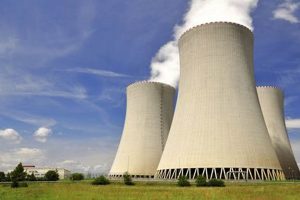
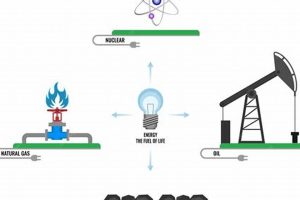
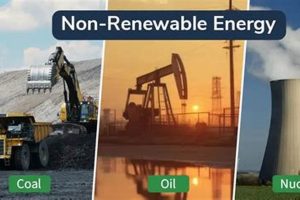
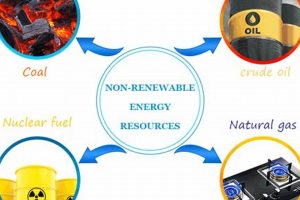
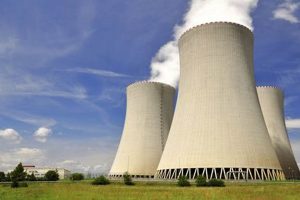
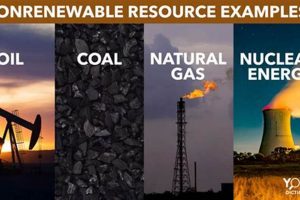
Finite resources like fossil fuels (coal, oil, and natural gas) and nuclear fuels (uranium) power conventional energy generation. These resources are extracted from the Earth and, once consumed, are gone, taking millions of years to replenish naturally. Conversely, sustainable energy sources, such as solar, wind, hydro, geothermal, and biomass, harness naturally replenishing resources. Sunlight, wind, water flow, and Earth’s internal heat are virtually inexhaustible on a human timescale. Biomass, while technically consumable, can be sustainably managed through replanting and regrowth.
The distinction between these two energy paradigms is crucial for the future of the planet. Reliance on finite resources carries significant environmental consequences, including greenhouse gas emissions contributing to climate change, air and water pollution, and habitat destruction. Furthermore, the depletion of these resources poses long-term energy security challenges. Sustainable alternatives offer a pathway to mitigating these issues, providing cleaner energy production and enhancing energy independence. The shift towards these resources has gained momentum in recent decades, driven by growing environmental awareness, technological advancements, and decreasing costs.
The following sections delve deeper into the specific advantages and disadvantages of each energy type, exploring their environmental impact, economic considerations, and potential for future development. A comparative analysis will provide a comprehensive understanding of the ongoing energy transition and its implications for global sustainability.
Informed decision-making regarding energy consumption is crucial for both individual and collective sustainability efforts. The following tips offer guidance for navigating the complexities of finite and sustainable energy sources.
Tip 1: Understand Your Energy Footprint: Evaluating current energy consumption provides a baseline for identifying areas for improvement. Analyze utility bills and consider energy audits to pinpoint energy-intensive appliances and habits.
Tip 2: Embrace Energy Efficiency: Implementing energy-saving practices, such as using energy-efficient appliances, improving insulation, and reducing standby power consumption, can significantly lower reliance on both finite and sustainable resources.
Tip 3: Explore Renewable Energy Options: Investigate the feasibility of integrating sustainable energy solutions, like solar panels or geothermal heat pumps, into homes and businesses. Local incentives and government rebates may be available to support these initiatives.
Tip 4: Advocate for Sustainable Policies: Supporting policies that promote renewable energy development and incentivize sustainable practices can contribute to broader systemic change. Engage in local and national dialogues regarding energy policy.
Tip 5: Invest in Sustainable Technologies: Consider investing in companies and projects focused on developing and deploying sustainable energy technologies. This can accelerate the transition to a cleaner energy future.
Tip 6: Stay Informed: The energy landscape is constantly evolving. Keeping abreast of advancements in renewable energy technologies, government policies, and market trends is essential for making informed choices.
Tip 7: Promote Sustainable Practices: Encourage family, friends, and colleagues to adopt energy-efficient practices and support sustainable initiatives. Collective action can amplify individual efforts.
By incorporating these tips, individuals and communities can contribute to a more sustainable energy future, mitigating the environmental impact of energy consumption and promoting a healthier planet.
The concluding section will synthesize the key takeaways from this discussion and offer a forward-looking perspective on the future of energy.
1. Source Replenishment

Source replenishment serves as the fundamental differentiator between non-renewable and renewable energy. Non-renewable energy sources, derived from geological processes over millions of years, are finite. The rate of consumption far exceeds the rate of natural replenishment, rendering these resources effectively exhaustible within a human timescale. Fossil fuels, such as coal, oil, and natural gas, exemplify this characteristic. Their extraction and utilization deplete reserves that cannot be replaced at a pace relevant to current or foreseeable energy demands. Uranium, the fuel for nuclear energy, also falls within this category due to its limited terrestrial abundance.
Conversely, renewable energy sources replenish naturally over relatively short periods. Solar energy, derived from sunlight, provides a continuous influx of power. Wind energy, harnessed from atmospheric movement, similarly offers a consistent source of renewable power. Hydropower leverages the water cycle, driven by solar energy and gravity, for continuous electricity generation. Geothermal energy taps into the Earth’s internal heat, a vast and essentially inexhaustible reservoir. Biomass, derived from organic matter, can be sustainably managed through replanting and regrowth. These replenishment cycles ensure a continuous supply of energy, contrasting sharply with the finite nature of non-renewable resources. For instance, a solar panel converts sunlight into electricity without depleting the sun’s energy, while the combustion of coal permanently consumes a finite resource.
Understanding the distinction in replenishment rates is crucial for shaping sustainable energy policies. Continued reliance on finite resources presents long-term challenges related to resource depletion, price volatility, and environmental degradation. Transitioning towards renewable energy sources, characterized by continuous replenishment, offers a pathway to enhanced energy security, mitigated environmental impact, and a sustainable energy future. The challenge lies in effectively harnessing and integrating these resources into existing energy infrastructure, requiring ongoing technological innovation and policy support.
2. Environmental Impact
A critical point of divergence between non-renewable and renewable energy sources lies in their environmental impact. Non-renewable energy sources, primarily fossil fuels, are the principal contributors to greenhouse gas emissions, driving climate change. The combustion of coal, oil, and natural gas releases substantial quantities of carbon dioxide, methane, and nitrous oxide into the atmosphere, trapping heat and disrupting the global climate system. Furthermore, the extraction and processing of these resources often entail habitat destruction, water contamination, and air pollution, impacting local ecosystems and human health. For example, coal mining can lead to deforestation and acid mine drainage, while oil spills devastate marine environments. Nuclear energy, while not contributing directly to greenhouse gas emissions, carries the risk of nuclear waste disposal and potential accidents with long-term environmental consequences.
Renewable energy sources, in contrast, offer a significantly lower environmental footprint. Solar and wind power generate electricity without emitting greenhouse gases during operation. Hydropower, while generally considered clean, can impact aquatic ecosystems through dam construction and altered water flow. Geothermal energy, although relatively benign, can release small amounts of greenhouse gases from underground reservoirs. Biomass, while potentially carbon-neutral if sustainably managed, can contribute to air pollution if not combusted efficiently. For example, a solar farm can generate electricity with minimal impact on the surrounding environment, while a coal-fired power plant releases substantial pollutants into the air and water. The lifecycle emissions of renewable energy technologies, including manufacturing and disposal, are generally lower than those of fossil fuel-based systems.
Transitioning from non-renewable to renewable energy is essential for mitigating climate change and reducing environmental degradation. This shift requires significant investment in renewable energy infrastructure, technological advancements, and policy support. While challenges remain in terms of intermittency, storage, and land use for some renewable technologies, the overall environmental benefits of embracing sustainable energy sources are undeniable. The long-term sustainability of the planet hinges on effectively addressing the environmental challenges posed by non-renewable energy sources and accelerating the adoption of cleaner alternatives.
3. Energy Security

Energy security is intrinsically linked to the choice between non-renewable and renewable energy sources. Reliance on finite, geographically concentrated resources like fossil fuels creates vulnerabilities. Fluctuating global markets, geopolitical instability, and supply chain disruptions can significantly impact energy availability and affordability for nations dependent on imports. This dependence undermines energy independence and creates potential points of conflict. For instance, a nation heavily reliant on imported oil may face economic hardship and energy shortages during times of international conflict or political sanctions. Conversely, diversifying energy portfolios with domestically sourced renewable resources enhances energy security. Countries with significant solar, wind, or geothermal resources can reduce their dependence on volatile global markets, enhancing their energy independence and mitigating the risks associated with geopolitical tensions.
The transition to renewable energy sources offers a pathway to greater energy autonomy and resilience. Decentralized energy generation, characteristic of many renewable technologies, further strengthens energy security. Distributed solar and wind installations, for example, are less susceptible to large-scale disruptions than centralized power plants reliant on fossil fuels. This distributed generation model enhances grid stability and reduces vulnerability to cascading failures. Furthermore, renewable energy resources are often more evenly distributed geographically than fossil fuels, reducing the need for long-distance transmission and associated infrastructure vulnerabilities. Investing in renewable energy infrastructure and technologies strengthens domestic energy production, reducing reliance on potentially unstable international markets and enhancing national energy security.
In summary, energy security considerations strongly favor the adoption of renewable energy sources. Reducing dependence on finite, imported fuels mitigates geopolitical risks and price volatility. Investing in domestic renewable energy capacity enhances energy independence and strengthens national resilience to supply disruptions. The transition to a renewable energy future is not only an environmental imperative but also a strategic necessity for ensuring long-term energy security and stability. This shift requires proactive policies, technological innovation, and international cooperation to address the complex challenges associated with transitioning away from established fossil fuel-based energy systems.
4. Cost Fluctuations

Cost fluctuations represent a significant factor in the ongoing debate surrounding non-renewable and renewable energy sources. The inherent volatility of fossil fuel prices, driven by geopolitical events, supply chain disruptions, and fluctuating global demand, introduces considerable uncertainty into energy markets. Renewable energy sources, while experiencing initial capital costs, offer greater price stability over the long term due to the free and abundant nature of their fuel sources. Understanding the cost dynamics of each energy type is crucial for informed decision-making regarding energy investments and policy development.
- Fossil Fuel Price Volatility
Fossil fuel prices exhibit significant volatility, subject to fluctuations in global supply and demand, geopolitical events, and regulatory changes. This price instability creates uncertainty for consumers and businesses, impacting energy planning and investment decisions. Oil price shocks, for example, can ripple through the global economy, affecting transportation costs, manufacturing, and consumer goods. This inherent volatility contrasts sharply with the relative price stability of renewable energy sources.
- Renewable Energy Price Stability
Renewable energy sources, once deployed, benefit from stable fuel costs. Sunlight, wind, and geothermal heat are essentially free resources, insulating renewable energy generation from the price fluctuations that characterize fossil fuels. This price stability allows for predictable long-term energy planning and reduces vulnerability to external market forces. While the initial investment in renewable energy infrastructure can be substantial, the absence of fuel costs provides long-term cost certainty.
- Externalized Costs
The price of fossil fuels often fails to reflect their true cost to society. Environmental damage, health impacts from air and water pollution, and the costs associated with climate change mitigation are frequently externalized, meaning they are not fully reflected in the market price of fossil fuels. These externalized costs represent a significant societal burden, often borne by taxpayers and future generations. Renewable energy sources, with their lower environmental impact, minimize these externalized costs, offering a more holistic and sustainable approach to energy production.
- Technological Advancements and Cost Reductions
Technological advancements continue to drive down the cost of renewable energy technologies. Improvements in solar panel efficiency, wind turbine design, and energy storage solutions have significantly reduced the cost of renewable energy generation, making it increasingly competitive with fossil fuels. Continued innovation promises further cost reductions, accelerating the transition to a sustainable energy future. For example, the cost of solar photovoltaic panels has decreased dramatically over the past decade, making solar power a viable option for both residential and commercial applications.
In conclusion, cost considerations play a vital role in the transition from non-renewable to renewable energy sources. While fossil fuels have historically dominated energy markets due to their relatively low cost, their price volatility and externalized environmental and social costs pose significant long-term challenges. Renewable energy sources, with their stable fuel costs, declining technology prices, and reduced environmental impact, offer a more sustainable and economically viable pathway to a cleaner energy future. The transition to a renewable energy economy requires strategic investments, policy support, and continued technological innovation to fully realize the economic and environmental benefits of sustainable energy sources.
5. Technological Advancement
Technological advancement plays a crucial role in the evolving relationship between non-renewable and renewable energy sources. Historically, technological progress has focused on optimizing the extraction, processing, and utilization of fossil fuels. Advancements in drilling techniques, enhanced oil recovery methods, and the development of more efficient combustion engines have enabled greater exploitation of these finite resources. However, the environmental consequences associated with fossil fuel combustion have spurred a parallel trajectory of technological innovation focused on renewable energy technologies. This dual focus has created a complex interplay between competing energy paradigms, with technological advancements driving both the continued reliance on fossil fuels and the accelerating transition towards sustainable alternatives.
Significant advancements in renewable energy technologies have dramatically altered the energy landscape. Improvements in photovoltaic cell efficiency, wind turbine design, and energy storage solutions have significantly reduced the cost and increased the reliability of renewable energy generation. For example, the development of high-capacity lithium-ion batteries has addressed the intermittency challenges associated with solar and wind power, enabling more effective integration of these resources into the grid. Furthermore, advancements in smart grid technologies and distributed generation systems enhance the efficiency and resilience of renewable energy infrastructure. These technological breakthroughs have made renewable energy increasingly cost-competitive with fossil fuels, driving market adoption and accelerating the transition towards a sustainable energy future. Conversely, technological advancements in areas like hydraulic fracturing (fracking) have unlocked vast reserves of previously inaccessible fossil fuels, prolonging the dependence on non-renewable resources and presenting new environmental challenges. This dynamic highlights the complex relationship between technological progress and the ongoing energy transition.
The future of energy hinges on continued technological innovation. Research and development efforts focused on next-generation renewable energy technologies, such as advanced biofuels, wave energy converters, and enhanced geothermal systems, hold the potential to further reduce reliance on fossil fuels. Similarly, advancements in carbon capture and storage technologies could mitigate the environmental impact of existing fossil fuel infrastructure, providing a bridge to a fully decarbonized energy system. Addressing the challenges associated with energy storage, grid integration, and the development of cost-effective and sustainable energy solutions requires sustained investment in research and development, fostering collaboration between academia, industry, and government. Ultimately, the pace and trajectory of the energy transition will be heavily influenced by the ongoing interplay between technological advancements in both non-renewable and renewable energy sectors.
6. Resource Availability
Resource availability plays a defining role in the distinction between non-renewable and renewable energy sources. The finite nature of fossil fuels and nuclear materials contrasts sharply with the continuous replenishment of renewable resources like solar, wind, and hydropower. This inherent difference in availability has profound implications for long-term energy planning, energy security, and the environmental sustainability of energy production and consumption. Understanding the geographic distribution and accessibility of these resources is crucial for shaping effective energy policies and fostering a transition towards a sustainable energy future.
- Fossil Fuel Distribution and Depletion
Fossil fuel reserves are unevenly distributed globally, creating dependencies and geopolitical vulnerabilities. Extraction becomes increasingly challenging and expensive as readily accessible reserves are depleted, leading to exploration in environmentally sensitive areas like the Arctic and deep ocean. This uneven distribution and eventual depletion underscore the finite nature of these resources and the need for diversification towards renewable alternatives.
- Renewable Resource Abundance and Variability
Renewable energy resources, while abundant, exhibit geographical and temporal variability. Solar energy is more readily available in sun-rich regions, while wind resources are concentrated in specific areas. Hydropower potential is dependent on river flow and topography. Understanding these variations is crucial for optimizing renewable energy deployment and integrating these resources effectively into existing energy infrastructure. For instance, regions with limited solar resources may find wind or geothermal energy more viable.
- Critical Materials for Renewable Technologies
The manufacturing of renewable energy technologies, such as solar panels and wind turbines, requires specific materials like rare earth elements and lithium. The availability and sustainable sourcing of these critical materials are essential for the large-scale deployment of renewable energy systems. Ensuring ethical and environmentally responsible sourcing practices is crucial for minimizing the environmental footprint of the renewable energy transition.
- Land Use and Environmental Considerations
Resource availability also intersects with land use and environmental considerations. Large-scale renewable energy projects, such as solar farms and wind farms, require significant land areas. Careful planning and siting are essential to minimize environmental impacts on ecosystems, biodiversity, and land use for other purposes like agriculture. Balancing the need for renewable energy deployment with environmental protection is a critical aspect of sustainable energy planning.
In conclusion, resource availability is a critical factor shaping the future of energy. The finite nature and uneven distribution of fossil fuels necessitate a transition towards renewable energy sources. While abundant, renewable resources require strategic planning and technological innovation to address their variability and ensure sustainable sourcing of critical materials. Careful consideration of land use and environmental impacts is essential for maximizing the benefits and minimizing the potential drawbacks of renewable energy deployment. The ongoing interplay between resource availability, technological advancements, and environmental considerations will ultimately determine the trajectory of the global energy transition.
Frequently Asked Questions
This section addresses common inquiries regarding the distinctions between non-renewable and renewable energy sources, aiming to provide clear and concise answers.
Question 1: What is the primary environmental advantage of renewable energy sources over non-renewable sources?
Renewable energy sources produce significantly fewer greenhouse gas emissions, mitigating the impact on climate change compared to the combustion of fossil fuels.
Question 2: Why is energy security a concern with non-renewable energy sources?
Reliance on finite and often geographically concentrated non-renewable resources creates vulnerabilities to supply disruptions, price volatility, and geopolitical instability.
Question 3: Are renewable energy sources truly sustainable in the long term?
While renewable resources are naturally replenished, the sustainability of their utilization depends on responsible management of land use, resource extraction for necessary materials, and manufacturing processes.
Question 4: What are the main economic considerations when comparing non-renewable and renewable energy?
Non-renewable energy sources are often subject to price volatility, while renewable energy offers greater price stability after the initial investment. The long-term economic implications of climate change also favor renewable energy.
Question 5: How does technological advancement influence the transition to renewable energy?
Technological advancements drive down the cost and improve the efficiency of renewable energy technologies, making them increasingly competitive with non-renewable sources. Continued innovation is crucial for overcoming challenges related to intermittency and storage.
Question 6: What are the key challenges associated with transitioning to a fully renewable energy system?
Challenges include intermittency of some renewable resources, infrastructure development, energy storage solutions, material sourcing for renewable technologies, and managing the social and economic impacts of transitioning away from fossil fuel-based industries.
Understanding the key differences between non-renewable and renewable energy is fundamental to informed decision-making and effective policy development. Addressing the challenges and embracing the opportunities associated with the transition to renewable energy is crucial for ensuring a sustainable energy future.
The concluding section provides a summary of the key takeaways from this comprehensive overview of non-renewable and renewable energy sources.
Conclusion
The examination of non-renewable versus renewable energy sources reveals a critical juncture in human history. Finite resources, while currently dominant, present inherent limitations and significant environmental consequences. Their continued exploitation fuels climate change, threatens ecological stability, and creates energy security vulnerabilities. Renewable energy sources offer a viable and increasingly competitive alternative, promising a sustainable pathway to power human civilization. The transition, however, necessitates substantial investment, technological innovation, and policy adjustments to address challenges related to intermittency, storage, and infrastructure development. The analysis underscores the urgency of embracing renewable energy not as a mere option, but as a fundamental necessity for a sustainable future.
The choice between non-renewable and renewable energy is not merely a technological or economic decision; it is a choice that will shape the future of the planet. Continued reliance on finite resources carries profound risks, while embracing the potential of renewable energy offers a pathway towards a more sustainable and prosperous future. The transition requires collective action, informed decision-making, and a commitment to long-term sustainability. The time for decisive action is now, as the consequences of inaction are far too significant to ignore. The future of energy, and indeed the future of humanity, hinges on the choices made today.