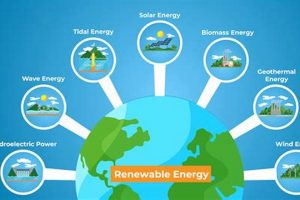
Energies that naturally replenish on a human timescale are considered sustainable. These resources, unlike fossil fuels, are not finite and offer a continuous supply of power. Examples include solar radiation, wind currents, geothermal heat, and flowing water.
Utilizing these forms of power offers significant environmental benefits, reducing greenhouse gas emissions and mitigating climate change. Historically, harnessing the sun and wind has been practiced for centuries, but modern technologies have greatly enhanced efficiency and scalability. This reduces reliance on diminishing conventional energy sources.
The following sections will delve into specific types of these energy forms, exploring their operational mechanisms, advantages, and disadvantages, and their potential impact on the global energy landscape. Technologies and challenges related to implementation and storage will also be discussed.
Harnessing Sustainable Energies
Effective integration of naturally replenished energy supplies requires strategic planning and informed decision-making. The following tips offer guidance for maximizing their potential and addressing common challenges.
Tip 1: Conduct a Thorough Resource Assessment: Before investing in any sustainable energy system, a comprehensive assessment of local resources is essential. This includes evaluating solar irradiance levels, wind speeds, geothermal gradients, and water flow rates. Accurate data informs appropriate technology selection and system sizing.
Tip 2: Prioritize Energy Efficiency: Reducing overall energy consumption minimizes the need for new power generation capacity. Implementing energy-efficient building designs, appliances, and industrial processes significantly decreases demand, making renewable energy targets more achievable.
Tip 3: Integrate Energy Storage Solutions: The intermittent nature of some sustainable energies, such as solar and wind, necessitates energy storage solutions. Battery storage, pumped hydro storage, and thermal energy storage can buffer fluctuations and ensure a consistent power supply.
Tip 4: Optimize Grid Integration: Seamless grid integration is crucial for large-scale deployment. Upgrading grid infrastructure to accommodate variable power inputs and implementing smart grid technologies enhances system stability and reliability.
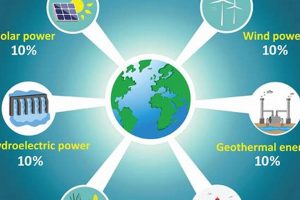
Tip 5: Embrace Diversification: Relying on a single naturally replenished power source increases vulnerability to weather patterns and resource variability. Diversifying the energy portfolio with a mix of solar, wind, geothermal, and other sources enhances resilience.
Tip 6: Policy Support and Incentives: Government policies play a critical role in accelerating the transition to a clean energy economy. Incentives such as tax credits, feed-in tariffs, and renewable energy mandates can drive investment and adoption.
Tip 7: Community Engagement and Education: Public acceptance and support are vital for successful implementation. Engaging local communities in the planning process and educating the public about the benefits of naturally replenished power promotes understanding and reduces opposition.
By carefully considering these factors, stakeholders can effectively harness sustainable energies, contributing to a cleaner, more sustainable energy future.
The following sections will delve into the economic and policy landscapes that influence the widespread adoption of sustainable energies.
1. Sustainability

The concept of sustainability is inextricably linked to the effective utilization of renewable sources. Energy sources that deplete natural resources, contributing to environmental degradation, fundamentally undermine the principles of sustainability. Renewable sources, by definition, replenish themselves naturally over a human timescale, offering a viable pathway to long-term energy security without compromising the environment or future generations. The cause-and-effect relationship is clear: reliance on finite resources causes depletion and environmental harm, while adoption of energies that are naturally replenished fosters environmental stewardship and resource preservation. A vital component of renewable source viability is its inherent sustainability, as these energies must continue to provide energy without damaging environment. For example, well-managed forestry practices ensures woody biomass electricity remain replenishable, while careless timber harvest can impact forest health.
The practical significance of understanding this connection lies in the need for informed decision-making regarding energy policy and investment. Governments and corporations must prioritize the development and deployment of renewable energy technologies to achieve genuine sustainability. This includes investments in infrastructure, research and development, and supportive regulatory frameworks. The implementation of solar energy farms, wind turbine arrays, and geothermal power plants demonstrate practical applications of this understanding, significantly reducing reliance on fossil fuels and mitigating their associated environmental impacts. For example, the construction of a large-scale solar power facility in a region previously reliant on coal reduces carbon emissions, improves air quality, and creates local jobs, contributing to both environmental and economic sustainability.
In summary, the connection between sustainability and the use of naturally replenished energy is crucial for long-term environmental health and energy security. Prioritizing renewable sources is a fundamental step towards building a sustainable future. Challenges remain, including intermittency issues and the need for grid modernization, but these can be addressed through technological advancements and strategic policy interventions. Ultimately, a commitment to sustainability necessitates a transition away from depleting resources and towards a future powered by naturally replenished energies.
2. Resource Replenishment

Resource replenishment is the defining characteristic that differentiates naturally replenished energy from finite energy sources. The continuous availability of these resources forms the bedrock of their sustainability and long-term viability in meeting global energy demands.
- Solar Energy Replenishment
The suns energy is perpetually replenished through nuclear fusion within its core. This constant flow of solar radiation provides a virtually inexhaustible source of power. Solar panels capture this energy, converting it into electricity, and ensuring the continual availability of power without depleting a finite reserve. Fluctuations occur due to daily cycles and weather patterns, but the underlying energy source remains consistently renewed.
- Wind Energy Renewal
Wind patterns are driven by differential heating of the Earths surface by solar radiation. These atmospheric circulations are continuously regenerated, ensuring a consistent supply of wind energy. Wind turbines harness this kinetic energy, converting it into electricity. While wind speeds vary, the fundamental process that generates wind remains a constantly replenishing resource.
- Hydropower Cycle
The water cycle, powered by solar energy, continuously replenishes freshwater resources. Evaporation, precipitation, and runoff maintain the flow of rivers and streams, which can be harnessed for hydropower generation. Dams and turbines convert the potential energy of flowing water into electricity. The cyclical nature of the water cycle ensures the ongoing availability of this energy source, though factors like drought can impact its availability.
- Geothermal Regeneration
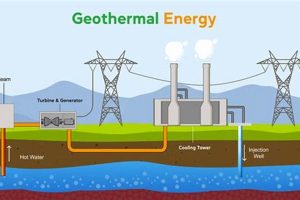
Geothermal energy derives from the Earths internal heat, which is continuously replenished by radioactive decay within the Earth’s core. This heat source provides a constant flow of thermal energy that can be harnessed for electricity generation and direct heating applications. Geothermal power plants tap into underground reservoirs of hot water or steam, extracting the heat to drive turbines. The ongoing regeneration of Earth’s internal heat ensures a steady and reliable source of energy.
In essence, the concept of resource replenishment is fundamental to understanding the utility and long-term potential of naturally replenished energy. These resources are not depleted by use but are instead continuously regenerated by natural processes, making them an environmentally sound and sustainable alternative to fossil fuels.
3. Environmental Impact
The adoption of naturally replenished energy resources carries profound implications for mitigating adverse environmental effects traditionally associated with conventional energy production. The shift towards these sources represents a strategic move in minimizing ecological damage and fostering sustainable practices.
- Reduced Greenhouse Gas Emissions
Conventional fossil fuels are a primary contributor to atmospheric greenhouse gas concentrations, driving climate change. Renewable energies, such as solar, wind, and hydropower, produce negligible or zero greenhouse gas emissions during operation. This directly mitigates the impacts of global warming, reducing the risk of extreme weather events, sea-level rise, and ecosystem disruption.
- Diminished Air and Water Pollution
Combustion of fossil fuels releases particulate matter, nitrogen oxides, sulfur dioxide, and other pollutants into the atmosphere, contributing to respiratory illnesses, acid rain, and smog. Furthermore, extraction and processing of fossil fuels can contaminate water sources. Renewable energies significantly curtail these forms of pollution, improving air and water quality, and protecting public health.
- Land Use Considerations
While renewable energy infrastructure requires land for deployment, the overall impact is often less disruptive than that of fossil fuel extraction and transportation. Solar farms, wind turbine arrays, and hydroelectric dams can co-exist with agricultural activities or be sited on previously disturbed lands. Careful planning and mitigation measures are crucial to minimizing habitat fragmentation and ecological disruption.
- Resource Conservation
Conventional energy production relies on finite resources that are extracted from the Earth, leading to depletion and environmental degradation. Naturally replenished energies utilize resources that are constantly regenerated, minimizing the strain on natural ecosystems and promoting resource conservation. This contributes to long-term sustainability and reduces the risk of resource scarcity.
The environmental advantages of renewable resources are multifaceted and far-reaching. By transitioning to cleaner energy sources, societies can mitigate climate change, protect public health, conserve resources, and promote ecological sustainability. This transition necessitates strategic investments, policy support, and technological innovation to fully realize the environmental benefits of naturally replenished energy.
4. Energy Security
Energy security, defined as uninterrupted availability of energy at an affordable price, is significantly enhanced through the utilization of naturally replenished energy. Reliance on fossil fuels often entails dependence on specific geographic regions, making nations vulnerable to supply disruptions due to geopolitical instability, infrastructure failures, or cartel actions. The diversification of energy sources, inherent in the adoption of renewable technologies, mitigates these risks, bolstering national energy independence. For example, a nation heavily reliant on imported oil can enhance its energy security by investing in domestic solar, wind, or geothermal power generation, reducing its susceptibility to global oil market fluctuations.
The distributed nature of many renewable energy resources further enhances energy security. Unlike centralized fossil fuel power plants, renewable energy installations can be dispersed across a wide geographic area, minimizing the impact of localized disruptions. Solar panels on rooftops, wind turbines in rural areas, and small-scale hydropower plants can all contribute to a more resilient and decentralized energy grid. This decentralization makes it more difficult for single points of failure to cripple the entire energy system. Germany’s Energiewende (energy transition) exemplifies this approach, with a significant emphasis on decentralized renewable energy production to enhance energy security and reduce reliance on imported fossil fuels.
In summary, the link between energy security and renewable energy sources is strong. By diversifying energy sources, reducing dependence on volatile global markets, and decentralizing power generation, nations can significantly enhance their energy security. This contributes not only to national economic stability but also to geopolitical independence. The transition to a renewable-based energy system requires sustained investment and policy support, but the benefits in terms of energy security and long-term stability are substantial. Addressing intermittency and grid integration challenges remains crucial for fully realizing the potential of naturally replenished energy in achieving energy security goals.
5. Technological Advancements

Technological advancements are critical in unlocking the full potential of naturally replenished energy. Innovation across various fields is enhancing the efficiency, reliability, and affordability of these resources, making them increasingly competitive with traditional energy sources.
- Improved Solar Panel Efficiency
Advancements in photovoltaic materials and panel designs are steadily increasing the efficiency of solar energy conversion. Higher efficiency panels generate more electricity from the same surface area, reducing land requirements and overall system costs. Examples include the development of perovskite solar cells and multi-junction solar cells. These innovations enhance the economic viability of solar energy and expand its deployment in diverse environments.
- Enhanced Wind Turbine Design and Control
Technological improvements in wind turbine design, including larger rotor diameters, taller towers, and advanced aerodynamic profiles, are maximizing energy capture from wind currents. Smart control systems optimize turbine performance based on real-time wind conditions, enhancing power output and grid stability. Offshore wind turbine technology is also progressing rapidly, enabling access to stronger and more consistent wind resources. These innovations are crucial for increasing the capacity factor and cost-effectiveness of wind energy.
- Advanced Energy Storage Solutions
Energy storage technologies, such as lithium-ion batteries, flow batteries, and pumped hydro storage, are crucial for addressing the intermittency challenges associated with naturally replenished energy. These technologies store excess energy generated during periods of high production and release it when demand exceeds supply, ensuring a reliable and consistent power supply. Furthermore, smart grid technologies enable better integration of energy storage into the electricity grid, enhancing overall system stability and flexibility.
- Smart Grid Technologies
Smart grids integrate advanced communication and control systems into the electricity grid, enabling real-time monitoring, optimization, and management of energy flows. These technologies improve grid stability, enhance energy efficiency, and facilitate the integration of distributed renewable energy resources. Smart meters, advanced sensors, and automated control systems enable utilities to respond rapidly to changing grid conditions and optimize power distribution. This is critical for maximizing the efficiency and reliability of renewable energy systems.
In summary, technological advancements are fundamental to the widespread adoption of naturally replenished energy. Continuous innovation across various fields is driving down costs, increasing efficiency, and improving reliability, making these resources increasingly competitive with fossil fuels. Continued investment in research and development is essential for unlocking the full potential of naturally replenished energy and building a sustainable energy future.
6. Economic Viability

The economic viability of naturally replenished energy sources has progressed significantly, transforming them from niche technologies to increasingly cost-competitive alternatives to fossil fuels. This shift is driven by declining technology costs, supportive government policies, and growing awareness of the long-term economic benefits associated with renewable energy.
The levelized cost of energy (LCOE), which represents the average cost of generating electricity over the lifetime of a power plant, has decreased dramatically for solar and wind energy. This decline is attributable to technological advancements, economies of scale, and improved manufacturing processes. Solar and wind power are now economically competitive with, or even cheaper than, coal and natural gas in many regions of the world. The expansion of renewable energy projects is also creating jobs in manufacturing, installation, and maintenance, contributing to economic growth. Countries such as Germany, Denmark, and China have witnessed substantial economic benefits from their investments in renewable energy industries. Moreover, the reduced reliance on imported fossil fuels enhances energy security and reduces exposure to volatile global energy markets, creating long-term economic stability.
Despite these advancements, challenges remain. Intermittency issues necessitate investment in energy storage solutions and grid modernization, adding to the overall system costs. Policy frameworks that provide long-term certainty and stable incentives are crucial for attracting private investment and sustaining the growth of the renewable energy sector. Nevertheless, the trend towards greater economic viability is clear. As technology continues to improve and economies of scale are further realized, naturally replenished energies will become even more competitive, driving a global transition towards a more sustainable and economically sound energy future.
Frequently Asked Questions
The following addresses commonly asked questions regarding energies that are naturally replenished. These responses offer concise and informative clarifications to promote a more profound understanding of renewable energy systems.
Question 1: What constitutes a “renewable” energy source?
An energy source is considered “renewable” if it is naturally replenished on a human timescale. These resources are not finite and offer a continuous supply of power, contrasting with depletable fossil fuels and nuclear materials.
Question 2: Are renewable energy resources entirely free of environmental impact?
While renewable energy sources generally have a lower environmental impact than fossil fuels, they are not entirely without consequence. Manufacturing processes, land use, and potential effects on wildlife must be considered and carefully managed.
Question 3: Why is energy storage essential for effective renewable energy utilization?
Intermittency is a characteristic of certain renewable energy resources, such as solar and wind. Energy storage technologies allow for the capture of excess power during periods of high production, ensuring a continuous supply even when the renewable source is not actively generating electricity.
Question 4: How do government policies influence the adoption of renewable energy?
Government policies play a pivotal role in encouraging the adoption of renewable energy. Incentives such as tax credits, feed-in tariffs, and renewable energy mandates create economic incentives for businesses and individuals to invest in these technologies.
Question 5: Can renewable energy sources reliably meet global energy demands?
While challenges exist, renewable energy sources have the potential to meet a significant portion of global energy demands. Continued technological advancements, strategic infrastructure investments, and supportive policies are essential for realizing this potential.
Question 6: What are some of the economic benefits associated with transitioning to renewable energy?
The economic benefits of transitioning to renewable energy include job creation in manufacturing and installation, reduced reliance on imported fossil fuels, and increased energy independence. In addition, decreasing the levelized cost of electricity makes these sources economically competitive with traditional sources.
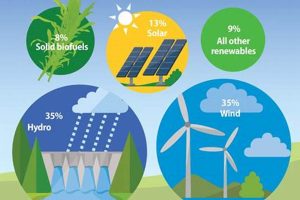
The fundamental aspect is the enduring nature of renewable sources, which allows for continued power generation without detrimental effects on the Earth. A diversified approach, that encompasses solar, wind, geothermal and hydro, offers the most reliable and resilient pathway to a clean energy future.
The following article sections will address the future outlook for renewable energy adoption, technological forecasts, and policy recommendations.
What are Renewable Sources
This exploration has clarified that renewable sources are defined by their ability to naturally replenish within a human timescale, presenting a viable and sustainable alternative to finite fossil fuels. Key advantages include reduced greenhouse gas emissions, diminished air and water pollution, enhanced energy security, and the stimulation of economic growth through technological innovation and job creation. While challenges relating to intermittency and grid integration persist, continuous advancements in energy storage and smart grid technologies are addressing these obstacles.
The transition towards widespread adoption of naturally replenished energy demands concerted efforts from governments, industries, and individuals. Policy frameworks must incentivize investment, technological innovation must continue apace, and public awareness must increase. Failure to prioritize these sources will perpetuate reliance on environmentally damaging and economically unsustainable energy practices, jeopardizing long-term global well-being. The future hinges on a decisive commitment to harnessing the power of what are renewable sources.