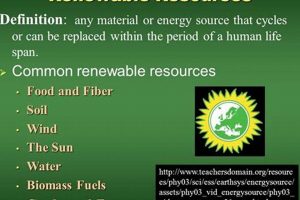
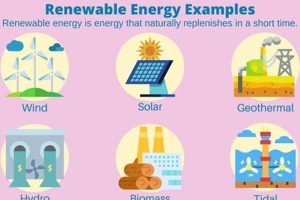
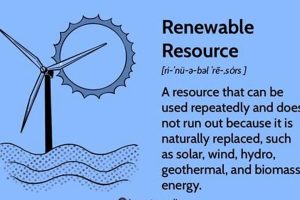
A comprehensive understanding of energy sources that are naturally replenished on a human timescale is vital for sustainable energy practices. These resources are characterized by their ability to be renewed through ongoing natural processes, contrasting with finite reserves that deplete with extraction. Examples encompass solar radiation, wind power, geothermal heat, hydropower, and biomass.
The significance of relying upon these self-recharging energy streams lies in their potential to reduce reliance on fossil fuels, mitigating greenhouse gas emissions and contributing to climate change mitigation efforts. Furthermore, the implementation of these resources can enhance energy security, diversify energy portfolios, and foster economic growth through the creation of new industries and job opportunities. Historically, the development and utilization of these energy sources has been driven by concerns over resource scarcity, environmental degradation, and the need for sustainable development.
Subsequent sections will delve into the specific characteristics, technologies, applications, and challenges associated with harnessing these inexhaustible sources of power. Further exploration will also address the economic and policy frameworks crucial for accelerating their widespread adoption and integration into the global energy system.
Guidance on Understanding Renewable Energy Resources
The following points provide clarity on the core principles related to the concept of naturally replenished power sources and their implications.
Tip 1: Emphasize Replenishment Rates. The defining characteristic is the rate at which a source regenerates. Sources like solar and wind are continuously available, whereas biomass has a slower renewal cycle, influencing its sustainability.
Tip 2: Distinguish from Alternative Energy. The phrase should not be used interchangeably with “alternative energy.” The latter encompasses all non-traditional energy sources, some of which, like nuclear, are not renewable.
Tip 3: Understand Resource-Specific Definitions. Wind energy, for instance, is characterized by air flow patterns, while geothermal energy is derived from the Earth’s internal heat. Each type has its own defining parameters.
Tip 4: Acknowledge Geographic Variability. The availability and effectiveness of these energy sources varies depending on location. Solar energy potential is higher in regions with consistent sunlight, while geothermal potential is concentrated in areas with geothermal activity.
Tip 5: Consider Technological Limitations. The viability of harnessing these resources is dependent on the technological infrastructure available. Advancements in solar panel efficiency, wind turbine design, and energy storage solutions are essential.
Tip 6: Evaluate Environmental Impact. While generally considered cleaner, the development and operation of these facilities can have environmental consequences. Hydropower dams can alter river ecosystems, and large-scale solar farms require land use considerations.
Tip 7: Analyze Economic Feasibility. The economic competitiveness of these resources depends on factors such as installation costs, government incentives, and energy market prices. The cost of solar and wind power has decreased significantly in recent years, making them more attractive options.
The application of these points can facilitate a comprehensive evaluation of energy options and inform strategies for a transition towards sustainable energy systems.
The subsequent sections of this analysis will examine the practical applications and challenges of incorporating sustainable and replenished power sources into the global energy infrastructure.
1. Replenishment Rate

The replenishment rate stands as a cornerstone in the context of sources that are naturally renewed, serving as a primary differentiator between them and finite energy reserves. This rate directly dictates a resource’s classification as sustainable and influences its long-term availability for energy generation.
- Defining Resource Sustainability
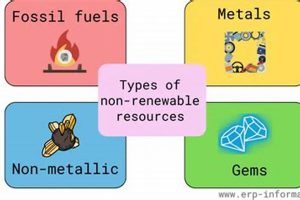
The replenishment rate inherently determines a resource’s classification as renewable. If a resource regenerates within a timeframe relevant to human activity, it qualifies as sustainable. Solar energy, for example, possesses an effectively infinite replenishment rate, ensuring its continuous availability. In contrast, fossil fuels possess an extremely slow natural regeneration process, rendering them unsustainable within a human lifespan.
- Influence on Energy Security
Resources with high replenishment rates contribute significantly to long-term energy security. A consistent and dependable supply of energy reduces reliance on geographically concentrated and politically sensitive fossil fuel reserves. Geothermal energy, while geographically restricted, presents a relatively consistent power supply, enhancing regional energy independence.
- Technological and Infrastructure Considerations
The replenishment rate influences the type of technology employed for energy extraction and conversion. Solar energy harvesting necessitates photovoltaic panels or concentrated solar power systems, designed to capture continuously available sunlight. Hydropower relies on the consistent replenishment of water sources through precipitation, necessitating dam infrastructure and water management systems.
- Environmental Impact Mitigation
The utilization of resources with rapid replenishment rates generally entails lower environmental impact compared to fossil fuels. Reduced greenhouse gas emissions, minimized land degradation, and decreased water consumption contribute to a more sustainable energy ecosystem. However, it is essential to consider the potential environmental consequences of infrastructure development associated with these resources, such as habitat disruption from wind turbine farms or altered river ecosystems due to hydroelectric dams.
The interplay between replenishment rate and the capacity for sustainable and continuous power generation underscores its pivotal role. Understanding this relationship is critical for effective energy planning, policy development, and the transition toward a low-carbon economy. The selection of appropriate energy sources, informed by replenishment rate considerations, will determine the long-term sustainability and resilience of energy systems.
2. Natural processes

The formation and continuous availability of renewable energy sources are intrinsically linked to natural processes. These processes are the engine that drives the replenishment of resources deemed renewable, defining their inherent characteristic of sustainability. Absent these processes, the very concept of inexhaustible energy sources would be rendered moot.
Solar energy, for instance, hinges on nuclear fusion occurring within the sun, a continuous natural process. Wind energy is driven by atmospheric pressure gradients created by differential solar heating and the Earth’s rotation. Hydropower relies on the continuous water cycle evaporation, condensation, and precipitation to replenish reservoirs. Geothermal energy is a result of the Earth’s internal heat, a consequence of radioactive decay and residual heat from planetary formation. Biomass derives its energy from photosynthesis, a process whereby plants convert solar energy into chemical energy. Each example illustrates the vital role of ongoing, self-sustaining natural mechanisms.
Therefore, comprehending the underlying natural processes is not merely academic but essential for effective management and utilization of such sustainable sources. Failure to account for changes in natural processes, such as altered precipitation patterns due to climate change impacting hydropower, or disruptions to photosynthetic activity due to deforestation affecting biomass production, can undermine the reliability and sustainability of the relevant energy source. In conclusion, any comprehensive discussion or strategic planning relating to this power, must acknowledge and integrate an understanding of the essential natural processes that underpin it.
3. Resource sustainability

The concept of resource sustainability is inextricably linked to the established classification of constantly replenished power sources. This sustainability serves as a critical component, denoting the ability of an energy source to meet present needs without compromising the ability of future generations to meet their own. Sources classified as naturally self-replenished inherently possess the characteristic of sustainability, distinguishing them from finite resources that deplete over time.
Consider, for example, solar energy. The sun’s energy is a constantly available and virtually inexhaustible resource. Its continued utilization does not diminish the resource itself, exemplifying sustainability. In contrast, the extraction and combustion of fossil fuels result in a reduction of the available reserve and the generation of pollutants, thus failing to meet the criteria of resource sustainability. Similar logic applies to wind, geothermal, and sustainably managed biomass resources. Sustainable management practices of these resources, such as responsible forestry to ensure biomass replenishment, further strengthen the connection between the source and the concept of long-term availability.
Therefore, understanding the principle of resource sustainability is crucial for evaluating the merits of different energy options. Transitioning towards a greater reliance on constantly available power options necessitates a comprehensive understanding of the inherent connection between the definition of these sources and their capacity to ensure the long-term availability of energy resources. While initial investment costs or technological challenges may present hurdles, the commitment to resource sustainability, as embodied by resources that are naturally renewed, offers a pathway towards a more resilient and secure energy future.
4. Reduced depletion

The utilization of naturally replenished power sources directly correlates with reduced depletion of finite energy reserves. As reliance on sources characterized by their ability to regenerate on a human timescale increases, the demand for, and subsequent extraction of, exhaustible resources like fossil fuels decreases. This shift is fundamental to mitigating resource scarcity and promoting long-term energy security. For instance, the adoption of solar and wind power generation in various countries demonstrably lowers their dependence on imported oil and natural gas, thereby reducing the depletion rate of global fossil fuel reserves.
The significance of reduced depletion extends beyond the mere preservation of resources. It encompasses broader environmental and economic benefits. Reduced extraction translates to diminished environmental impact associated with mining, drilling, and transportation of fossil fuels. Furthermore, diversifying energy portfolios with renewable options cushions economies against price volatility linked to finite resources, fostering greater stability and predictability. The progressive implementation of these sources in the energy sector, coupled with advances in energy storage technologies, provides a tangible pathway towards diminishing the depletion of traditional energy sources.
In conclusion, the adoption of naturally replenished power directly leads to reduced depletion of finite energy reserves. This reduction is a vital component of sustainable energy strategies, offering environmental protection, economic stability, and long-term resource security. While challenges related to scalability and grid integration persist, the continued investment in and development of these sources remains essential for minimizing the depletion of exhaustible energy resources and achieving a more sustainable energy future.
5. Environmental benefits

The concept of environmental benefits is central to understanding and advocating for naturally replenished power sources. Their integration into energy systems is predicated on the premise of mitigating adverse environmental impacts associated with traditional, exhaustible energy sources.
- Reduced Greenhouse Gas Emissions
A primary environmental benefit is the significant reduction in greenhouse gas emissions, particularly carbon dioxide, methane, and nitrous oxide. These emissions are major contributors to climate change. These power sources, such as solar, wind, and geothermal, produce minimal to zero greenhouse gas emissions during operation, representing a stark contrast to fossil fuel combustion. The widespread adoption leads to a substantial decrease in the atmospheric concentration of greenhouse gases, mitigating the effects of global warming and climate change.
- Air Quality Improvement
The combustion of fossil fuels releases particulate matter, sulfur dioxide, nitrogen oxides, and other pollutants that degrade air quality, leading to respiratory illnesses and other health problems. Naturally replenished energy facilities do not produce these pollutants during electricity generation. Transitioning to these sources can significantly improve air quality, particularly in urban areas and regions heavily reliant on coal-fired power plants, resulting in decreased health risks and improved public health outcomes.
- Water Conservation
Conventional power plants, especially those utilizing coal and nuclear energy, require significant amounts of water for cooling purposes. This water consumption can strain water resources, particularly in arid and semi-arid regions. Many of these energy options, such as solar photovoltaic and wind power, require minimal water for operation. The shift towards these resources conserves water resources, alleviating water scarcity and reducing the environmental impact on aquatic ecosystems.
- Land Use Considerations
While the construction of infrastructure for the sources may require substantial land areas, careful planning and siting can minimize environmental impacts. For example, co-location of solar farms on brownfields or degraded lands can repurpose underutilized areas. Additionally, offshore wind farms minimize land use impact. The overall land footprint, considering the entire life cycle of energy production, including extraction, transportation, and waste disposal, is often smaller than that of fossil fuel-based energy systems.
The environmental benefits associated with natural replenishing power sources are multifaceted and far-reaching. These benefits extend beyond the immediate reduction of pollution to encompass broader ecological and public health improvements. Recognizing and quantifying these benefits are essential for informing energy policy decisions and promoting a sustainable energy future. These environmental advantages, in conjunction with economic and social considerations, underscore the importance of transitioning towards a greater reliance on consistently available power sources.
6. Economic viability

The economic viability of naturally replenishing power options is intrinsically linked to the precise characterization of such sources. The definition establishes the parameters under which these resources are considered sustainable and their potential for long-term energy generation. This, in turn, significantly influences their economic attractiveness and competitiveness within the broader energy market. For instance, the inherent sustainability of solar and wind power, as defined by their constant renewal, translates to reduced fuel costs and predictable long-term operational expenses. This predictability is a major factor in attracting investment and achieving economic competitiveness against fossil fuel-based power generation, which is subject to volatile fuel prices.
The economic viability is further affected by technological advancements and economies of scale. Increased efficiency in solar panel manufacturing and wind turbine design, coupled with large-scale deployment, has led to significant cost reductions over the past decade. These cost reductions have made these energy sources increasingly competitive, even without subsidies, in many regions. Germany’s Energiewende, despite facing challenges, demonstrates a long-term commitment to renewable energy, highlighting that despite the high initial investment, the long-term advantages concerning energy security and environmental impact are considered worthwhile. Therefore, these factors are essential considerations when assessing the “Economic viability” component of resources that are naturally regenerated.
In conclusion, the economic viability of these energy sources is directly influenced by their established properties. The environmental benefits and the predictable long-term operational costs are also essential in making the definition valid. Challenges like intermittency and high initial capital investment remain, but the continuous decline in technology costs and increasing environmental awareness are further driving the economic competitiveness. Therefore, understanding this interplay is paramount for fostering sustainable energy policies and guiding investment decisions toward a more secure and environmentally responsible energy future.
Frequently Asked Questions
This section addresses common inquiries and clarifies prevalent misunderstandings regarding energy sources characterized by their natural replenishment.
Question 1: What is the fundamental distinction between these sources and alternative energy sources?
This power is specifically characterized by natural replenishment on a human timescale. Alternative energy is a broader term encompassing non-traditional energy sources, including nuclear power, which is not inherently replenishable.
Question 2: Are they invariably environmentally benign?
While they generally exhibit lower environmental impact compared to fossil fuels, the construction and operation of related facilities can pose environmental challenges. Hydropower dams can alter aquatic ecosystems, and large-scale solar farms require significant land use considerations.
Question 3: What role does geographical location play in their effectiveness?
Geographic variability significantly impacts the availability and efficiency of these resources. Solar energy potential is greater in regions with high solar irradiance, whereas geothermal potential is concentrated in areas with geothermal activity.
Question 4: How does technological advancement influence their viability?
Technological advancement is crucial for enhancing the efficiency and reducing the cost of harnessing these resources. Improvements in solar panel technology, wind turbine design, and energy storage solutions are essential for their wider adoption.
Question 5: What is the relationship between replenishment rate and sustainability?
Replenishment rate is a defining factor in determining resource sustainability. A high replenishment rate ensures long-term availability and contributes to energy security.
Question 6: How do natural processes underpin their functionality?
Natural processes are the driving force behind their continuous availability. Solar energy relies on nuclear fusion in the sun, wind energy on atmospheric pressure gradients, and hydropower on the water cycle.
The understanding of these key aspects can facilitate more informed decision-making and promote the successful integration of these sources into the global energy mix.
The following sections will delve into the various types of these energies and their potential in creating a sustainable energy future.
Conclusion
The comprehensive assessment of the term has underscored its significance in the context of energy sustainability. The discussion has elucidated the characteristics, environmental implications, and economic considerations associated with resources categorized under this heading. It is clear that a firm grasp of the “renewable energy resources definition” is paramount in guiding responsible energy policy and investment decisions.
Continued research, technological innovation, and strategic policy implementation are crucial to fully realize the potential of this energy source. The sustained commitment to this, alongside international collaboration, will accelerate the global energy transition towards a more sustainable and secure future. Addressing these aspects offers an opportunity to mitigate environmental impact and foster long-term energy independence.
![Guide to What Energy Resources Are Renewable [+Future] | Renewable Energy Solutions for a Sustainable Future | Clean & Green Power](https://pplrenewableenergy.com/wp-content/uploads/2026/03/th-516-300x200.jpg "Guide to What Energy Resources Are Renewable [+Future] Renewable Energy Solutions for a Sustainable Future | Clean & Green Power")