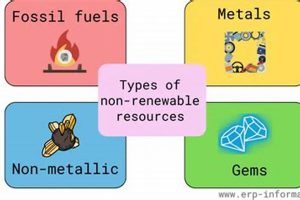
These naturally occurring materials exist in a finite amount and cannot be replenished at a rate comparable to their consumption. Fossil fuels, such as coal, petroleum, and natural gas, are prime examples. They are formed over millions of years from the remains of dead organisms subjected to intense heat and pressure within the Earth’s crust. Nuclear fuels, like uranium, also fall into this category due to their limited supply and the time required for their formation.
The exploitation of these materials has been fundamental to industrial development and technological advancement, providing energy for transportation, manufacturing, and electricity generation. They have fueled economic growth and improved living standards globally. Historically, their discovery and utilization have shaped geopolitical landscapes and driven significant technological innovation. However, the continued reliance on these sources presents considerable environmental and societal challenges.
The following sections will delve deeper into the specific types of these finite materials, their extraction processes, environmental impacts, and the ongoing search for alternative, sustainable energy sources to mitigate the challenges associated with their depletion and use.
Strategies for Responsible Management of Exhaustible Reserves
The following recommendations address the critical need for responsible stewardship and efficient utilization of these finite resources, recognizing the implications for future generations and planetary health.
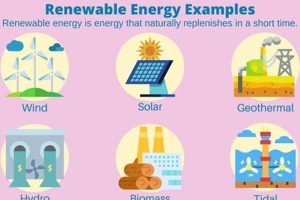
Tip 1: Diversify Energy Sources. Reducing dependence on a single type of energy source mitigates the risks associated with supply disruptions and price volatility. Invest in renewable energy technologies like solar, wind, and geothermal to create a more resilient and sustainable energy portfolio.
Tip 2: Improve Energy Efficiency. Implementing energy-efficient technologies across all sectors, including transportation, industry, and buildings, significantly reduces consumption and extends the lifespan of available reserves. This includes upgrading infrastructure, adopting energy-saving practices, and promoting efficient appliance usage.
Tip 3: Promote Resource Conservation. Implementing policies that encourage conservation and reduce waste is crucial. This includes promoting recycling programs, reducing consumption of resource-intensive products, and investing in technologies that minimize resource depletion.
Tip 4: Invest in Research and Development. Continuous investment in research and development of alternative technologies, carbon capture and storage, and advanced extraction methods is essential to address the long-term challenges associated with resource depletion and environmental impact.
Tip 5: Establish Strategic Reserves. Maintaining strategic reserves of critical energy resources provides a buffer against supply disruptions and price shocks. These reserves can be used to stabilize markets and ensure energy security during times of crisis.
Tip 6: Implement Carbon Pricing Mechanisms. Implementing carbon pricing mechanisms, such as carbon taxes or cap-and-trade systems, internalizes the environmental costs associated with their extraction and use. This incentivizes emissions reductions and promotes investment in cleaner technologies.
Tip 7: Enhance International Collaboration. Addressing the challenges requires international collaboration and cooperation on technology development, resource management, and emissions reduction. Sharing best practices and coordinating policies can lead to more effective solutions.
The adoption of these strategies will contribute to a more sustainable and equitable energy future, mitigating the environmental and economic risks associated with reliance on finite materials. This transition is paramount to ensuring long-term energy security and protecting the planet for future generations.
The subsequent sections will explore the economic and policy implications of these recommendations in greater detail.
1. Finite Supply

The defining characteristic of a resource deemed exhaustible rests on its inherent finite supply. This characteristic signifies that the quantity of the resource available on Earth is limited, and once consumed, cannot be replenished within a human timescale. This constraint has profound implications for resource management, economic stability, and environmental sustainability. The causative relationship is direct: the inherent geological processes responsible for the formation of these resources, such as the transformation of organic matter into fossil fuels, operate over millions of years, rendering their renewal rate infinitesimally small compared to the rate of human consumption. Thus, excessive use inevitably leads to depletion.
The importance of “finite supply” as a component lies in its influence over resource valuation and strategic planning. Scarcity, a direct consequence of finite supply, drives up the economic value of these materials. Governments and industries must, therefore, factor this scarcity into long-term energy and economic models. Real-life examples such as peak oil theory, which posits that global oil production will eventually reach a peak and then decline, illustrate the practical significance of understanding this limitation. Similarly, the depletion of high-grade mineral ores necessitates the extraction of lower-grade ores, increasing extraction costs and environmental impacts. The practical significance is evident in energy policy, resource allocation, and technological development, pushing towards sustainable alternatives and conservation strategies.
In summary, recognizing the finite supply of exhaustible resources is critical for informed decision-making. Ignoring this limitation can lead to resource depletion, economic instability, and environmental degradation. Addressing this challenge requires a multipronged approach, encompassing conservation efforts, technological innovation, and a transition to sustainable alternatives. The long-term well-being of society depends on the responsible management of these resources and a shift towards a circular economy that minimizes waste and maximizes resource utilization.
2. Fossil Fuel Dominance

The extensive use of fossil fuelscoal, petroleum, and natural gasconstitutes a dominant characteristic of current energy systems and is intrinsically linked to the concept of exhaustible resources. This dominance is a direct consequence of their historical abundance, relatively low extraction costs (historically speaking, compared to nascent renewable technologies), and high energy density. Their widespread application spans across various sectors, including power generation, transportation, industrial processes, and residential heating. The connection to exhaustible resources stems from the fact that these fuels are formed over millions of years from the decomposition of organic matter under specific geological conditions. The rate of formation is vastly slower than the rate of human consumption, thus classifying them as finite and non-renewable.The continued prevalence of fossil fuels as an energy source underscores the challenges in transitioning to renewable alternatives. The entrenched infrastructure, established supply chains, and economies of scale associated with fossil fuels present significant barriers to change. Real-world examples of this dominance are evident in global energy statistics, where fossil fuels consistently account for a substantial portion of the total energy supply. The reliance on oil in the transportation sector and coal in electricity generation are prime illustrations. This reliance has shaped international relations, driven economic growth, and influenced technological development.
However, the dominance of fossil fuels carries considerable environmental and societal consequences. The extraction and combustion of these fuels contribute significantly to greenhouse gas emissions, driving climate change and its associated impacts, such as rising sea levels, extreme weather events, and ecosystem disruption. Air and water pollution, habitat destruction, and resource depletion are other negative externalities. The practical significance of understanding fossil fuel dominance lies in the necessity for developing effective strategies to mitigate these adverse effects. This includes promoting energy efficiency, investing in renewable energy technologies, implementing carbon capture and storage technologies, and transitioning to a circular economy. The economic and political implications of diminishing oil reserves further necessitate diversification of energy sources.
In summary, the dominance of fossil fuels as a primary energy source is inextricably linked to the challenges posed by reliance on exhaustible resources. While their historical abundance and energy density have fueled industrial development, their environmental and societal costs demand a shift towards sustainable alternatives. Recognizing the finite nature of these resources and implementing policies to reduce their dominance is crucial for ensuring long-term energy security, mitigating climate change, and fostering a more sustainable future. Overcoming inertia and transitioning to a balanced, renewable-energy-based system is paramount for responsible management of the planet’s finite resources.
3. Environmental Degradation

The extraction, processing, and combustion of exhaustible resources are intrinsically linked to environmental degradation, resulting in multifaceted impacts on ecosystems, climate, and human health. These activities frequently compromise environmental integrity on local, regional, and global scales. The following details highlight key areas where environmental degradation is accelerated by reliance on these materials.
- Air Pollution
The combustion of fossil fuels releases particulate matter, nitrogen oxides, sulfur dioxide, and other pollutants into the atmosphere. These pollutants contribute to smog, acid rain, and respiratory illnesses. Coal-fired power plants are a primary source of sulfur dioxide emissions, which contribute to acid rain that damages forests and aquatic ecosystems. Furthermore, the release of volatile organic compounds from oil and gas operations can lead to ground-level ozone formation, exacerbating respiratory problems. This constitutes a significant threat to air quality and human health globally.
- Water Contamination
Mining and drilling operations can contaminate surface and groundwater resources. Acid mine drainage, a result of exposing sulfide minerals to air and water during mining activities, can release heavy metals and acidic compounds into waterways. Fracking, a technique used to extract natural gas, poses risks of groundwater contamination through methane leakage and the potential for spills of fracking fluids. The consequences include harm to aquatic life, reduced water quality for human consumption, and long-term ecosystem damage.
- Habitat Destruction
The extraction of exhaustible resources often involves clearing forests, draining wetlands, and disrupting natural habitats. Mountaintop removal mining, for instance, obliterates entire ecosystems and alters landscapes permanently. Oil and gas exploration can fragment habitats, disrupting wildlife migration patterns and reducing biodiversity. The destruction of these habitats leads to a loss of ecosystem services, such as carbon sequestration and water purification, further exacerbating environmental problems.
- Greenhouse Gas Emissions
The combustion of fossil fuels is a major source of greenhouse gas emissions, including carbon dioxide, methane, and nitrous oxide. These gases trap heat in the atmosphere, contributing to global warming and climate change. The increased frequency and intensity of extreme weather events, rising sea levels, and melting glaciers are some of the consequences of this climate change. Mitigation efforts, such as transitioning to renewable energy sources and implementing carbon capture technologies, are essential to reduce greenhouse gas emissions and slow down the pace of climate change.
The interconnectedness of these environmental impacts demonstrates the far-reaching consequences of continued reliance on exhaustible resources. Moving towards a sustainable energy future necessitates a comprehensive approach that addresses pollution, protects habitats, and reduces greenhouse gas emissions. The transition to renewable energy sources, coupled with responsible resource management practices, is crucial for minimizing environmental degradation and ensuring a healthy planet for future generations.
4. Geopolitical Implications

The uneven global distribution of exhaustible energy materials, coupled with their fundamental importance to economic activity and national security, engenders significant geopolitical implications. Competition for access, control, and transport of these materials shapes international relations, influences alliances, and can contribute to regional instability.
- Resource Curse and Internal Conflict
Countries with abundant supplies of these materials may experience slower economic growth, increased corruption, and internal conflict. The revenue generated from resource extraction can be mismanaged, leading to inequality and social unrest. Examples include conflicts in resource-rich regions, where competing factions vie for control of revenue streams. The mismanagement of resources undermines governance, fuels corruption, and inhibits diversification of the economy.
- Energy Security and International Alliances
Nations dependent on imports for their energy needs often form strategic alliances to secure reliable supplies. These alliances can influence foreign policy decisions and create dependencies that impact diplomatic relations. The formation of energy partnerships and trade agreements reflects the importance of ensuring access to these critical resources. Shifts in global energy markets can lead to realignments of these partnerships.
- Strategic Chokepoints and Vulnerability
The transportation routes for these materials, such as the Strait of Hormuz and the Suez Canal, represent strategic chokepoints that are vulnerable to disruption. Control or blockage of these routes can significantly impact global energy markets and international trade. The security of these chokepoints is a major concern for importing nations, leading to increased military presence and diplomatic efforts to maintain stability.
- Resource Nationalism and Market Volatility
Governments of resource-rich nations may pursue policies of resource nationalism, seeking greater control over their natural resources and limiting foreign investment. These policies can lead to supply disruptions, price volatility, and strained relationships with consumer nations. The nationalization of energy companies and the imposition of export restrictions exemplify resource nationalism. Such actions influence global energy prices and create uncertainty for consumers.
These facets underscore the complex interplay between exhaustible materials and international relations. The pursuit of energy security, coupled with the potential for conflict and instability, highlights the importance of diversifying energy sources and promoting international cooperation. The transition to renewable energy, while offering a path towards greater sustainability, also has the potential to reshape geopolitical dynamics, reducing reliance on specific regions and fostering a more decentralized global energy landscape.
5. Depletion Consequences

The consumption of exhaustible resources at rates exceeding their natural regeneration results in depletion, a condition marked by decreasing availability and increasing difficulty in extraction. This depletion instigates a cascade of economic, environmental, and social repercussions. The finite nature of these resources dictates that continued reliance inevitably leads to scarcity, driving up prices and impacting industries dependent on them. For example, declining oil reserves necessitate deeper drilling and exploration in more remote areas, significantly increasing extraction costs. The importance of understanding depletion consequences lies in the need for proactive strategies to mitigate its impact and transition towards sustainable alternatives. Overlooking this factor results in economic instability and compromised resource security.
Further, depletion exacerbates environmental degradation. As easily accessible reserves are exhausted, extraction shifts to more environmentally sensitive areas, such as deep-sea drilling or tar sands mining. These operations carry greater risks of spills, habitat destruction, and greenhouse gas emissions. The depletion of freshwater aquifers, due to over-extraction for agriculture and industry, illustrates another facet of this environmental strain, leading to desertification and water scarcity. Practically, this signifies a need for technological innovation in resource extraction and processing, alongside a greater emphasis on resource efficiency and conservation. Policies that promote the circular economy, recycling, and reduced consumption patterns become crucial in minimizing demand and prolonging the availability of remaining reserves.
In conclusion, the depletion of exhaustible resources presents a multifaceted challenge that demands a comprehensive response. Ignoring the economic, environmental, and social consequences of depletion jeopardizes future resource availability and increases the vulnerability of societies dependent on these materials. Addressing this requires a shift in perspective, prioritizing resource conservation, technological innovation, and a transition to a diversified energy portfolio. Sustainable development strategies and international cooperation are essential to navigate the challenges posed by resource depletion and ensure a more secure and equitable future.
Frequently Asked Questions Regarding Exhaustible Materials
The following addresses common queries regarding materials that exist in limited quantities and are not easily replenished.
Question 1: What defines a resource as exhaustible?
A resource is classified as exhaustible when its rate of formation is significantly slower than its rate of consumption, effectively rendering it finite within a human timescale.
Question 2: What are the primary examples of materials considered exhaustible?
Fossil fuels (coal, petroleum, natural gas) and nuclear fuels (uranium) are prominent examples, owing to their geological formation processes that span millions of years.
Question 3: How does the use of these materials contribute to climate change?
The combustion of fossil fuels releases greenhouse gases, such as carbon dioxide, into the atmosphere, trapping heat and contributing to global warming.
Question 4: What are the geopolitical implications associated with these resources?
The uneven global distribution of these materials can lead to international competition, resource nationalism, and strategic alliances to secure access and control.
Question 5: What are the consequences of depleting these resources?
Depletion leads to increased extraction costs, environmental degradation, economic instability, and resource scarcity, impacting industries and societies reliant on these materials.
Question 6: What strategies can be employed for the responsible management of these resources?
Diversifying energy sources, improving energy efficiency, promoting resource conservation, investing in research and development, and establishing strategic reserves are essential strategies.
The effective management and conservation of these materials are crucial to mitigate environmental impacts, promote economic stability, and ensure energy security for future generations.
The subsequent discussion will explore the role of technological innovation in addressing the challenges associated with the use of these materials.
Conclusion
This exploration has illuminated the finite nature and multifaceted implications of non renewable resource utilization. Dependence on these exhaustible materials, while historically pivotal for societal advancement, presents significant economic, environmental, and geopolitical challenges. The depletion of these resources necessitates a fundamental shift in global energy strategies.
The path forward requires proactive measures, including investment in renewable energy technologies, promotion of resource conservation, and international cooperation. Failure to address the challenges posed by non renewable resource consumption will compromise long-term sustainability and jeopardize the well-being of future generations. The responsible management of these finite materials and a transition to sustainable alternatives are critical imperatives for a secure and equitable future.
![Guide to What Energy Resources Are Renewable [+Future] | Renewable Energy Solutions for a Sustainable Future | Clean & Green Power](https://pplrenewableenergy.com/wp-content/uploads/2026/03/th-516-300x200.jpg "Guide to What Energy Resources Are Renewable [+Future] Renewable Energy Solutions for a Sustainable Future | Clean & Green Power")