Coal is a combustible black or brownish-black sedimentary rock composed mostly of carbon and hydrocarbons. It is formed from accumulated plant matter that has been subjected to heat and pressure over millions of years. Wood, for instance, decomposes into peat, then lignite, then bituminous coal, and eventually anthracite as geological forces act upon it. This process, known as coalification, transforms organic material into a concentrated energy source.
This naturally occurring substance plays a historically significant role in energy production, having fueled industrial revolutions and providing a crucial source for electricity generation across the globe. Its accessibility and relatively low cost have contributed to its widespread use. However, the environmental consequences of its extraction and combustion are significant, including air and water pollution, greenhouse gas emissions, and habitat destruction.
The central question surrounding this fossil fuel pertains to its replenishment rate. Understanding the timeframe required for its formation is crucial to classifying it accurately within resource management frameworks. The ensuing discussion will explore the classification of this resource, evaluating the processes required for its creation against the criteria of renewability and sustainability.
Understanding Coal’s Resource Classification
The following tips provide guidance on classifying coal based on its formation and availability relative to human timescales.
Tip 1: Consider the Formation Timeframe: Coal formation requires millions of years under specific geological conditions. This prolonged process fundamentally distinguishes it from resources like solar or wind energy, which are continuously replenished.
Tip 2: Compare Replenishment Rate to Consumption Rate: The rate at which coal is consumed vastly exceeds the rate at which it forms. This imbalance is a primary factor in determining its classification.
Tip 3: Analyze the Definition of “Renewable”: A renewable resource is one that is naturally replenished on a human timescale. Coal’s extremely slow formation process does not meet this definition.
Tip 4: Evaluate Environmental Impact: The extraction and combustion of this resource contribute significantly to greenhouse gas emissions and environmental degradation. These negative impacts are relevant when assessing its long-term sustainability.
Tip 5: Understand the Role of Carbon Sequestration: While carbon sequestration technologies aim to mitigate emissions from coal combustion, they do not alter the fundamental classification of the substance itself.
Tip 6: Acknowledge Geological Constraints: The specific geological conditions required for coal formation are not universally present or consistently active. This limits the potential for future coal deposits to form at a rate comparable to consumption.
In summary, classifying this fuel source necessitates a clear understanding of its formation processes, consumption rates, and environmental impacts. Given the geological timescales involved, it is appropriately categorized as a non-renewable resource.
This understanding is crucial for informed energy policy decisions and the development of sustainable energy strategies.
1. Formation timescale
The formation timescale is a critical factor in determining whether coal qualifies as a renewable energy source. Coal’s genesis, a process known as coalification, requires the accumulation of plant matter in specific geological environments over millions of years. This process involves the transformation of organic material through stages of peat, lignite, bituminous coal, and finally, anthracite, each requiring increasing pressure and heat applied over immense geological periods. The sheer duration of this process establishes a fundamental distinction between coal and genuinely renewable resources like solar, wind, or hydropower, which are naturally replenished within a human lifetime. The immense temporal disparity highlights the inherent non-renewability of coal.
Consider the Appalachian coal fields in the United States, formed from vast swamp forests during the Carboniferous period, roughly 300 to 360 million years ago. This geological timeframe far exceeds any human-scale resource management strategy. Even if modern processes could accelerate coal formation (which they cannot at any practical scale), the rate of human consumption vastly outstrips any theoretical rate of replenishment. This disparity underscores the importance of understanding timescales when classifying energy resources. Moreover, the energy invested in extracting and processing coal, relative to its original formation, is a key economic and environmental consideration. The slow creation pace contrasts starkly with the immediate consumption.
In summary, the vast formation timescale of coal directly contradicts the definition of a renewable resource. This long timeframe necessitates that coal be treated as a finite and non-renewable resource. Recognizing this fact is essential for informed energy policy decisions, promoting investment in truly renewable energy technologies, and mitigating the environmental impacts associated with its extraction and combustion. Sustainable energy strategies must prioritize resources that are replenished on a human timescale to ensure long-term energy security and environmental stewardship.
2. Finite supply

The finite nature of coal reserves is a critical determinant in evaluating its classification as a renewable energy source. Unlike resources that regenerate on a human timescale, coal exists in a limited quantity, formed over geological epochs.
- Fixed Quantity
Coal deposits represent a fixed amount of stored energy, created through specific historical geological processes. The total quantity is finite and depletable. Once extracted and combusted, that specific quantity of coal is irretrievably consumed. This contrasts sharply with solar or wind energy, which are continuously available.
- Uneven Distribution
Coal reserves are not uniformly distributed across the globe. Some regions possess abundant deposits, while others have limited or no access to this resource. This uneven distribution can lead to geopolitical dependencies and resource scarcity in certain areas, further emphasizing its non-renewable characteristics.
- Depletion Concerns
Continued extraction and consumption of coal will eventually lead to the depletion of economically viable reserves. While new deposits may be discovered, their formation rates are negligible compared to the current rate of consumption. Projections of coal reserve depletion influence energy policy and investment decisions, favoring development of renewable alternatives.
- Economic Impacts of Scarcity
As readily accessible coal deposits are exhausted, the cost of extraction increases, impacting the economics of coal-fired power generation. More challenging extraction methods, such as deep mining or unconventional extraction, lead to higher prices. This economic pressure incentivizes the adoption of renewable energy technologies with lower long-term operational costs.
The inherent finite supply of coal directly refutes any classification as a renewable resource. This limitation necessitates a strategic shift towards sustainable energy solutions that do not rely on depletable resources. Acknowledgement of its finite nature is essential for fostering responsible energy consumption and promoting the transition to a diversified energy portfolio that prioritizes renewable resources.
3. Geological Constraints

Geological constraints are a pivotal factor in assessing the renewability of coal, dictating the conditions and timeframe required for its formation. The intricate geological processes involved fundamentally limit coal’s availability and replenishment, directly influencing its classification as a non-renewable resource.
- Specific Environmental Requirements
Coal formation necessitates particular environmental conditions, including the accumulation of substantial plant biomass in swamp-like environments, followed by burial and exposure to specific temperatures and pressures over millions of years. These precise conditions are not universally present across the Earth’s surface or through time, limiting the potential for widespread or rapid coal formation. Regions lacking these specific geological attributes cannot naturally produce coal reserves.
- Long Formation Time Scales
The conversion of plant matter into coal involves a gradual process spanning vast geological epochs. This transformation, encompassing stages from peat to lignite, bituminous coal, and anthracite, requires millions of years of sustained geological activity. The extremely prolonged timeframe involved renders coal formation non-renewable in the context of human energy needs and environmental considerations.
- Limited Geographical Distribution
Major coal deposits are concentrated in specific regions where the necessary geological and environmental conditions have historically converged. These areas, such as the Appalachian Basin, the Powder River Basin, and regions within China and Australia, represent finite zones of coal formation. The limited geographical distribution of these deposits contributes to the resource’s overall scarcity and further underscores its non-renewable nature.
- Irreversible Geological Processes
The geological processes that led to coal formation are not easily reversible or replicable on a human timescale. While technological advancements may allow for some degree of carbon capture and storage, these processes do not recreate coal or accelerate its natural formation. The irreversible nature of these processes reaffirms the designation of coal as a non-renewable resource, requiring careful management and strategic consideration within broader energy policies.
These geological constraints collectively affirm that coal is not a renewable energy source. The precise environmental requirements, extended formation time scales, limited geographical distribution, and irreversible geological processes prevent it from being replenished at a rate comparable to its consumption. Therefore, sustainable energy strategies must prioritize truly renewable resources to ensure long-term energy security and environmental sustainability.
4. Carbon emissions

Carbon emissions, a byproduct of coal combustion, are intrinsically linked to the classification of coal as a non-renewable energy source. The environmental impact of these emissions directly contradicts the principles of sustainability associated with renewable resources.
- Contribution to Greenhouse Gas Effect
Coal combustion releases substantial quantities of carbon dioxide (CO2), a primary greenhouse gas. Elevated CO2 concentrations in the atmosphere contribute to global warming and climate change. The magnitude of CO2 emissions from coal-fired power plants exacerbates the environmental impact, rendering it unsustainable from a climate perspective. This significant contribution to greenhouse gas emissions inherently disqualifies coal from being considered renewable.
- Impact on Air Quality
Besides CO2, coal combustion also emits pollutants such as sulfur dioxide (SO2), nitrogen oxides (NOx), and particulate matter (PM). These pollutants degrade air quality, leading to respiratory problems and other health issues. The release of these harmful substances further diminishes the environmental viability of coal as an energy source. Air pollution from coal undermines its potential to be regarded as a clean, sustainable, or renewable energy option.
- Carbon Sequestration Limitations
Carbon capture and storage (CCS) technologies are aimed at reducing CO2 emissions from coal-fired power plants. However, CCS is not yet widely deployed, and its effectiveness remains a subject of ongoing research. Even with successful implementation, CCS addresses only the CO2 emissions, not the other pollutants released during combustion. Furthermore, CCS is an energy-intensive process, potentially reducing the overall efficiency of coal power generation. These limitations further confirm that coal is not a renewable resource.
- Life Cycle Assessment
A comprehensive life cycle assessment of coal energy encompasses the environmental impacts from extraction to combustion. Mining operations, transportation, and processing all contribute to environmental degradation. When considering the entire life cycle, the negative impacts of coal far outweigh any potential benefits, solidifying its status as a non-renewable and environmentally burdensome energy source. The complete environmental footprint associated with coal energy reinforces its classification as a non-renewable resource.
In conclusion, the significant carbon emissions and associated environmental impacts resulting from coal combustion firmly establish it as a non-renewable energy source. The detrimental effects on climate and air quality, coupled with the limitations of carbon sequestration technologies and the broader life cycle assessment, collectively underscore the unsustainability of coal. A transition towards cleaner, renewable energy sources is essential for mitigating climate change and ensuring a sustainable energy future.
5. Environmental degradation

The extraction, processing, and combustion of coal are intrinsically linked to significant environmental degradation, which directly challenges the notion of it being a renewable source. Coal mining, whether surface or underground, leads to habitat destruction, soil erosion, and water pollution. Surface mining, in particular, involves the removal of vast tracts of land, permanently altering landscapes and disrupting ecosystems. Acid mine drainage, a common consequence of coal mining, contaminates waterways, harming aquatic life and rendering water unusable for human consumption or agriculture. The inherent environmental impacts associated with its acquisition preclude its classification as a renewable resource.
Combustion of coal releases various pollutants into the atmosphere, contributing to air pollution and climate change. Emissions include sulfur dioxide, nitrogen oxides, particulate matter, and carbon dioxide. These pollutants can cause respiratory problems, acid rain, and contribute to global warming. The release of carbon dioxide, a greenhouse gas, is particularly concerning due to its long-term impact on the Earth’s climate. These emissions have direct consequences to ecosystem health and human well-being. The cumulative effect of these processes establishes coal as a major contributor to environmental degradation, making its association with renewable sources untenable. The cost associated with mitigating these environmental effects further complicates its standing as a sustainable solution.
Environmental degradation is a critical factor in assessing the renewability of energy sources. Coal, due to its destructive extraction methods, polluting emissions, and contribution to climate change, fails to meet the criteria of environmental sustainability required for renewable resources. The environmental consequences necessitate a transition to cleaner, renewable energy alternatives to minimize further damage and protect ecological systems. Recognizing the extent of environmental harm associated with coal is essential for making informed energy policy decisions and promoting a sustainable future. Therefore, environmental integrity precludes coal as a renewable source.
6. Unsustainable extraction

Unsustainable extraction practices associated with coal mining are a central factor in evaluating whether it can be considered a renewable resource. The environmental damage and resource depletion inherent in these practices directly contradict the principles of renewability.
- Habitat Destruction and Biodiversity Loss
Coal extraction, particularly through mountaintop removal mining, obliterates entire ecosystems. Forests are cleared, streams are buried, and landscapes are permanently altered. This results in a significant loss of biodiversity, disrupting ecological balance. Such irreversible environmental damage is inconsistent with the concept of renewable resources, which should aim for minimal environmental impact.
- Water Contamination
Coal mining often leads to water contamination through acid mine drainage. When sulfide minerals in coal and surrounding rock are exposed to air and water, they produce sulfuric acid, which leaches into waterways. This acid mine drainage pollutes rivers and streams, harming aquatic life and rendering the water unsuitable for drinking or irrigation. The long-term contamination of water resources associated with coal extraction further diminishes its viability as a sustainable resource.
- Land Degradation and Soil Erosion
Coal mining activities disturb the soil structure, making it susceptible to erosion. Deforestation and the removal of topsoil during mining operations leave the land barren and prone to landslides. The degraded land is often difficult to restore to its original condition, reducing its productivity and ecological value. This long-term land degradation is incompatible with the idea of a renewable resource, which should preserve or enhance environmental quality.
- Depletion of a Finite Resource
Coal, as a fossil fuel, is a finite resource formed over millions of years. Unsustainable extraction practices deplete these finite reserves at a rate that far exceeds their natural replenishment. This rapid depletion undermines the long-term availability of coal, making it unsustainable as an energy source. The fact that coal is a finite resource being depleted through unsustainable extraction methods is a primary reason why it cannot be classified as renewable.
The cumulative effect of habitat destruction, water contamination, land degradation, and the depletion of a finite resource demonstrates that current extraction practices are fundamentally unsustainable. This unsustainability directly contradicts the principles of renewability, reinforcing the classification of coal as a non-renewable energy source. A transition to sustainable energy solutions requires a departure from these destructive extraction methods and a focus on resources that can be replenished naturally and with minimal environmental impact.
7. Non-renewable status

The non-renewable status of coal is intrinsically linked to the fundamental question of its renewability as an energy source. This status stems from the geological processes responsible for its formation, a process requiring millions of years of accumulated organic matter subjected to specific conditions of heat and pressure. Consequently, the rate at which coal is consumed far exceeds the rate at which it is naturally replenished, defining it as a finite resource. This inherent limitation directly contradicts the defining characteristic of renewable resources, which are replenished on a human timescale. Thus, the non-renewable status is not merely a descriptive attribute of coal; it is the definitive reason why coal does not qualify as a renewable source.
The implications of coal’s non-renewable status extend beyond simple classification. It necessitates strategic resource management to ensure energy security and mitigate environmental consequences. For instance, countries heavily reliant on coal for electricity generation face long-term challenges related to dwindling reserves and the associated economic and environmental costs. Recognizing and accepting this non-renewable status drives the need for diversified energy portfolios, investment in renewable energy technologies, and the development of sustainable consumption patterns. Policies aimed at reducing carbon emissions and promoting energy efficiency are also crucial responses to the environmental concerns associated with coal’s non-renewable nature. The shift to energy sources with negligible resource depletion rates represents a practical adaptation to coal’s inherent limitations.
In summary, the non-renewable status of coal is not just a characteristic but a defining aspect of its relationship to the query, “is coal a renewable source.” It signifies a fixed supply, depleted by extraction and combustion at a rate far exceeding natural replenishment, resulting in an inherently unsustainable resource when viewed through a lens of renewability. A clear understanding of this status is essential for guiding energy policies, promoting technological innovation, and fostering a transition toward truly renewable energy sources for long-term energy security and environmental sustainability. Acknowledging coal’s fixed nature is therefore crucial to any comprehensive energy strategy.
Frequently Asked Questions
The following section addresses common questions and misconceptions surrounding the classification of coal as a renewable energy resource. The answers provided are based on scientific consensus and geological evidence.
Question 1: Is coal a renewable resource?
No, coal is not a renewable resource. It is a fossil fuel formed over millions of years from accumulated plant matter subjected to heat and pressure. The rate of consumption vastly exceeds the rate of natural replenishment, rendering it non-renewable.
Question 2: Can carbon capture technology make coal a more sustainable energy source?
Carbon capture and storage (CCS) technologies aim to reduce carbon dioxide emissions from coal-fired power plants. However, CCS does not alter coal’s fundamental non-renewable status, nor does it address other environmental impacts associated with coal extraction and combustion.
Question 3: Are there different types of coal that are more renewable than others?
No, the various types of coal (e.g., lignite, bituminous, anthracite) represent different stages in the coalification process. None are renewable. All types share the characteristic of extremely slow formation rates, disqualifying them from being considered renewable.
Question 4: Does the abundance of coal reserves change its classification as a non-renewable resource?
The abundance of coal reserves does not change its classification. Even with significant quantities remaining, coal’s extraction rate far exceeds its natural formation rate. This imbalance confirms its status as a finite, non-renewable resource.
Question 5: What makes solar, wind, and hydropower renewable while coal is not?
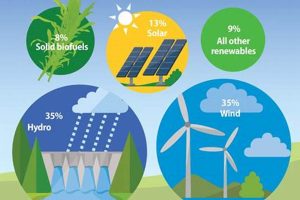
Solar, wind, and hydropower are considered renewable because they are continuously replenished by natural processes on a human timescale. Sunlight and wind are constantly available, and water cycles through evaporation and precipitation. Coal, conversely, requires millions of years to form, making its replenishment rate negligible compared to its consumption rate.
Question 6: If plant matter is constantly decaying, could it eventually become coal again, making it renewable in the distant future?
While plant matter continuously decays and could theoretically form new coal deposits over millions of years, the formation rate is insignificant compared to human energy demands. The energy required for industrial civilization necessitates a scale of resource availability that cannot be met by the extremely slow process of coal formation. For all practical purposes, it is a non-renewable resource.
Understanding coal’s non-renewable status is essential for informed energy policy decisions. The shift towards truly renewable resources is necessary for long-term energy security and environmental sustainability.
The next section explores alternative energy sources and their potential to replace coal in meeting global energy demands.
Is Coal a Renewable Source
This exploration has systematically demonstrated that coal does not meet the criteria of a renewable resource. Its formation timescale, finite supply, geological constraints, carbon emissions, environmental degradation, and unsustainable extraction practices collectively solidify its non-renewable status. The evidence presented leaves no ambiguity: coal is a finite resource being depleted at a rate far exceeding any natural replenishment.
The implications of this determination are significant. Global energy strategies must transition toward resources that can be sustainably managed for future generations. Continued reliance on coal presents unacceptable environmental and societal risks. The imperative now lies in accelerating the development and deployment of genuinely renewable energy technologies to secure a sustainable energy future.