Fossil fuels, formed from the remains of ancient organic matter over millions of years, are categorized as non-renewable. Coal, a primary example, originates from accumulated plant material subjected to immense pressure and heat deep within the Earth’s crust. This geological process transforms the organic matter into a carbon-rich solid used primarily for energy production.
The significance of coal lies in its historical role in powering industrial revolutions and its continuing contribution to global electricity generation. Its abundance and relatively low extraction costs, compared to some other energy sources, have made it a readily available fuel. However, the extraction and combustion of coal present significant environmental challenges, including greenhouse gas emissions and habitat disruption.
Considering the timescale required for its natural formation, and the current rate of consumption, it is critical to examine the implications of its finite supply and explore alternative, sustainable energy solutions. The following sections will delve into the specific aspects of this classification and discuss the broader context of resource management and environmental sustainability.
Understanding Coal Resource Classification
The following points highlight critical considerations regarding the categorization of coal resources and their implications.
Tip 1: Comprehend the Definition of Renewability: Assess resources based on their natural replenishment rate. A renewable resource regenerates within a human lifetime, while a non-renewable resource requires geological timescales.
Tip 2: Acknowledge the Formation Process Duration: Coal formation necessitates millions of years of accumulated organic matter undergoing intense pressure and heat. This extended timescale negates its classification as renewable.
Tip 3: Evaluate Consumption vs. Replenishment Rate: The current rate of coal consumption far exceeds any potential natural replenishment. This disparity confirms its finite nature and non-renewable status.
Tip 4: Consider Environmental Impacts of Extraction and Combustion: The extraction and burning of coal lead to significant environmental consequences, including greenhouse gas emissions, air and water pollution, and habitat destruction. These factors contribute to the urgency of transitioning to alternative energy sources.
Tip 5: Differentiate Between Resources and Reserves: “Resources” refer to the total estimated quantity of a substance, while “reserves” represent the portion that is economically and technically recoverable. Understanding this distinction is crucial for resource management.
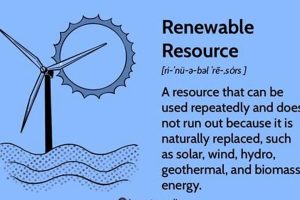
Tip 6: Investigate Alternative Energy Sources: Recognizing the non-renewable nature of coal underscores the need for investment in renewable energy technologies such as solar, wind, and geothermal power. This diversification reduces reliance on finite resources and mitigates environmental impacts.
Tip 7: Promote Energy Efficiency and Conservation: Reducing overall energy demand through improved efficiency measures and conservation practices lessens the pressure on fossil fuel resources, including coal, thereby extending their availability and minimizing environmental damage.
The crucial takeaway is that coal, due to its extended formation timescale and unsustainable consumption rate, is definitively classified as a non-renewable resource. This understanding necessitates a proactive shift towards sustainable energy solutions and responsible resource management.
The subsequent sections will explore the environmental and economic considerations associated with coal utilization and the transition to a more sustainable energy future.
1. Formation timescale
The duration required for coal formation is a primary factor in determining whether it can be classified as a renewable resource. This timescale involves geological processes that span millions of years, influencing its availability and sustainable utilization.
- Geological Time Requirement
Coal originates from the accumulation of plant matter in swamp-like environments. Over extended periods, this organic material is subjected to intense pressure and heat deep within the Earth’s crust. This geological transformation converts the biomass into peat, then lignite, bituminous coal, and ultimately anthracite, each representing a different stage of carbon concentration. The entire process can take hundreds of millions of years.
- Contrast with Consumption Rate
The rate at which coal is consumed for energy production is orders of magnitude faster than its natural formation rate. Current global energy demands necessitate the extraction and combustion of vast quantities of coal annually. This rapid depletion contrasts sharply with the geological timescale required for its creation, rendering it unsustainable for long-term use.
- Impact on Resource Classification
The definition of a renewable resource hinges on its ability to be replenished within a human lifetime or a reasonable timeframe for sustainable management. Given that coal formation necessitates geological epochs, it fails to meet this criterion. Its finite supply, coupled with the inability to regenerate within a practical timeframe, solidifies its classification as a non-renewable resource.
- Implications for Energy Policy
Recognizing the extensive formation timescale and the non-renewable nature of coal has significant implications for energy policy. It necessitates a transition towards alternative energy sources that are renewable, such as solar, wind, and geothermal power. Furthermore, it underscores the importance of energy conservation and improved efficiency measures to reduce reliance on finite fossil fuel resources.
The vast disparity between the formation timescale of coal and its consumption rate highlights its unsustainable nature. Understanding this fundamental aspect is essential for developing responsible energy policies and transitioning to a more sustainable energy future based on renewable resources.
2. Consumption rate

The rate at which coal is utilized globally directly impacts its categorization as a non-renewable resource. High consumption rates exacerbate the disparity between supply and demand, underlining the finite nature of coal reserves. Because the formation of coal requires millions of years, extracting and burning it at current rates far outstrips any possibility of natural replenishment. For example, the rapid industrialization of nations like China and India significantly increased global coal consumption in the 21st century, depleting reserves at an unprecedented pace. This consumption pattern fundamentally contradicts the definition of a renewable resource, which necessitates a replenishment rate comparable to or exceeding its usage. The practical significance lies in the understanding that continued reliance on coal at current levels will inevitably lead to resource exhaustion and environmental degradation.
The scale of coal consumption is often measured in billions of metric tons annually, driven by electricity generation, industrial processes such as steel production, and heating applications. The effect of this consumption is evident in declining coal reserves, increased extraction costs, and heightened environmental consequences such as greenhouse gas emissions. Countries heavily reliant on coal face the challenge of transitioning to alternative energy sources while maintaining economic stability. This transition necessitates substantial investment in renewable energy infrastructure, policy changes to incentivize sustainable practices, and technological advancements to improve energy efficiency. Furthermore, the consumption rate influences the lifespan of existing coal-fired power plants, requiring strategic planning for decommissioning and replacement with cleaner alternatives.
In summary, the consumption rate is a critical determinant of coal’s non-renewable status. The unsustainable pace of coal extraction and combustion, relative to its geological formation, necessitates a fundamental shift towards renewable energy sources and more sustainable consumption patterns. Addressing the challenges posed by high consumption rates requires concerted efforts in policy, technology, and investment to ensure a viable energy future. Recognizing the finite nature of coal and the environmental impacts of its use is essential for informed decision-making and effective resource management.
3. Geological process

The geological processes involved in coal formation are central to understanding its non-renewable classification. These processes, spanning vast timescales, dictate the limited availability and unsustainable extraction rates associated with coal resources.
- Organic Matter Accumulation and Burial
The initial stage involves the accumulation of plant matter in swampy environments. This organic material, primarily composed of lignin and cellulose, is subsequently buried under layers of sediment. The rate of accumulation is dependent on ecological conditions and preservation rates, often requiring extensive periods for significant deposits to form. These environmental factors constrain the scale and timing of initial resource deposition, which inherently limits the overall availability of the potential coal source. This facet is important to coal’s non-renewability, because the initial amount of raw materials relies on millions of years of plant life to start the geological process.
- Diagenesis and Coalification
As the organic matter is buried deeper, it undergoes diagenesis, a series of physical and chemical changes driven by increasing pressure and temperature. This process transforms the plant matter into peat, a precursor to coal. Further burial leads to coalification, where peat is progressively converted into lignite, bituminous coal, and ultimately anthracite. Each stage represents an increase in carbon content and energy density. The rate of these transformations is temperature-dependent and typically proceeds over geological timescales, rendering them non-renewable. Coalification is important as it transforms the initial organic matter into the high energy coal we use.
- Tectonic Activity and Resource Concentration
Tectonic forces play a crucial role in the concentration and preservation of coal deposits. Subsidence, faulting, and folding can create geological structures that trap and protect coal seams from erosion or oxidation. These processes are intermittent and spatially variable, resulting in uneven distribution of coal resources across the globe. The role of tectonics emphasizes the role of natural selection, as it has a lot to do with how and where we can get coal as a resource. This facet emphasizes the role of geological events in determining the accessibility and viability of coal reserves and influences the economic feasibility of extraction. Therefore, this facet is important to the process of coal formation itself.
- Time Scale and Replenishment
The overarching characteristic of these geological processes is the immense timescale involved. Coal formation from initial plant accumulation to the development of high-grade anthracite requires millions of years. This timescale is orders of magnitude greater than the rate at which coal is currently consumed for energy production. The disparity between formation and consumption makes coal a non-renewable resource, as the natural replenishment rate is negligible compared to its depletion rate. The long formation time compared to the rapid depletion is key to coal’s non-renewability.
These interconnected geological processes underscore the non-renewable nature of coal. The extended timescales, coupled with the finite nature of organic matter accumulation and tectonic activity, highlight the limitations of coal as a sustainable energy source. Understanding these geological constraints is essential for informing energy policy and promoting the transition to renewable alternatives.
4. Environmental impact

The environmental consequences associated with coal extraction and utilization are substantial factors in classifying it as a non-renewable resource. These impacts extend across multiple domains, affecting air and water quality, land use, and global climate patterns, thereby underscoring the unsustainable nature of its use.
- Air Pollution and Respiratory Health
The combustion of coal releases numerous air pollutants, including particulate matter, sulfur dioxide, nitrogen oxides, and mercury. These pollutants contribute to respiratory illnesses such as asthma and bronchitis, cardiovascular problems, and premature mortality. Acid rain, formed from sulfur dioxide and nitrogen oxides, damages ecosystems and infrastructure. The adverse health effects and environmental degradation associated with coal combustion highlight the unsustainable aspects of its energy production.
- Greenhouse Gas Emissions and Climate Change
Coal is a significant contributor to greenhouse gas emissions, particularly carbon dioxide, the primary driver of climate change. The extraction, processing, and combustion of coal release substantial quantities of carbon dioxide into the atmosphere, exacerbating global warming and contributing to rising sea levels, extreme weather events, and ecosystem disruptions. The climate change implications of coal use necessitate a transition to lower-carbon energy sources.
- Water Contamination and Ecosystem Damage
Coal mining activities can lead to water contamination through acid mine drainage, where sulfuric acid and dissolved heavy metals leach into waterways. This contamination harms aquatic life, degrades water quality for human use, and disrupts ecosystem function. Coal ash, a byproduct of combustion, can also contaminate water sources if improperly stored. The environmental damage to water resources underscores the non-sustainable nature of coal extraction and utilization.
- Land Degradation and Habitat Loss
Surface mining operations, such as mountaintop removal, result in significant land degradation and habitat loss. These practices alter landscapes, disrupt ecosystems, and threaten biodiversity. Reforestation and reclamation efforts can mitigate some of the impacts, but the original ecological integrity is often difficult to restore. The land-use implications of coal mining contribute to its classification as a non-renewable and environmentally damaging resource.
The comprehensive environmental impacts associated with coal extraction and combustion reinforce its unsustainable nature. The air and water pollution, greenhouse gas emissions, land degradation, and habitat loss collectively necessitate a transition to cleaner, renewable energy alternatives to mitigate the adverse consequences of coal dependence.
5. Energy alternatives

The recognition that coal is a non-renewable resource necessitates the exploration and adoption of alternative energy sources. The development and implementation of these alternatives are crucial for mitigating environmental impacts, ensuring long-term energy security, and transitioning to a sustainable energy future.
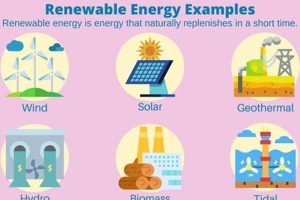
- Solar Power
Solar energy, harnessed through photovoltaic cells or concentrated solar power systems, converts sunlight directly into electricity. Its potential is vast, as the sun provides an inexhaustible supply of energy. Widespread adoption of solar technologies can significantly reduce reliance on coal-fired power plants, thereby decreasing greenhouse gas emissions and air pollution. For example, large-scale solar farms in desert regions have the capacity to generate substantial amounts of electricity, displacing coal-based generation. Solar power’s intermittency requires energy storage solutions and grid modernization to ensure reliability, but its long-term environmental benefits outweigh these challenges.
- Wind Power
Wind energy utilizes wind turbines to convert kinetic energy into electricity. Wind farms, located in areas with consistent wind patterns, can generate substantial amounts of power. Onshore and offshore wind farms are increasingly common, contributing to a diversified energy portfolio. The environmental impact of wind power is minimal compared to coal, with no greenhouse gas emissions during operation. Challenges include visual impact, noise pollution, and potential effects on bird populations. However, technological advancements and careful site selection can mitigate these concerns.
- Hydropower
Hydropower harnesses the energy of moving water to generate electricity. Dams and reservoirs create a head of water that drives turbines, producing a reliable source of power. While hydropower is a renewable energy source, large-scale dams can have significant environmental impacts, including altered river ecosystems, habitat fragmentation, and displacement of communities. Small-scale hydropower projects can mitigate some of these concerns by minimizing ecological disruption. Hydropower’s contribution to renewable energy portfolios remains significant, but its environmental consequences must be carefully managed.
- Geothermal Energy
Geothermal energy taps into the Earth’s internal heat to generate electricity or provide direct heating. Geothermal power plants extract steam or hot water from underground reservoirs to drive turbines. Geothermal energy is a reliable and consistent source of power, available 24/7 regardless of weather conditions. Its environmental impact is relatively low, with minimal greenhouse gas emissions and a small land footprint. However, geothermal resources are geographically limited, requiring specific geological conditions for viable development. The high upfront costs of geothermal projects can also be a barrier to widespread adoption, but its long-term benefits justify investment in suitable locations.
The shift towards these energy alternatives is essential for addressing the limitations and environmental consequences associated with coal. The continued development and deployment of solar, wind, hydropower, and geothermal technologies offer viable pathways to a more sustainable energy future, reducing reliance on finite resources and mitigating the impacts of climate change. A diversified energy portfolio, combining various renewable sources with energy storage solutions and smart grid technologies, is critical for ensuring a reliable and environmentally responsible energy supply.
Frequently Asked Questions
The following addresses common inquiries regarding the classification of coal and its implications for energy sustainability.
Question 1: What defines a renewable resource, and how does coal fail to meet this definition?
A renewable resource replenishes within a human lifespan or a comparable timeframe. Coal, formed over millions of years through geological processes, lacks this capacity. Its extraction far exceeds its natural formation rate, rendering it non-renewable.
Question 2: How does the formation timescale influence the assessment of coal as a non-renewable resource?
The formation of coal necessitates millions of years of organic matter accumulation and transformation under intense pressure and heat. This extended timescale is incompatible with the current rate of consumption, underscoring its finite nature.
Question 3: What are the primary environmental impacts associated with coal extraction and combustion?
Coal extraction leads to habitat destruction, water contamination via acid mine drainage, and land degradation. Combustion releases air pollutants, including greenhouse gases, contributing to respiratory illnesses, climate change, and ecosystem damage.
Question 4: How does the rate of consumption compare to the natural replenishment rate of coal?
The global consumption rate of coal far surpasses its natural replenishment rate. This disparity confirms that coal is being depleted at an unsustainable pace, making its long-term use untenable.
Question 5: What are some viable energy alternatives to coal, and what advantages do they offer?
Viable alternatives include solar, wind, hydropower, and geothermal energy. These sources offer reduced greenhouse gas emissions, diminished air and water pollution, and enhanced energy security through domestic resource utilization.
Question 6: How can energy policies promote the transition from coal to more sustainable energy sources?
Energy policies can incentivize renewable energy development through subsidies, tax credits, and mandates. Carbon pricing mechanisms and stricter environmental regulations can discourage coal consumption. Investments in energy efficiency and grid modernization are also crucial for facilitating the transition.
The critical takeaway is that the extended formation time, coupled with the unsustainable extraction and combustion rates, definitively classifies coal as a non-renewable resource. This realization necessitates a proactive shift towards sustainable energy solutions and responsible resource management.
The subsequent sections will delve into the economic and social implications of transitioning away from coal, examining the challenges and opportunities associated with this shift.
Conclusion
This exploration has definitively addressed the query: “is coal a renewable resource?” By examining the geological timescale required for formation, contrasting it with the rapid rate of consumption, and considering the significant environmental consequences of extraction and combustion, the conclusion is unequivocal. Coal is a finite, non-renewable resource. Its continued reliance presents substantial challenges to long-term sustainability and environmental health. The formation processes, spanning millions of years, stand in stark contrast to the current pace of depletion, negating any claim of renewability. The environmental costs further underscore the need for a transition.
Given the conclusive evidence, a strategic pivot toward renewable energy sources is not merely advisable, but essential. Investment in and adoption of sustainable alternatives represent a necessary step to mitigate environmental harm and ensure energy security for future generations. A failure to acknowledge and act upon the non-renewable nature of coal carries profound implications for the planet and the sustainability of human society.
![Guide to What Energy Resources Are Renewable [+Future] | Renewable Energy Solutions for a Sustainable Future | Clean & Green Power](https://pplrenewableenergy.com/wp-content/uploads/2026/03/th-516-300x200.jpg "Guide to What Energy Resources Are Renewable [+Future] Renewable Energy Solutions for a Sustainable Future | Clean & Green Power")