Generating income from renewable energy sources involves diverse avenues, from direct electricity sales to leveraging government incentives and developing innovative technologies. For instance, a homeowner might install solar panels and sell excess energy back to the grid, while a larger company could develop a wind farm and sell the generated power under a power purchase agreement.
The economic opportunities presented by renewable energy are significant and contribute to a more sustainable future. Historically, reliance on fossil fuels has dominated energy markets. The shift towards renewable energy not only diversifies energy portfolios but also addresses environmental concerns related to carbon emissions and climate change. This transition fosters job creation in burgeoning sectors like solar installation, wind turbine maintenance, and biofuel production, promoting economic growth and energy independence.
The following sections will explore various methods for capitalizing on the renewable energy sector, ranging from residential-scale investments to large-scale project development, covering technological advancements, policy frameworks, and market trends.
Tips for Generating Income from Renewable Energy
Capitalizing on the growing renewable energy sector requires careful planning and informed decision-making. The following tips provide guidance for individuals and businesses seeking opportunities within this dynamic market.
Tip 1: Evaluate Local Resources and Incentives: Thorough assessment of available resources like sunlight, wind, or geothermal activity is crucial. Investigating local, regional, and national incentives, such as tax credits, rebates, and grants, can significantly impact project profitability.
Tip 2: Understand Energy Market Dynamics: Fluctuations in energy prices and demand influence revenue streams. Analyzing market trends and electricity pricing models is essential for forecasting potential returns.
Tip 3: Consider Diverse Investment Options: Opportunities span from direct investments in renewable energy projects (e.g., owning a wind turbine) to indirect investments like renewable energy stocks or mutual funds. Diversification can mitigate risks.
Tip 4: Explore Community Solar and Wind Projects: Participating in community-owned projects allows individuals to benefit from renewable energy without requiring direct installation on their property. This provides access to clean energy and potential cost savings.
Tip 5: Research Technological Advancements: Staying informed about emerging technologies, such as improved solar panel efficiency or innovative energy storage solutions, can enhance profitability and competitiveness.
Tip 6: Assess Land Suitability and Regulations: Project feasibility hinges on appropriate land availability and compliance with zoning regulations and environmental permits. Due diligence is paramount.
Tip 7: Seek Expert Consultation: Navigating the complexities of renewable energy projects often necessitates professional guidance. Financial advisors, legal experts, and renewable energy consultants can provide valuable insights and support.
By considering these tips, individuals and businesses can make informed decisions and strategically position themselves to benefit from the economic opportunities presented by the renewable energy sector. Understanding market dynamics, available incentives, and technological advancements is crucial for long-term success.
In conclusion, the transition to renewable energy presents a compelling opportunity for both financial gain and environmental stewardship. The following section will offer further insights into the future of this rapidly evolving industry.
1. Direct Energy Sales

Direct energy sales represent a fundamental mechanism for generating revenue from renewable energy installations. This approach involves selling the electricity produced by renewable sources, such as solar panels or wind turbines, directly to consumers or utilities. Understanding the various facets of direct energy sales is crucial for maximizing profitability and contributing to a sustainable energy landscape.
- Power Purchase Agreements (PPAs)
PPAs are contractual agreements wherein a renewable energy producer sells electricity to a buyer (often a utility or corporation) at a predetermined price over a fixed period. These agreements provide price stability and long-term revenue streams for project developers, facilitating project financing and ensuring a predictable return on investment.
- Net Metering
Net metering allows residential and commercial customers with on-site renewable energy systems to sell excess electricity generated back to the grid. This offsets electricity consumption costs and provides a direct financial benefit to system owners, incentivizing distributed renewable energy generation.
- Direct Sales to Consumers (Peer-to-Peer Trading)
Emerging models of peer-to-peer energy trading enable individuals and businesses to directly buy and sell renewable energy amongst themselves, often facilitated by blockchain technology. This can enhance market efficiency and empower consumers to support local renewable energy projects.
- Wholesale Market Participation
Larger renewable energy projects can participate in wholesale electricity markets, competing with conventional power plants to sell electricity at market-determined prices. Successful participation requires strategic bidding and understanding market dynamics.
These diverse approaches to direct energy sales provide multiple avenues for monetizing renewable energy assets. By strategically selecting the most appropriate sales mechanism based on project scale, market conditions, and regulatory frameworks, stakeholders can effectively leverage the economic potential of renewable energy and contribute to a cleaner energy future.
2. Government Incentives

Government incentives play a pivotal role in the economic viability of renewable energy projects. These incentives, designed to stimulate investment and accelerate the transition to cleaner energy sources, offer various financial benefits to individuals and businesses engaged in renewable energy development and utilization. A key mechanism is the Investment Tax Credit (ITC), offering a percentage credit against federal taxes for investments in qualifying renewable energy systems, such as solar, wind, and geothermal. Production Tax Credits (PTCs) provide payments per kilowatt-hour (kWh) of electricity generated by eligible renewable energy facilities. State and local governments often supplement federal incentives with additional rebates, tax exemptions, and grants, creating a layered incentive structure that enhances the financial attractiveness of renewable energy investments. For instance, a solar developer might leverage the ITC to reduce project costs, coupled with state rebates to further enhance returns, making the overall venture financially compelling. Such incentives are essential in making renewables cost-competitive with traditional fossil fuel-based power generation.
The impact of government incentives extends beyond individual projects. By creating a favorable investment environment, these policies foster market growth and innovation within the renewable energy sector. The availability of incentives drives demand for renewable energy technologies, stimulating manufacturing and creating job opportunities in installation, maintenance, and research. Furthermore, government support signals a long-term commitment to clean energy transition, providing investor confidence and attracting private capital to the sector. However, the long-term success hinges on policy consistency and predictability. Frequent changes or abrupt termination of incentive programs can create market uncertainty and hinder investment decisions. For example, retroactive changes to feed-in tariffs can negatively impact the profitability of existing projects, jeopardizing future investment and potentially stalling market growth.
In conclusion, government incentives represent a crucial component in driving the adoption of renewable energy technologies and creating a financially viable pathway for generating income from these sources. Understanding the various types of incentives available, their eligibility criteria, and their potential impact on project economics is essential for successful participation in the renewable energy market. While incentives play a significant role, their long-term effectiveness relies on stable and predictable policy frameworks that foster investor confidence and promote sustainable market development.
3. Technological Innovation

Technological innovation is inextricably linked to the profitability and overall success of renewable energy ventures. Advancements in areas such as solar panel efficiency, wind turbine design, energy storage solutions, and smart grid technologies directly influence the cost-effectiveness and reliability of renewable energy generation. These innovations can lead to higher energy yields, reduced operational expenses, and improved integration with existing energy infrastructure. For example, the development of perovskite solar cells, boasting higher efficiency potential than traditional silicon-based cells, could significantly increase energy output and reduce the land area required for solar farms, impacting both revenue generation and project feasibility. Similarly, advancements in battery technology are crucial for addressing the intermittency of renewable sources like solar and wind power, enabling more reliable energy delivery and expanding market access. This interplay between technological progress and economic viability creates a dynamic landscape where continuous innovation is essential for maximizing returns on renewable energy investments.
Further, innovation is not solely confined to hardware improvements. Software and data analytics are also playing an increasingly important role in optimizing renewable energy systems. Advanced algorithms can predict energy generation patterns, optimize energy storage and distribution, and enhance grid stability. For instance, predictive maintenance tools utilizing machine learning can anticipate equipment failures, minimizing downtime and optimizing maintenance schedules, leading to substantial cost savings and improved system performance. Moreover, blockchain technology offers potential solutions for streamlining renewable energy transactions, facilitating peer-to-peer energy trading, and enhancing transparency in renewable energy markets. These advancements not only improve operational efficiency but also create new revenue streams and business models within the renewable energy ecosystem.
In summary, technological innovation acts as a critical catalyst for generating revenue from renewable energy sources. Continuous advancements across various technological domains are essential for driving down costs, improving efficiency, and enhancing the reliability and integration of renewable energy systems. Embracing and fostering innovation is paramount for long-term success in the renewable energy sector, enabling stakeholders to capitalize on the growing demand for clean energy while contributing to a more sustainable future. However, challenges remain in terms of research and development funding, technology transfer, and policy frameworks that effectively support and incentivize continued innovation. Addressing these challenges will be crucial for unlocking the full economic potential of renewable energy and accelerating the global transition to a cleaner energy future.
4. Land leasing/ownership

Land suitable for renewable energy projects represents a crucial asset, creating a direct link between land ownership or leasing and the potential for generating income from renewable energy. Whether vast tracts for large-scale solar or wind farms or smaller properties for individual wind turbines, the availability of suitable land is fundamental to project development and subsequent revenue generation. This section explores the various facets of land leasing and ownership within the context of renewable energy profitability.
- Land Lease Agreements
Landowners can lease their property to renewable energy developers for a predetermined period, typically ranging from 20 to 40 years. These agreements provide a stable income stream for landowners without requiring direct investment in renewable energy infrastructure. Lease payments can be structured as fixed annual amounts, revenue-sharing models based on energy generation, or a combination of both. For instance, a farmer with non-arable land might lease a portion to a solar company, receiving consistent income while the land remains productive for energy generation. The terms of these agreements are crucial, covering aspects like land access, environmental responsibility, and decommissioning obligations.
- Land Ownership and Direct Development
Landowners can also develop renewable energy projects directly on their property. This approach requires greater upfront investment but offers the potential for higher returns through direct energy sales or participation in renewable energy certificate (REC) markets. A business owner, for example, might install solar panels on a factory rooftop, reducing energy costs and potentially selling excess electricity back to the grid. This model allows landowners to fully capitalize on the renewable energy potential of their property.
- Land Valuation and Suitability Assessment
Assessing land suitability for renewable energy projects requires careful consideration of factors such as solar irradiance, wind resource availability, proximity to transmission lines, environmental impact, and local regulations. These factors significantly influence project feasibility and potential revenue streams. Conducting thorough due diligence, including environmental impact studies and geotechnical surveys, is critical before committing to any renewable energy development. Land valuation for renewable energy purposes differs significantly from traditional agricultural or residential valuations, reflecting the revenue potential of energy generation.
- Community-Owned Land and Renewable Energy Projects
Community-owned land can be leveraged for developing renewable energy projects, benefiting the entire community through shared ownership, reduced energy costs, or revenue generation from energy sales. This approach fosters local involvement and promotes equitable distribution of the economic benefits of renewable energy development. A community might collectively invest in a wind farm on shared land, distributing profits or reducing energy costs for all members. Such initiatives demonstrate the potential of combining community resources with renewable energy generation for mutual benefit.
Effective utilization of land resources is integral to generating income from renewable energy. Whether through leasing agreements or direct project development, land ownership plays a pivotal role in harnessing renewable energy potential. Careful evaluation of land suitability, consideration of environmental impacts, and strategic negotiation of lease agreements are critical for maximizing the financial returns and overall success of renewable energy ventures. The increasing demand for clean energy reinforces the importance of land as a key asset in the transition to a sustainable energy future.
5. Renewable Energy Credits (RECs)

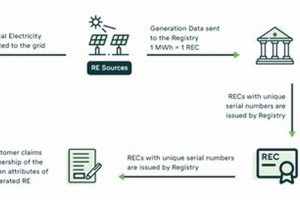
Renewable Energy Credits (RECs), also known as Renewable Energy Certificates or Tradable Renewable Certificates (TRCs), represent a crucial mechanism within the renewable energy market, offering a distinct pathway for generating revenue. A REC embodies the environmental attributes of one megawatt-hour (MWh) of electricity generated from a renewable source. Decoupled from the actual electricity itself, RECs can be sold separately, providing an additional revenue stream for renewable energy producers and offering a means for organizations to support renewable energy development and meet sustainability goals. This section explores the multifaceted nature of RECs and their connection to profitability within the renewable energy sector.
- REC Generation and Tracking
RECs are generated upon verification of renewable energy production by certified tracking systems. These systems ensure the integrity and prevent double counting of RECs. Each REC is uniquely identified and tracked throughout its lifecycle, from generation to retirement. This robust tracking system establishes credibility and transparency within the REC market.
- REC Trading and Markets
RECs are traded in compliance and voluntary markets. Compliance markets arise from government mandates requiring utilities or other entities to procure a certain percentage of their electricity from renewable sources. RECs facilitate compliance with these Renewable Portfolio Standards (RPS). Voluntary markets cater to organizations seeking to offset their carbon footprint or demonstrate their commitment to sustainability by purchasing RECs. These markets create demand for RECs, establishing a price signal and providing revenue opportunities for renewable energy generators.
- REC Value and Pricing
REC prices fluctuate based on market dynamics, including supply and demand, regulatory requirements, and the specific characteristics of the RECs (e.g., technology type, location). Compliance markets often exhibit higher REC prices due to the mandatory nature of the demand. Voluntary markets typically experience lower prices but offer greater flexibility and accessibility for buyers. Understanding these market dynamics is crucial for optimizing REC sales strategies and maximizing revenue potential.
- RECs and Corporate Sustainability Goals
Many corporations utilize RECs to achieve their sustainability targets and demonstrate environmental responsibility. Purchasing RECs allows companies to offset their electricity consumption from non-renewable sources, reducing their carbon footprint and enhancing their brand image. This demand from corporate buyers creates a significant market for RECs, contributing to the financial viability of renewable energy projects. For example, a company aiming to achieve carbon neutrality might purchase RECs equivalent to its annual electricity consumption, effectively supporting renewable energy development while offsetting its emissions.
In conclusion, RECs represent a valuable tool for generating income from renewable energy projects. By understanding REC generation, market dynamics, pricing mechanisms, and the role of corporate sustainability goals, renewable energy producers can effectively leverage RECs to enhance project profitability and contribute to a more sustainable energy future. The evolving regulatory landscape and increasing corporate focus on sustainability suggest continued growth and relevance of the REC market, providing ongoing opportunities for revenue generation within the renewable energy sector. The integration of RECs into overall financial projections for renewable energy projects is essential for accurate assessment of potential returns and informed investment decisions.
6. Investment in Renewables

Investment in renewable energy technologies represents a crucial pathway for generating financial returns while contributing to a sustainable energy transition. This approach encompasses a diverse range of opportunities, from direct project ownership to indirect investments in publicly traded companies or specialized funds. The following facets illustrate the various avenues for capitalizing on the growth of the renewable energy sector.
- Direct Project Investment
Direct investment involves financing and owning renewable energy projects, such as solar farms, wind turbines, or hydroelectric plants. This approach requires substantial capital outlay but offers the potential for significant returns through direct energy sales, power purchase agreements (PPAs), and renewable energy credits (RECs). For example, a consortium of investors might finance the construction of a large-scale solar farm, selling the generated electricity to a local utility under a long-term PPA, securing a predictable revenue stream and return on investment. Direct project ownership offers greater control over project development and operation but also entails higher risks and responsibilities.
- Equity Investments in Renewable Energy Companies
Investing in publicly traded companies specializing in renewable energy technologies, manufacturing, or project development offers a less capital-intensive entry point into the market. Stock ownership provides the potential for capital appreciation and dividend income as the renewable energy sector grows. Investing in a diversified portfolio of renewable energy companies can mitigate risks associated with individual company performance. This approach requires careful analysis of market trends, company financials, and technological advancements within the sector.
- Renewable Energy Funds and Exchange-Traded Funds (ETFs)
Renewable energy funds and ETFs provide a diversified investment vehicle focused on companies engaged in various aspects of the renewable energy industry. These funds offer investors exposure to a broader range of companies and technologies, reducing risk compared to individual stock picking. Investing in a renewable energy ETF, for instance, might include exposure to solar panel manufacturers, wind turbine developers, and biofuel producers, offering a diversified approach to capturing growth within the sector. This approach simplifies investment management and provides a convenient way to participate in the renewable energy market.
- Green Bonds
Green bonds are debt instruments specifically earmarked for financing environmentally friendly projects, including renewable energy infrastructure. Investing in green bonds offers a fixed-income investment opportunity with a defined interest rate and maturity date, providing a relatively stable income stream while supporting sustainable development. Municipalities, corporations, and governments issue green bonds to raise capital for renewable energy projects, offering investors a way to align their financial goals with environmental objectives. This approach provides a lower-risk investment option compared to equity investments while contributing directly to the expansion of renewable energy capacity.
These diverse investment avenues offer a range of opportunities for individuals and institutions to participate in the growth of the renewable energy sector and generate financial returns. Each approach carries distinct risk-reward profiles, requiring careful consideration of investment goals, risk tolerance, and market conditions. The increasing demand for clean energy and ongoing technological advancements suggest continued growth potential within the renewable energy investment landscape, making it a compelling area for investors seeking both financial and environmental returns. Analyzing the regulatory environment, policy stability, and technological trends within specific regions or market segments is crucial for informed investment decisions and maximizing the potential for financial success in renewable energy investments. Further, considering portfolio diversification across different renewable energy technologies and investment strategies can mitigate risks and enhance long-term returns.
Frequently Asked Questions about Generating Income from Renewable Energy
This section addresses common inquiries regarding the financial aspects of renewable energy, providing concise and informative responses.
Question 1: What is the typical return on investment for residential solar installations?
Return on investment varies depending on factors such as system size, local electricity rates, available incentives, and financing options. Generally, residential solar installations can yield returns between 8% and 12% annually.
Question 2: Are there risks associated with investing in renewable energy projects?
Like any investment, renewable energy projects carry inherent risks, including regulatory changes, technological obsolescence, fluctuating energy prices, and project development delays. Thorough due diligence and risk assessment are essential.
Question 3: How can landowners determine the suitability of their property for renewable energy development?
Assessing land suitability requires evaluating solar irradiance or wind resources, proximity to transmission infrastructure, environmental considerations, and local zoning regulations. Professional assessments are recommended.
Question 4: What are the key differences between investing in renewable energy stocks and investing directly in renewable energy projects?
Investing in stocks offers broader market exposure with lower capital requirements, while direct project investment provides greater control but necessitates higher initial capital and carries project-specific risks.
Question 5: How do government policies and incentives influence the profitability of renewable energy ventures?
Government incentives, such as tax credits, rebates, and feed-in tariffs, can significantly impact project economics. Policy stability and predictability are crucial for long-term investor confidence.
Question 6: What role does technological innovation play in the future of renewable energy investment?
Continuous technological advancements drive down costs, improve efficiency, and enhance the reliability of renewable energy systems. Staying informed about emerging technologies is crucial for successful investment strategies.
Understanding these key aspects of generating income from renewable energy is critical for making informed decisions and maximizing the potential for both financial and environmental returns.
For further information on specific investment opportunities or project development considerations, consulting with qualified financial advisors and renewable energy experts is recommended.
Generating Income from Renewable Energy
Exploration of revenue generation within the renewable energy sector reveals diverse avenues, ranging from direct energy sales and government incentives to technological innovation and land resource utilization. Direct project investment, equity participation in renewable energy companies, specialized funds, and green bonds offer varied investment opportunities. Understanding market dynamics, technological advancements, regulatory frameworks, and risk mitigation strategies is crucial for successful participation in this evolving market. Renewable energy credits (RECs) provide an additional revenue stream, further enhancing project profitability and supporting corporate sustainability goals.
The transition to a sustainable energy future presents compelling economic opportunities. Strategic engagement within the renewable energy sector not only yields financial returns but also contributes to environmental stewardship and energy independence. Continuous innovation, policy support, and informed investment decisions are essential for realizing the full potential of renewable energy as a driver of both economic growth and a cleaner planet.