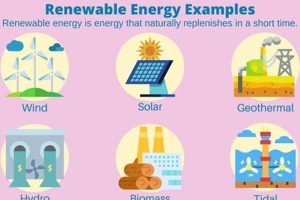
Governmental frameworks designed to incentivize and facilitate the adoption of sustainable power sources, such as solar, wind, hydro, and geothermal, are crucial for a diversified energy portfolio. Examples include feed-in tariffs, renewable portfolio standards, tax credits, and direct subsidies aimed at lowering the cost and increasing the competitiveness of green technologies.
Such interventions can yield numerous positive outcomes. These encompass diminished reliance on finite fossil fuels, mitigation of greenhouse gas emissions, enhanced energy security through domestic production, and the creation of new employment opportunities in the burgeoning green economy. Historically, the implementation of supportive regulations has often correlated with increased investment and innovation in the renewable sector, driving down technology costs and improving efficiency.
Subsequent sections will delve into the specific types of these interventions, examine their effectiveness across different geographic regions, and analyze their broader socio-economic impacts. Furthermore, the challenges and opportunities associated with transitioning to a predominantly renewable-based energy system will be explored in detail.
Strategies for Effective Implementation
Optimizing the deployment of governmental and regulatory structures is crucial for accelerating the transition to a sustainable energy economy. The following strategies are designed to enhance the efficacy of these initiatives.
Tip 1: Establish Clear and Consistent Long-Term Goals: A stable policy environment reduces investment risk. Announce specific, measurable, achievable, relevant, and time-bound (SMART) targets for renewable energy deployment to signal commitment to investors and developers.
Tip 2: Implement Feed-in Tariffs (FITs): FITs guarantee a fixed price for electricity generated from renewable sources. This provides predictable revenue streams and encourages investment, particularly for smaller-scale projects.
Tip 3: Enforce Renewable Portfolio Standards (RPS): RPS mandates a certain percentage of electricity generation to come from renewable sources. This compels utilities to procure renewable energy, driving demand and stimulating market growth.
Tip 4: Offer Targeted Tax Incentives and Subsidies: Provide financial support, such as tax credits or direct subsidies, to reduce the upfront costs of renewable energy technologies. This makes them more competitive with conventional sources.
Tip 5: Streamline Permitting and Regulatory Processes: Reduce bureaucratic hurdles and delays in obtaining permits and approvals for renewable energy projects. This can significantly lower project costs and timelines.
Tip 6: Invest in Grid Modernization: Upgrade the electricity grid to accommodate the intermittent nature of renewable energy sources. This includes enhancing grid flexibility, expanding transmission capacity, and deploying smart grid technologies.
Tip 7: Promote Research and Development: Support research and development efforts to improve the efficiency, cost-effectiveness, and reliability of renewable energy technologies. This fosters innovation and drives long-term cost reductions.
Tip 8: Foster Public Awareness and Education: Educate the public about the benefits of renewable energy and the importance of transitioning to a sustainable energy future. This increases public support for supportive structures.
By adopting these strategies, policymakers can create a supportive environment that accelerates the transition to a renewable energy-based economy, contributing to reduced emissions, energy security, and economic growth.
The subsequent sections will further explore the practical application of these strategies through case studies and comparative analyses.
1. Incentives

Financial inducements and supportive frameworks are crucial components of strategies designed to bolster renewable energy adoption. These incentives directly influence the economic viability and market competitiveness of renewable technologies, serving as a catalyst for their broader deployment.
- Tax Credits
Tax credits reduce the tax liability of individuals or businesses investing in renewable energy systems. For instance, offering a tax credit for the installation of solar panels on residential properties lowers the initial cost, making solar energy more financially attractive to homeowners. The impact is a reduction in the payback period for these investments, incentivizing wider adoption.
- Production Tax Credits (PTCs)
PTCs provide financial benefits based on the amount of renewable energy generated. Wind energy producers, for example, may receive a credit for each kilowatt-hour of electricity they generate. This lowers the operating costs and increases the profitability of renewable energy facilities, encouraging further investment and expansion.
- Grants and Subsidies
Direct financial assistance in the form of grants and subsidies can significantly lower the capital costs of renewable energy projects. These mechanisms often target specific technologies or project types, such as large-scale solar farms or geothermal power plants. The impact is to de-risk investments and facilitate the development of otherwise cost-prohibitive projects.
- Feed-in Tariffs (FITs)
FITs guarantee a fixed price for electricity generated from renewable sources. This provides predictable revenue streams for renewable energy producers, attracting investment and fostering the growth of renewable energy markets. The stability and predictability offered by FITs are particularly beneficial for smaller-scale projects and emerging technologies.
These diverse incentive structures collectively contribute to reducing the cost barriers and enhancing the financial viability of renewable energy technologies. When strategically designed and implemented, such frameworks play a pivotal role in accelerating the transition towards a cleaner, more sustainable energy future by encouraging participation from both consumers and energy producers.
2. Regulations

Regulatory frameworks establish the ground rules under which energy markets operate, and they are indispensable for guiding the energy sector towards sustainability. These regulations directly influence the integration of renewable energy resources by creating a supportive environment or, conversely, by removing barriers that impede their progress.
- Emissions Standards
Emissions standards limit the amount of pollutants that power plants can release into the atmosphere. Stricter standards incentivize the retirement of older, fossil fuel-based facilities and make renewable energy sources, which have minimal or no emissions, more economically competitive. An example is the Clean Power Plan, which, though subject to legal challenges, aimed to reduce carbon emissions from power plants, thereby encouraging a shift towards cleaner energy alternatives.
- Mandatory Renewable Energy Targets
Renewable Portfolio Standards (RPS) or similar mandates require utilities to generate a certain percentage of their electricity from renewable sources by a specific date. These mandates create a guaranteed market for renewable energy, driving investment and development. Many U.S. states have adopted RPS policies that have led to significant increases in renewable energy capacity.
- Permitting and Zoning Regulations
Streamlined permitting processes and favorable zoning regulations are essential for facilitating the development of renewable energy projects. Complex and lengthy permitting procedures can significantly increase project costs and timelines, hindering deployment. Regulations that prioritize renewable energy development and establish clear, efficient permitting processes can accelerate the construction of new facilities.
- Grid Interconnection Rules
Regulations governing the interconnection of renewable energy facilities to the electricity grid are critical for ensuring their reliable and efficient operation. Fair and transparent interconnection rules facilitate the integration of renewable energy into the grid, while discriminatory or overly burdensome rules can create barriers. Clear interconnection standards and streamlined procedures are essential for enabling the widespread deployment of distributed renewable energy resources, such as rooftop solar panels.
The effective design and implementation of regulatory structures are crucial for accelerating the transition to a sustainable energy system. These regulations, when thoughtfully crafted, can address market failures, internalize environmental costs, and create a level playing field that promotes the widespread adoption of renewable energy resources. Moreover, consistent and predictable regulations reduce uncertainty and encourage long-term investment in clean energy technologies.
3. Standards
Standards serve as a cornerstone within the framework of governmental frameworks, influencing both their design and effectiveness. These established benchmarks, ranging from technical specifications to operational protocols, provide a concrete foundation for evaluating and promoting sustainable power generation. For example, the establishment of minimum energy performance criteria for solar panels or wind turbines ensures that only technologies meeting predefined efficiency levels qualify for government subsidies or tax incentives. This directs financial support towards more productive and environmentally beneficial renewable energy projects. Furthermore, interconnection standards, defining how renewable energy systems connect to the electrical grid, are crucial for smooth integration and grid stability. Without such standards, the widespread deployment of renewable energy sources would encounter significant technical and logistical hurdles.
The presence of clear and internationally recognized standards facilitates cross-border cooperation and trade in renewable energy technologies. For instance, the International Electrotechnical Commission (IEC) develops standards for various renewable energy technologies, promoting harmonization and interoperability across different markets. The adoption of these standards reduces trade barriers and encourages the transfer of knowledge and technology, accelerating the global transition to a more sustainable energy system. Additionally, compliance with environmental standards, such as those related to water usage or land disturbance during renewable energy project development, ensures that the environmental benefits of renewable energy are not offset by negative impacts on other environmental resources. These ensure that “green” initiatives remain so throughout their lifecycle.
In summary, standards are critical for ensuring the quality, reliability, and environmental compatibility of sustainable energy systems. By providing a framework for assessing and promoting effective applications, standards enhance the overall effectiveness of supporting frameworks. Addressing challenges associated with the development and enforcement of standards, such as adapting them to rapidly evolving technologies and ensuring global consistency, remains crucial for realizing the full potential of renewable energy and achieving a sustainable energy future.
4. Investment

Capital allocation is a primary driver in the proliferation of sustainable energy technologies. Governmental and regulatory structures that strategically attract and direct funding are fundamental to scaling renewable energy infrastructure and fostering innovation within the sector.
- Private Equity and Venture Capital
These funding sources are crucial for nascent renewable energy companies and innovative technologies. Structures such as tax incentives, loan guarantees, and streamlined permitting processes reduce the perceived risk and attract private capital. For example, venture capital firms are more likely to invest in early-stage solar technology companies when the government provides tax credits for solar energy production, lowering the overall risk profile of the investment.
- Public Funding and Government Grants
Direct government investment in renewable energy research, development, and deployment serves as a catalyst for innovation and market growth. Grants for renewable energy projects reduce the initial capital expenditure, making them more financially viable. The U.S. Department of Energy’s loan programs, for instance, have supported the development of large-scale solar and wind projects, stimulating economic activity and reducing reliance on fossil fuels.
- Institutional Investment
Pension funds, insurance companies, and sovereign wealth funds represent a significant source of long-term capital for renewable energy projects. Clear, stable, and predictable regulatory structures, such as renewable portfolio standards and feed-in tariffs, provide the certainty needed to attract this type of investment. Institutional investors are more likely to allocate capital to renewable energy projects when they can rely on consistent revenue streams and a supportive regulatory environment.
- Green Bonds and Sustainable Finance
These financial instruments are specifically designed to fund environmentally friendly projects. By issuing green bonds, governments and corporations can raise capital for renewable energy projects while demonstrating a commitment to sustainability. The proceeds from these bonds are typically earmarked for projects that have a positive environmental impact, attracting investors who prioritize environmental, social, and governance (ESG) factors.
The effectiveness of governmental and regulatory structures in promoting renewable energy hinges on their ability to mobilize capital across various investment channels. A comprehensive approach that combines targeted incentives, clear regulatory frameworks, and innovative financing mechanisms is essential for accelerating the transition to a sustainable energy future. The availability of capital directly impacts the scale and pace of renewable energy deployment, making investment a critical component of any successful framework.
5. Innovation

The advancement and deployment of sustainable energy technologies are intrinsically linked to innovation. Governmental frameworks designed to encourage the adoption of renewable energy resources act as a catalyst for inventive solutions across various technological and economic sectors. Policies such as feed-in tariffs and research grants create a market pull, incentivizing companies and research institutions to develop more efficient, cost-effective, and reliable renewable energy systems. For instance, the German feed-in tariff system, while criticized for its costs, spurred significant innovation in solar panel technology, driving down global prices and improving energy conversion rates. Similarly, government-funded research into advanced battery storage solutions is critical for addressing the intermittency challenge associated with solar and wind power, enabling wider grid integration.
Furthermore, supportive regulations can foster innovation in business models and financing mechanisms related to renewable energy. For example, policies that promote distributed generation, such as net metering, have stimulated the growth of innovative companies offering rooftop solar leasing programs. These programs reduce the upfront costs for consumers, making solar energy more accessible, while also driving innovation in areas such as smart grid technologies and energy management systems. Regulatory sandboxes, which allow companies to test new technologies and business models in a controlled environment, can also play a crucial role in fostering innovation by reducing regulatory barriers and providing a platform for experimentation. The United Kingdom’s regulatory sandbox for financial technology has been adapted for energy innovations, facilitating the development of smart energy solutions.
In conclusion, fostering innovation is not merely a desirable outcome but a necessity for the long-term success of sustainable energy frameworks. Frameworks that effectively promote renewable energy resources must integrate mechanisms to support research and development, encourage the adoption of new technologies, and foster innovative business models. The continuous cycle of policy support, technological advancement, and market deployment is crucial for achieving a sustainable and resilient energy future. Challenges remain in aligning innovation policies with broader energy objectives and ensuring that the benefits of innovation are equitably distributed. Nevertheless, the strategic integration of innovation into frameworks is essential for driving down costs, improving performance, and accelerating the transition to a cleaner energy system.
6. Accessibility
Fair access to sustainable energy options constitutes a critical dimension of effective governmental frameworks. Policies that inadvertently limit access to renewable energy technologies exacerbate existing socio-economic disparities and undermine the overarching goal of equitable energy transition. These policies must address both the economic and geographic barriers that hinder widespread adoption.
- Affordability for Low-Income Households
The initial costs of renewable energy systems, such as solar panels, can be prohibitive for low-income households. Policies must incorporate targeted financial assistance, such as subsidies, rebates, or low-interest loans, to make renewable energy technologies accessible to a broader segment of the population. Community solar programs, where multiple households share the benefits of a single solar installation, offer an alternative pathway for low-income communities to access solar energy without the burden of individual ownership.
- Geographic Equity in Rural Areas
Rural areas often face challenges in accessing renewable energy due to limited grid infrastructure and higher installation costs. Policies should prioritize investments in rural grid upgrades and provide incentives for off-grid renewable energy systems, such as microgrids powered by solar and wind energy. Streamlining permitting processes for small-scale renewable energy projects in rural areas can also reduce development costs and encourage adoption. Government programmes that encourage the growth of renewable energy in these areas can provide electricity access to the rural and poor communities.
- Availability in Multi-Dwelling Units
Residents of apartments and other multi-dwelling units frequently encounter barriers to accessing rooftop solar energy due to complex ownership structures and regulatory hurdles. Policies can address these challenges by promoting virtual net metering, which allows residents to receive credit for the electricity generated by a shared solar installation, and by streamlining permitting processes for solar projects on multi-dwelling buildings. Policies can also mandate or incentivize new constructions to incorporate solar energy or renewable energy as one of the energy options.
- Information and Awareness
A lack of information about the benefits of renewable energy and the availability of financial assistance programs can hinder adoption, particularly among underserved communities. Policies must include public awareness campaigns and educational programs to inform consumers about the advantages of sustainable energy and the resources available to support their transition. Community-based organizations can play a crucial role in disseminating information and providing technical assistance to help households navigate the complexities of renewable energy adoption.
These facets collectively underscore that the efficacy of frameworks depends not only on promoting renewable energy adoption but also on ensuring that the benefits of this transition are equitably distributed across all segments of society. Policies that prioritize accessibility considerations are essential for realizing a sustainable energy future that leaves no one behind.
Frequently Asked Questions
The following questions and answers address common concerns and misconceptions regarding governmental and regulatory initiatives aimed at fostering the adoption of sustainable power generation. These answers are intended to provide clarity and promote a more informed understanding of the issues.
Question 1: What are the primary economic arguments against implementing policies?
Concerns often revolve around the potential for increased energy costs, the impact on industries reliant on fossil fuels, and the competitiveness of renewable energy technologies. Some argue that subsidies for renewable energy distort markets and create an unfair advantage over conventional energy sources.
Question 2: How are the intermittent nature of renewable energy sources, such as solar and wind, addressed within the structures?
Strategies to mitigate intermittency include investments in energy storage technologies, diversification of renewable energy sources, and grid modernization to enhance flexibility and responsiveness. Demand-side management strategies and improved forecasting of renewable energy generation also play a crucial role.
Question 3: What is the role of international cooperation in promoting the use of renewable energy resources?
International agreements and collaborations facilitate the sharing of best practices, technology transfer, and financial assistance for renewable energy projects. These partnerships also contribute to setting global targets for emissions reductions and promoting a coordinated approach to addressing climate change.
Question 4: How effective are carbon pricing mechanisms, such as carbon taxes and cap-and-trade systems, in conjunction with policies?
Carbon pricing mechanisms can complement efforts by internalizing the environmental costs of fossil fuels, making renewable energy more economically competitive. These mechanisms create a financial incentive for reducing emissions and can generate revenue that can be reinvested in renewable energy development.
Question 5: How do governmental and regulatory frameworks address the potential social and environmental impacts of renewable energy projects, such as land use and wildlife habitat disruption?
Environmental impact assessments, stringent permitting processes, and mitigation measures are employed to minimize the potential adverse effects of renewable energy projects. These assessments consider factors such as land use, water resources, and impacts on biodiversity.
Question 6: What are the key performance indicators (KPIs) used to measure the success of such policies?
Common KPIs include the percentage of electricity generated from renewable sources, reductions in greenhouse gas emissions, investment in renewable energy infrastructure, job creation in the renewable energy sector, and the cost of renewable energy relative to conventional sources. These metrics provide a basis for evaluating the effectiveness of policies and making adjustments as needed.
This section has provided a concise overview of some of the most frequently asked questions about such policies. Understanding these concerns and the approaches used to address them is vital for fostering informed discussions and making effective decisions.
The next section will explore case studies of countries that have successfully implemented frameworks and examine the lessons learned from their experiences.
Energy Policies Promoting Renewable Resources
The preceding exploration has illuminated the multifaceted nature of energy policies that promote the use of renewable energy resources. Through incentives, regulations, standards, investments, innovation, and accessibility considerations, these policies shape the landscape of sustainable energy production and consumption. Their effectiveness hinges on a cohesive and strategic approach, carefully tailored to specific regional and economic contexts.
The sustained commitment to designing, implementing, and refining frameworks remains paramount. These policies represent a fundamental tool in mitigating climate change, enhancing energy security, and fostering economic growth. Continued research, adaptive implementation, and rigorous evaluation are essential to unlock the full potential of sustainable power generation and secure a cleaner, more resilient energy future.
![Guide to What Energy Resources Are Renewable [+Future] | Renewable Energy Solutions for a Sustainable Future | Clean & Green Power](https://pplrenewableenergy.com/wp-content/uploads/2026/03/th-516-300x200.jpg "Guide to What Energy Resources Are Renewable [+Future] Renewable Energy Solutions for a Sustainable Future | Clean & Green Power")