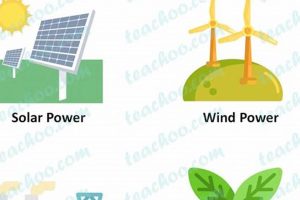
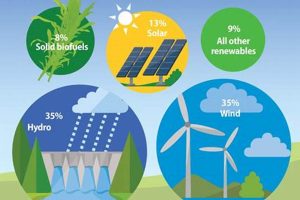
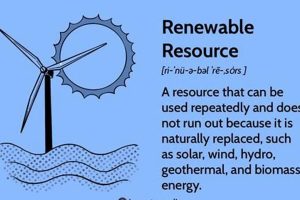
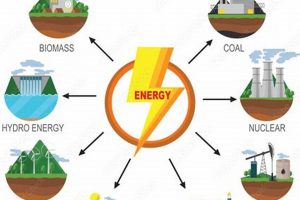
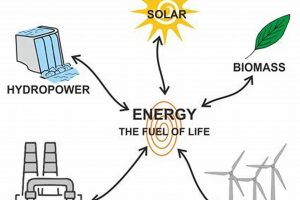
Forms of power generation that naturally replenish, and thus offer a sustainable alternative to fossil fuels, are varied and increasingly vital. Examples include harnessing the sun’s radiation, capturing the kinetic energy of wind and water, and utilizing the Earth’s internal heat. These methods represent a shift towards environmentally conscious energy production.
The advantages of employing these methods are numerous, encompassing reduced greenhouse gas emissions, decreased reliance on finite resources, and the potential for energy independence. Historically, simple forms, like windmills and watermills, predated the industrial revolution; however, modern technology allows for far greater efficiency and wider application, contributing to a cleaner and more stable energy future.
This article will delve into the specifics of solar, wind, hydroelectric, geothermal, and biomass energy, examining their respective technologies, benefits, limitations, and potential roles in a global energy transition. Further analysis will consider the economic and environmental impacts of each approach, providing a comprehensive overview of this important field.
Considerations for Implementing Renewable Energy Technologies
The adoption of sustainable energy production methods requires careful planning and a thorough understanding of available options. The following points outline key considerations for individuals, businesses, and governments aiming to integrate renewable energy into their energy portfolios.
Tip 1: Evaluate Resource Availability: Prior to investment, a comprehensive assessment of local renewable resources is crucial. Solar irradiance levels, average wind speeds, water flow rates, and geothermal gradients vary significantly by location, directly impacting the feasibility and efficiency of specific technologies.
Tip 2: Prioritize Energy Efficiency Measures: Reducing overall energy consumption through building insulation, efficient appliances, and optimized industrial processes minimizes the scale of renewable energy systems required, leading to cost savings and enhanced sustainability.
Tip 3: Explore Hybrid Systems: Combining multiple complementary energy production methods, such as solar photovoltaic panels paired with wind turbines, can provide a more consistent and reliable power supply than relying on a single source. This strategy mitigates the intermittency challenges associated with some approaches.
Tip 4: Invest in Energy Storage Solutions: Integrating energy storage technologies, such as battery systems or pumped hydro storage, is essential for managing the fluctuating output of renewable sources and ensuring a stable electricity grid. Storage enhances grid resilience and allows for greater penetration of sustainable energy.
Tip 5: Understand Government Incentives and Regulations: Familiarize yourself with local, regional, and national policies designed to promote renewable energy adoption. Tax credits, rebates, feed-in tariffs, and renewable energy mandates can significantly reduce the financial burden and streamline the implementation process.
Tip 6: Conduct a Lifecycle Cost Analysis: Evaluate the long-term economic viability of renewable energy projects by considering upfront capital costs, operational expenses, maintenance requirements, and anticipated energy savings. A thorough lifecycle cost analysis provides a more accurate picture of the investment’s overall value.
These considerations highlight the multifaceted nature of transitioning towards a sustainable energy future. Thoughtful planning, informed decision-making, and strategic investments are essential for maximizing the benefits of renewable energy technologies and mitigating potential challenges.
The subsequent sections will delve deeper into specific applications and advancements within each major category of renewable energy, providing further insight into their potential to reshape the global energy landscape.
1. Solar Photovoltaic Conversion

Solar photovoltaic (PV) conversion stands as a pivotal technology within the broader spectrum of sustainable energy production. Its relevance stems from the abundance of solar radiation and the scalability of PV systems, ranging from small-scale residential installations to large utility-scale power plants. Photovoltaic technology directly transforms sunlight into electricity, offering a clean and versatile energy source.
- Photovoltaic Cell Composition and Function
The foundation of solar PV conversion lies in the photovoltaic cell, typically composed of semiconducting materials like silicon. When photons from sunlight strike the cell, they excite electrons, generating an electric current. The efficiency of these cells, measured by the percentage of sunlight converted into electricity, is a critical factor in determining the overall performance of PV systems. Ongoing research focuses on developing advanced materials and cell designs to enhance efficiency and reduce manufacturing costs.
- System Integration and Grid Interconnection
The generated electricity from solar PV cells must be integrated into usable power systems and often connected to the existing electrical grid. This involves inverters to convert direct current (DC) electricity into alternating current (AC), as well as monitoring and control systems to manage power output and grid stability. Grid interconnection standards and regulations play a significant role in facilitating the seamless integration of solar PV energy into the broader energy infrastructure.
- Environmental Considerations and Life Cycle Assessment
While solar PV conversion offers a clean energy source, it is essential to consider the environmental impact throughout the entire lifecycle of PV systems. This includes the extraction and processing of raw materials, the manufacturing of PV cells and panels, the transportation and installation of systems, and the eventual decommissioning and recycling of components. Life cycle assessments are conducted to evaluate the overall environmental footprint and identify opportunities for improvement.
- Economic Viability and Investment Considerations
The economic viability of solar PV projects depends on various factors, including the cost of PV panels, installation expenses, financing options, government incentives, and the price of electricity. Levelized Cost of Energy (LCOE) calculations are used to compare the cost-effectiveness of solar PV with other energy sources over the lifetime of the system. Declining PV panel costs and increasing grid parity have made solar PV an increasingly competitive energy option.
Solar PV conversion, through continuous advancements in materials science, engineering, and policy frameworks, continues to evolve as a prominent solution within different kinds of renewable energy sources. As technology progresses and deployment scales, solar PV plays an increasingly vital role in decarbonizing the energy sector and fostering a sustainable energy future.
2. Wind Turbine Technology

Wind turbine technology constitutes a significant subset within different kinds of renewable energy sources. The conversion of kinetic energy from wind into electrical energy represents a direct displacement of fossil fuel-based power generation, thereby mitigating greenhouse gas emissions. Modern wind turbines, through advanced aerodynamic design and sophisticated control systems, achieve high efficiencies in harnessing wind power, contributing substantially to a cleaner energy mix. Denmark, for instance, derives a significant percentage of its electricity from wind power, demonstrating the practical viability of this renewable energy approach on a national scale.
The impact of wind turbine technology extends beyond direct energy production. The development, manufacturing, installation, and maintenance of wind turbines generate employment opportunities and stimulate economic growth in related sectors. Furthermore, wind farms can often coexist with agricultural land, providing a dual land-use benefit. However, challenges remain, including concerns about visual impact, noise pollution, and potential effects on wildlife, particularly bird and bat populations. Ongoing research focuses on mitigating these environmental impacts through improved turbine designs and strategic site selection.
In conclusion, wind turbine technology is integral to the expansion of renewable energy and the reduction of reliance on conventional power sources. While environmental and societal considerations necessitate careful planning and mitigation strategies, the ongoing technological advancements and economic competitiveness of wind power underscore its importance in the transition towards a sustainable energy future. The integration of wind energy into existing grid infrastructure, coupled with energy storage solutions, further enhances its reliability and potential to contribute to a stable and decarbonized energy supply.
3. Hydroelectric Generation

Hydroelectric generation constitutes a significant component of renewable energy portfolios globally. The process harnesses the potential energy of water stored at a height, converting it into kinetic energy as it flows through turbines connected to generators. The resultant electricity production relies on a constantly replenishing resource, water, thereby classifying it among sustainable energy options. The causal relationship is straightforward: the consistent water cycle, driven by solar energy, facilitates continuous power generation, distinguishing it from finite fossil fuels. Norway, for example, derives nearly all of its electricity from hydroelectric sources, underscoring its practical implementation.
The importance of hydroelectric generation lies in its capacity to provide baseload power, unlike certain other renewable sources subject to intermittency. Large-scale dams offer the capacity to regulate water flow, ensuring a reliable electricity supply. Furthermore, pumped storage hydroelectric systems enable energy storage by pumping water uphill during periods of low demand and releasing it for power generation during peak demand. This enhances grid stability and facilitates the integration of other variable renewable energy sources, like solar and wind. The Three Gorges Dam in China exemplifies the scale and potential of hydroelectric power, though not without environmental considerations.
Despite its advantages, hydroelectric generation is not without challenges. Dam construction can significantly alter river ecosystems, impacting aquatic life and displacing communities. Sedimentation behind dams can reduce their operational lifespan, and methane emissions from reservoirs in certain climates contribute to greenhouse gas effects. Therefore, sustainable hydroelectric development requires careful planning, environmental impact assessments, and mitigation strategies. Balancing energy needs with ecological preservation is crucial for realizing the full potential of hydroelectric generation within the framework of diverse sustainable energy solutions.
4. Geothermal Extraction Processes
Geothermal extraction processes represent a critical component within the diverse landscape of renewable energy sources. These processes tap into the Earth’s internal heat, a virtually inexhaustible resource, to generate electricity and provide direct heating and cooling. Their relevance stems from offering a baseload power option independent of weather conditions, distinguishing them from intermittent renewable sources.
- Hydrothermal Resources and Power Generation
Hydrothermal resources, characterized by the presence of hot water or steam, are the most commonly utilized geothermal resources for power generation. Extraction involves drilling wells into underground reservoirs to access the hot fluids, which are then used to drive turbines connected to generators. The Geysers in California, a well-known example, showcase the successful implementation of this approach on a large scale. The consistent and reliable power output from hydrothermal power plants contributes significantly to regional energy security.
- Enhanced Geothermal Systems (EGS) and Future Potential
Enhanced Geothermal Systems (EGS) expand the accessibility of geothermal energy by enabling power generation from areas without naturally occurring hydrothermal resources. This involves creating artificial fractures in hot, dry rocks deep underground, circulating water through the fractures to extract heat, and then bringing the heated water to the surface to generate electricity. EGS technology holds enormous potential for significantly increasing the availability of geothermal energy worldwide, as hot dry rocks are far more abundant than hydrothermal resources. Research and development efforts are focused on improving EGS technology to enhance its efficiency and economic viability.
- Direct-Use Applications and Heat Extraction
Beyond electricity generation, geothermal extraction processes also facilitate direct-use applications, where geothermal heat is directly used for heating buildings, greenhouses, and aquaculture facilities, as well as for industrial processes. These applications often involve lower-temperature geothermal resources and can be implemented using shallow geothermal wells or ground-source heat pumps. Iceland’s widespread use of geothermal energy for district heating demonstrates the effectiveness of direct-use applications in reducing reliance on fossil fuels.
- Environmental Considerations and Sustainable Practices
While geothermal energy is a renewable resource, careful management is necessary to ensure its long-term sustainability and minimize environmental impacts. These include land use, water usage, induced seismicity (particularly with EGS), and potential emissions of greenhouse gases (such as carbon dioxide and hydrogen sulfide) from geothermal reservoirs. Sustainable practices, such as reinjecting geothermal fluids back into the reservoir to maintain pressure and minimize water consumption, are essential for responsible geothermal development.
Geothermal extraction processes represent a multifaceted approach to harnessing the Earth’s internal heat. Hydrothermal resources and EGS technology contribute significantly to electricity production, while direct-use applications provide efficient heating and cooling solutions. Responsible development and sustainable practices are crucial to maximizing the benefits of geothermal energy within the context of different kinds of renewable energy sources.
5. Biomass combustion potential

The utilization of biomass as a fuel source through combustion represents one pathway within different kinds of renewable energy sources. While considered renewable due to the potential for biomass replenishment, its sustainability is contingent upon responsible sourcing and efficient combustion technologies. The following points outline critical facets of this energy generation method.
- Sustainable Sourcing of Biomass Feedstock
The renewable designation of biomass hinges on the sustainability of its sourcing. Ideal feedstocks include agricultural residues (e.g., corn stover, rice husks), forestry thinnings, and dedicated energy crops grown on marginal lands. Unsustainable practices, such as deforestation or the diversion of food crops to fuel production, negate the environmental benefits and can exacerbate ecological problems. Life cycle assessments are crucial for evaluating the true sustainability of biomass sources.
- Combustion Technologies and Emission Controls
The efficiency and environmental impact of biomass combustion depend heavily on the technology employed. Advanced combustion systems, such as fluidized bed combustors, offer improved fuel-to-energy conversion and reduced emissions compared to traditional methods. Furthermore, emission control technologies, including scrubbers and filters, are essential for minimizing the release of particulate matter, nitrogen oxides, and other pollutants. These technologies are crucial for mitigating the adverse air quality impacts associated with biomass combustion.
- Energy Conversion Pathways and Applications
Biomass combustion can be used for various energy conversion pathways, including electricity generation, heat production, and combined heat and power (CHP) systems. Electricity generation typically involves using the heat from combustion to produce steam, which drives turbines connected to generators. Direct heat applications include space heating and industrial processes. CHP systems offer increased overall efficiency by simultaneously producing electricity and heat. The selection of the appropriate energy conversion pathway depends on the specific energy needs and resource availability.
- Life Cycle Assessment and Carbon Neutrality Considerations
The carbon neutrality of biomass combustion is a subject of ongoing debate. While biomass absorbs carbon dioxide during its growth, this carbon is released upon combustion. The net carbon impact depends on factors such as the carbon sequestration rate of the biomass source, the energy inputs for harvesting and transporting the biomass, and the efficiency of the combustion process. Life cycle assessments are essential for determining the overall greenhouse gas emissions associated with biomass combustion and for comparing it to other energy sources. Sustainable biomass practices, such as reforestation and the use of sustainably managed forests, can enhance carbon sequestration and reduce the net carbon impact.
Biomass combustion presents both opportunities and challenges within the spectrum of different kinds of renewable energy sources. While it can provide a renewable and dispatchable energy source, its sustainability hinges on responsible sourcing, efficient combustion technologies, and thorough life cycle assessments. Ongoing research and technological advancements are focused on improving the environmental performance and economic viability of biomass combustion as a component of a diversified renewable energy portfolio.
6. Ocean Thermal Gradient

Ocean thermal energy conversion (OTEC) represents a distinct and potentially significant category within different kinds of renewable energy sources. This technology exploits the temperature difference between warm surface seawater and cold deep seawater to generate electricity. The magnitude of this temperature differential, while relatively small compared to other energy sources, provides a continuous and stable thermal gradient suitable for power production, particularly in tropical regions.
- Closed-Cycle OTEC Systems
Closed-cycle OTEC systems employ a working fluid with a low boiling point, such as ammonia or propane. Warm surface seawater is used to vaporize the working fluid, which then drives a turbine connected to a generator. Cold deep seawater is subsequently used to condense the vapor back into a liquid, completing the cycle. This approach offers relatively high thermal efficiencies compared to open-cycle systems and can be implemented in both land-based and floating platforms. Japan has been a pioneer in developing and testing closed-cycle OTEC systems, demonstrating their technical feasibility.
- Open-Cycle OTEC Systems
Open-cycle OTEC systems utilize warm surface seawater directly as the working fluid. The seawater is evaporated under a vacuum, and the resulting steam drives a turbine. After passing through the turbine, the steam is condensed using cold deep seawater. While open-cycle systems can produce desalinated water as a byproduct, they generally have lower thermal efficiencies than closed-cycle systems due to the energy required to create and maintain the vacuum. The Natural Energy Laboratory of Hawaii Authority (NELHA) has conducted extensive research on open-cycle OTEC and desalination.
- Hybrid OTEC Systems
Hybrid OTEC systems combine aspects of both closed-cycle and open-cycle configurations. These systems typically use warm surface seawater to vaporize a working fluid in a closed-cycle loop, but also incorporate a flash evaporation process to produce desalinated water. Hybrid systems aim to optimize both power generation and water production, offering a potentially more economically viable solution. Further research and development are needed to improve the efficiency and scalability of hybrid OTEC systems.
- Environmental Considerations and Sustainability
OTEC technology offers a potentially sustainable energy source, but careful consideration must be given to its environmental impacts. These include the discharge of cold, nutrient-rich deep seawater into the surface ocean, which can affect local marine ecosystems. Furthermore, the construction and operation of OTEC plants can have impacts on benthic habitats and marine life. Sustainable OTEC development requires thorough environmental impact assessments, mitigation strategies, and responsible resource management. Ongoing research focuses on minimizing the environmental footprint of OTEC while maximizing its energy production potential.
The exploitation of the ocean thermal gradient through OTEC technology represents a unique opportunity to harness a renewable energy source with the potential to contribute to a diversified and sustainable energy future. While challenges related to efficiency, cost, and environmental impact remain, ongoing research and technological advancements continue to improve the viability of OTEC as a component within different kinds of renewable energy sources, particularly in tropical coastal regions.
7. Tidal energy harnessing

Tidal energy harnessing constitutes a discrete category within different kinds of renewable energy sources, deriving power from the natural rise and fall of ocean tides. The consistent and predictable nature of tidal movements distinguishes this energy source from intermittent renewables like solar and wind. Tidal energy converters capture kinetic energy during both flood and ebb tides, transforming it into electricity. The cause-and-effect relationship is clear: gravitational forces of the moon and sun drive tidal cycles, and engineered systems capitalize on this predictable movement to generate power. The importance of tidal energy lies in its potential to provide a reliable and baseload renewable energy supply, particularly in coastal regions with significant tidal ranges. The Rance Tidal Power Station in France, one of the worlds oldest and largest tidal power plants, exemplifies this potential, providing a consistent source of electricity for decades.
Practical applications of tidal energy harnessing involve various technologies, including tidal barrages, tidal stream generators, and tidal lagoons. Tidal barrages function like dams, trapping water during high tide and releasing it through turbines to generate electricity. Tidal stream generators, resembling underwater wind turbines, extract energy from flowing tidal currents. Tidal lagoons, enclosed bodies of water with strategically placed turbines, offer a less environmentally disruptive alternative to barrages. Understanding these technologies is significant as they represent distinct approaches to capturing tidal energy, each with its own set of advantages and disadvantages. The MeyGen project in Scotland, for example, utilizes tidal stream generators to harness the strong tidal currents in the Pentland Firth, demonstrating the practical application of this technology in challenging marine environments. These initiatives provide valuable insights into the design, deployment, and operational considerations of tidal energy systems.
In summary, tidal energy harnessing represents a valuable, albeit localized, component of the broader renewable energy landscape. Its predictable nature and potential for baseload power generation distinguish it from other renewable sources. Challenges associated with high capital costs, environmental impacts, and limited geographic applicability remain, necessitating continued research and technological innovation. However, as coastal communities seek to diversify their energy portfolios and reduce reliance on fossil fuels, tidal energy harnessing offers a promising avenue for sustainable power generation.
Frequently Asked Questions
This section addresses common inquiries regarding various methods of obtaining power from sources that naturally replenish.
Question 1: What defines an energy source as “renewable?”
A renewable energy source is characterized by its ability to be replenished naturally within a human timescale. This distinguishes it from finite resources like fossil fuels, which are depleted over time.
Question 2: Are renewable energy sources entirely free from environmental impact?
No energy generation method is completely devoid of environmental impact. Production and maintenance of renewable energy systems can involve land use changes, resource extraction, and emissions, though generally less than fossil fuels.
Question 3: Is any one type of renewable energy inherently superior to others?
No single renewable energy source is universally superior. The optimal choice depends on geographic location, resource availability, technological maturity, and economic considerations.
Question 4: What role does energy storage play in the widespread adoption of intermittent sustainable power methods?
Energy storage is crucial for mitigating the intermittency of solar and wind power. Storage technologies enable the capture and release of energy when needed, ensuring a reliable and consistent power supply.
Question 5: Are renewable energy systems cost-competitive with traditional energy sources?
The cost-competitiveness of renewable energy varies by technology and region. Solar and wind power have become increasingly competitive in recent years, while other renewable sources, like geothermal and tidal, may have higher upfront costs.
Question 6: What policy measures are commonly used to promote the adoption of sustainable energy systems?
Common policy measures include tax credits, subsidies, feed-in tariffs, renewable energy mandates, and carbon pricing mechanisms. These policies aim to incentivize investment in and deployment of various sustainable power technologies.
In summary, sustainable energy represents a diverse array of technologies and approaches, each with its own strengths and limitations. The successful transition to a cleaner energy future requires a diversified portfolio of renewable sources, coupled with supportive policies and ongoing technological innovation.
The following section will explore case studies of successful renewable energy implementation around the world.
Conclusion
The preceding analysis has delineated various sustainable energy approaches, each possessing unique characteristics, benefits, and limitations. From solar photovoltaic conversion and wind turbine technology to hydroelectric generation, geothermal extraction, biomass combustion, ocean thermal gradient exploitation, and tidal energy harnessing, a diverse range of methods exists for transitioning away from conventional power sources. The efficacy of each approach depends on factors such as resource availability, geographic location, technological maturity, and environmental considerations.
The ongoing pursuit of a sustainable energy future necessitates a comprehensive and informed understanding of these different kinds of renewable energy sources. Continued research, technological innovation, and strategic policy implementation are essential for realizing the full potential of these methods and mitigating the environmental challenges associated with energy production. The future global energy landscape will be profoundly shaped by the choices made today regarding the adoption and deployment of these alternative power systems.