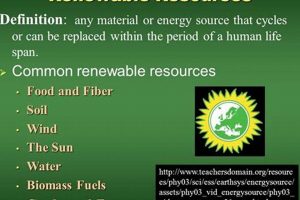
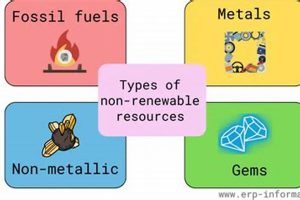
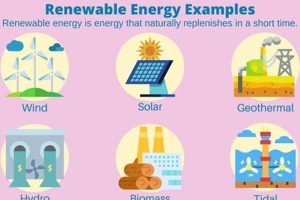
Vegetation possesses the inherent capacity to regenerate within a human lifespan, positioning it as a replenishable asset. This self-sustaining characteristic contrasts sharply with finite resources like fossil fuels. For example, a forest, when managed sustainably, can provide timber indefinitely, as new trees grow to replace those harvested.
The significance of biological materials that renew themselves lies in their environmental and economic advantages. They offer a pathway to reduce dependence on non-renewable sources, mitigating pollution and climate change. Historically, societies have relied on this form of wealth for sustenance, shelter, and energy, demonstrating its long-term value and adaptability.
Further discussion will examine specific aspects of flora’s renewability, considering factors such as sustainable harvesting practices, biodiversity conservation, and the role of technological advancements in optimizing productivity. The subsequent analysis will explore both the potential and limitations associated with leveraging this capacity to meet global needs.
Maximizing the Potential of Plant-Based Renewability
The following outlines strategies to effectively leverage the regenerative nature of vegetation while minimizing negative impacts and ensuring long-term availability.
Tip 1: Implement Sustainable Harvesting Practices: Regulated forestry and agriculture are crucial. Harvesting should occur at a rate that allows for natural regeneration, preventing depletion. For example, selective logging in forests preserves biodiversity and ensures continued growth.
Tip 2: Promote Biodiversity: Monoculture farming can deplete soil nutrients and increase vulnerability to pests. Diversifying crops enhances ecosystem resilience and supports a wider range of species, improving overall system health.
Tip 3: Invest in Research and Development: Continual innovation is necessary to improve crop yields, enhance disease resistance, and optimize resource utilization. Genetic research and precision agriculture techniques can play a significant role.
Tip 4: Conserve Water Resources: Efficient irrigation techniques, such as drip irrigation, minimize water waste and ensure that plants receive the necessary moisture for growth. Water scarcity can severely limit agricultural productivity.
Tip 5: Protect Soil Health: Soil erosion and degradation reduce the land’s capacity to support plant life. Implementing soil conservation measures, such as terracing and no-till farming, preserves soil fertility and structure.
Tip 6: Reduce Waste: Minimizing post-harvest losses and maximizing the utilization of plant-based materials reduces the demand for new production. This includes composting organic waste and finding alternative uses for agricultural byproducts.
Tip 7: Support Reforestation Efforts: Planting trees helps to restore degraded lands, sequester carbon dioxide, and improve water quality. Reforestation projects can create habitats and provide economic opportunities for local communities.
Adopting these strategies facilitates the sustainable use of biological resources, leading to environmental protection, food security, and economic prosperity.
The subsequent section will delve into the economic implications and policy frameworks surrounding this renewable sector, further emphasizing its role in a sustainable future.
1. Regeneration

The ability of flora to regenerate is fundamentally linked to its classification as a replenishable asset. This intrinsic property allows vegetation to recover from harvesting, disturbances, or natural senescence, thereby maintaining the ongoing provision of ecosystem services and material resources.
- Natural Reproduction
Many species propagate naturally through seed dispersal, vegetative propagation, or root suckering. This inherent reproductive capability allows for the replenishment of plant populations following natural attrition or managed harvesting. For instance, many hardwood forests regenerate naturally after selective logging, ensuring a sustained supply of timber.
- Growth and Recovery
Even after substantial damage or removal of above-ground biomass, many species can resprout from remaining root systems, rhizomes, or dormant buds. This rapid recovery mechanism enables the continued provision of ground cover, soil stabilization, and habitat provision. Examples include the rapid regrowth of grasslands after grazing and the coppicing of certain tree species for sustained timber production.
- Succession and Ecosystem Dynamics
Ecological succession, the process of community change over time, is driven by the regenerative capacities of different species. Disturbed sites are colonized by fast-growing, opportunistic species, followed by slower-growing, more persistent species. This dynamic process ensures the long-term sustainability of ecosystems and the availability of diverse biological resources.
- Cultivation and Management
Human intervention, through agricultural practices and sustainable forestry, enhances the regenerative capabilities of certain species. Selective breeding, fertilization, and irrigation optimize growth rates and yields, while sustainable harvesting practices ensure the long-term viability of plant populations. The cultivation of fast-growing crops like bamboo and hemp exemplifies this enhanced renewability.
These facets of regeneration underscore the fundamental characteristic of plant-based materials, ensuring the perpetual availability of vegetation when managed sustainably. Recognizing and fostering these regenerative capacities is crucial for securing long-term access to the diverse benefits that flora provides.
2. Sustainability

Sustainability, in the context of biological matter, refers to the capacity to utilize vegetation in a manner that meets present needs without compromising the ability of future generations to meet their own. This concept is inextricably linked to the notion of these materials being replenishable, as sustainable practices ensure the long-term availability and productivity of biological ecosystems.
- Ecosystem Integrity
Maintaining the health and resilience of ecosystems is paramount for ensuring sustainability. This includes preserving biodiversity, protecting soil health, and managing water resources effectively. For example, sustainable forestry practices prioritize the preservation of habitat structure and species diversity, mitigating the negative impacts of timber harvesting on the overall forest ecosystem.
- Resource Efficiency
Optimizing the utilization of biological materials minimizes waste and reduces the environmental footprint of production and consumption. This involves employing efficient harvesting techniques, reducing post-harvest losses, and finding innovative uses for agricultural byproducts. For example, using agricultural residues for biofuel production reduces reliance on fossil fuels and minimizes waste disposal.
- Social Equity
Sustainable resource management considers the social and economic well-being of communities that depend on biological materials. This involves ensuring fair access to resources, promoting equitable distribution of benefits, and respecting the rights of indigenous peoples. For example, community-based forestry initiatives empower local communities to manage forest resources sustainably while generating income and employment opportunities.
- Long-Term Planning
Sustainability requires a long-term perspective that considers the potential impacts of resource use on future generations. This involves developing policies and management strategies that promote the conservation and sustainable utilization of biological assets. For example, implementing long-rotation forestry practices ensures a continuous supply of timber while allowing for the maturation of old-growth forests that provide critical habitat for wildlife.
These facets collectively illustrate the interconnectedness of sustainability and the continuous supply of flora. Sustainable practices are essential for maintaining the ecological integrity, economic viability, and social equity associated with the utilization of vegetation, ensuring these resources remain available for future generations. The ongoing adoption and refinement of sustainable approaches are crucial for maximizing the benefits derived from plant-based resources while minimizing environmental impacts.
3. Biodiversity
The variety of life forms present in a given ecosystem, known as biodiversity, directly influences the long-term viability of plants as a replenishable asset. The complexity and stability of ecosystems are intrinsically linked to the diversity of species they contain. Reduced biodiversity compromises the resilience of plant populations and their capacity to regenerate.
- Ecosystem Resilience
Diverse ecosystems are better equipped to withstand environmental stresses such as climate change, pest outbreaks, and disease. A wide range of species ensures that some organisms can adapt and survive, maintaining ecosystem functions even under adverse conditions. Monoculture plantations, conversely, are highly vulnerable to pests and diseases, potentially leading to widespread crop failure and long-term resource depletion. The Irish potato famine serves as a stark historical example of the risks associated with low genetic diversity in crops.
- Pollination and Seed Dispersal
Many plant species rely on animals for pollination and seed dispersal. A decline in pollinator populations, such as bees and butterflies, can reduce reproductive success and limit the ability of plants to regenerate naturally. Similarly, the loss of seed-dispersing animals, such as birds and mammals, can hinder the establishment of new plant populations. Maintaining diverse animal communities is therefore essential for supporting plant reproduction and renewal.
- Nutrient Cycling and Soil Health
Biodiversity plays a crucial role in nutrient cycling and soil health. Diverse plant communities contribute to a complex web of interactions with soil organisms, such as bacteria and fungi, which facilitate the decomposition of organic matter and the release of nutrients. Healthy soils support plant growth and enhance the regenerative capacity. Intensive agricultural practices that reduce soil biodiversity can lead to nutrient depletion and soil degradation, compromising long-term plant productivity.
- Genetic Diversity
Genetic diversity within plant populations is essential for adaptation to changing environmental conditions. A wide range of genetic traits increases the likelihood that some individuals will possess the necessary adaptations to survive and reproduce under new stresses. Conserving genetic diversity, through seed banks and in situ conservation efforts, is therefore critical for ensuring the long-term renewability of plant resources. The preservation of heirloom varieties of crops, for example, safeguards genetic diversity and provides a valuable resource for future breeding programs.
These interconnected elements highlight the profound impact of biodiversity on the ongoing availability of biological resources. Strategies for managing plant populations as renewable assets must incorporate measures to protect and enhance biodiversity, ensuring that ecosystems retain their resilience and capacity for long-term regeneration. Integrating conservation practices into agricultural and forestry management is essential for securing the continuous provision of plant-based resources.
4. Carbon sequestration

The natural process of carbon dioxide removal from the atmosphere and long-term storage, known as carbon sequestration, is intrinsically linked to the replenishable nature of plant life. The capacity of vegetation to absorb carbon dioxide during photosynthesis directly contributes to mitigating climate change, thereby enhancing the sustainability of ecosystems and resources.
- Photosynthesis and Biomass Accumulation
Plants use carbon dioxide during photosynthesis to produce biomass, effectively storing atmospheric carbon within their tissues. Forests, grasslands, and agricultural crops all contribute to carbon sequestration. The rate of carbon accumulation varies depending on the plant species, growth stage, and environmental conditions. For example, fast-growing tree species like bamboo can sequester significant amounts of carbon in a relatively short period.
- Soil Carbon Storage
A substantial portion of the carbon sequestered by plants is stored in the soil. Plant roots and decaying organic matter contribute to soil organic carbon (SOC), which is a critical component of soil health. Sustainable agricultural practices, such as no-till farming and cover cropping, can enhance SOC levels and improve soil fertility. Conversely, soil erosion and deforestation release stored carbon back into the atmosphere.
- Carbon Offsetting and Carbon Credits
The carbon sequestration potential of plant-based ecosystems has led to the development of carbon offsetting programs and carbon credit markets. These initiatives incentivize the preservation and restoration of forests and other ecosystems that sequester carbon. Companies and individuals can purchase carbon credits to offset their greenhouse gas emissions, supporting sustainable land management practices and contributing to climate change mitigation efforts. Reforestation projects are common examples of activities that generate carbon credits.
- Long-Term Carbon Storage in Wood Products
Harvested wood can continue to store carbon for extended periods if used in durable wood products such as timber for construction or furniture. This effectively prolongs the carbon sequestration process, preventing the release of carbon dioxide back into the atmosphere. Utilizing sustainably harvested wood products can therefore contribute to climate change mitigation efforts.
These facets underscore the crucial role of plant life in carbon sequestration, solidifying their position as an essential element in addressing climate change and enhancing ecological sustainability. Effective management and conservation strategies focused on vegetation can optimize carbon capture and storage, contributing to a more balanced carbon cycle and a more resilient environment.
5. Food security
The availability of sustenance hinges directly on vegetation’s inherent capacity for renewal. Cultivated crops, representing a significant portion of human diets, require continuous cycles of planting, growth, and harvesting. These cycles, achievable because plants are replenishable, ensure a stable supply of essential nutrients and calories. Disruptions to this cycle, caused by unsustainable agricultural practices or environmental degradation, can lead to diminished yields and compromised access to nourishment.
Sustainable agricultural techniques are critical to maintaining food security. Practices such as crop rotation, integrated pest management, and water conservation enhance soil health, reduce reliance on synthetic inputs, and promote biodiversity. These methods collectively contribute to the long-term productivity of agricultural systems. Conversely, unsustainable practices, like monoculture farming and excessive pesticide use, can deplete soil nutrients, increase pest resistance, and diminish crop yields, ultimately threatening food security. The adoption of drought-resistant crop varieties in arid regions exemplifies a strategy that bolsters food security in the face of climate change.
Sustained access to an adequate, stable, and nutritious food supply relies on the careful stewardship of plant resources. Understanding the regenerative nature of plant life, and implementing sustainable agricultural practices, are essential for ensuring food security for present and future generations. Failure to recognize and address the interconnectedness of plant renewability and food security poses a significant risk to global well-being.
6. Economic Viability

The economic viability of industries reliant on flora is fundamentally intertwined with the principle of plants being replenishable. This characteristic allows for the continuous production of raw materials and ecosystem services, provided that harvesting and management practices are sustainable. Without this regenerative capacity, resource-dependent industries would face depletion and eventual collapse.
- Sustainable Harvesting and Market Stability
Sustainable harvesting practices, such as selective logging in forestry, ensure a continuous supply of timber, preventing price volatility and maintaining market stability. Overexploitation of forest resources, conversely, leads to scarcity, driving up prices and destabilizing the industry. Certification programs, like those offered by the Forest Stewardship Council (FSC), promote sustainable forestry practices and provide consumers with assurance that wood products are sourced responsibly, contributing to the long-term economic viability of the forestry sector.
- Agroforestry and Diversified Income Streams
Integrating trees and shrubs into agricultural landscapes, known as agroforestry, diversifies income streams for farmers. In addition to crop production, farmers can generate revenue from timber, fruits, nuts, and other tree products. This diversification reduces economic risks associated with crop failures and market fluctuations, enhancing the overall economic resilience of agricultural operations. For example, coffee farmers who integrate shade trees into their plantations can generate additional income from timber and non-timber forest products.
- Ecotourism and Conservation Funding
The aesthetic and ecological value of plant-rich ecosystems, such as forests and wetlands, can generate revenue through ecotourism. Visitors are willing to pay for access to natural areas, providing economic incentives for conservation. These revenues can be used to fund conservation efforts, such as habitat restoration and invasive species control, further enhancing the long-term economic viability of these ecosystems. National parks and nature reserves are prime examples of areas where ecotourism contributes significantly to local economies and conservation efforts.
- Bio-based Products and Green Economies
The development of bio-based products, such as biofuels, bioplastics, and bio-based chemicals, creates new economic opportunities and reduces reliance on fossil fuels. Utilizing plant biomass as a feedstock for these products can stimulate economic growth while reducing greenhouse gas emissions. Government policies that support the development and commercialization of bio-based products can foster green economies and enhance the economic viability of plant-based industries.
These diverse aspects underscore the critical link between the replenishable nature of plants and the economic viability of resource-dependent industries. Sustainable management practices, diversified income streams, and innovative uses of biological materials are essential for ensuring the long-term economic benefits derived from biological resources. The integration of economic considerations into resource management decisions is crucial for promoting sustainable development and securing the prosperity of future generations.
7. Resource Management
Effective strategies are essential to harnessing the inherent renewability of plant life. Improperly managed flora can lead to resource depletion, ecosystem degradation, and diminished capacity for future regeneration, thus negating their potential as a truly sustainable asset.
- Sustainable Harvesting Practices
Regulated harvesting is crucial for maintaining the long-term viability of plant populations. This involves harvesting at a rate that allows for natural regeneration and minimizing damage to surrounding ecosystems. Selective logging, for example, removes mature trees while leaving younger trees and understory vegetation intact, promoting forest regeneration. Sustainable harvesting prevents overexploitation, ensures continuous resource availability, and maintains ecosystem health.
- Ecosystem Conservation and Restoration
Protecting and restoring plant-rich ecosystems is essential for maintaining biodiversity and ecosystem services. Conservation efforts involve establishing protected areas, controlling invasive species, and mitigating pollution. Restoration projects aim to rehabilitate degraded ecosystems, such as reforestation efforts in deforested areas. These actions enhance the resilience of plant populations and their ability to regenerate.
- Integrated Land-Use Planning
Effective allocation necessitates considering the diverse needs and competing demands for land resources. Integrated land-use planning balances agricultural production, forestry, conservation, and urban development, minimizing conflicts and promoting sustainable resource use. Zoning regulations, for example, can prevent the conversion of valuable agricultural land to urban development, preserving food production capacity. Such planning ensures that diverse land uses coexist harmoniously and sustainably.
- Adaptive Management Strategies
Environmental management is an iterative process that involves monitoring resource conditions, evaluating management effectiveness, and adjusting strategies as needed. Adaptive management recognizes that ecosystems are dynamic and complex, requiring flexible and responsive management approaches. Regular monitoring of plant populations, soil health, and water quality provides valuable data for informing management decisions. This iterative process ensures that resource management strategies remain effective and responsive to changing environmental conditions.
These resource management facets are crucial for maintaining the renewability of plants. Sustainable practices ensure long-term availability, ecosystem protection, and adaptability to change, vital for food security, climate mitigation, and economic sustainability.
Frequently Asked Questions
The following addresses common inquiries regarding the classification of vegetation as a replenishable asset. The intent is to provide clear, concise answers based on scientific understanding and established practices.
Question 1: What criteria determine if flora qualifies as renewable?
A key criterion is the capacity for regeneration within a human lifespan, distinguishing it from finite resources. Sustainable management practices must also be in place to ensure continuous availability and prevent depletion.
Question 2: How do unsustainable agricultural practices affect the renewability of crops?
Practices such as monoculture farming, excessive pesticide use, and soil erosion can degrade soil health, reduce biodiversity, and diminish long-term crop yields, thereby compromising the renewability of agricultural resources.
Question 3: Does deforestation negate the renewability of forests?
Uncontrolled deforestation exceeds natural regeneration rates and disrupts ecosystem functions, impairing the capacity of forests to replenish themselves. Sustainable forestry practices are necessary to maintain forest renewability.
Question 4: Can climate change impact vegetation’s ability to regenerate?
Altered climate patterns, including increased temperatures, altered precipitation regimes, and more frequent extreme weather events, can negatively affect plant growth, reproduction, and survival, thereby reducing the renewability of plant resources.
Question 5: What is the role of biodiversity in maintaining vegetation’s renewability?
Biodiversity enhances ecosystem resilience, promotes pollination and seed dispersal, and supports nutrient cycling. A diverse plant community is better equipped to withstand environmental stresses and maintain its capacity to regenerate.
Question 6: How does resource management influence plant sustainability?
Effective allocation balances diverse land use demands, implements sustainable harvesting practices, and supports ecosystem conservation, resulting in maximized biodiversity and a higher chance of long-term plant availability.
These responses underscore the significance of sustainability in maintaining the regenerative capabilities of plant-based resources. Responsible management and conservation efforts are crucial for ensuring that flora remains a replenishable asset for future generations.
A further examination of policy frameworks and technological advancements related to plant resource management will be presented in the subsequent section.
Conclusion
The preceding analysis has established the foundation for recognizing vegetation’s capacity for self-renewal. This characteristic, coupled with sustainable stewardship, positions plant-based resources as a replenishable asset. The investigation emphasized the importance of biodiversity, responsible agricultural methods, carbon sequestration, and thoughtful resource allocation. Successfully maintaining flora’s regenerative properties necessitates ongoing dedication to ecological conservation and resource oversight.
Acknowledging vegetation’s renewability mandates proactive strategies that support ecological equilibrium and long-term resource availability. Future endeavors must prioritize policy frameworks that incentivize sustainability, support innovative technologies, and promote global collaboration. Safeguarding biological matter for generations to come depends on a steadfast commitment to responsible management.
![Guide to What Energy Resources Are Renewable [+Future] | Renewable Energy Solutions for a Sustainable Future | Clean & Green Power](https://pplrenewableenergy.com/wp-content/uploads/2026/03/th-516-300x200.jpg "Guide to What Energy Resources Are Renewable [+Future] Renewable Energy Solutions for a Sustainable Future | Clean & Green Power")