Determining the optimal method for generating clean power involves a multifaceted analysis of factors such as energy output, cost-effectiveness, environmental impact, and geographic suitability. Various technologies, including solar photovoltaic, wind turbine systems, hydropower facilities, geothermal plants, and biomass conversion processes, each possess unique characteristics impacting their overall performance and applicability.
The relevance of identifying superior clean energy technologies lies in their potential to mitigate climate change, reduce reliance on fossil fuels, enhance energy security, and foster economic growth through the creation of green jobs. Historically, the development and deployment of these technologies have been driven by concerns regarding air pollution, fluctuating energy prices, and the long-term consequences of greenhouse gas emissions. Continued research and development efforts are essential to improving efficiency and reducing the associated expenses.
This discussion will address the relative merits of several leading renewable energy technologies. Specifically, it will examine the performance characteristics, economic considerations, and environmental impacts associated with solar, wind, hydro, geothermal, and biomass energy production. By comparing and contrasting these technologies, a more informed perspective on their suitability for different applications can be achieved.
Strategies for Maximizing Renewable Energy Effectiveness
To optimize clean energy investments, a comprehensive approach that considers various technological, economic, and geographical factors is essential.
Tip 1: Prioritize Resource Assessment: Conduct thorough assessments of local renewable energy resources. Solar irradiance, wind speeds, hydro potential, geothermal gradients, and biomass availability vary significantly by location. Accurate resource mapping enables informed decisions regarding the most suitable technology.
Tip 2: Evaluate Lifecycle Costs: Focus not only on initial capital expenditures but also on the lifecycle costs of different systems. Factors such as operation and maintenance (O&M), decommissioning expenses, and the longevity of components should be incorporated into the economic analysis.
Tip 3: Optimize Grid Integration: Ensure that renewable energy projects are designed to effectively integrate with the existing power grid. Grid stability, transmission capacity, and storage solutions are crucial for maximizing the utilization of intermittent sources like solar and wind.
Tip 4: Promote Technological Diversification: A diverse portfolio of clean energy technologies can enhance resilience and reduce dependence on any single source. Combining solar, wind, hydro, and geothermal energy can provide a more reliable and balanced energy supply.
Tip 5: Implement Smart Grid Technologies: Employ smart grid technologies such as advanced metering infrastructure (AMI) and demand response programs to optimize energy consumption and improve grid efficiency. These technologies facilitate the integration of distributed generation and enhance the overall reliability of the power system.
Tip 6: Encourage Policy Support and Incentives: Advocate for policies and incentives that promote the development and deployment of clean energy technologies. Feed-in tariffs, tax credits, and renewable portfolio standards can create a favorable investment climate and accelerate the transition to a cleaner energy future.
These strategies are fundamental to maximizing the impact of clean energy initiatives. By prioritizing resource assessment, evaluating lifecycle costs, optimizing grid integration, promoting technological diversification, implementing smart grid technologies, and encouraging supportive policies, stakeholders can accelerate the transition to a sustainable energy future.
The subsequent section will explore specific examples of successful renewable energy projects and discuss the lessons learned from their implementation.
1. Scalability

Scalability is a critical determinant in assessing clean energy technologies. A readily scalable energy source possesses the capacity for widespread deployment, meeting substantial energy demands across diverse geographic areas and population densities. Its importance stems from the imperative to transition away from fossil fuels on a global scale. A source constrained by inherent scaling limitations cannot contribute significantly to global decarbonization efforts, regardless of its other merits.
The relationship between scalability and the overall effectiveness of a clean energy technology is causal. High scalability directly enables broader energy access, reduces reliance on fossil fuels, and lowers carbon emissions. Solar photovoltaic (PV) technology exemplifies a scalable solution. Solar farms can be constructed at various scales, from distributed residential installations to large-scale utility power plants. This adaptability has fueled the rapid growth of solar energy globally. Conversely, some geothermal technologies, while efficient and reliable where suitable geothermal resources exist, face limitations in scalability due to geological constraints.
In summary, scalability is a necessary, though not sufficient, condition for any clean energy technology to be deemed genuinely effective. Technologies lacking scalability may play a niche role but cannot serve as a primary solution for global energy needs. Overcoming scalability challenges requires continuous innovation in materials science, manufacturing processes, grid infrastructure, and policy frameworks that incentivize the large-scale deployment of clean energy solutions. Focusing solely on sources with inherent scalability advantages accelerates the transition to a sustainable energy future.
2. Consistency

The reliable and uninterrupted delivery of energy is a paramount factor in evaluating the overall effectiveness of any energy source, including renewable options. Consistency, in this context, refers to the ability of a technology to provide a stable and predictable energy output over extended periods, irrespective of short-term fluctuations or environmental variability. A consistent energy supply is essential for maintaining grid stability, powering critical infrastructure, and meeting the continuous energy demands of residential, commercial, and industrial consumers. Therefore, the effectiveness of any renewable energy technology is directly linked to its capacity to provide a reliable and consistent power output.
The inherent intermittency of some clean energy sources presents a significant challenge to their overall effectiveness. Solar energy, for example, is dependent on sunlight availability, while wind energy relies on wind speeds. These variations necessitate sophisticated grid management strategies, energy storage solutions, and forecasting technologies to ensure a consistent energy supply. Hydropower, while generally considered a reliable source, can be affected by seasonal variations in rainfall and river flow. Geothermal energy, often cited for its consistent output, requires specific geological conditions that limit its widespread deployment. Biomass energy, while offering a more controllable source, raises sustainability concerns if not managed responsibly. Consequently, strategies to mitigate intermittency, such as geographical diversification, energy storage technologies (e.g., batteries, pumped hydro), and demand-side management techniques, are crucial to enhancing the consistency and, therefore, the overall effectiveness of variable clean energy sources.
In conclusion, consistency is an indispensable attribute of an effective clean energy technology. While certain renewable sources may exhibit high energy output or low environmental impact, their overall value is diminished if they cannot provide a reliable and predictable power supply. Addressing the challenges of intermittency through technological innovation, strategic resource allocation, and intelligent grid management is essential to unlocking the full potential of renewable energy and ensuring a sustainable and resilient energy future. The long-term viability of transitioning away from fossil fuels hinges on the ability to deliver clean energy in a manner that meets the reliability demands of modern society.
3. Cost-efficiency

Cost-efficiency constitutes a fundamental criterion in determining the viability and widespread adoption of any renewable energy source. The economic competitiveness of clean energy technologies, relative to conventional fossil fuel-based alternatives, significantly influences investment decisions, policy support, and consumer acceptance. Therefore, an evaluation of energy sources must consider not only environmental benefits but also the economic realities of deployment and operation.
- Levelized Cost of Energy (LCOE)
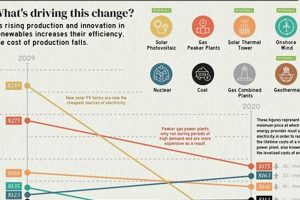
The Levelized Cost of Energy (LCOE) is a metric used to compare the cost of electricity generation across different technologies. It accounts for the total lifecycle costs of a project, including capital expenditures, operating expenses, and fuel costs, divided by the total energy output over the project’s lifespan. A lower LCOE indicates greater cost-efficiency. For example, solar and wind energy have experienced significant LCOE reductions in recent years, making them increasingly competitive with coal and natural gas in many regions. This competitiveness is driving increased investment and deployment of these technologies, enhancing their overall effectiveness as energy sources.
- Capital Costs and Economies of Scale
The initial capital investment required for renewable energy projects can be substantial. However, economies of scale can drive down costs as deployment increases and manufacturing processes become more efficient. For instance, the cost of solar photovoltaic (PV) panels has decreased dramatically over the past decade due to technological advancements and increased production volume. This cost reduction has made solar energy more accessible to a wider range of consumers and businesses, increasing its effectiveness as a viable energy alternative. Government policies, such as tax incentives and subsidies, can also play a crucial role in reducing capital costs and promoting the adoption of clean energy technologies.
- Operating and Maintenance (O&M) Expenses
While renewable energy technologies often have lower fuel costs compared to fossil fuels, operating and maintenance (O&M) expenses can still impact their overall cost-efficiency. Factors such as equipment maintenance, grid connection fees, and land lease costs contribute to O&M expenses. Efficiently managing these costs is essential to maximizing the economic competitiveness of renewable energy projects. Advanced monitoring systems and predictive maintenance strategies can help reduce downtime and lower O&M costs, thereby enhancing the long-term cost-effectiveness of these technologies.
- Externalities and Societal Benefits
Traditional cost analyses often fail to account for the externalities associated with fossil fuel-based energy production, such as air pollution, greenhouse gas emissions, and public health impacts. Renewable energy sources offer significant societal benefits by reducing these negative externalities. Quantifying these benefits and incorporating them into cost-benefit analyses can provide a more comprehensive assessment of the true cost-efficiency of clean energy technologies. Carbon pricing mechanisms, such as carbon taxes or cap-and-trade systems, can help internalize these externalities and level the playing field for renewable energy sources.
The foregoing demonstrates that cost-efficiency, evaluated through metrics like LCOE and encompassing capital expenditures, operational expenses, and the incorporation of externalities, is a crucial factor in the evaluation process. Clean energy sources must not only be environmentally sound but also economically competitive to achieve widespread adoption and make a significant contribution to the global energy transition. Further advancements in technology, supportive government policies, and innovative financing models will continue to play a vital role in driving down costs and enhancing the effectiveness of clean energy as a primary energy source.
4. Sustainability

Sustainability is a central tenet in determining the efficacy of any renewable energy source. The long-term viability of an energy technology hinges on its ability to minimize environmental impacts, conserve natural resources, and promote social equity. Assessing sustainability requires a comprehensive lifecycle analysis, considering resource extraction, manufacturing, operation, and decommissioning phases.
- Resource Depletion
The utilization of finite resources in the production and operation of renewable energy technologies poses a significant sustainability challenge. For example, the manufacturing of solar photovoltaic (PV) panels requires rare earth minerals, the extraction of which can result in environmental degradation and geopolitical concerns. Similarly, biomass energy, while renewable, can lead to deforestation and soil erosion if not managed sustainably. A truly effective renewable energy source must minimize its reliance on non-renewable resources and prioritize the use of recycled or sustainably sourced materials.
- Environmental Impact
Although intended to mitigate environmental damage, renewable energy technologies can still exert negative environmental impacts. Hydropower projects, for instance, can alter river ecosystems, disrupt fish migration patterns, and inundate terrestrial habitats. Wind farms may pose a threat to avian wildlife and generate noise pollution. Geothermal energy can release greenhouse gases, such as hydrogen sulfide, under certain conditions. Evaluating the overall environmental footprint of a renewable energy source requires a thorough assessment of its potential impacts on air quality, water resources, biodiversity, and land use.
- Lifecycle Emissions
The lifecycle emissions associated with renewable energy technologies extend beyond the operational phase. The manufacturing, transportation, and installation processes can contribute significantly to greenhouse gas emissions. For instance, the production of concrete for wind turbine foundations and the mining of materials for battery storage systems can be energy-intensive activities. A comprehensive lifecycle assessment (LCA) is essential for accurately quantifying the carbon footprint of renewable energy technologies and identifying opportunities for reducing emissions across the entire value chain.
- Social Equity
The deployment of renewable energy technologies should promote social equity by ensuring that benefits are distributed fairly across communities. Large-scale renewable energy projects can displace local populations, disrupt traditional livelihoods, and exacerbate existing inequalities. It is imperative to engage with affected communities, address their concerns, and provide equitable compensation and opportunities. Furthermore, access to affordable and reliable energy is a fundamental human right, and renewable energy technologies should be deployed in a manner that promotes energy justice and reduces energy poverty.
The sustainability of a renewable energy source transcends mere environmental considerations, encompassing resource management, lifecycle impacts, and social equity. A holistic approach to sustainability is crucial for evaluating the overall effectiveness of renewable energy technologies and ensuring their long-term contribution to a sustainable energy future. Addressing the challenges associated with resource depletion, environmental impacts, lifecycle emissions, and social equity is essential for maximizing the benefits of clean energy and minimizing unintended consequences.
5. Environmental Impact
The assessment of environmental impact is paramount when evaluating the effectiveness of renewable energy sources. While these sources are intended to supplant fossil fuels and mitigate climate change, their deployment can engender distinct environmental consequences that must be carefully considered. The minimization of adverse environmental effects is a crucial factor in determining the overall viability and sustainability of any energy technology.
- Land Use and Habitat Disruption
Large-scale renewable energy installations, such as solar farms and wind farms, require significant land areas. This can result in habitat loss, fragmentation, and displacement of wildlife. The construction of hydropower dams inundates land, altering river ecosystems and affecting aquatic species. Careful site selection, incorporating environmental impact assessments and mitigation strategies, is essential to minimize these disruptions. For example, siting wind farms away from migratory bird routes and implementing habitat restoration plans can reduce the impact on biodiversity.
- Resource Extraction and Manufacturing
The production of renewable energy technologies necessitates the extraction of raw materials and the manufacturing of components. Mining for rare earth elements used in solar panels and wind turbines can lead to soil erosion, water pollution, and deforestation. The manufacturing process itself can be energy-intensive and generate greenhouse gas emissions. Prioritizing the use of recycled materials, adopting sustainable manufacturing practices, and improving material efficiency can reduce the environmental footprint of renewable energy technologies.
- Waste Management and Recycling
As renewable energy infrastructure reaches the end of its operational life, proper waste management and recycling practices become critical. Disposing of solar panels and wind turbine blades can pose environmental challenges due to the presence of hazardous materials and the difficulty of recycling composite materials. Developing effective recycling technologies and establishing responsible disposal protocols are necessary to prevent pollution and recover valuable resources. Extended Producer Responsibility (EPR) schemes can incentivize manufacturers to design products for recyclability and manage end-of-life waste.
- Impacts on Water Resources
Certain renewable energy technologies can impact water resources. Hydropower dams alter river flow regimes, affecting water availability and quality downstream. Concentrated solar power (CSP) plants require significant amounts of water for cooling, potentially straining water supplies in arid regions. Geothermal energy extraction can lead to groundwater contamination if not properly managed. Implementing water-efficient cooling technologies, optimizing dam operations, and adopting closed-loop geothermal systems can mitigate the impacts on water resources.
The various facets of environmental impact are integral to determining the most effective renewable energy source. Trade-offs inevitably exist, and a comprehensive analysis is required to weigh the benefits of displacing fossil fuels against the potential environmental costs. Prioritizing technologies that minimize environmental impacts across their entire lifecycle, from resource extraction to decommissioning, is essential for ensuring a truly sustainable energy transition. Continuous innovation in materials science, manufacturing processes, and waste management practices is crucial for further reducing the environmental footprint of renewable energy technologies and enhancing their overall effectiveness.
6. Geographic Suitability

The effectiveness of any renewable energy source is inextricably linked to its geographic suitability. This parameter dictates the potential for a given technology to generate energy efficiently and reliably in a specific location. The availability and intensity of renewable resources solar irradiance, wind speed, hydro potential, geothermal gradients, and biomass feedstock vary significantly across different regions. Selecting the most appropriate technology for a particular location is therefore crucial for maximizing energy output, minimizing environmental impacts, and ensuring economic viability. A solar photovoltaic installation in a high-latitude region with frequent cloud cover will inherently be less effective than one situated in a sun-drenched desert environment. Similarly, a wind farm in a location with low average wind speeds will underperform compared to one in a consistently windy area.
Geographic suitability extends beyond mere resource availability. Factors such as topography, geology, proximity to population centers, and access to grid infrastructure also play critical roles. Hydropower potential is determined by the availability of suitable river systems and dam sites, while geothermal energy requires access to geothermal reservoirs at relatively shallow depths. The cost of transmitting electricity from remote renewable energy installations to load centers can significantly impact the economic feasibility of a project. For instance, Iceland’s abundant geothermal resources provide a significant portion of the nation’s energy needs, but replicating this model elsewhere requires both suitable geological conditions and proximity to energy consumers or the availability of efficient long-distance transmission infrastructure. The Sahara Desert’s immense solar potential is likewise tempered by the challenges of transmitting electricity across vast distances to populated areas.
In conclusion, geographic suitability is not merely a supplementary consideration, but rather a fundamental determinant of renewable energy effectiveness. A thorough assessment of local resource availability, environmental conditions, and infrastructural constraints is essential for selecting and deploying clean energy technologies in a manner that optimizes energy production, minimizes environmental impact, and ensures long-term sustainability. Ignoring geographic suitability leads to inefficient resource allocation, underperforming projects, and ultimately, hinders the transition to a sustainable energy future. Future renewable energy strategies must place greater emphasis on localized assessments to maximize the effectiveness of diverse technologies across various geographic contexts.
Frequently Asked Questions
This section addresses common inquiries regarding the selection and evaluation of renewable energy sources, offering concise and informative responses to prevalent questions.
Question 1: What factors primarily influence the overall effectiveness of a renewable energy source?
The primary factors include scalability, consistency of energy supply, cost-efficiency, environmental impact throughout its lifecycle, and geographic suitability. A balanced consideration of these elements determines the viability and applicability of a specific technology.
Question 2: Is there a single renewable energy source universally recognized as the most effective?
No single source consistently outperforms all others. The ideal choice depends on specific regional conditions, energy demands, and environmental priorities. A diversified approach, incorporating a mix of renewable technologies, often proves to be the most resilient and effective strategy.
Question 3: How is the Levelized Cost of Energy (LCOE) used in evaluating different renewable energy options?
The Levelized Cost of Energy (LCOE) provides a standardized metric for comparing the total lifecycle costs of electricity generation across various technologies. It accounts for capital expenditures, operating expenses, and fuel costs, offering a comprehensive view of economic competitiveness.
Question 4: What role does energy storage play in enhancing the effectiveness of intermittent renewable sources like solar and wind?
Energy storage technologies, such as batteries and pumped hydro, mitigate the intermittency of solar and wind energy by storing excess electricity during periods of high production and releasing it when demand exceeds supply. This enhances grid stability and reliability.
Question 5: How can the environmental impact of renewable energy technologies be minimized?
Minimizing environmental impact requires careful consideration of land use, resource extraction, waste management, and lifecycle emissions. Sustainable manufacturing practices, responsible sourcing of materials, and effective recycling programs are crucial elements.
Question 6: What policy measures can promote the deployment of more effective renewable energy solutions?
Effective policy measures include feed-in tariffs, tax credits, renewable portfolio standards, and carbon pricing mechanisms. These policies create a favorable investment climate, incentivize innovation, and drive the adoption of clean energy technologies.
Selecting optimal solutions necessitates a comprehensive, data-driven approach, considering the specific context of each application and prioritizing solutions that offer the greatest environmental and economic benefits.
The subsequent section will provide a comparative analysis of select renewable energy technologies, highlighting their strengths, weaknesses, and suitability for various applications.
Determining Optimal Renewable Energy Solutions
Evaluation of technologies to determine the most effective renewable energy source requires a comprehensive analysis considering scalability, consistency, cost-efficiency, environmental impact, and geographic suitability. No single energy source universally excels across all criteria, demanding a nuanced assessment based on specific regional contexts and energy requirements. Diversification of renewable energy sources, coupled with advancements in energy storage and grid management, enhances system resilience and reliability.
Continued investment in research, development, and deployment of renewable energy technologies is crucial to mitigate climate change and secure a sustainable energy future. Policymakers, industry stakeholders, and individual consumers must collaborate to promote informed decision-making and accelerate the transition to cleaner energy solutions. The long-term success of this endeavor depends on a commitment to innovation, responsible resource management, and equitable distribution of benefits.