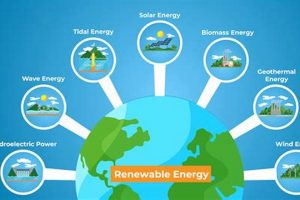
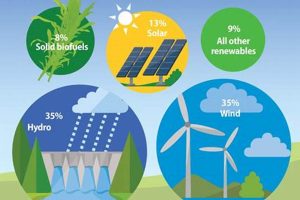
Harnessing power from naturally replenishing resources offers a sustainable alternative to traditional fossil fuels. This approach utilizes resources that regenerate on a human timescale, such as sunlight, wind, and water. For instance, solar energy converts sunlight into electricity, while wind turbines transform wind’s kinetic energy into usable power. Geothermal energy taps into the Earth’s internal heat for heating and electricity generation.
The adoption of these resources presents numerous advantages. It reduces dependence on finite fossil fuels, mitigating concerns about resource depletion and geopolitical instability. Furthermore, it minimizes greenhouse gas emissions and air pollution, contributing to improved air quality and mitigating climate change. Historically, societies have utilized renewable resources in various forms, but advancements in technology have made large-scale energy production from these sources increasingly viable.
The subsequent sections will delve into the specifics of several prominent methods, including solar power, wind power, hydropower, geothermal energy, and biomass energy. Each section will explore the underlying technologies, practical applications, and potential for future growth within the energy sector.
Considerations for Renewable Energy Integration
Implementing renewable energy solutions requires careful planning and a comprehensive understanding of the available options and their respective limitations. Successful integration involves optimizing resource availability, infrastructure development, and policy frameworks.
Tip 1: Assess Resource Availability: Conduct a thorough evaluation of available resources within a specific geographic area. Solar irradiance levels, wind speeds, and geothermal gradients vary significantly, impacting the feasibility of different projects.
Tip 2: Prioritize Energy Storage Solutions: Address the intermittent nature of some resources by incorporating energy storage technologies. Batteries, pumped hydro storage, and thermal storage can mitigate fluctuations and ensure a stable energy supply.
Tip 3: Invest in Grid Modernization: Upgrade existing grid infrastructure to accommodate distributed generation from variable sources. Smart grids with enhanced monitoring and control capabilities are essential for managing increased renewable energy penetration.
Tip 4: Develop Supportive Policy Frameworks: Establish clear and consistent policy incentives, such as feed-in tariffs, tax credits, and renewable energy mandates, to encourage investment and deployment.
Tip 5: Promote Community Engagement: Foster public understanding and acceptance of renewable energy projects through transparent communication and community involvement in the planning process.
Tip 6: Focus on Lifecycle Cost Analysis: Evaluate the total cost of ownership, including initial investment, operating expenses, and decommissioning, to make informed decisions about long-term economic viability.
Tip 7: Integrate Energy Efficiency Measures: Complement generation with demand-side management strategies to reduce overall energy consumption and minimize the need for large-scale infrastructure development.
Effective implementation requires a holistic approach that considers the interplay between technology, economics, and policy. By prioritizing resource assessment, storage, grid modernization, and supportive policies, stakeholders can maximize the benefits of renewable energy and create a sustainable energy future.
The subsequent sections will explore advanced technologies and future trends in renewable energy, highlighting innovative solutions and potential breakthroughs.
1. Solar Power Viability

The viability of solar power directly influences the overall success and adoption of diverse alternative energy options. As a core component of sustainable solutions, its accessibility, efficiency, and cost-effectiveness determine its integration potential. If solar energy is easily harnessed, affordable, and efficient, its contribution to the energy mix significantly increases, furthering the displacement of fossil fuels. The practical significance of this connection is evident in regions like California, where substantial investments in solar infrastructure have led to a significant reduction in reliance on traditional power plants, demonstrating a real-world cause-and-effect relationship.
Furthermore, the economic viability of solar power incentivizes research and development, leading to technological advancements that enhance its performance and reduce its environmental footprint. For instance, advancements in photovoltaic cell technology have increased energy conversion rates, making solar installations more productive and profitable. This ongoing innovation fuels its competitiveness against other energy sources and makes it a more attractive option for both residential and commercial applications. The availability of government subsidies and tax incentives also impacts the economic viability, promoting further deployment of solar systems.
In conclusion, the robust operation and effective design of solar technology directly impact the overall success of renewable sources. Addressing challenges such as intermittency through improved storage solutions and grid integration is crucial to ensure solar energy realizes its full potential as a cornerstone of a sustainable global energy system. The ongoing efforts to improve solar infrastructure and technology will not only benefit the solar sector but will also contribute significantly to the widespread adoption and effectiveness of other renewable energy options.
2. Wind Energy Potential

Wind energy potential functions as a significant determinant of the overall effectiveness of alternative power sources. As a renewable source, wind’s contribution to the energy mix is directly proportional to the exploitable potential. The magnitude of this potential influences investment decisions, technology development, and infrastructure planning within the renewable energy sector. Regions with consistently high wind speeds, such as the Great Plains in the United States or the North Sea in Europe, demonstrate the cause-and-effect relationship, attracting substantial wind farm development and contributing significantly to the local and national energy supply. The higher the exploitable wind capacity, the greater the displacement of fossil fuel-based generation.
Furthermore, the realization of maximum wind energy potential necessitates advancements in turbine technology, grid integration, and energy storage solutions. Larger, more efficient turbines can capture more kinetic energy, while smart grids facilitate the seamless integration of variable wind power into existing electricity networks. Addressing the intermittency of wind through storage technologies, such as batteries or pumped hydro, enhances its reliability and makes it a more dependable power source. For instance, the Hornsea Project One offshore wind farm in the UK showcases the integration of large-scale wind power with advanced grid management systems, ensuring a stable and predictable electricity supply to millions of homes.
In conclusion, fully realizing wind energy’s potential is crucial for the widespread adoption of renewable energy. Challenges such as land use conflicts, environmental impacts, and public acceptance must be addressed to ensure sustainable development. Continuing to improve wind turbine efficiency, grid infrastructure, and energy storage technologies will be essential to unlocking the full power of wind and integrating it seamlessly into a diversified renewable energy portfolio. The successful implementation and expansion of wind farms worldwide directly contribute to reducing carbon emissions and mitigating climate change, reinforcing its importance in a global transition to sustainable power generation.
3. Hydropower Sustainability

The concept of hydropower sustainability is paramount within the broader discussion of renewable energy sources. While hydropower is a well-established form of renewable energy, its environmental and social implications require careful consideration to ensure long-term sustainability and minimize negative impacts. Balancing energy generation with ecological preservation and community well-being is critical for maintaining its viability as a truly sustainable alternative.
- Ecological Impacts of Dams
Dam construction significantly alters river ecosystems, disrupting fish migration patterns, sediment transport, and water quality. The creation of reservoirs inundates habitats, leading to biodiversity loss and changes in aquatic and riparian ecosystems. Mitigation strategies, such as fish ladders and minimum flow requirements, can partially alleviate these impacts but often come with limitations. Examples include the ongoing efforts to restore salmon populations in the Columbia River Basin in the Pacific Northwest, where dam operations are carefully managed to balance power generation with fish passage.
- Social and Community Considerations
Hydropower projects can displace communities, disrupt traditional livelihoods, and alter cultural heritage sites. Displacement often leads to economic hardship and social disruption for affected populations. Meaningful consultation with local communities, fair compensation for lost assets, and participation in decision-making processes are essential for ensuring social sustainability. The Three Gorges Dam project in China, while generating significant power, resulted in the displacement of millions of people, highlighting the potential social costs associated with large-scale hydropower development.
- Lifecycle Greenhouse Gas Emissions
Although hydropower is generally considered a low-carbon energy source, reservoirs can emit greenhouse gases, particularly methane, due to the decomposition of organic matter in submerged areas. The magnitude of these emissions varies depending on the reservoir’s age, location, and management practices. In tropical regions, where reservoirs are often large and shallow, methane emissions can be substantial. Proper reservoir management, such as minimizing deforestation prior to flooding and promoting oxygenation, can help reduce these emissions. Studies of reservoirs in the Amazon Basin have shown significant variations in greenhouse gas emissions depending on specific site characteristics.
- Climate Change Vulnerability
Hydropower generation is vulnerable to climate change impacts, such as changes in precipitation patterns, increased frequency of droughts, and altered snowmelt patterns. Reduced water availability can decrease power generation capacity and threaten the reliability of hydropower systems. Adapting to climate change requires diversifying water resources, improving water management practices, and investing in climate-resilient infrastructure. The California drought of 2011-2017 significantly reduced hydropower generation in the state, highlighting the vulnerability of hydropower systems to prolonged dry periods.
Addressing these facets is essential for ensuring the long-term sustainability of hydropower within the landscape of different types of renewable energy sources. Balancing the benefits of hydropower generation with the need to protect ecosystems, support communities, and mitigate climate change impacts requires careful planning, responsible management, and ongoing monitoring. By integrating sustainability considerations into all stages of hydropower development, it is possible to harness its potential as a valuable contributor to a low-carbon energy future.
4. Geothermal Resource Access

Geothermal resource access is a critical factor determining the viability and deployment of geothermal energy among different types of renewable energy sources. The availability and accessibility of geothermal resources significantly impact the economic feasibility, technological requirements, and environmental considerations associated with geothermal power generation and direct-use applications.
- Geological Prerequisites
The fundamental requirement for geothermal energy extraction is the presence of accessible geothermal reservoirs, characterized by high temperatures at relatively shallow depths. These reservoirs are typically located in areas with active or recent volcanism, tectonic activity, or hydrothermal systems. The geological characteristics of a region, such as rock permeability, fault lines, and subsurface water circulation, determine the ease of accessing and extracting geothermal fluids. For example, Iceland’s abundant geothermal resources, due to its location on the Mid-Atlantic Ridge, have enabled widespread geothermal power generation and district heating. Conversely, regions lacking suitable geological conditions face significant challenges in developing geothermal projects, limiting their contribution to the overall energy mix.
- Technological Requirements for Extraction
Accessing geothermal resources often requires advanced drilling and extraction technologies to tap into high-temperature reservoirs located deep underground. Enhanced Geothermal Systems (EGS) involve fracturing hot, dry rocks to create artificial reservoirs, expanding the potential for geothermal energy production in areas without naturally occurring hydrothermal systems. EGS technologies are capital-intensive and require significant research and development to improve efficiency and reduce costs. The Soultz-sous-Forts project in France is an example of EGS technology, aiming to access geothermal resources in regions with limited natural permeability. The success and scalability of such projects are crucial for broadening geothermal resource access and enhancing its contribution to the renewable energy landscape.
- Economic Viability and Investment
The economic viability of geothermal projects is heavily influenced by the cost of accessing geothermal resources, including drilling expenses, exploration costs, and infrastructure development. High upfront costs can deter investment, particularly in regions with uncertain geothermal potential. Government incentives, such as tax credits, feed-in tariffs, and research funding, play a crucial role in mitigating financial risks and attracting private sector investment. The Geysers geothermal field in California, one of the world’s largest geothermal complexes, benefited from early government support, which spurred its development and demonstrated the economic potential of geothermal energy. The cost-effectiveness of geothermal resource access directly impacts its competitiveness relative to other renewable energy sources and conventional fossil fuels.
- Environmental Considerations
While geothermal energy is generally considered environmentally friendly, accessing geothermal resources can pose certain environmental challenges, including induced seismicity, land disturbance, and emissions of greenhouse gases and air pollutants. Proper environmental impact assessments, stringent regulations, and best management practices are essential for minimizing these risks. For example, careful monitoring and mitigation measures are necessary to prevent induced seismicity associated with EGS projects. Additionally, the release of hydrogen sulfide (H2S) and other gases from geothermal power plants requires effective emission control technologies. Balancing the benefits of geothermal energy with the need to protect ecosystems and public health is critical for ensuring its long-term sustainability among different types of renewable energy sources.
In conclusion, the ease of geothermal resource access, influenced by geological conditions, technological advancements, economic factors, and environmental considerations, profoundly impacts the role of geothermal energy within the portfolio of renewable energy options. Overcoming the challenges associated with resource access through innovation and strategic planning is essential for maximizing the contribution of geothermal energy to a sustainable and diversified energy future.
5. Biomass Conversion Efficiency

Biomass conversion efficiency is a pivotal factor determining the viability and contribution of biomass energy among different types of renewable energy sources. The efficiency with which biomass is converted into usable energy forms such as electricity, heat, or biofuels directly influences its economic competitiveness, environmental impact, and overall sustainability.
- Combustion Efficiency and Emissions
The completeness of biomass combustion significantly affects energy yield and emissions of greenhouse gases and air pollutants. Inefficient combustion results in lower energy output and higher emissions of particulate matter, carbon monoxide, and other harmful substances. Advanced combustion technologies, such as fluidized bed combustion and staged combustion, improve efficiency and reduce emissions by optimizing air-fuel ratios and combustion temperatures. For instance, modern biomass power plants equipped with advanced combustion systems achieve higher energy conversion rates and lower emission levels compared to traditional biomass-fired boilers, enhancing their sustainability as an energy source.
- Gasification and Syngas Utilization
Biomass gasification involves converting biomass into syngas, a mixture of carbon monoxide, hydrogen, and other gases, which can be used to generate electricity or produce biofuels. The efficiency of gasification processes determines the quantity and quality of syngas produced, impacting the overall energy output. Efficient gasification technologies, such as entrained flow gasification and fluidized bed gasification, maximize syngas yield and minimize tar formation. The use of syngas in combined cycle power plants or for the production of advanced biofuels, such as synthetic diesel and aviation fuels, enhances biomass’s contribution to the reduction of fossil fuel reliance.
- Anaerobic Digestion and Biogas Production
Anaerobic digestion is a biological process that converts organic matter into biogas, primarily composed of methane and carbon dioxide. The efficiency of anaerobic digestion depends on factors such as feedstock composition, digester design, and operating conditions. High-efficiency digesters, such as continuous stirred-tank reactors (CSTR) and anaerobic sequencing batch reactors (ASBR), optimize biogas production by maintaining stable operating conditions and promoting microbial activity. Biogas can be used for electricity generation, heating, or upgraded to biomethane for injection into natural gas pipelines, increasing biomass’s role in providing a diversified energy supply.
- Biofuel Production Efficiency and Feedstock Selection
The efficiency of biofuel production processes, such as ethanol fermentation and biodiesel transesterification, is critical for the economic viability and environmental sustainability of biofuels. Efficient conversion technologies maximize biofuel yield from biomass feedstocks while minimizing energy inputs and waste generation. The selection of sustainable biomass feedstocks, such as non-food crops, agricultural residues, and algae, is also important for avoiding competition with food production and minimizing land-use impacts. Advanced biofuel technologies, such as cellulosic ethanol production and hydrothermal liquefaction, offer the potential to convert a wider range of biomass feedstocks into biofuels with higher efficiency and lower environmental footprints.
In conclusion, optimizing biomass conversion efficiency across various conversion pathways is essential for enhancing the competitiveness and sustainability of biomass energy within the spectrum of different types of renewable energy sources. Improving combustion technologies, gasification processes, anaerobic digestion systems, and biofuel production methods will enable biomass to play a more significant role in reducing greenhouse gas emissions, diversifying energy supplies, and promoting a sustainable energy future.
6. Ocean Energy Feasibility

The assessment of ocean energy feasibility is integral to the diversified portfolio of different types of renewable energy sources. The successful implementation of ocean energy technologies hinges on the convergence of technical viability, economic competitiveness, environmental compatibility, and regulatory support. A rigorous evaluation of these factors determines whether ocean energy can contribute meaningfully to global energy demand and displace reliance on fossil fuels. The cause-and-effect relationship is evident: only when ocean energy technologies demonstrate a favorable balance of these considerations does investment, deployment, and widespread adoption become practical. The absence of demonstrated feasibility hinders progress and limits its integration into mainstream energy strategies.
Practical applications of understanding ocean energy feasibility can be observed through ongoing pilot projects and research initiatives worldwide. For instance, tidal stream generators, such as those deployed in the Pentland Firth in Scotland, exemplify the potential of tidal energy. However, their long-term economic viability and environmental impact are subject to continuous monitoring and assessment. Wave energy converters, tested at sites like the European Marine Energy Centre (EMEC) in Orkney, Scotland, demonstrate varying degrees of technical maturity and energy capture efficiency. The practical significance of these tests lies in refining designs, optimizing performance, and addressing potential environmental concerns before large-scale deployments are considered. Similarly, ocean thermal energy conversion (OTEC) plants, although technically feasible, face challenges related to cost-effectiveness and operational stability, limiting their near-term prospects. The viability of salinity gradient power remains under investigation, with ongoing research aimed at improving energy conversion efficiency and reducing infrastructure costs. These examples demonstrate the need for ongoing scrutiny to determine ocean energy’s ultimate role.
In conclusion, ocean energy’s contribution as a component within different types of renewable energy sources depends critically on rigorous feasibility assessments across multiple domains. Challenges remain regarding technology development, cost reduction, and environmental impact mitigation. Achieving widespread adoption requires continued innovation, supportive policies, and a commitment to sustainable practices. Only through comprehensive evaluation and refinement can ocean energy realize its full potential and contribute significantly to a cleaner, more sustainable energy future. This assessment directly informs strategic decisions related to resource allocation, technology investments, and the overall composition of renewable energy mixes.
Frequently Asked Questions
This section addresses common inquiries concerning diverse renewable energy options, offering concise answers to promote informed decision-making.
Question 1: What distinguishes renewable energy sources from non-renewable ones?
Renewable energy resources are naturally replenished within a human lifespan, such as solar, wind, and hydropower. Non-renewable resources, like fossil fuels, are finite and take millions of years to form.
Question 2: Are all renewable energy sources equally environmentally friendly?
While generally cleaner than fossil fuels, renewable sources can have environmental impacts. Hydropower dams can disrupt ecosystems, and biomass combustion can release air pollutants. Careful planning and mitigation are essential.
Question 3: How reliable are renewable energy sources, given their dependence on weather conditions?
Intermittency is a challenge, but advancements in energy storage (e.g., batteries, pumped hydro) and grid management are improving reliability. Diversifying renewable sources also helps stabilize supply.
Question 4: What is the current cost competitiveness of renewable energy sources compared to traditional fossil fuels?
The cost of many sources, particularly solar and wind, has decreased significantly and is now competitive with or even cheaper than fossil fuels in many regions. Factors like government policies and technology advancements further influence costs.
Question 5: What are the primary limitations hindering the widespread adoption of renewable energy sources?
Challenges include intermittency, infrastructure limitations (e.g., grid capacity), upfront investment costs, and policy uncertainties. Addressing these barriers is crucial for broader adoption.
Question 6: Can renewable energy sources completely replace fossil fuels in the future?
Achieving a 100% renewable energy system is technically feasible, but requires substantial investment, technological innovation, and policy support. A combination of different types of sources will likely be necessary.
In summary, while different types of renewable energy sources offer significant benefits, understanding their specific characteristics, challenges, and requirements is vital for effective implementation.
The following section will discuss policy implications and the future outlook for expanding renewable energy deployment.
Conclusion
The preceding discussion has illuminated the diverse array of “different types of renewable energy sources” available for integration into global energy systems. Solar, wind, hydropower, geothermal, biomass, and ocean energy each offer unique contributions, characterized by varying levels of maturity, resource availability, and environmental impact. Their successful implementation necessitates a nuanced understanding of their individual strengths and limitations.
The future trajectory of global energy production is inextricably linked to the strategic deployment of these resources. Addressing the challenges of intermittency, grid integration, and upfront investment is paramount. Governments, industries, and research institutions must collaborate to foster technological innovation, develop supportive policies, and ensure equitable access to sustainable energy solutions. The comprehensive and judicious utilization of “different types of renewable energy sources” represents a critical pathway toward mitigating climate change and securing a resilient energy future.