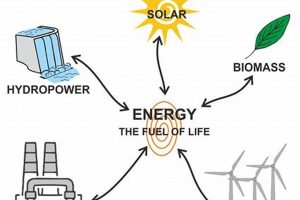
Harnessing power from naturally replenishing resources offers sustainable alternatives to traditional fossil fuels. Solar, wind, and hydropower represent prominent examples of these environmentally conscious methods. Solar energy employs photovoltaic cells to convert sunlight directly into electricity. Wind energy utilizes turbines to capture kinetic energy from the wind and transform it into usable power. Hydropower leverages the force of moving water, typically through dams, to generate electricity.
The significance of these energy solutions lies in their ability to reduce carbon emissions, mitigate climate change, and promote energy independence. Throughout history, societies have utilized wind and water for mechanical tasks; however, recent technological advancements have enabled large-scale electricity generation. The implementation of these resources contributes to a more sustainable energy future by decreasing reliance on finite and polluting fossil fuels.
Detailed exploration of solar power’s various forms, analysis of wind turbine technology and placement, and a comprehensive overview of the different hydropower approaches and their environmental impacts follow, providing a deeper understanding of each method’s specific characteristics and considerations.
Harnessing Sustainable Power
Effective implementation of resources that replenish naturally requires careful planning and execution. The following considerations ensure responsible and efficient energy generation.
Tip 1: Evaluate Resource Availability: Conduct a thorough assessment of the geographic area’s solar irradiance, wind patterns, or hydrological resources. Data accuracy is critical for projecting power generation potential.
Tip 2: Optimize Technology Selection: Choose technology suited to the specific resource characteristics and environmental conditions. For instance, consider thin-film solar panels in regions with diffused sunlight, or specialized wind turbines for varying wind speeds.
Tip 3: Implement Efficient Energy Storage: Energy storage solutions, such as battery systems or pumped hydro, mitigate intermittency issues and ensure a stable power supply. Storage capacity should be proportional to the anticipated fluctuations in power generation.
Tip 4: Prioritize Grid Integration: Seamless integration into existing power grids is essential for distributing the generated energy effectively. Smart grid technologies and advanced control systems can optimize energy flow and minimize transmission losses.
Tip 5: Conduct Comprehensive Environmental Impact Assessments: Evaluate potential impacts on ecosystems, water resources, and land use. Minimize negative effects through careful site selection, mitigation strategies, and ongoing monitoring.
Tip 6: Consider Lifecycle Costs: Evaluate not just upfront investment but ongoing maintenance, operational expenses, and eventual decommissioning costs. Financial modeling should encompass a long-term perspective to determine overall viability.
Tip 7: Engage with Local Communities: Collaborate with local residents and stakeholders to address concerns, promote acceptance, and ensure projects align with community needs. Community involvement fosters project success and reduces potential conflicts.
Implementing these tips promotes the responsible and effective harnessing of naturally replenishing resources, advancing a more sustainable energy future. Attention to resource availability, technology selection, energy storage, grid integration, environmental impacts, lifecycle costs and community engagement ensures the successful execution of energy projects.
The subsequent section elaborates on strategies for optimizing the economic feasibility and long-term sustainability of these energy solutions.
1. Solar Power Versatility

Solar energy, one of the most prominent sustainable options, exhibits substantial flexibility in its application. This adaptability contributes to its widespread adoption and potential for addressing diverse energy needs. Its various forms and implementation methods demonstrate its versatility within the domain of environmentally conscious energy generation.
- Photovoltaic (PV) Systems
Photovoltaic systems represent a direct conversion of sunlight into electricity using semiconductor materials. Applications range from small-scale residential rooftop installations to expansive utility-scale solar farms. This direct conversion process eliminates moving parts, contributing to low maintenance requirements and operational longevity. Their integration is essential to meeting future energy demand through the use of diverse energy resources.
- Concentrated Solar Power (CSP)
Concentrated solar power technologies utilize mirrors or lenses to focus sunlight onto a receiver, generating heat that drives a steam turbine connected to an electricity generator. CSP systems are often coupled with thermal energy storage, allowing for electricity generation even during periods of low solar irradiance or at night. These resources help supply electricity outside of traditional sunlight hours.
- Solar Thermal Applications
Solar thermal systems harness solar energy for direct heating purposes, such as water heating, space heating, and industrial process heat. Solar water heaters are commonly used in residential and commercial settings, reducing reliance on conventional energy sources for water heating. These direct heating methods contribute to improved efficient utilization of solar resources.
- Building-Integrated Photovoltaics (BIPV)
Building-integrated photovoltaics integrate solar cells directly into building materials, such as roofing tiles, facades, and windows. BIPV systems not only generate electricity but also serve as functional building components, reducing material costs and improving building energy efficiency. Widespread building-integrated PV systems enhance energy independence.
Solar power’s ability to adapt to varying scales, applications, and integration methods underscores its importance as a versatile option. By supporting diverse energy needs and reducing reliance on conventional resources, solar technology contributes significantly to a more sustainable energy future.
2. Wind Energy Scalability

Wind energy, recognized as one of the three prevalent categories of sustainable power sources, possesses a significant attribute: scalability. This feature allows wind energy projects to range from single, small-scale turbines powering individual residences to vast wind farms comprised of hundreds of turbines supplying electricity to entire regions. The cause of this scalability lies in the modular nature of wind turbine technology; adding or removing turbines adjusts the overall power generation capacity of a given installation. This adaptability makes wind energy particularly valuable in diverse geographical locations and for a wide range of energy demands.
The importance of wind energy scalability stems from its capacity to address varying energy needs effectively. For example, in remote rural areas, a single turbine might provide sufficient power for a small community, reducing dependence on grid infrastructure. Conversely, expansive wind farms, such as those found in the American Midwest or the North Sea, contribute substantially to the overall energy mix of larger populations and even entire nations. Furthermore, technological advancements continuously enhance the efficiency and power output of individual turbines, leading to increased scalability and reduced land use requirements for equivalent energy production. The ongoing development of offshore wind farms, which often involve larger and more powerful turbines, further exemplifies this trend.
In conclusion, the scalability of wind energy is a defining characteristic that makes it a critical component in the sustainable energy landscape. It allows for flexible deployment strategies, catering to diverse energy demands and geographic conditions. Ongoing technological progress continues to improve the efficiency and output of wind turbines, reinforcing wind’s position as a leading source of sustainable power. The understanding of this scalability is essential for effective energy planning and policy development, facilitating a transition towards a cleaner and more sustainable energy future.
3. Hydropower Reliability

Hydropower’s reliability distinguishes it among prominent sustainable sources. The stability of power generation, especially from large reservoir-based systems, offers a consistent and predictable energy supply. This reliability contrasts with the intermittent nature of solar and wind resources, where power output fluctuates based on weather conditions. Hydropower plants, particularly those with large water storage capacities, can regulate water flow to meet electricity demand, ensuring a stable and dependable energy source. The Hoover Dam, for example, demonstrates hydropower’s capacity to maintain a consistent power supply, supporting grid stability across multiple states. Hydropower mitigates the variability inherent in other renewable options, playing a vital role in ensuring grid stability and dependable energy supply.
Enhancing hydropower’s dependability often involves modernization and optimization. Upgrading turbines and generators improves efficiency and extends the lifespan of existing facilities. Implementing advanced monitoring and control systems allows operators to respond rapidly to changing grid conditions and optimize water resource management. Further, pumped storage hydropower, where water is pumped uphill to a reservoir during periods of low electricity demand and released to generate electricity during peak demand, helps to integrate intermittent renewable sources like solar and wind into the grid. Norway’s extensive network of hydropower plants, coupled with its pumped storage capabilities, exemplifies this integrated approach. These techniques solidify hydropower’s position as a reliable backbone for electrical grids incorporating increasing amounts of variable renewable energy.
Hydropower reliability is crucial for transitioning to a sustainable energy future. Its capacity to provide a consistent and controllable power source helps balance the variability of other renewable resources. Investing in upgrades and modernizing existing infrastructure is essential to maintain this reliability. Hydropower supports grid stability and enables the integration of more intermittent sources, facilitating decarbonization of the energy sector. While environmental impacts need careful consideration, hydropower continues to be a substantial component in global sustainable resource portfolios due to its capacity and reliability attributes.
4. Resource Geographic Dependency

The effectiveness and economic viability of solar, wind, and hydropower depend significantly on geographic location. This dependency dictates resource availability and influences technology selection, infrastructure development, and overall project feasibility.
- Solar Irradiance and Latitude
Solar energy’s potential is directly tied to solar irradiance, varying with latitude and climate. Regions closer to the equator, characterized by higher annual sunlight hours, demonstrate superior conditions for photovoltaic electricity generation. Conversely, higher latitude regions experience lower irradiance, requiring larger solar panel arrays or potentially favoring alternative energy resources. Site-specific assessments of solar irradiance, including cloud cover patterns, are essential for accurate project planning and optimization.
- Wind Patterns and Terrain
Wind energy potential depends on consistent and strong wind patterns, often influenced by terrain and coastal proximity. Mountain passes and coastal areas frequently exhibit elevated wind speeds, ideal for wind farm development. Geographic characteristics dictate turbine placement and design, with taller turbines preferred in areas with lower wind shear. Detailed wind resource assessments, incorporating meteorological data and terrain analysis, are critical for maximizing energy capture and minimizing turbulence-related issues.
- Hydrological Resources and Topography
Hydropower generation necessitates suitable hydrological resources and topographic conditions. Regions with significant river systems and elevation gradients offer the greatest potential for hydroelectric power generation. Dam construction requires stable geological formations and minimal environmental impact. Geographic considerations extend to water availability, seasonal flow variations, and potential impacts on downstream ecosystems. Comprehensive watershed management and environmental impact assessments are integral for sustainable hydropower development.
- Geothermal Gradients and Tectonic Activity
Geothermal energy production is intrinsically linked to areas with elevated geothermal gradients, typically associated with tectonic activity or volcanic regions. These areas offer accessible sources of subterranean heat, which can be used for electricity generation or direct heating applications. Resource mapping and geological surveys are important steps to accurately assess geothermal energy’s potential. Iceland’s widespread use of geothermal energy illustrates how the specific geographic feature of high geothermal gradients is utilized to promote sustainable energy production.
The interplay between resource geographic dependency and the deployment of environmentally conscious energy sources underscores the necessity for comprehensive site-specific assessments. Efficient implementation of solar, wind, and hydropower requires detailed consideration of local climate, terrain, and hydrological resources to maximize power generation and minimize environmental impacts. Ignoring these geographic factors will result in inefficient energy production or project failure.
5. Technology Advancements Impact
Technological progress exerts a substantial influence on the efficiency, cost-effectiveness, and widespread adoption of solar, wind, and hydropower. Innovations across multiple domains are transforming how these resources are harnessed and integrated into global energy systems, extending viability and potential.
- Improved Solar Cell Efficiency
Advancements in photovoltaic materials, such as perovskite and multi-junction cells, increase the efficiency of converting sunlight into electricity. Higher efficiency translates into greater power output from smaller areas, reducing land use requirements and lowering installation costs. The ongoing pursuit of improved solar cell technology is crucial for making solar power more economically competitive with conventional energy sources. For example, the development of tandem solar cells, combining different materials to capture a broader spectrum of sunlight, has significantly increased the energy conversion rate.
- Enhanced Wind Turbine Design
Wind turbine technology constantly evolves, with larger rotor diameters and taller towers increasing energy capture. Improved blade aerodynamics and advanced control systems optimize power generation under varying wind conditions. Direct-drive generators reduce mechanical losses and improve reliability. The development of floating offshore wind platforms opens up access to stronger and more consistent offshore winds, further expanding the potential of wind energy. These design improvements are essential for scaling up wind energy production and reducing the cost per unit of electricity generated.
- Advanced Hydropower Systems
Technological enhancements in hydropower focus on improving efficiency, reducing environmental impacts, and expanding the range of viable sites. Fish-friendly turbine designs minimize harm to aquatic life, addressing one of the key environmental concerns associated with hydropower. Pumped storage systems, which store energy by pumping water uphill during periods of low demand and releasing it to generate electricity during peak demand, contribute to grid stability and enable greater integration of intermittent renewable sources. The modernization of existing hydropower plants with more efficient turbines and control systems increases power output and extends operational lifespan. These advancements maintain hydropower’s position as a reliable sustainable resource.
- Smart Grid Integration and Storage Solutions
Smart grid technologies facilitate the integration of renewable energy sources by optimizing energy flow, improving grid stability, and enabling demand response. Advanced energy storage systems, such as lithium-ion batteries and flow batteries, mitigate the intermittent nature of solar and wind power, ensuring a consistent and reliable electricity supply. Predictive algorithms and data analytics enable more accurate forecasting of renewable energy generation, facilitating better grid management and reducing the need for backup power. The deployment of smart grid technologies and energy storage solutions is critical for maximizing the potential of renewable energy sources and transitioning to a more sustainable energy system.
These examples underscore the vital role technological advancements play in realizing the full potential of energy from naturally replenishing sources. From enhancing the efficiency of solar cells to optimizing wind turbine design and improving grid integration, technological progress lowers costs, increases reliability, and expands the applicability of these energy sources. Continued investment in research and development is essential to further accelerate this progress and achieve a sustainable energy future.
Frequently Asked Questions
This section addresses common inquiries regarding environmentally conscious methods of power generation, providing clear and concise answers to foster a better understanding of these energy solutions.
Question 1: What defines an energy source as renewable?
An energy source is classified as renewable if it is naturally replenished at a rate comparable to its consumption. These sources, such as solar, wind, and hydropower, derive from processes or resources that are essentially inexhaustible on a human timescale.
Question 2: Are resources that replenish naturally entirely free of environmental impact?
While these energy alternatives generally possess lower environmental impacts than fossil fuels, they are not entirely without consequence. Hydropower facilities may disrupt aquatic ecosystems, wind farms can pose risks to avian species, and solar farms require land use, potentially affecting habitats. Comprehensive environmental impact assessments are essential for minimizing negative effects.
Question 3: How do the costs of energy from naturally replenishing resources compare to traditional sources?
The costs associated with these sustainable methods vary depending on the specific technology, geographic location, and available incentives. Solar and wind energy have experienced substantial cost reductions in recent years, becoming increasingly competitive with fossil fuels. Hydropower costs are site-specific and influenced by construction and environmental mitigation expenses.
Question 4: What role does energy storage play in utilizing energy from naturally replenishing resources?
Energy storage solutions are crucial for mitigating the intermittent nature of solar and wind power. Technologies such as batteries, pumped hydro storage, and thermal energy storage enable the storage of excess energy generated during periods of high production and its release during periods of low production, enhancing grid stability.
Question 5: How does grid infrastructure affect the deployment of these energy resources?
Adequate grid infrastructure is essential for transporting energy generated from naturally replenished resources to consumers. Upgrading transmission lines, implementing smart grid technologies, and enhancing grid flexibility are necessary to accommodate the increasing integration of these variable energy sources.
Question 6: What are the primary limitations hindering wider adoption of energy from naturally replenishing resources?
Limitations include intermittency, geographic constraints, upfront capital costs, and the need for grid infrastructure upgrades. Technological advancements, policy support, and market mechanisms are instrumental in overcoming these barriers and promoting wider adoption.
In summary, resources that replenish naturally offer a sustainable pathway to meet energy demands, although challenges related to intermittency, infrastructure, and cost require ongoing technological advancement and strategic policy implementations.
The next section examines the future prospects and evolving trends within the field of renewable energy sources.
Conclusion
The preceding discussion clarified the attributes of prominent sustainable energy methods. Solar, wind, and hydropower represent significant alternatives to fossil fuels, characterized by their capacity for natural replenishment. While each possesses unique strengths and weaknesses concerning efficiency, geographic suitability, and technological readiness, their combined potential to mitigate climate change and enhance energy security is undeniable.
Continued investment in research and development, coupled with strategic policy implementation, is critical to further optimize the utilization of these energy sources. The transition to a sustainable energy future necessitates a comprehensive approach that integrates technological innovation, infrastructure development, and responsible resource management. Embracing these resources ensures a more resilient and environmentally responsible energy landscape for generations to come.
![Biogas: Is It a Renewable Source of Energy? [Answered] | Renewable Energy Solutions for a Sustainable Future | Clean & Green Power](https://pplrenewableenergy.com/wp-content/uploads/2026/03/th-204-300x200.jpg "Biogas: Is It a Renewable Source of Energy? [Answered] Renewable Energy Solutions for a Sustainable Future | Clean & Green Power")