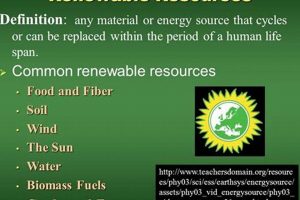
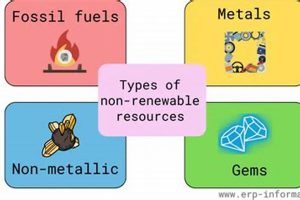
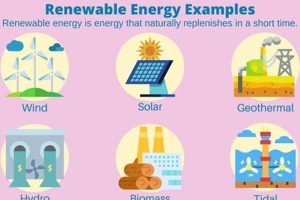
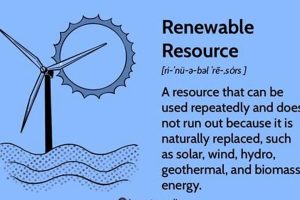
The distinction lies in the rate of replenishment. One category comprises sources that regenerate naturally within a human lifespan, while the other encompasses resources with finite supplies, accumulated over geological timescales. Solar, wind, hydro, geothermal, and biomass energy fall into the former classification, continuously replenished by natural processes. Conversely, fossil fuels like coal, oil, and natural gas, along with nuclear fuels, constitute the latter, existing in limited quantities.
Understanding this fundamental characteristic is vital for energy planning and environmental stewardship. Reliance on the former reduces reliance on exhaustible resources, decreasing emissions, bolstering energy security, and mitigating environmental impacts. Historically, societies heavily depended on the second group, driving industrialization and economic growth. However, the detrimental effects of their extraction and combustion necessitate a transition towards sustainable alternatives.
This document will further elaborate on the specific attributes of each category. It will analyze the specific energy production methods, their advantages, disadvantages, environmental considerations, and economic viability, aiming to provide a balanced and comprehensive understanding of energy source distinctions.
The selection of energy sources necessitates careful evaluation. Understanding the core characteristics of available options provides a foundation for informed decision-making.
Tip 1: Assess Long-Term Availability: Prioritize energy sources with a demonstrable capacity for sustained yield. Consider the reserve-to-production ratios of finite resources alongside the continuous renewal rates of alternative options.
Tip 2: Evaluate Environmental Impact: Analyze the full lifecycle emissions associated with each energy source. This includes emissions from extraction, processing, transportation, and combustion or energy conversion.
Tip 3: Account for Infrastructure Requirements: Recognize that different energy options require distinct infrastructure investments. This impacts both initial capital expenditures and ongoing operational costs.
Tip 4: Consider Energy Security Implications: Diversify energy portfolios to minimize vulnerability to supply disruptions and geopolitical instability. Dependence on single sources, particularly imported fuels, can create significant risks.
Tip 5: Analyze Economic Viability: Evaluate the levelized cost of energy (LCOE) for different options. This metric allows for a comprehensive comparison of the cost per unit of energy produced, accounting for capital costs, operating expenses, and fuel costs.
Tip 6: Investigate Technological Advancements: Keep abreast of evolving technologies in both fields. Efficiency improvements, cost reductions, and enhanced energy storage capabilities can significantly alter the relative merits of different choices.
Tip 7: Acknowledge Intermittency Challenges: Recognize the variability of certain energy sources, such as solar and wind. Implement strategies, like energy storage and grid management, to mitigate the impacts of intermittent supply.
Adopting these considerations promotes the development of sustainable and resilient energy systems. By carefully evaluating the long-term implications of energy choices, societies can effectively address energy needs while minimizing environmental harm.
The next segment will offer specific strategies for integrating these considerations into comprehensive energy policies and long-term planning.
1. Replenishment Rate

The replenishment rate is the defining characteristic in differentiating renewable and non-renewable energy resources. It dictates the long-term availability and sustainability of an energy source. Renewable energy sources, such as solar, wind, and hydropower, are characterized by their rapid replenishment rates. Solar energy, for instance, is constantly replenished by the sun; wind energy is driven by atmospheric processes continuously fueled by solar radiation; and hydropower relies on the water cycle, a perpetual process. Non-renewable energy resources, conversely, have replenishment rates measured in millions of years, rendering them effectively finite within a human timescale. The extraction and consumption of fossil fuels like coal, oil, and natural gas far outpace their geological formation, leading to depletion of reserves. The rate disparity is the primary cause of the critical distinctions in the environmental, economic, and geopolitical implications of each energy type.
Understanding the impact of replenishment rates on long-term energy security is paramount. Consider the example of oil reserves. Global consumption rates are such that proven reserves are projected to last for a finite period, contingent on extraction technology and economic viability. This scarcity fuels geopolitical competition and price volatility. In contrast, the reliance on solar energy in sun-rich regions ensures a stable and predictable energy supply, independent of geopolitical factors. The implementation of policies that prioritize the development and deployment of renewable energy technologies can mitigate the risks associated with depleting finite resources.
In summary, the replenishment rate forms the foundational element of the renewable and non-renewable energy resource dichotomy. Recognizing the implications of differing replenishment rates is crucial for informed decision-making concerning energy policies, investments, and technological advancements. The challenge lies in effectively transitioning energy systems to leverage the inherent advantages of rapidly replenished resources, ensuring both environmental sustainability and long-term energy security.
2. Environmental Impact

The divergence in environmental impact constitutes a pivotal aspect of the “difference between renewable and non-renewable energy resources”. Non-renewable resources, particularly fossil fuels, exert substantial environmental consequences across their entire lifecycle, from extraction to combustion. Extraction processes such as mining and drilling can disrupt ecosystems, contaminate soil and water, and lead to habitat loss. Combustion of these fuels releases greenhouse gases (carbon dioxide, methane, nitrous oxide), contributing significantly to climate change and its associated effects: rising global temperatures, sea-level rise, and increased frequency of extreme weather events. Further, the burning of fossil fuels releases air pollutants, including particulate matter and sulfur dioxide, causing respiratory illnesses and other health problems. The environmental consequences are significant, widespread, and persistent, creating long-term challenges for ecological integrity and human well-being. A pertinent example is the Deepwater Horizon oil spill, which devastated marine ecosystems and coastal communities, demonstrating the potential for catastrophic environmental damage from fossil fuel extraction.
In contrast, renewable energy sources generally exhibit a smaller environmental footprint. Solar, wind, and hydropower operations produce minimal or no greenhouse gas emissions during electricity generation. However, environmental impacts are not entirely absent. The manufacturing of solar panels and wind turbines involves resource extraction and energy consumption, contributing to some emissions. Hydropower dams can alter river ecosystems, affecting fish migration and water quality. Biomass energy, when sustainably sourced, can be carbon neutral, but deforestation and unsustainable harvesting practices can negate these benefits. Geothermal energy can release small amounts of greenhouse gases trapped underground. Therefore, while renewable energy sources offer a substantial improvement over fossil fuels, a complete lifecycle assessment is essential to quantify and mitigate their specific environmental impacts.
In summary, the significantly lower environmental impact of renewable energy sources, in comparison to the detrimental effects of non-renewable resources, underscores the imperative for transitioning towards a sustainable energy future. While renewable technologies are not entirely without environmental consequences, their impacts are generally less severe, more localized, and more amenable to mitigation strategies. Recognizing and addressing the environmental dimension is critical for energy policy decisions aimed at minimizing ecological damage and securing a healthy planet for future generations. A thorough understanding of these differences promotes the development of comprehensive strategies that minimize environmental harm.
3. Resource Availability

Resource availability serves as a crucial differentiating factor when assessing energy sources. The finite nature of certain resources compared to the sustained yield of others underpins fundamental choices in energy policy and infrastructure development. This section examines key facets of resource availability and their implications.
- Global Distribution of Fossil Fuels
Fossil fuel reserves are unevenly distributed across the globe. This concentration can lead to geopolitical dependencies and price volatility, as nations reliant on imports are vulnerable to supply disruptions. Examples include the concentration of oil reserves in the Middle East and the geographical limitations on coal deposits. The distribution patterns create strategic vulnerabilities and necessitate diversified energy portfolios.
- Ubiquity of Renewable Resources
Renewable resources, such as solar radiation and wind energy, are geographically more dispersed than fossil fuels. While specific locations may offer higher yields (e.g., deserts for solar, coastal regions for wind), these resources are accessible to a greater number of countries. This widespread availability enhances energy security and reduces reliance on specific regions, fostering greater self-sufficiency.
- Technology Dependence for Resource Extraction
Accessing certain non-renewable resources requires advanced and often costly extraction technologies. Deepwater drilling for oil and hydraulic fracturing (fracking) for natural gas exemplify this dependency. The economic and environmental risks associated with these technologies further constrain resource availability. In contrast, the extraction of renewable energy typically requires less complex and less environmentally invasive techniques, although technological advancements continue to improve efficiency.
- Long-Term Resource Depletion
The extraction and consumption of non-renewable resources deplete finite reserves. As reserves dwindle, extraction becomes more challenging and costly, potentially leading to resource scarcity and price increases. Conversely, renewable resources, by their nature, are constantly replenished and therefore do not face the same depletion risks, offering a more sustainable long-term energy supply.
In summary, the availability of energy resources, both in terms of geographical distribution and long-term sustainability, directly impacts energy security, economic stability, and environmental considerations. The inherent differences in resource availability between renewable and non-renewable sources highlight the need for strategic energy planning that prioritizes diversified portfolios and sustainable resource management to mitigate risks associated with finite resources.
4. Energy Security

Energy security, defined as the uninterrupted availability of energy sources at an affordable price, is intrinsically linked to the distinctions between renewable and non-renewable energy resources. The reliance on specific energy sources significantly shapes a nation’s vulnerability to supply disruptions and price fluctuations. The selection of energy resources directly influences a country’s overall energy security posture.
- Geopolitical Risk Mitigation
Non-renewable resources, such as oil and natural gas, are often concentrated in specific geographic regions. Reliance on these regions exposes importing nations to geopolitical instability, supply embargoes, and price manipulation. Conversely, renewable energy resources, like solar and wind, are geographically more dispersed. Diversifying energy portfolios with renewable sources reduces dependence on volatile regions, mitigating geopolitical risks. For example, countries investing heavily in domestic solar and wind capacity can lessen their vulnerability to disruptions in the global oil market.
- Price Volatility Reduction
The prices of non-renewable energy resources are subject to fluctuations influenced by geopolitical events, market speculation, and production constraints. These fluctuations can create economic instability and increase energy costs for consumers and industries. Renewable energy sources, particularly those with low operating costs (e.g., wind, solar), offer price stability, as their costs are primarily determined by upfront capital investments. This price predictability enhances economic planning and reduces exposure to volatile global energy markets.
- Resilience to Infrastructure Disruptions
Centralized energy systems relying on fossil fuels are vulnerable to disruptions from natural disasters, cyberattacks, and infrastructure failures. For example, a hurricane damaging an oil refinery can lead to widespread fuel shortages. Distributed renewable energy systems, such as rooftop solar and microgrids, enhance resilience by providing decentralized power generation. This distributed architecture reduces dependence on single points of failure and improves the ability to maintain energy supply during emergencies.
- Indigenous Resource Utilization
Investing in renewable energy allows nations to utilize their indigenous resources, reducing reliance on imported fuels. For example, countries with abundant solar resources can develop solar power plants, creating jobs and stimulating local economies. Similarly, nations with strong wind resources can harness wind energy for electricity generation. Utilizing indigenous resources enhances energy independence, reduces trade deficits, and promotes sustainable economic development.
The connection between energy security and the choice of energy resources is undeniable. Prioritizing renewable energy sources promotes greater energy independence, reduces geopolitical risks, enhances resilience to infrastructure disruptions, and fosters economic stability. Therefore, transitioning towards a diversified energy mix that incorporates a significant proportion of renewable energy is a strategic imperative for enhancing long-term energy security.
5. Economic Considerations
Economic considerations are paramount in evaluating the feasibility and adoption of various energy sources. The cost structures associated with renewable and non-renewable energy resources differ significantly, influencing investment decisions, market competitiveness, and overall energy affordability. These factors necessitate a comprehensive analysis to guide sustainable energy transitions.
- Upfront Capital Costs vs. Fuel Costs
Renewable energy technologies typically involve substantial upfront capital investments for infrastructure development, such as solar panel installations or wind turbine construction. Once operational, these technologies often have low marginal costs, as they do not require continuous fuel purchases. Conversely, non-renewable energy sources usually entail lower initial capital expenditures but necessitate ongoing fuel costs for operations. The fluctuating prices of fossil fuels can significantly impact the long-term economic viability of these energy systems. The relative attractiveness of each option depends on factors like discount rates, project lifespans, and fuel price projections.
- Levelized Cost of Energy (LCOE)
The Levelized Cost of Energy (LCOE) is a metric used to compare the total cost of an energy source over its lifetime, divided by the total energy produced. This metric provides a standardized method for evaluating the economic competitiveness of different energy technologies. The LCOE considers capital costs, operating expenses, fuel costs (if applicable), and decommissioning costs. Recent trends indicate that the LCOE of many renewable energy technologies, particularly solar and wind, has decreased significantly, making them increasingly competitive with traditional fossil fuels. These cost reductions are driven by technological advancements, economies of scale, and policy support mechanisms.
- Externalized Costs and Environmental Impacts
The economic analysis of energy resources should account for externalized costs, which are the indirect costs borne by society due to environmental and health impacts. Non-renewable energy sources often impose significant externalized costs, including air pollution, water contamination, and climate change-related damages. These costs are typically not reflected in the market prices of fossil fuels, leading to market distortions. Renewable energy sources generally have lower externalized costs, as they produce fewer emissions and have less environmental impact. Integrating externalized costs into economic assessments can provide a more accurate and socially responsible evaluation of energy options.
- Job Creation and Economic Development
The transition to renewable energy can create new job opportunities and stimulate economic development in sectors related to manufacturing, installation, and maintenance of renewable energy systems. Investments in renewable energy infrastructure can also attract private capital and foster innovation. In contrast, the decline of the fossil fuel industry may lead to job losses in traditional energy sectors. Policies aimed at promoting renewable energy can include workforce training programs and support for affected communities to facilitate a just and equitable energy transition. The net economic impact depends on factors such as regional resource endowments, policy choices, and technological innovation.
These economic considerations underscore the dynamic interplay between cost, environmental impact, and societal benefits in evaluating energy resources. The shifting landscape of energy economics necessitates a comprehensive and nuanced assessment to guide investment decisions and policy development, facilitating a transition towards sustainable and economically viable energy systems. Evaluating the differences in these economic facets allows for a more comprehensive understanding of the economic landscape of energy sources.
6. Technology Dependence

Technology dependence is a crucial aspect differentiating energy resources. The level of technological sophistication required for extraction, conversion, storage, and distribution significantly influences the viability and accessibility of both renewable and non-renewable energy sources. Understanding these technological dependencies is essential for informed energy policy and investment decisions.
- Extraction Technologies for Fossil Fuels
The extraction of non-renewable resources often requires complex and specialized technologies. Deepwater drilling, hydraulic fracturing (fracking), and enhanced oil recovery techniques demand significant technological expertise and capital investment. These technologies come with inherent environmental risks, including potential for spills, groundwater contamination, and induced seismicity. The advancement of extraction technologies enables access to previously unreachable reserves but also intensifies environmental concerns. The technological demands and associated risks further differentiate fossil fuels from many renewable options.
- Conversion Technologies for Renewable Energy
Renewable energy technologies, while environmentally benign in operation, rely heavily on advanced materials and manufacturing processes. Solar photovoltaic (PV) cells, wind turbines, and geothermal power plants require sophisticated engineering and precision manufacturing. Efficient energy conversion necessitates ongoing research and development to improve performance and reduce costs. Advances in materials science, such as perovskite solar cells, promise higher efficiency and lower manufacturing costs, enhancing the competitiveness of renewable energy. Technology breakthroughs are critical for unlocking the full potential of renewable resources.
- Energy Storage Technologies
The intermittent nature of many renewable energy sources, such as solar and wind, necessitates the deployment of energy storage technologies. Batteries, pumped hydro storage, and compressed air energy storage are essential for ensuring grid stability and reliable power supply. Technological advancements in energy storage are critical for integrating renewable energy into the grid and addressing the challenge of intermittency. The development of high-capacity, long-duration storage solutions is vital for enabling a fully renewable energy system. The need for advanced storage solutions highlights a key technological dependency for renewable energy.
- Smart Grid and Distribution Technologies
Integrating both types of energy resource, particularly renewable, effectively requires advanced grid management and distribution technologies. Smart grids, equipped with sensors, communication networks, and advanced control systems, enable real-time monitoring and optimization of energy flow. These technologies enhance grid stability, reduce energy losses, and facilitate the integration of distributed generation sources. Investment in smart grid infrastructure is essential for accommodating the increasing share of renewable energy and ensuring a reliable and efficient energy system. These technologies also help with managing the consumption by the users.
The technological dependencies inherent in both renewable and non-renewable energy resources emphasize the importance of sustained investment in research and development. Addressing the technological challenges associated with extraction, conversion, storage, and distribution is crucial for achieving a sustainable and secure energy future. Furthermore, evaluating energy resources must account for the lifecycle environmental impacts and resource requirements associated with these technologies, providing a comprehensive assessment of their overall sustainability and long-term viability.
Frequently Asked Questions
This section addresses common inquiries regarding the distinctions between renewable and non-renewable energy resources, offering clarity and insights into key aspects of their differences.
Question 1: What fundamentally differentiates renewable energy resources from their non-renewable counterparts?
The primary distinction lies in the rate of replenishment. Renewable resources replenish naturally within a human lifespan, whereas non-renewable resources exist in finite quantities, accumulated over geological timescales.
Question 2: Are renewable energy sources entirely free of environmental impact?
While renewable energy sources generally exhibit lower environmental impacts than non-renewable sources, they are not entirely without consequences. Manufacturing processes, land use, and potential effects on wildlife must be considered.
Question 3: Why is energy security often linked to renewable energy sources?
Renewable energy resources are geographically more dispersed than fossil fuels, reducing dependence on specific regions and mitigating geopolitical risks. Harnessing indigenous renewable resources enhances energy independence and stability.
Question 4: How do the economic considerations differ between renewable and non-renewable energy resources?
Renewable energy often involves higher upfront capital costs but lower operating costs due to the absence of fuel expenses. Non-renewable energy typically has lower initial capital costs but is subject to fluctuating fuel prices.
Question 5: What role does technology play in the utilization of both renewable and non-renewable energy resources?
Both energy categories rely on technology, albeit in different ways. Non-renewable resources require advanced extraction techniques, while renewable energy necessitates sophisticated conversion and storage technologies.
Question 6: Can non-renewable energy resources be considered sustainable under any circumstances?
Non-renewable energy resources are inherently unsustainable due to their finite nature. Mitigation strategies, such as carbon capture and storage, can reduce emissions but do not address the fundamental issue of resource depletion.
In summary, understanding the core distinctions between renewable and non-renewable energy resources is vital for informed energy policy and investment decisions. The long-term sustainability and environmental implications of each category must be carefully considered to secure a responsible and viable energy future.
The next section will explore the future outlook for both types of energy resources and their roles in a sustainable energy system.
Conclusion
The preceding analysis underscores the critical “difference between renewable and non-renewable energy resources.” Renewable sources offer sustained yield, lower environmental impact during operation, and enhanced energy security through geographically diverse availability. Non-renewable resources, while possessing established infrastructure and high energy density, face finite reserves, significant environmental burdens across their lifecycle, and geopolitical vulnerabilities.
Societal progress hinges on a strategic transition. Future energy policies must prioritize the development and deployment of renewable technologies, coupled with responsible management of remaining non-renewable resources. This necessitates sustained investment in research and development, supportive regulatory frameworks, and a comprehensive understanding of the long-term implications of energy choices. The path forward demands a commitment to sustainable practices that mitigate environmental harm and ensure a secure energy future for all.
![Guide to What Energy Resources Are Renewable [+Future] | Renewable Energy Solutions for a Sustainable Future | Clean & Green Power](https://pplrenewableenergy.com/wp-content/uploads/2026/03/th-516-300x200.jpg "Guide to What Energy Resources Are Renewable [+Future] Renewable Energy Solutions for a Sustainable Future | Clean & Green Power")