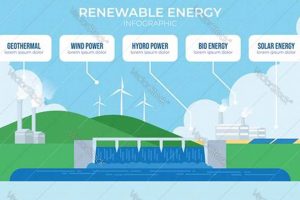
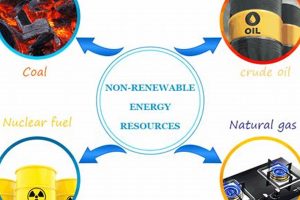
These resources represent naturally replenishing energy forms, derived from processes that are virtually inexhaustible on a human timescale. Examples include solar radiation, wind power, geothermal heat, hydropower, and biomass.
The utilization of such resources offers significant advantages over finite fossil fuels. They contribute to reduced greenhouse gas emissions, improved air quality, and decreased reliance on imported energy, thereby enhancing national energy security. Historically, the harnessing of wind and water power dates back centuries, but recent technological advancements have dramatically improved their efficiency and scalability.
The following sections will delve into the specific technologies associated with these sustainable energy options, their current state of development, and their potential to contribute to a cleaner, more resilient energy future.
Strategies for Effective Implementation
Successful integration of these resources requires careful planning and execution. The following guidelines offer insight into maximizing their potential.
Tip 1: Conduct a Comprehensive Resource Assessment: Prior to investment, thoroughly evaluate the availability and potential of local resources. For example, assess solar irradiance levels for solar energy projects or wind speeds for wind turbine installations.
Tip 2: Prioritize Energy Efficiency Measures: Reducing overall energy demand is crucial. Implementing energy-efficient technologies in buildings and industries minimizes the scale of renewable energy projects needed.
Tip 3: Implement Smart Grid Technologies: Integrate advanced technologies to manage and distribute energy effectively. Smart grids optimize energy flow, accommodate intermittent renewable sources, and enhance grid stability.
Tip 4: Diversify the Energy Portfolio: Reliance on a single resource can create vulnerability. A diversified portfolio that combines solar, wind, hydro, and geothermal resources strengthens energy security.
Tip 5: Secure Long-Term Financing and Incentives: Renewable energy projects require substantial upfront investment. Securing stable funding mechanisms, such as tax credits, grants, and feed-in tariffs, is essential.
Tip 6: Invest in Energy Storage Solutions: Address the intermittent nature of solar and wind power through energy storage technologies like batteries, pumped hydro, and compressed air energy storage.
Tip 7: Streamline Regulatory Processes: Reduce bureaucratic hurdles and expedite permitting processes to accelerate project development and deployment.
By implementing these strategies, stakeholders can effectively harness the benefits, contributing to a sustainable and resilient energy system.
The subsequent sections will delve into the economic and environmental implications of these strategies, offering a more complete perspective.
1. Sustainability

Sustainability, in the context of naturally replenishing resources, constitutes a pivotal criterion for evaluating energy options. It goes beyond mere renewability, encompassing environmental, economic, and social dimensions to ensure long-term viability.
- Environmental Impact Minimization
Environmental impact minimization involves reducing or eliminating detrimental effects on ecosystems, biodiversity, and natural resources. This includes avoiding greenhouse gas emissions, preventing pollution of air and water, and minimizing land use. For instance, responsible siting of wind farms avoids disruption of bird migration routes. Sustainable resources inherently aim for lower environmental footprints compared to fossil fuels.
- Resource Depletion Prevention
Resource depletion prevention focuses on ensuring that the rate of resource use does not exceed its rate of regeneration. This requires careful management and monitoring of resource extraction and utilization. Sustainable biomass practices, for instance, require replanting trees at a rate that matches or exceeds harvesting. Sustainable resource management is fundamental to their long-term availability.
- Economic Viability and Affordability
Economic viability and affordability are necessary to promote widespread adoption. Sustainable resources must be cost-competitive with traditional energy sources to attract investment and consumer acceptance. Government incentives, technological advancements, and economies of scale play a crucial role in enhancing their economic attractiveness. Without economic sustainability, widespread adoption is unlikely.
- Social Equity and Accessibility
Social equity and accessibility ensure that the benefits are distributed fairly across all segments of society. This includes ensuring that energy is affordable and accessible to low-income communities and that projects are developed with community input and participation. Community solar projects, for example, can provide access to solar energy for households that cannot install panels on their own roofs. Inequitable distribution of benefits undermines their long-term social sustainability.
These sustainability facets underscore the holistic considerations essential for a successful transition. Balancing these aspects ensures that these resources provide long-term environmental, economic, and social benefits, contributing to a more resilient and equitable energy future.
2. Accessibility

Accessibility, in the context of energy generation, refers to the degree to which sources are available for utilization, influenced by geographical location, technological maturity, economic feasibility, and regulatory frameworks. Its role is pivotal in determining the practical deployment and widespread adoption of alternative energy solutions.
- Geographical Availability
Geographical availability denotes the natural prevalence of specific energy resources in particular regions. Solar resources are abundant in areas with high insolation levels, while wind resources are concentrated in coastal and mountainous regions. Geothermal energy is accessible in areas with geothermal activity. This disparity necessitates tailored energy strategies based on regional resource endowments. For instance, regions with abundant solar resources may prioritize solar energy development, while those with strong wind resources may focus on wind power.
- Technological Feasibility
Technological feasibility involves the availability and maturity of technologies required to harness resources. Advanced technologies, such as high-efficiency solar panels and large-scale wind turbines, enable efficient resource extraction. The lack of mature technologies can impede accessibility, particularly for emerging energy sources like enhanced geothermal systems. Investment in research and development is essential to enhance technological feasibility and reduce costs.
- Economic Affordability
Economic affordability pertains to the cost-effectiveness of harnessing resources. High capital costs, operational expenses, and maintenance requirements can limit accessibility, particularly in developing countries. Government subsidies, tax incentives, and economies of scale can improve economic affordability, making them competitive with conventional energy sources. A balanced approach is needed to ensure economic viability and widespread deployment.
- Regulatory Frameworks
Regulatory frameworks govern the development, operation, and utilization of energy resources. Streamlined permitting processes, clear regulatory guidelines, and supportive policies can enhance accessibility by reducing bureaucratic hurdles and attracting investment. Complex and restrictive regulations can impede project development and limit deployment. Governments play a crucial role in establishing supportive regulatory environments.
The aforementioned aspects highlight the intricate relationship between resource availability and practical implementation. Overcoming accessibility barriers through technological innovation, supportive policies, and strategic investments is critical for unlocking the full potential of resources. This concerted effort will accelerate the transition toward a cleaner and more sustainable energy future.
3. Scalability

Scalability, in the context of electricity generation, represents the capacity to expand production to meet growing energy demands. For various renewable resources, this characteristic is critical for displacing conventional fossil fuels and achieving significant reductions in greenhouse gas emissions. Evaluating the scalability of each source involves assessing resource availability, technological maturity, infrastructure requirements, and economic viability.
- Resource Availability and Potential Output
The inherent volume of available resources dictates potential output. Solar and wind, for example, possess vast theoretical potential but require extensive land areas for large-scale deployment. Geothermal resources, while geographically limited, offer consistent baseload power. The total theoretically harvestable resource sets an upper bound on scalability. Real-world scalability is then dictated by practical limitations of harvesting, technology and land usage.
- Technological Advancements and Efficiency Improvements
Technological innovations directly impact scalability by enhancing energy conversion efficiency and reducing costs. Advances in solar panel technology, wind turbine design, and energy storage systems are continuously improving the economic viability and expanding the practical limits of output. Further research and development are crucial for unlocking untapped potential and enabling larger-scale deployments.
- Infrastructure Development and Grid Integration
Large-scale deployment necessitates robust infrastructure to transmit generated electricity to consumers. Upgrading existing transmission networks and building new high-capacity lines are essential for accommodating increased renewable energy generation. Smart grid technologies play a crucial role in managing intermittent resources and maintaining grid stability. Without adequate infrastructure, scalability is constrained by transmission bottlenecks.
- Economic Viability and Investment Attractiveness
Scalability is intrinsically linked to economic factors. Achieving economies of scale through mass production and streamlined manufacturing processes can reduce capital costs and improve competitiveness. Government incentives, tax credits, and long-term contracts play a crucial role in attracting private investment and driving large-scale project development. A stable and predictable regulatory environment is essential for fostering investor confidence and enabling scalability.
The scalability of various renewable sources is a complex interplay of resource potential, technological innovation, infrastructure development, and economic conditions. Overcoming these scalability challenges requires coordinated efforts from governments, industries, and research institutions to foster innovation, reduce costs, and create a supportive regulatory environment. Successfully addressing scalability will enable significant integration and reduce reliance on conventional sources.
4. Intermittency
Intermittency, the characteristic of being irregular or non-continuous, presents a significant challenge in the context of electricity generation, particularly when considering power sources that depend on fluctuating environmental conditions. Solar irradiance varies diurnally and seasonally, influenced by cloud cover and weather patterns. Wind speeds are similarly variable, subject to atmospheric conditions and geographic location. This inherent variability introduces complexities in grid management and necessitates strategies to ensure a reliable and consistent power supply. The predictable cycles of daylight and seasons provide some degree of predictability, enabling forecasting and proactive grid management, but short-term fluctuations pose ongoing operational challenges.
The integration of renewable energy sources is largely influenced by intermittency. As the penetration of solar and wind power increases within an electrical grid, the need for flexible resources to compensate for their variability becomes paramount. These flexible resources may include dispatchable generation sources, such as natural gas-fired power plants or hydroelectric dams, as well as energy storage technologies like batteries or pumped hydro storage. Demand-side management techniques, which involve adjusting electricity consumption patterns in response to grid conditions, also play a role in mitigating the impacts of intermittency. For example, utilities may incentivize consumers to shift their electricity usage to periods of high renewable energy production, reducing reliance on conventional generators.
Addressing intermittency is crucial for the widespread adoption and reliable operation of sustainable electricity systems. The combination of accurate forecasting, flexible generation resources, energy storage, and demand-side management provides a multifaceted approach to manage variability and ensures grid stability. Investment in these enabling technologies and strategies is essential for unlocking the full potential of sustainable energy sources and achieving a clean energy future. Furthermore, advancements in grid infrastructure and inter-regional transmission capacity can broaden the geographic area over which variability can be smoothed, enhancing overall system reliability.
5. Infrastructure

Infrastructure forms the essential backbone for the effective harnessing and integration of naturally replenishing energy sources. Without adequate infrastructure, the potential of these resources remains largely untapped, hindering their ability to contribute meaningfully to the global energy supply. The following examines crucial aspects of infrastructure in the context of this area.
- Transmission Networks
Transmission networks are vital for transporting electricity generated from geographically dispersed resources to demand centers. High-voltage transmission lines are necessary to minimize losses over long distances. Upgrading existing grids and building new transmission infrastructure are critical investments for integrating large-scale facilities, such as wind farms and solar power plants, located in remote areas with abundant resources. These upgrades often require significant capital investment and careful planning to minimize environmental impacts.
- Energy Storage Solutions
Energy storage technologies, including batteries, pumped hydro storage, and compressed air energy storage, are integral to addressing the intermittent nature of solar and wind power. These storage solutions enable the capture of excess energy during periods of high production and its release during periods of low production, thereby ensuring a more stable and reliable electricity supply. Deployment of these systems requires strategic planning and integration with grid infrastructure to optimize their performance and maximize their benefits.
- Smart Grid Technologies
Smart grid technologies enhance the efficiency, reliability, and flexibility of electricity grids. These technologies include advanced sensors, communication networks, and control systems that enable real-time monitoring and management of electricity flows. Smart grids facilitate the integration of distributed generation sources, such as rooftop solar panels, and enable demand-side management strategies, allowing consumers to adjust their electricity consumption in response to grid conditions. The implementation of smart grid technologies requires interoperability standards and cybersecurity measures to ensure secure and reliable operation.
- Distribution Networks
Distribution networks connect the transmission grid to individual consumers, delivering electricity to homes, businesses, and industries. Upgrading distribution infrastructure is necessary to accommodate the increasing penetration of distributed generation sources and electric vehicles. Smart inverters and advanced metering infrastructure enable two-way communication between consumers and the grid, facilitating more efficient management of electricity flows and supporting the integration of distributed resources. Modernization of distribution networks is crucial for creating a more resilient and decentralized electricity system.
The development of robust and adaptable infrastructure is essential for unlocking the full potential of naturally replenishing energy sources. Investments in transmission networks, energy storage solutions, smart grid technologies, and distribution networks are crucial for creating a sustainable and reliable energy system. The coordinated planning and implementation of these infrastructure components is paramount for achieving a clean energy transition and ensuring a secure energy future.
Frequently Asked Questions About Renewable Energy Sources
The following addresses common inquiries and misconceptions surrounding the utilization of naturally replenishing energy sources.
Question 1: Are naturally replenishing energy sources truly inexhaustible?
While derived from processes that are virtually inexhaustible on a human timescale, their availability can be affected by environmental factors. Solar irradiance can be influenced by atmospheric conditions, and hydropower generation depends on consistent water flow. Prudent management and sustainable practices are necessary to ensure their long-term viability.
Question 2: How do fluctuating energy source costs compare to those of fossil fuels?
The upfront capital costs for renewable energy projects can be substantial, but operating costs are generally lower than those for fossil fuel power plants. Technological advancements and economies of scale are driving down the costs, making them increasingly competitive. Long-term, they offer price stability and reduced exposure to volatile fossil fuel markets.
Question 3: What is the land-use impact of utility-scale wind and solar farms?
Large-scale wind and solar farms require significant land areas, which can potentially impact ecosystems and land use patterns. Careful site selection, environmental impact assessments, and mitigation measures are essential to minimize these impacts. Innovative approaches, such as co-locating solar farms with agricultural activities, can help optimize land use efficiency.
Question 4: How reliable are renewable energy sources, given their intermittent nature?
The intermittent nature of solar and wind power presents challenges to grid stability, but these can be addressed through various strategies. Energy storage technologies, such as batteries and pumped hydro storage, can store excess energy for later use. Smart grid technologies and demand-side management techniques can also help balance supply and demand. Geographic diversification of renewable energy projects can further mitigate variability.
Question 5: What is the role of policy and regulation in promoting sources?
Government policies and regulations play a crucial role in creating a supportive environment for renewable energy development. Feed-in tariffs, tax credits, and renewable energy standards can incentivize investment and deployment. Streamlined permitting processes and clear regulatory guidelines can reduce bureaucratic hurdles and accelerate project development. Carbon pricing mechanisms can further level the playing field by internalizing the environmental costs of fossil fuels.
Question 6: Can electricity generated from these energy resources completely replace fossil fuels?
While a complete transition to the electricity grid solely from renewable energy resources is technically feasible, it requires significant investments in infrastructure, energy storage, and grid modernization. A diversified portfolio combining solar, wind, hydro, geothermal, and biomass resources, along with energy efficiency measures, is likely the most practical and cost-effective path to a clean energy future. Sustained technological innovation and policy support are essential for achieving this transition.
Ultimately, the successful integration depends on careful planning, technological innovation, and supportive policy frameworks.
The next section will analyze the long-term benefits of a energy-driven economy.
Conclusion
The preceding analysis underscores the multifaceted nature of various renewable sources of energy. The investigation has illuminated critical aspects, including their sustainability, accessibility, scalability, and the infrastructural requirements for their effective integration. Addressing the intermittency challenges and optimizing resource management are crucial for realizing their full potential.
Continued investment in technological innovation, strategic policy implementation, and infrastructure development remains paramount. A commitment to these elements will facilitate a sustained transition towards a cleaner, more secure, and economically viable energy future. The long-term benefits of widespread adoption extend beyond environmental preservation, encompassing economic growth and enhanced energy independence.