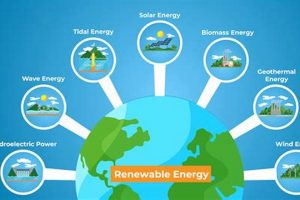
The ability to harness the earth’s natural hydrological cycle presents a significant opportunity. Precipitation, surface runoff, and the constant replenishment of water bodies facilitate various methods for generating power. This involves converting the kinetic energy of flowing or falling liquid into electricity via hydroelectric dams, or utilizing tidal movements to drive turbines. These methods tap into naturally recurring processes.
Power generation using these resources offers a multitude of advantages. It reduces reliance on fossil fuels, thereby mitigating greenhouse gas emissions and combating climate change. Furthermore, it promotes energy independence and can provide a stable, domestically sourced energy supply. Historically, societies have recognized the potential of this resource, with water wheels being employed for mechanical work for centuries, predating modern electrical generation.
The sustainability of water-based power depends on careful management and environmental stewardship. While the resource itself is constantly renewed through the water cycle, factors such as dam construction, water usage practices, and climate change can affect its availability and impact ecosystems. Therefore, a holistic approach, considering both energy needs and environmental consequences, is crucial for long-term viability.
Utilizing Water Resources for Sustainable Energy
Effective and responsible use of water resources for energy generation demands careful planning and execution. Adhering to the following guidelines can maximize the benefits while minimizing environmental impact.
Tip 1: Conduct Thorough Environmental Impact Assessments: Prior to any development, assess the potential effects on aquatic ecosystems, water quality, and downstream users. Consider the impact on fish migration, sediment transport, and overall biodiversity.
Tip 2: Implement Sustainable Water Management Practices: Optimize water usage and minimize waste. Implement measures to conserve water resources and ensure adequate flows for both power generation and ecological health.
Tip 3: Invest in Modern Hydroelectric Technologies: Explore the use of closed-loop systems, run-of-river projects, and pumped storage solutions to increase efficiency and reduce environmental disruption. Research and implement technologies that minimize impact on aquatic life.
Tip 4: Diversify Energy Sources: Integrate water-based power with other renewable energy technologies, such as solar and wind, to create a more resilient and reliable energy grid. This reduces reliance on a single source and promotes energy security.
Tip 5: Prioritize Dam Safety and Maintenance: Ensure the structural integrity of existing infrastructure. Regular inspections and maintenance are crucial to prevent catastrophic failures and protect downstream communities.
Tip 6: Promote Community Engagement and Transparency: Involve local communities in the decision-making process. Address concerns and ensure that the benefits of water-based power are shared equitably.
Tip 7: Adapt to Climate Change: Recognize the potential impacts of climate change on water availability. Develop strategies to mitigate the effects of droughts and floods on energy production.
Water-based power, when managed responsibly, provides a vital pathway to a cleaner energy future. By integrating these strategies, it becomes possible to harness a valuable natural resource, protect environmental integrity, and foster resilient and sustainable energy systems.
Future research and development should focus on novel technologies and adaptive management strategies to optimize the benefits of water resources for future energy needs.
1. Hydrological Cycle

The hydrological cycle, or water cycle, is fundamental to understanding the renewability of water as an energy source. This continuous circulation of water sustains the potential for power generation through various methods. The cycle’s integrity directly impacts the availability and reliability of water-based energy resources.
- Evaporation and Precipitation
Evaporation, driven by solar energy, transforms water from liquid to vapor, which then condenses and returns to the earth as precipitation. This process replenishes surface and groundwater reserves, providing the feedstock for hydroelectric power generation. Reduced rainfall can directly impact reservoir levels, diminishing energy production capacity.
- Surface Runoff and River Systems
Precipitation that flows across the land surface forms rivers and streams, which are harnessed for run-of-river hydroelectric projects. The consistent flow of these systems allows for continuous electricity generation without large-scale impoundments. Alterations to land use patterns, such as deforestation, can disrupt runoff patterns and affect river flows.
- Groundwater Recharge
A portion of precipitation infiltrates the ground, replenishing aquifers that can be accessed for geothermal energy production. The earth’s internal heat warms this groundwater, which can then be used to generate electricity or provide direct heating. Over-extraction of groundwater can deplete aquifers and impact both water availability and geothermal potential.
- Glacial Melt and Seasonal Variations
Glaciers and snowpack act as natural reservoirs, releasing meltwater during warmer months. This meltwater sustains river flows and supports hydroelectric power generation, particularly in mountainous regions. Climate change-induced glacial retreat can alter seasonal flow patterns and threaten the long-term viability of water-based energy resources.
The facets of the hydrological cycle are interconnected and dictate water’s potential as a renewable energy source. Disruptions to any stage of the cycle, whether through climate change or unsustainable water management practices, directly impact the reliability and sustainability of water-based power generation. Recognizing these interdependencies is crucial for the responsible and effective utilization of water as a renewable energy resource.
2. Hydroelectric power

Hydroelectric power represents a significant application of water as a renewable energy resource. It harnesses the potential energy of water stored at a higher elevation, converting it into kinetic energy as it flows downhill. This kinetic energy drives turbines connected to generators, producing electricity. The fundamental renewability stems from the continuous replenishment of water sources through the hydrological cycle. Large-scale dams, such as the Three Gorges Dam in China or the Itaipu Dam straddling Brazil and Paraguay, illustrate the capacity to generate substantial amounts of electricity. Smaller, run-of-river hydroelectric projects, such as those found extensively in the Swiss Alps, minimize impoundment and ecological disruption while still capitalizing on water’s energy potential.
The effectiveness of hydroelectric power is contingent upon consistent water availability. Seasonal variations in precipitation, snowmelt, and glacial retreat can directly impact electricity generation capacity. Furthermore, the construction of dams can alter river ecosystems, affecting fish migration patterns, sediment transport, and water quality. Sustainable operation requires careful management of water resources, considering both energy needs and ecological consequences. Mitigation strategies, such as fish ladders and regulated water releases, are employed to minimize environmental impact. Modern technological advancements also focus on improving turbine efficiency and reducing negative ecological effects.
Hydroelectric power’s contribution to global renewable energy production is substantial. While it offers a clean source of electricity, it is essential to acknowledge and mitigate its potential environmental consequences. The ongoing challenge involves optimizing energy generation while preserving the integrity of aquatic ecosystems. Technological innovation, responsible planning, and adaptive management strategies are crucial for ensuring the long-term sustainability of hydroelectric power as a component of renewable energy portfolios. The future of hydropower rests on harmonizing energy needs with environmental stewardship.
3. Tidal energy

Tidal energy represents a distinct form of water-based renewable energy, capitalizing on the predictable rise and fall of ocean tides. Its connection to the broader concept of water as a renewable resource lies in its harnessing of a naturally recurring phenomenon driven by gravitational forces. This distinguishes it from other forms of hydropower dependent on river flow or rainfall.
- Tidal Barrages
Tidal barrages function by creating a dam across an estuary or bay. Gates in the barrage allow water to flow in and out during high and low tides. When the water level difference reaches a sufficient threshold, the gates are closed, and the impounded water is released through turbines to generate electricity. The La Rance Tidal Power Station in France exemplifies this technology. Barrages can significantly alter tidal flow patterns and impact estuarine ecosystems.
- Tidal Stream Generators
Tidal stream generators operate underwater, similar to wind turbines, harnessing the kinetic energy of tidal currents. These generators can be deployed in channels or straits with strong tidal flows. Advantages over barrages include reduced environmental impact and lower construction costs. The MeyGen project in Scotland’s Pentland Firth is a prominent example of a tidal stream generator farm. The reliability of these generators depends on the consistency and predictability of tidal currents.
- Tidal Lagoons
Tidal lagoons involve constructing artificial enclosures along the coastline. Water fills and empties the lagoon with the tides, and electricity is generated as the water flows through turbines. Unlike barrages, lagoons do not block an entire estuary. Proposed projects, such as the Swansea Bay Tidal Lagoon in Wales, aim to minimize ecological impact compared to traditional barrage systems. Their viability is contingent on site-specific tidal ranges and environmental considerations.
- Environmental Considerations
While tidal energy offers a renewable alternative to fossil fuels, potential environmental impacts must be addressed. These include alterations to tidal flow patterns, effects on marine life, and sediment transport. Comprehensive environmental impact assessments and mitigation strategies are essential for the sustainable development of tidal energy projects. Ongoing research focuses on minimizing these impacts and developing environmentally friendly technologies.
The utilization of tidal energy underscores the versatility of water as a renewable energy resource. Harnessing tidal movements presents a predictable and reliable source of power. Responsible implementation necessitates careful consideration of environmental consequences and the adoption of sustainable development practices to ensure long-term viability.
4. Wave energy

Wave energy, a form of renewable energy derived from ocean surface waves, contributes to the broader discussion surrounding sustainable power generation. Its potential stems from the consistent and geographically widespread availability of oceanic wave motion. Harnessing this energy offers a method for electricity production that reduces reliance on fossil fuels. The viability of wave energy hinges on technological advancements and site-specific conditions.
- Wave Energy Converters (WECs)
Wave Energy Converters (WECs) are devices designed to capture the energy of ocean waves and convert it into electricity. WECs come in various forms, including oscillating water columns, point absorbers, and overtopping devices. Each type interacts with wave motion differently to drive generators. The deployment of WECs represents a direct method of extracting energy from a renewable water-based source. For example, the Mutriku Breakwater Power Plant in Spain utilizes oscillating water columns to generate electricity, demonstrating a practical application of wave energy technology.
- Resource Assessment and Variability
Assessing the potential of wave energy involves analyzing wave climate data to determine the power available at a specific location. Wave energy resources vary depending on geographic location, seasonal patterns, and weather conditions. Regions with consistent and high wave energy fluxes are more suitable for wave energy deployment. Accurate resource assessment is crucial for planning and optimizing wave energy projects. The European Marine Energy Centre (EMEC) in Scotland serves as a test site for wave energy devices, providing valuable data on wave energy resource characteristics.
- Grid Integration and Scalability
Integrating wave energy into existing electricity grids presents challenges related to the intermittent nature of wave power. Wave energy output can fluctuate depending on wave conditions. Energy storage systems and grid management strategies are necessary to ensure a stable electricity supply. The scalability of wave energy technology is also a consideration. Deploying large-scale wave energy farms requires significant investment and careful planning to minimize environmental impact. Successful grid integration and scalability are essential for wave energy to contribute significantly to renewable energy portfolios.
- Environmental Impacts and Mitigation
The deployment of wave energy devices can have potential environmental impacts on marine ecosystems. These impacts may include habitat alteration, noise pollution, and effects on marine life. Thorough environmental impact assessments are necessary before deploying wave energy devices. Mitigation measures, such as minimizing noise emissions and avoiding sensitive marine areas, can help reduce environmental harm. Ongoing research focuses on developing environmentally friendly wave energy technologies that minimize ecological disruption.
The successful integration of wave energy hinges on technological advancements, resource assessment, grid integration, and environmental stewardship. The development and deployment of wave energy technologies present both opportunities and challenges for harnessing a renewable water-based resource. Continued research and development are essential for optimizing the utilization of wave energy and minimizing its environmental footprint. This effort is pivotal in supporting the broader transition to sustainable energy systems.
5. Geothermal potential

Geothermal potential, when viewed through the lens of water as a renewable energy source, reveals a less direct, yet significant relationship. Geothermal energy harnesses heat from within the Earth. While not directly reliant on surface water flow in the same manner as hydroelectric or tidal power, many geothermal systems depend on subsurface water as a heat transfer medium. This liquid, heated by the Earth’s core, is extracted and its thermal energy is used to generate electricity or provide direct heating. The Geysers geothermal field in California exemplifies this, where steam, derived from heated groundwater, powers turbines to produce electricity. Thus, the sustainability of geothermal energy is intertwined with the sustainable management of groundwater resources.
The cause-and-effect relationship is evident: geothermal heat warms subterranean water, leading to its potential use as a renewable energy source. Depletion of these water reservoirs through unsustainable extraction practices, however, can diminish the long-term viability of geothermal energy production. The importance of geothermal potential lies in its capacity to provide a consistent, baseload energy supply, unlike intermittent sources such as solar or wind. Iceland, for instance, heavily relies on geothermal energy for both electricity generation and heating, demonstrating the practical application and benefits of this resource. However, the reinjection of cooled water back into the geothermal reservoir is crucial for maintaining pressure and ensuring the sustainability of the resource. Failure to do so can lead to reservoir depletion and reduced energy output.
In conclusion, the geothermal potential contributes to water’s role as a renewable energy source, albeit through a different mechanism than other water-based energy technologies. Its reliance on subsurface water resources necessitates careful management to prevent depletion and maintain long-term sustainability. The successful harnessing of geothermal energy, as demonstrated by countries like Iceland, underscores its potential to provide a consistent and reliable source of renewable power, contingent on responsible resource management and the implementation of reinjection strategies. Future research and development should focus on optimizing water use within geothermal systems to ensure the continued viability of this valuable renewable resource.
6. Sustainable management

The sustained availability of water as a renewable energy resource is inextricably linked to its sustainable management. Unregulated exploitation and inefficient practices undermine the long-term potential of water-based energy systems. Cause-and-effect relationships are evident: mismanagement leads to resource depletion, impacting the reliability and capacity of hydroelectric, tidal, wave, and geothermal energy production. The effective application of sustainable management principles is therefore not merely an ancillary consideration, but a foundational requirement for ensuring the continued contribution of water to renewable energy portfolios. For example, over-extraction of groundwater for geothermal energy production can lead to reservoir depletion, diminishing its capacity to generate power. Similarly, unsustainable water diversion for irrigation can reduce river flows, impacting hydroelectric generation.
Practical significance is apparent in the implementation of integrated water resource management (IWRM) strategies. These strategies promote holistic planning and decision-making, considering the competing demands of various water users, including energy production, agriculture, domestic consumption, and environmental conservation. IWRM emphasizes the importance of stakeholder engagement, ensuring that all relevant parties are involved in the management process. Real-world examples include the Murray-Darling Basin Plan in Australia, which seeks to balance water extraction for agricultural use with the ecological health of the river system. Similarly, in Switzerland, water management practices prioritize both hydroelectric power generation and the preservation of aquatic ecosystems.
In conclusion, the enduring value of water as a renewable energy source depends critically on the adoption of sustainable management practices. This requires a shift from siloed approaches to integrated frameworks that recognize the interconnectedness of water resources, energy production, and environmental sustainability. Challenges remain in balancing competing water demands and adapting to the impacts of climate change, which can exacerbate water scarcity and alter hydrological patterns. Addressing these challenges necessitates ongoing research, innovation in water management technologies, and a commitment to collaborative governance. Only through such concerted efforts can water truly serve as a consistently renewable energy source, contributing to a more sustainable energy future.
7. Environmental impact

The harnessing of water as a renewable energy source, while offering a pathway towards mitigating climate change, is not without potential environmental consequences. The environmental impact is a critical consideration in assessing the true sustainability of water-based energy systems. The utilization of water resources for energy generation can alter aquatic ecosystems, disrupt natural hydrological cycles, and affect terrestrial environments. Cause-and-effect relationships are evident: dam construction, for instance, can lead to habitat fragmentation, impede fish migration, and alter downstream water flow patterns. These effects can have cascading impacts on biodiversity and ecosystem services. The importance of understanding and mitigating these environmental impacts is paramount to ensuring that water remains a genuinely renewable and sustainable energy option. Failure to address these issues can compromise the ecological integrity of aquatic systems and undermine the long-term viability of water-based energy projects. For example, the construction of the Three Gorges Dam in China has had significant environmental consequences, including habitat loss, altered sediment transport, and increased risk of landslides. These negative impacts highlight the importance of conducting thorough environmental impact assessments and implementing mitigation measures during the planning and operation of water-based energy projects.
The practical significance of considering environmental impact extends beyond the immediate ecological consequences. It also encompasses economic and social dimensions. For instance, altered water flow patterns can affect agricultural productivity, water availability for domestic use, and recreational opportunities. In some cases, displacement of communities may occur due to reservoir creation. Therefore, a comprehensive assessment of environmental impacts should include an evaluation of these socio-economic effects. Furthermore, the increasing awareness of environmental issues has led to stricter regulatory frameworks and public scrutiny of water-based energy projects. Developers must demonstrate a commitment to minimizing environmental harm to secure project approvals and maintain public support. Techniques to mitigate impact involve fish ladders to facilitate migration, carefully planned dam releases to mimic natural flood cycles, and use of run-of-river hydroelectric systems. Environmental DNA sampling and satellite based remote sensing are becoming an integral component of impact assessment to help facilitate responsible and minimal impacts.
In conclusion, the connection between water as a renewable energy source and its environmental impact is undeniable. Balancing the need for clean energy with the imperative to protect aquatic ecosystems requires careful planning, responsible operation, and continuous monitoring. While water holds immense potential as a renewable energy source, its true sustainability depends on minimizing environmental harm and ensuring the long-term health of aquatic ecosystems. Meeting this challenge demands a holistic approach, integrating environmental considerations into all stages of water-based energy development, from project conception to decommissioning. Further research and technological innovation are crucial to develop more environmentally friendly water-based energy systems, ensuring that the pursuit of renewable energy does not come at the expense of ecological integrity. The ongoing challenge lies in harmonizing energy needs with environmental preservation, thereby securing a sustainable energy future for generations to come. The Environmental Performance Index (EPI) offers a data-driven summary of the state of sustainability around the world to give insight in environmental quality and ecosystem vitality. The World Bank measures groundwater sustainability from indicators for hydrological regime, water quality, and dependent ecosystems.
Frequently Asked Questions
This section addresses common inquiries and clarifies misunderstandings regarding water’s role as a renewable energy source, providing objective and factual information.
Question 1: Is water inherently renewable in all circumstances?
While the Earth’s water cycle continuously replenishes water resources, the rate of renewal and availability can be affected by factors such as climate change, unsustainable water management practices, and pollution. Therefore, responsible management is necessary to maintain its renewable status.
Question 2: Does hydroelectric power generation have any environmental drawbacks?
Yes, hydroelectric power can have environmental consequences, including habitat disruption, altered river flow patterns, and impacts on fish migration. Mitigation strategies, such as fish ladders and regulated water releases, can help minimize these effects.
Question 3: How reliable are tidal and wave energy technologies compared to other renewable sources?
Tidal energy is generally more predictable than wave energy, due to its reliance on consistent tidal cycles. However, both technologies are still under development and require further advancements to improve their reliability and efficiency for large-scale grid integration.
Question 4: What role does geothermal energy play in the context of water as a renewable resource?
Geothermal energy often utilizes heated groundwater as a heat transfer medium. While the heat source is geothermal, the sustainability of this energy source depends on the responsible management of groundwater resources to prevent depletion.
Question 5: What are the key challenges in integrating water-based energy sources into existing power grids?
Integrating water-based energy sources, particularly wave and tidal energy, can pose challenges related to intermittency and grid stability. Energy storage solutions and advanced grid management systems are necessary to address these issues.
Question 6: Can climate change significantly impact the availability of water for energy production?
Climate change can significantly alter precipitation patterns, increase the frequency of droughts and floods, and accelerate glacial melt, all of which can affect the availability and reliability of water for energy production. Adaptation strategies are crucial for mitigating these impacts.
Water’s role as a renewable energy source relies on responsible management, technological advancements, and a comprehensive understanding of its environmental and climatic context. Further research and development are essential for maximizing the potential of water-based energy systems while minimizing their negative impacts.
The next section will delve into the future prospects and emerging technologies related to water-based renewable energy.
Conclusion
This exploration has revealed the multifaceted nature of water as a renewable energy source. Its potential is manifested through diverse technologies, ranging from established hydropower to emerging tidal and wave energy systems. The fundamental renewability stems from the Earth’s hydrological cycle, yet its availability and reliability are contingent upon responsible management and environmental stewardship. While offering a pathway towards mitigating climate change, the environmental impacts of water-based energy projects necessitate careful consideration and proactive mitigation strategies.
The continued viability of water as a significant contributor to a sustainable energy future hinges on ongoing research, technological innovation, and integrated water resource management. Prioritizing ecological integrity, adapting to climate change impacts, and fostering collaborative governance are essential for realizing water’s full potential as a consistently renewable energy source. A commitment to these principles will ensure that water-based energy systems contribute effectively to a cleaner, more sustainable world for generations to come.