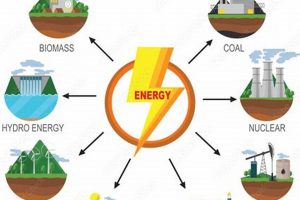
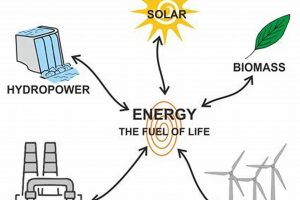
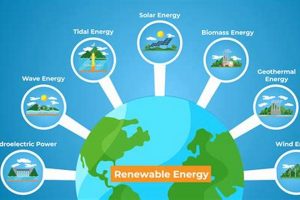
Harnessing power from naturally replenishing resources defines a crucial area of energy production. Examples encompass sunlight, wind, geothermal heat, water flow, and biomass, which are continuously or cyclically renewed within the environment.
Utilizing these resources offers several advantages. Reduced greenhouse gas emissions, decreased reliance on finite fossil fuels, and enhanced energy security are key benefits. Historically, simple forms, such as windmills and water wheels, served basic energy needs, evolving into sophisticated technologies capable of large-scale electricity generation.
The subsequent sections will explore diverse methodologies for capturing and converting these naturally occurring phenomena into usable power, examining their technological underpinnings and practical applications.
Optimizing the Integration of Renewable Energy Technologies
The following guidelines are intended to facilitate the effective implementation and utilization of various power generation technologies that rely on replenishing natural resources.
Tip 1: Conduct a Comprehensive Resource Assessment: Prior to investment, rigorously evaluate the potential of available resources, such as solar irradiance, wind speed, geothermal gradients, and biomass availability, at the intended site. This assessment should include long-term data analysis to account for seasonal variations and potential fluctuations.
Tip 2: Prioritize Grid Modernization: The intermittent nature of some power generation methods necessitates investments in smart grid technologies capable of balancing supply and demand, improving energy storage, and enhancing overall grid stability.
Tip 3: Implement Energy Storage Solutions: Integrating battery storage, pumped hydro, or other energy storage systems can mitigate the variability associated with certain resources, ensuring a more consistent power supply and enabling greater grid integration.
Tip 4: Diversify Energy Portfolio: Reducing reliance on any single source by strategically combining different power generation methods, such as solar, wind, and hydro, can enhance resilience and reduce vulnerability to resource fluctuations.
Tip 5: Promote Policy Support and Incentives: Governmental policies, tax incentives, and feed-in tariffs can play a crucial role in fostering investment and accelerating the adoption of these technologies by reducing upfront costs and improving economic viability.
Tip 6: Foster Public Awareness and Education: Educating the public about the benefits and limitations of various power generation methods can promote wider acceptance and encourage greater participation in energy conservation and efficiency efforts.
Tip 7: Invest in Research and Development: Continued innovation in materials science, energy conversion technologies, and grid management systems is essential to further improve efficiency, reduce costs, and enhance the overall performance of these energy systems.
Adhering to these guidelines will contribute to a more sustainable and resilient energy future by maximizing the benefits of readily available and continually renewing power sources.
The following section will present a detailed comparative analysis of different renewable energy generation techniques, highlighting their specific advantages, disadvantages, and applications.
1. Solar Irradiance

Solar irradiance, the power per unit area received from the sun in the form of electromagnetic radiation, serves as a foundational metric for assessing the viability of solar-based energy systems. Its intensity and predictability directly influence the potential of numerous applications that fall under the purview of renewable energy resources.
- Photovoltaic Energy Conversion
Solar irradiance is the primary input for photovoltaic (PV) cells, which convert sunlight directly into electricity. Higher irradiance levels translate to increased electricity generation from PV systems. For example, regions with consistently high irradiance, such as the southwestern United States or the Sahara Desert, are prime locations for large-scale solar farms. The implications are that irradiance levels directly impact the size and economic feasibility of solar energy projects.
- Concentrated Solar Power (CSP)
CSP technologies utilize mirrors or lenses to concentrate solar irradiance onto a receiver, which then heats a working fluid to drive a turbine and generate electricity. The efficiency of CSP plants is highly dependent on the intensity of direct normal irradiance (DNI). Locations with high DNI, like the Atacama Desert in Chile, support the most efficient CSP operations. Consequently, the economics of CSP are tightly linked to high-irradiance regions.
- Solar Thermal Heating
Solar irradiance also drives solar thermal heating systems, which capture solar energy to heat water or air for residential, commercial, or industrial applications. The amount of solar energy available dictates the performance of these systems. Regions with consistent solar availability can effectively utilize solar thermal collectors for hot water or space heating, reducing reliance on fossil fuel-based alternatives. Implications include decreased carbon footprint and reduced energy costs.
- Solar-Driven Chemical Processes
Emerging technologies are exploring the use of concentrated solar irradiance to drive chemical reactions for producing fuels, chemicals, or materials. The intensity and spectral composition of solar radiation are critical factors in the efficiency of these processes. High solar irradiance can enable high-temperature reactions, making certain solar-driven chemical processes economically viable. This opens possibilities for sustainable production methods powered by solar energy.
In conclusion, solar irradiance is a critical factor in evaluating the feasibility and performance of multiple power generation methods. Its intensity directly influences the effectiveness and economic viability of solar energy systems, including photovoltaic power generation, concentrated solar power, solar thermal heating, and emerging solar-driven chemical processes, underscoring its essential role in promoting sustainable power development.
2. Wind Velocity
Wind velocity, a critical parameter within the realm of sustainable energy, directly influences the operational efficiency and economic viability of wind power generation, a significant source.
- Turbine Power Output
The power output of a wind turbine is directly proportional to the cube of wind velocity. This cubic relationship implies that even a small increase in wind speed can lead to a significant boost in electricity generation. For instance, a wind turbine operating in an area with an average wind velocity of 10 meters per second will produce substantially more energy than the same turbine in an area with 8 meters per second. The availability of consistent, high wind velocities is therefore a key determinant of a wind farm’s productivity.
- Cut-in and Cut-out Speeds
Wind turbines are designed to operate within a specific range of wind velocities, defined by the cut-in and cut-out speeds. The cut-in speed is the minimum wind velocity required for the turbine to start generating electricity. Conversely, the cut-out speed is the maximum wind velocity at which the turbine can safely operate before being shut down to prevent damage. These parameters are crucial in site selection, ensuring that a location consistently provides wind speeds within the turbine’s operational range. Areas with frequent high wind events, exceeding the cut-out speed, may be less suitable for wind farm development.
- Aerodynamic Efficiency
Wind velocity affects the aerodynamic efficiency of turbine blades. Optimal blade design maximizes energy capture at specific wind speeds. Understanding the prevailing wind velocity profile at a site is essential for selecting turbines with appropriate blade designs. Blade pitch control systems can adjust the angle of the blades to optimize energy capture across a range of wind velocities. However, the fundamental relationship between wind velocity and aerodynamic efficiency remains a key factor in overall turbine performance.
- Wind Resource Assessment
Accurate assessment of wind velocity is paramount for determining the economic feasibility of wind power projects. Wind resource assessment involves long-term measurements of wind speed and direction at a potential site, typically using anemometers and wind vanes mounted on meteorological masts. These data are used to create wind resource maps and models that predict the energy production potential of a wind farm. Precise wind velocity data are vital for attracting investment and securing financing for wind energy projects.
In summary, wind velocity is a crucial determinant of the efficiency and economic viability of electricity generation. The relationship between wind velocity and turbine power output, the operational limits defined by cut-in and cut-out speeds, the aerodynamic efficiency of turbine blades, and the accuracy of wind resource assessments all underscore the fundamental importance of wind velocity in the context of sustainable energy.
3. Hydro Potential
Hydro potential, defined as the exploitable energy available from flowing or falling water, represents a significant component within the broader category of electricity generating methods. The conversion of this potential energy into kinetic energy, and subsequently into electrical energy, constitutes a long-established and widely utilized method. The geographical distribution of hydro potential is dictated by factors such as precipitation patterns, topography, and river flow rates. High hydro potential areas, often characterized by steep gradients and abundant water resources, lend themselves to the development of hydroelectric power plants. The construction and operation of these plants have demonstrable environmental and social effects.
Examples of hydroelectric projects span various scales, from large dams impounding substantial reservoirs to small-scale run-of-river systems. The Three Gorges Dam in China exemplifies a large-scale project, providing a substantial percentage of the nation’s electricity demand but also creating significant environmental challenges, including habitat disruption and sediment transport alteration. Run-of-river systems, exemplified by installations in the mountainous regions of Europe, have a smaller environmental footprint by diverting only a portion of the river’s flow. Technological advancements, such as improved turbine designs and pumped storage facilities, further optimize power generation and enhance grid stability.
Understanding hydro potential’s spatial distribution and technological aspects is crucial for sustainable energy planning. While hydroelectric power offers a renewable electricity source, careful assessment of environmental and social impacts is essential. Balancing power generation with ecosystem preservation and community well-being remains a key challenge. As such, ongoing research and development focus on minimizing the environmental consequences and maximizing the efficiency of hydroelectric technologies.
4. Geothermal Gradient

Geothermal gradient, the rate of increasing temperature with respect to increasing depth in the Earth’s interior, forms the fundamental basis for geothermal energy, an important source. Elevated geothermal gradients indicate regions with higher subsurface temperatures, presenting opportunities for electricity generation and direct-use applications. The heat emanating from the Earth’s core continuously replenishes this thermal energy, classifying geothermal as a continuously available resource. Locations with anomalously high gradients, often associated with volcanic activity or tectonic plate boundaries, are particularly well-suited for tapping this energy. Iceland, for example, relies heavily on geothermal resources due to its location on the Mid-Atlantic Ridge, an area characterized by high thermal activity. Geothermal gradient is thus a primary determinant of geothermal resource availability.
Direct-use applications include geothermal heating for buildings, industrial processes, and agriculture. Geothermal power plants harness high-temperature geothermal reservoirs to produce electricity via steam turbines. Enhanced Geothermal Systems (EGS) are engineered reservoirs created to access geothermal resources in areas with insufficient natural permeability. EGS technology expands the geographical reach of geothermal energy by allowing access to deeper, hotter rocks. Geothermal resources contribute to reduced greenhouse gas emissions compared to fossil fuels, enhancing energy security by utilizing a domestically available resource. Careful reservoir management ensures the long-term sustainability of geothermal energy production.
In summary, geothermal gradient is a critical parameter governing the viability and efficiency of geothermal energy utilization. Its understanding facilitates the identification and development of electricity generating methods, while technological advancements like EGS are expanding access to this source. Geothermal resources, driven by Earth’s internal heat, offer a sustainable and reliable electricity generating method, contributing to a diversified energy portfolio.
5. Biomass Availability

Biomass availability directly influences the feasibility and scalability of bioenergy, a significant subset of power generation technologies. The quantity, accessibility, and sustainability of biomass resources serve as fundamental constraints and opportunities for bioenergy development. Biomass encompasses a wide array of organic materials, including agricultural residues, forestry products, energy crops, and organic waste. The spatial distribution and management practices surrounding these resources determine the potential for their conversion into usable energy. For example, regions with extensive agricultural activity, such as the Midwestern United States, possess substantial quantities of corn stover and other crop residues that can be utilized for biofuel production or electricity generation. Conversely, areas with limited agricultural or forestry resources may face challenges in establishing viable bioenergy projects. Therefore, a thorough assessment of biomass availability is essential prior to undertaking any bioenergy initiative.
The type and quality of biomass feedstock also significantly impact the efficiency and cost-effectiveness of different bioenergy conversion technologies. Lignocellulosic biomass, derived from woody plants and agricultural residues, requires pretreatment processes to break down complex carbohydrates before they can be fermented into biofuels or combusted for electricity. Energy crops, specifically cultivated for energy production, can offer a more consistent and controllable source of biomass, but their cultivation requires land, water, and nutrient inputs, which can have environmental and economic implications. Organic waste materials, such as municipal solid waste and wastewater sludge, represent a readily available source of biomass, but their utilization requires careful management to address potential environmental and health concerns. Anaerobic digestion of organic waste produces biogas, a electricity generating method, while incineration with energy recovery reduces landfill volume and generates electricity. Understanding the characteristics and availability of different biomass feedstocks is crucial for selecting appropriate conversion technologies and optimizing energy production.
In conclusion, biomass availability is a critical factor determining the potential and limitations of electricity generating methods. Sustainable management practices, including efficient harvesting techniques, land-use planning, and waste reduction strategies, are essential for ensuring the long-term viability of bioenergy. While biomass offers a domestic and electricity generating method, careful consideration of environmental and economic factors is necessary to realize its full potential. The interplay between biomass availability, conversion technologies, and sustainability considerations will shape the future role of bioenergy in the broader energy landscape.
6. Energy Storage

Energy storage is integral to the widespread adoption and effective utilization of electricity generating methods. The intermittent nature of solar and wind energy, two prominent examples of continuously replenishing resources, necessitates the incorporation of efficient energy storage solutions to ensure a reliable and consistent electricity supply. Without adequate storage, the full potential of these energy systems cannot be realized, limiting their contribution to the overall energy mix. The fundamental issue is the temporal mismatch between energy generation and energy demand; storage bridges this gap.
Pumped hydro storage represents a mature and widely deployed form of large-scale energy storage. Water is pumped to a higher elevation during periods of low energy demand (often coinciding with high solar or wind output) and released through turbines to generate electricity when demand increases. Battery storage, particularly lithium-ion batteries, has seen rapid advancements in recent years, offering a more modular and scalable solution for grid-scale storage as well as residential and commercial applications. For instance, the Hornsdale Power Reserve in South Australia uses lithium-ion batteries to provide grid stabilization and backup power, demonstrating the capability of storage to mitigate the intermittency challenges associated with wind and solar power. Thermal energy storage, including concentrated solar power plants with thermal storage capabilities, offers another means to decouple energy generation from consumption, allowing for electricity generation even after sunset.
Effective energy storage addresses the inherent variability in energy systems, providing grid stability, enhancing energy security, and facilitating greater integration of these generating methods. The cost of storage remains a significant barrier to wider deployment, ongoing research focuses on improving energy density, lifespan, and safety while reducing manufacturing costs. Overcoming these challenges is crucial to unlocking the full potential of electricity generating methods and achieving a sustainable energy future.
Frequently Asked Questions
The following section addresses common inquiries regarding the generation of electricity from naturally replenishing resources. These answers aim to provide clarity on practical application and their limitations.
Question 1: How does the variability of solar and wind energy impact grid reliability?
The intermittent nature of solar and wind resources presents challenges for maintaining grid stability. Energy storage solutions, demand response programs, and advanced forecasting techniques are deployed to mitigate these fluctuations. Furthermore, geographical diversification of solar and wind installations can smooth out overall power output.
Question 2: What are the primary environmental concerns associated with hydropower?
Hydropower projects can alter river ecosystems, impacting fish migration, sediment transport, and water quality. Reservoir construction can lead to habitat loss and displacement of communities. Careful environmental impact assessments and mitigation measures are crucial for minimizing these negative effects. Run-of-river projects, with minimal reservoir creation, offer a reduced environmental footprint.
Question 3: Is geothermal energy truly electricity generating method?
While Earth’s internal heat is continuously replenished, geothermal resources are not inexhaustible at a local level. Over-extraction of geothermal fluids can lead to reservoir depletion and reduced power output. Sustainable reservoir management practices, including reinjection of geothermal fluids, are necessary to ensure the long-term viability of electricity generation methods.
Question 4: What are the limitations of biomass as an electricity generating method?
The widespread use of biomass for energy can compete with food production, leading to land-use changes and potential deforestation. Sustainable biomass sourcing is essential, prioritizing agricultural residues, forestry waste, and dedicated energy crops grown on marginal lands. Careful management of air emissions from biomass combustion is also necessary to mitigate potential air quality impacts.
Question 5: How does energy storage improve the economics of electricity generating methods?
Energy storage allows for the capture and storage of excess electricity generated during periods of high resource availability (e.g., sunny or windy days) and its subsequent release during periods of high demand. This increases the overall value of electricity generated and reduces the need for curtailment (wasting) of excess power. Furthermore, energy storage can provide grid services, such as frequency regulation and voltage support, generating additional revenue streams.
Question 6: What role do government policies play in promoting the adoption of electricity generating methods?
Government policies, such as tax incentives, feed-in tariffs, and renewable energy mandates, play a crucial role in accelerating the deployment of electricity generating methods. These policies can reduce upfront costs, provide long-term revenue certainty, and create a level playing field for these sources of energy, facilitating their competition with conventional energy sources. Research and development funding is also essential for advancing technological innovation and reducing the cost of these electricity generating methods.
These questions aim to clarify the current state of and address their role in a sustainable energy future. A balanced perspective is key to informed decision-making.
The subsequent section will focus on the technological advancements shaping the future of the above-mentioned electricity generating methods.
Conclusion
This exploration of all types of renewable energy sources has underscored their individual potential and interconnected roles in transitioning towards a sustainable energy future. From harnessing solar irradiance and wind velocity to tapping into hydro potential, geothermal gradients, and biomass availability, these resources offer a diverse portfolio of power generation methods. Energy storage solutions serve as a crucial enabler, mitigating the variability inherent in many of these sources and ensuring grid stability.
Continued investment in research, technological innovation, and strategic policy implementation is imperative to overcome existing challenges and unlock the full potential of all types of renewable energy sources. A commitment to informed decision-making, based on a thorough understanding of resource availability, environmental impacts, and economic considerations, will be essential to achieving a resilient and environmentally responsible energy system.