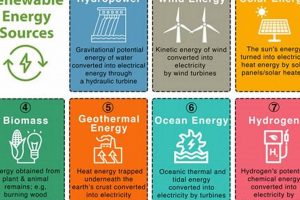
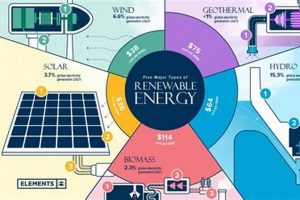
Diverse resources exist that power human activities. These essential resources are crucial for electricity generation, transportation, heating, and various industrial processes. Understanding the nature of these resources is foundational to comprehending energy production and consumption patterns globally. Solar power, wind power, hydropower, geothermal energy, and biomass represent a spectrum of these vital resources.
The significance of these resources stems from their potential to mitigate environmental impact associated with traditional fossil fuels. Renewable sources offer a pathway toward energy independence, energy security and reduced carbon emissions. Historically, reliance on finite resources has led to geopolitical instability and environmental degradation. Utilizing alternative energy sources offers a more sustainable future.
The following will discuss each major category, explaining its function and its role in global energy production, and examining their advantages and disadvantages in detail.
Guidance on Understanding Primary Power Resources
Gaining proficiency in identifying and utilizing the principal categories of power resources can lead to more informed energy-related decisions. The subsequent guidance offers practical insights.
Tip 1: Differentiate Renewable and Non-Renewable: Distinguish between resources that replenish naturally (e.g., solar, wind) and those that are finite (e.g., fossil fuels, nuclear). Understanding this difference is vital for long-term planning.
Tip 2: Assess Geographic Availability: The viability of certain resources is location-dependent. Solar power is more effective in sunnier regions, while geothermal energy requires specific geological conditions.
Tip 3: Evaluate Environmental Impact: Each resource has its environmental footprint. While solar and wind are cleaner than coal, their production and disposal still present challenges. Consider the full life cycle impact.
Tip 4: Understand Energy Conversion: The process of converting a resource into usable energy varies. Solar panels convert sunlight directly into electricity, while fossil fuels require combustion. Knowing these processes informs efficiency assessments.
Tip 5: Consider Economic Factors: The cost of deploying and maintaining different resources varies significantly. While the initial investment for renewable sources might be high, long-term operational costs can be lower.
Tip 6: Acknowledge Technological Advancements: The efficiency and cost-effectiveness of resources are constantly evolving through technological innovation. Stay informed about advancements in areas such as battery storage, wind turbine design, and solar panel efficiency.
Tip 7: Analyze Scalability Challenges: Some resources are more easily scaled than others. Expanding solar or wind power requires significant land area, whereas increasing nuclear power output involves complex regulatory and safety considerations.
Effective comprehension of power resource characteristics is essential for making sound decisions regarding energy production, consumption, and sustainability.
Moving forward, the article will explore specific challenges related to the integration of various power resources into existing energy infrastructures.
1. Solar Power

Solar power, derived from radiated light and heat from the sun, represents a substantial component of primary energy options. Its inclusion in broader discussions of key resources is predicated on its capacity to generate electricity and thermal energy through both photovoltaic and solar thermal technologies. The conversion of sunlight into electricity using photovoltaic cells exemplifies a direct cause-and-effect relationship. The sun’s irradiation is the catalyst, while electrical current is the resultant effect. Similarly, solar thermal systems concentrate sunlight to heat water or other fluids, subsequently producing steam to drive turbines for electricity generation or provide direct heating for buildings.
The significance of solar energy lies in its renewability and its potential to reduce reliance on fossil fuels. Real-world examples illustrate this point: large-scale solar farms across arid regions contribute significantly to grid electricity, while individual rooftop installations provide a decentralized power source for residential and commercial applications. The deployment of concentrated solar power plants in regions with high solar irradiance demonstrates the potential for large-scale, continuous energy production, particularly when coupled with thermal storage systems. Understanding the principles of solar energy, including photovoltaic conversion efficiencies and thermal storage capabilities, is essential for optimizing its integration into the energy infrastructure.
In summary, the consideration of radiated light and heat from the sun as a power resource is integral to any comprehensive examination of global power. The ongoing challenges related to intermittency, land use, and material sourcing for solar technologies require continued research and development. However, its increasing cost-competitiveness and environmental benefits establish it as a pivotal element in the transition towards a sustainable energy future.
2. Wind Power

Wind power, characterized by its conversion of kinetic energy into usable electricity, represents a significant category within the broader framework of essential power resources. Its importance stems from its renewable nature and its increasing contribution to global energy production.
- Turbine Design and Functionality
Wind turbines serve as the primary mechanism for harnessing wind energy. These structures, equipped with blades designed to capture the kinetic energy of the wind, convert rotational motion into electrical power. Different turbine designs, such as horizontal and vertical axis turbines, exist, each optimized for specific wind conditions and environmental factors. The efficiency of kinetic energy conversion is directly influenced by blade aerodynamics, turbine height, and generator technology. An example is the development of larger offshore wind turbines capable of capturing stronger and more consistent wind currents. This illustrates how turbine design and functionality impact the overall viability of wind power as an essential resource.
- Geographical Considerations and Wind Patterns
The effectiveness of wind power generation is heavily dependent on geographical location and prevalent wind patterns. Regions characterized by consistent and strong wind resources, such as coastal areas and elevated terrains, are particularly suitable for wind farm development. Wind maps and meteorological data are crucial for identifying optimal locations for wind turbine deployment. Real-world examples include the extensive wind farms in the Great Plains of the United States and along the coasts of Europe, which benefit from favorable wind conditions. Understanding these geographic dependencies is critical for accurately assessing wind power’s potential as a resource in various regions.
- Environmental Considerations and Mitigation Strategies
While wind power is a renewable energy source, its development is not without environmental considerations. Potential impacts include avian mortality, noise pollution, and visual intrusion. Mitigation strategies, such as careful site selection, turbine design modifications, and radar-based bird detection systems, are employed to minimize these effects. A pertinent example involves the implementation of measures to reduce bird collisions with turbine blades, demonstrating proactive efforts to address environmental concerns. Considering these impacts and implementing effective mitigation strategies is essential for the sustainable development of wind power.
- Integration with Existing Energy Infrastructure
The integration of wind power into existing energy grids presents unique challenges due to the intermittent nature of wind resources. Variability in wind speed can lead to fluctuations in electricity generation, requiring grid operators to maintain stable power supply through backup systems or energy storage solutions. Examples of successful integration include the development of advanced grid management technologies and the implementation of battery storage systems to smooth out wind power’s variability. Addressing these integration challenges is crucial for ensuring the reliability and stability of wind power as a significant contributor to essential power resources.
In conclusion, the ability to effectively harness and convert kinetic energy from wind necessitates careful consideration of turbine technology, geographical factors, environmental impacts, and grid integration strategies. Continued innovation and strategic deployment are critical for realizing the full potential of wind power as a vital and sustainable component of primary resources.
3. Hydropower

Hydropower, defined by its utilization of gravitational potential energy, constitutes a pivotal aspect of global power resources. Its relevance is underscored by its established history and significant contribution to global electricity generation, cementing its place among essential energy sources.
- Dam Construction and Reservoir Formation
The construction of dams and the subsequent formation of reservoirs are fundamental elements in hydropower generation. Dams impound water, creating a head differential that converts gravitational potential energy into kinetic energy as water flows through turbines. The scale of these projects often necessitates substantial engineering expertise and capital investment. The Three Gorges Dam in China exemplifies a large-scale hydropower project, providing significant power generation capacity. The consequences of dam construction, including ecological impacts on river ecosystems and potential displacement of human populations, must be carefully considered.
- Turbine Technology and Efficiency
Turbines serve as the central component for converting the kinetic energy of flowing water into mechanical energy, which is then transformed into electricity by generators. Turbine efficiency is a critical factor in determining the overall output of a hydroelectric plant. Different turbine designs, such as Francis, Kaplan, and Pelton turbines, are selected based on specific head and flow conditions. Ongoing advancements in turbine technology aim to improve energy conversion rates and reduce environmental impacts. For example, variable-speed turbines optimize performance under fluctuating water flow conditions, enhancing efficiency and grid stability.
- Environmental Impact and Mitigation Strategies
While hydropower is a renewable energy source, its environmental impact is a significant consideration. Dam construction can disrupt river ecosystems, alter sediment transport, and affect fish migration patterns. Mitigation strategies include the installation of fish ladders to facilitate fish passage, the implementation of minimum flow requirements to maintain downstream water quality, and the development of run-of-river projects that minimize reservoir size and ecological disruption. The effectiveness of these strategies is crucial for ensuring the sustainable operation of hydropower facilities.
- Geographic Suitability and Resource Assessment
The viability of hydropower projects is heavily dependent on geographic factors, including precipitation patterns, topography, and geological stability. Regions with abundant rainfall and steep gradients are particularly well-suited for hydropower development. Accurate resource assessment is essential for determining the potential energy output of a specific site. Examples include the Himalayan region in Asia and the Andes Mountains in South America, both of which possess significant hydropower potential due to their mountainous terrain and ample water resources. Effective resource management is critical for maximizing the benefits of hydropower while minimizing environmental impacts.
The aforementioned attributes of hydropower showcase its multi-faceted nature. The integration of technological innovation, sound environmental management practices, and comprehensive resource assessment are imperative for ensuring the sustained role of hydropower in the global power sector. As such, the ongoing challenges related to environmental sustainability and social impacts require rigorous mitigation strategies to maintain hydropower’s viability as a primary energy source.
4. Geothermal

Geothermal energy, derived from the Earth’s internal heat, represents a substantial component within the discussion of essential power resources. Its inclusion is predicated upon its capacity to generate electricity and provide direct heating, thus contributing to the diversification of the global energy portfolio. The Earth’s core, mantle, and crust release thermal energy through conduction and convection, resulting in varying temperature gradients across different geological regions. This internal heat source is harnessed through various technologies, including geothermal power plants that extract steam or hot water to drive turbines, and direct-use applications that utilize geothermal heat for space heating, industrial processes, and aquaculture.
The importance of geothermal energy as a component of the five major energy sources stems from its reliability and baseload power potential. Unlike solar and wind energy, geothermal resources are not subject to intermittent availability due to weather conditions. Geothermal power plants can operate continuously, providing a stable and predictable energy supply. Real-world examples of successful geothermal utilization include the Geysers geothermal field in California, which has been generating electricity for decades, and the extensive geothermal heating systems in Iceland, where geothermal energy provides a significant portion of the country’s heating needs. These examples demonstrate the practical significance of geothermal energy as a reliable and sustainable alternative to fossil fuels.
In conclusion, geothermal energy’s connection to essential power resources is defined by its capacity to harness the Earth’s internal heat for electricity generation and direct-use applications. Its reliability, baseload power potential, and diverse applications make it a vital component of a balanced energy portfolio. Ongoing challenges related to resource exploration, drilling costs, and potential environmental impacts require continued research and development. However, geothermal energy’s unique attributes position it as a key player in the transition towards a sustainable energy future.
5. Biomass

Biomass, in the context of fundamental power resources, encompasses organic matter used as fuel, primarily through combustion. Its inclusion within the established set of five essential energy sources is predicated on its widespread availability and potential to contribute to energy production across various sectors. The act of burning organic materials, be it wood, agricultural residues, or dedicated energy crops, releases stored chemical energy in the form of heat. This thermal energy is subsequently utilized to generate steam, which drives turbines connected to electrical generators. The process mirrors that of fossil fuel combustion, albeit with a theoretically lower net carbon footprint, contingent upon sustainable sourcing and carbon sequestration practices.
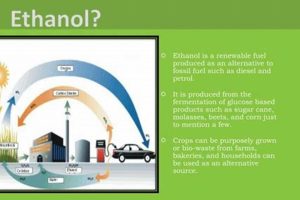
The importance of biomass combustion within the broader energy landscape lies in its capacity to supplement or replace fossil fuels, particularly in heating and power generation. A prevalent real-world example is the utilization of wood pellets in residential heating systems, common in colder climates. Furthermore, biomass power plants, often co-fired with coal in existing infrastructure, leverage agricultural waste or forestry residues to generate electricity. In Brazil, ethanol produced from sugarcane serves as a significant transportation fuel, demonstrating the application of biomass in the transport sector. However, the sustainability of biomass combustion is heavily dependent on responsible harvesting practices and the prevention of deforestation, alongside the management of emissions generated during combustion, including particulate matter and other air pollutants.
In summary, biomass combustion, as a component of the major energy resources, presents a complex interplay between energy provision and environmental stewardship. Its viability hinges on the implementation of sustainable sourcing practices, efficient combustion technologies, and effective emission controls. While biomass offers a pathway to reduce reliance on fossil fuels, its integration into the energy portfolio requires careful consideration of its lifecycle impacts to ensure a net positive contribution to sustainability goals.
Frequently Asked Questions
This section addresses common inquiries regarding the fundamental power resource types. The following questions and answers aim to clarify prevalent misconceptions and provide factual information regarding the role and characteristics of each category.
Question 1: Are the five essential energy sources the only options for power generation?
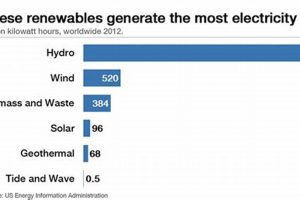
No. These five categories represent major established areas within the energy landscape. Other emerging technologies, such as hydrogen fuel cells, and less-common resources, such as tidal energy, also contribute to power generation, albeit to a lesser extent on a global scale.
Question 2: Is solar power universally applicable as a primary energy source?
The effectiveness of solar power is geographically dependent. Regions with high solar irradiance, such as deserts or areas near the equator, are more suitable for solar energy generation. Cloudy climates and high latitudes experience lower solar radiation levels, reducing the viability of solar as a primary energy source without substantial energy storage solutions.
Question 3: Does wind power generation consistently provide a stable energy supply?
Wind power’s intermittent nature presents challenges to grid stability. Fluctuations in wind speed directly impact electricity generation, necessitating integration with energy storage systems or backup power sources to ensure a consistent energy supply.
Question 4: Are all hydropower projects environmentally benign?
While hydropower is a renewable energy source, dam construction can have significant environmental impacts, including habitat disruption, altered river flow, and potential methane emissions from reservoirs. Mitigation strategies and careful project planning are essential for minimizing these impacts.
Question 5: Is geothermal energy available everywhere on Earth?
Geothermal resources are concentrated in specific geological regions characterized by volcanic activity or high subsurface temperatures. Accessing these resources requires specialized drilling and extraction technologies, limiting geothermal energy’s geographical applicability.
Question 6: Is biomass combustion a carbon-neutral energy source?
The carbon neutrality of biomass combustion depends on sustainable sourcing and carbon sequestration practices. Unsustainable harvesting practices can lead to deforestation and increased carbon emissions, negating the environmental benefits. The emissions released during combustion also contribute to air pollution if not properly controlled.
In essence, the assessment of power resources necessitates a nuanced understanding of their respective strengths, limitations, and environmental implications. Informed decision-making requires a comprehensive analysis of each resource’s potential contributions and associated risks.
Moving on, the following section will address potential innovations in each major resource category, highlighting ongoing research and development efforts.
Conclusion
The preceding examination of energy sources illuminates the diverse mechanisms by which humanity harnesses power. Solar, wind, hydro, geothermal, and biomass represent distinct pathways to energy production, each characterized by unique operational parameters, geographic constraints, and environmental impacts. Their significance lies not only in their potential to generate electricity, heat, and fuel, but also in their capacity to mitigate reliance on finite fossil fuels, a shift that carries profound geopolitical and environmental implications.
A comprehensive grasp of these core energy options is crucial for informed decision-making. Strategic investment in renewable energy infrastructure, coupled with technological innovation and responsible resource management, will be essential to ensure a sustainable and secure energy future. The long-term prosperity of society hinges on the continued pursuit of diversified and environmentally sound power sources, urging a critical evaluation of current energy practices and active support for solutions that advance a more sustainable trajectory.