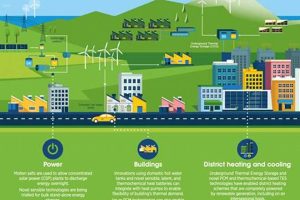
Investment funds specializing in companies focused on sustainable power generation, such as solar, wind, hydro, and geothermal, represent a specific niche within the broader energy investment landscape. These funds may invest in public equities, private companies, or project finance related to these technologies. For example, a fund might take a position in a manufacturer of wind turbine components or provide financing for a new solar farm development.
Financing the transition to cleaner power sources is critical for mitigating climate change and ensuring long-term energy security. Capital deployed in this sector fosters innovation, accelerates the development of new technologies, and helps scale existing solutions. Historically, investments in this area were considered higher risk, but advancements in technology and increasing governmental support have improved the risk-return profile, attracting more institutional and individual investors.
This article will further examine key aspects of this specialized investment area, including investment strategies, market trends, and the potential risks and rewards associated with allocating capital to sustainable energy projects. It will also explore the role of these investments in the global shift toward decarbonization and the future of energy production.
Tips for Evaluating Investments in Sustainable Energy Finance
Careful due diligence is crucial when considering investments in companies focused on sustainable energy production. The following tips provide a framework for evaluating opportunities in this dynamic sector.
Tip 1: Evaluate Management Team Expertise: Thoroughly assess the experience and track record of the fund’s management team. Look for demonstrable success in the renewable energy sector or related industries. A deep understanding of the technological, regulatory, and market dynamics is essential.
Tip 2: Analyze Investment Strategy: Understand the fund’s specific investment approach. Does it focus on early-stage ventures, established companies, or project finance? A clearly defined and well-reasoned strategy aligned with investor goals is critical.
Tip 3: Assess Technology and Innovation: The renewable energy landscape is constantly evolving. Favor funds that invest in companies and projects leveraging cutting-edge technologies with the potential for long-term growth and market leadership.
Tip 4: Consider Regulatory and Policy Landscape: Governmental policies and regulations play a significant role in the success of renewable energy projects. Evaluate the fund’s understanding of and ability to navigate this complex landscape.
Tip 5: Understand Risk Management Practices: Investing in any sector carries inherent risks. Ensure the fund has robust risk management processes in place to address potential challenges such as technological obsolescence, regulatory changes, and market volatility.
Tip 6: Evaluate Financial Performance and Transparency: Scrutinize the fund’s historical performance, if available, and pay close attention to its fee structure and transparency in reporting. A clear and consistent track record of delivering returns is a positive indicator.
Tip 7: Consider ESG Factors: Environmental, social, and governance (ESG) factors are increasingly important considerations for investors. Assess the fund’s commitment to sustainability and responsible investing practices.
By carefully considering these factors, investors can make more informed decisions and potentially gain exposure to the significant growth opportunities within the sustainable energy sector. These tips provide a foundation for navigating the complexities of this rapidly evolving market.
This discussion of key investment considerations leads to a concluding assessment of the overall outlook for sustainable energy finance and its role in shaping the future of the energy industry.
1. Investment Strategy

A clearly defined investment strategy is paramount for renewable energy hedge funds. Given the dynamic nature of the renewable energy sector, influenced by technological advancements, policy changes, and fluctuating commodity prices, a robust strategy provides a crucial framework for navigating complexities and achieving desired returns. Strategies vary significantly, ranging from focusing on publicly traded companies involved in renewable energy equipment manufacturing to investing directly in private projects such as wind farms or solar installations. Some funds might concentrate on specific technologies like solar or wind, while others may diversify across multiple renewable energy sub-sectors. For instance, a fund might employ a long-short strategy, going long on companies poised to benefit from anticipated growth in the electric vehicle charging infrastructure and shorting traditional fossil fuel companies expected to decline. The chosen strategy dictates the fund’s target investments, risk profile, and potential return characteristics.
The effectiveness of an investment strategy often hinges on its alignment with market realities and its adaptability to changing conditions. For example, a fund heavily invested in a specific technology that becomes rapidly obsolete due to disruptive innovation may experience significant losses. Therefore, successful strategies incorporate mechanisms for adapting to unforeseen events, such as diversification across technologies, geographies, and stages of project development. Furthermore, integrating thorough due diligence and ongoing monitoring processes is essential for evaluating investment opportunities and managing risks effectively. Consider a fund that invests in a portfolio of wind energy projects. A thorough investment strategy would consider factors like wind resource assessments, power purchase agreements, and potential environmental impacts to mitigate risks and enhance the probability of successful outcomes.
In conclusion, the investment strategy serves as a roadmap for renewable energy hedge funds. A well-defined and adaptive strategy, informed by rigorous research and analysis, is fundamental to generating returns, managing risks, and contributing to the growth and development of the renewable energy sector. Challenges remain, such as accurately forecasting technological advancements and navigating the evolving regulatory landscape. However, a sound investment strategy equips funds to address these complexities and capitalize on the opportunities presented by the transition to a sustainable energy future.
2. Risk Management

Effective risk management is crucial for renewable energy hedge funds, given the inherent uncertainties and complexities associated with the sector. These funds operate in a dynamic environment influenced by technological advancements, regulatory changes, market volatility, and project-specific risks. A robust risk management framework is essential for protecting investments and achieving long-term financial goals.
- Technology Risk
The renewable energy sector is characterized by rapid technological innovation. While this presents opportunities, it also creates risks related to technological obsolescence. Funds investing in companies or projects reliant on a particular technology face the risk of that technology being superseded by more efficient or cost-effective alternatives. For example, advancements in solar cell technology could render older generation solar farms less competitive. Effective risk management involves diversifying investments across different technologies and carefully evaluating the long-term viability of chosen technologies.
- Regulatory Risk
Government policies and regulations play a significant role in the renewable energy sector. Changes in subsidies, tax incentives, or environmental regulations can significantly impact project profitability and investment returns. For example, a reduction in feed-in tariffs could negatively affect the returns from a solar power project. Robust risk management requires a thorough understanding of the regulatory landscape and anticipating potential policy shifts. This may involve engaging with policymakers, conducting scenario analysis, and incorporating regulatory risk assessments into investment decisions.
- Market Risk
Renewable energy projects are exposed to market risks related to fluctuating energy prices, interest rates, and currency exchange rates. These fluctuations can impact project revenues and financing costs. For example, a decline in electricity prices could reduce the profitability of a wind farm. Effective risk management involves utilizing hedging strategies, diversifying across different markets, and carefully modeling the potential impact of market fluctuations on investment returns.
- Project-Specific Risk
Individual renewable energy projects are subject to specific risks related to construction delays, cost overruns, environmental permitting issues, and resource availability. For example, delays in obtaining environmental permits could postpone the start of a geothermal project, increasing financing costs and reducing overall profitability. Thorough due diligence, careful project selection, and ongoing monitoring are crucial for managing project-specific risks.
These interconnected risks highlight the importance of a comprehensive risk management approach for renewable energy hedge funds. By effectively identifying, assessing, and mitigating these risks, funds can enhance the probability of achieving their investment objectives while contributing to the growth and development of the renewable energy sector. A robust risk management framework not only protects investments but also fosters investor confidence and promotes the long-term sustainability of the industry.
3. Market Volatility

Market volatility significantly impacts renewable energy hedge funds. Fluctuations in energy prices, interest rates, and related commodity markets directly influence the value of investments held by these funds. For example, a decline in natural gas prices can reduce the competitiveness of renewable energy sources, potentially impacting the profitability of wind and solar projects and, consequently, the returns of funds invested in them. Conversely, rising oil prices might enhance the attractiveness of renewable energy alternatives, potentially boosting the value of related investments. Understanding and managing this volatility is crucial for these funds.
Several factors contribute to market volatility within the renewable energy sector. Government policies, such as changes to subsidies or carbon pricing mechanisms, can create uncertainty and price swings. Technological advancements can disrupt existing markets, creating winners and losers among renewable energy technologies. For instance, the rapid development of more efficient solar panel technology could negatively impact the value of investments in older generation solar farms. Furthermore, macroeconomic factors, like economic recessions or global supply chain disruptions, can influence investor sentiment and overall market conditions, affecting renewable energy investments along with other asset classes. A real-world example is the impact of the 2020 pandemic on global supply chains, which significantly affected the availability and pricing of components crucial for renewable energy projects.
Effectively navigating market volatility requires specialized strategies. Diversification across different renewable energy technologies and geographic markets can mitigate risks associated with specific technologies or regulatory environments. Sophisticated hedging strategies, such as using derivatives contracts, can help protect against adverse price movements in energy or commodity markets. Furthermore, rigorous due diligence and ongoing monitoring of market trends are crucial for identifying potential risks and opportunities. Understanding the interplay between market volatility and renewable energy investments is essential for achieving long-term financial success in this dynamic sector. The ability to anticipate and adapt to changing market conditions differentiates successful renewable energy hedge funds, allowing them to manage risks effectively and capitalize on emerging opportunities.
4. Regulatory Landscape

The regulatory landscape plays a critical role in shaping investment decisions and overall performance within renewable energy hedge funds. Government policies, incentives, and regulations directly impact the profitability and risk profile of renewable energy projects, influencing the investment strategies and returns of these specialized funds. Understanding the complexities of this landscape is crucial for successful navigation of the renewable energy investment arena.
- Subsidies and Incentives
Government subsidies and incentives, such as tax credits, feed-in tariffs, and production tax credits, significantly influence the financial viability of renewable energy projects. These incentives can make renewable energy more competitive with traditional fossil fuels, attracting investment and accelerating deployment. However, changes or expirations of these incentives can create uncertainty and impact project returns. For example, the expiration of a solar investment tax credit could reduce the profitability of solar projects, affecting the returns of funds invested in them. Renewable energy hedge funds must carefully analyze the impact of existing and potential future subsidy regimes on their investment portfolios.
- Carbon Pricing Mechanisms
Carbon pricing mechanisms, such as carbon taxes or cap-and-trade systems, aim to internalize the environmental cost of carbon emissions. These mechanisms can create financial incentives for renewable energy projects by increasing the cost of fossil fuel-based power generation. For example, a carbon tax could make wind power more cost-competitive compared to coal-fired power plants. Renewable energy hedge funds need to understand the implications of carbon pricing policies on the relative competitiveness of different energy sources and adjust their investment strategies accordingly.
- Environmental Regulations
Environmental regulations, such as permitting requirements for renewable energy projects, can impact project timelines and costs. Streamlined permitting processes can facilitate faster project development and reduce costs, while complex or lengthy permitting processes can create delays and increase financial burdens. For example, delays in obtaining environmental permits for a wind farm project could impact its financial viability and affect the returns of funds invested in it. Renewable energy hedge funds must carefully consider the regulatory burden associated with different project types and locations.
- International Agreements
International agreements, such as the Paris Agreement on climate change, establish global frameworks for reducing greenhouse gas emissions and promoting renewable energy. These agreements can influence national policies and create new investment opportunities in renewable energy. For example, a country’s commitment to reducing emissions under the Paris Agreement could lead to increased investment in renewable energy projects. Renewable energy hedge funds need to understand the implications of international agreements on national regulatory landscapes and identify potential investment opportunities.
These regulatory factors are interconnected and dynamically influence the renewable energy landscape. Renewable energy hedge funds must carefully analyze the current regulatory environment and anticipate potential changes to effectively manage risks and capitalize on investment opportunities. A deep understanding of the regulatory landscape is not only essential for financial success but also for contributing to the global transition towards a sustainable energy future. By carefully considering the regulatory landscape, these funds can align investment strategies with policy objectives, promote responsible development, and enhance the long-term sustainability of the renewable energy sector.
5. Technological Advancements
Technological advancements are inextricably linked to the success and evolution of renewable energy hedge funds. These funds often seek to capitalize on innovations that improve the efficiency, cost-effectiveness, and scalability of renewable energy technologies. Understanding key technological trends is crucial for identifying promising investment opportunities and managing risks within this dynamic sector. Advancements drive innovation, impacting everything from energy generation and storage to grid management and energy consumption, thereby influencing investment strategies and potential returns.
- Energy Storage Solutions
Improved energy storage technologies, such as advanced battery systems and pumped hydro storage, are essential for addressing the intermittency of renewable energy sources like solar and wind. More efficient and cost-effective storage solutions enable greater grid integration of renewable energy, facilitating a transition away from fossil fuels. For example, breakthroughs in solid-state battery technology could significantly enhance energy storage capacity and lifespan, creating new investment opportunities for renewable energy hedge funds. These funds may invest in companies developing or deploying such technologies, anticipating growth driven by increasing demand for reliable renewable energy integration.
- Smart Grid Technologies
Smart grid technologies optimize electricity grid management by integrating digital technologies and data analytics. These technologies enhance grid stability, improve energy efficiency, and facilitate the integration of distributed renewable energy sources. For instance, advanced grid management software can predict and respond to fluctuations in renewable energy generation, minimizing grid instability and maximizing the utilization of renewable resources. Renewable energy hedge funds may invest in companies developing smart grid solutions, recognizing their crucial role in enabling a more resilient and efficient energy system. This can include investments in software companies, hardware manufacturers, or companies providing grid management services.
- Next-Generation Solar Technologies
Continuous advancements in solar photovoltaic (PV) technology, such as perovskite solar cells and multi-junction solar cells, are pushing the boundaries of solar energy conversion efficiency. These next-generation technologies have the potential to significantly reduce the cost of solar energy and expand its applications. For example, perovskite solar cells offer higher efficiency potential compared to traditional silicon-based solar cells, potentially revolutionizing the solar industry. Renewable energy hedge funds may invest in companies developing or manufacturing these advanced solar technologies, anticipating growth driven by increasing demand for cost-competitive and efficient solar energy.
- Advanced Wind Turbine Technology
Advancements in wind turbine technology, such as larger rotor diameters, improved blade designs, and more efficient generators, are increasing the energy capture capacity and reducing the cost of wind energy. For example, floating offshore wind turbines enable access to stronger and more consistent wind resources in deeper waters, expanding the potential of offshore wind energy. Renewable energy hedge funds may invest in companies manufacturing or operating these advanced wind turbines, recognizing their potential to contribute to a cleaner and more sustainable energy mix. This includes companies specializing in turbine components, installation services, and operational maintenance.
These technological advancements are interconnected and drive the evolution of the renewable energy sector. Renewable energy hedge funds carefully analyze these trends, identifying promising investment opportunities that align with their investment strategies and risk tolerance. By understanding and anticipating the impact of technological advancements, these funds can contribute to the growth of the renewable energy industry and potentially generate significant financial returns. The ongoing pursuit of innovation in renewable energy technologies will continue to shape the investment landscape, offering both challenges and opportunities for specialized investors. Successful funds will be those that effectively identify and capitalize on the most transformative technological breakthroughs, while mitigating the risks associated with technological disruption and market volatility.
Frequently Asked Questions
This section addresses common inquiries regarding investment funds specializing in sustainable energy.
Question 1: What distinguishes these specialized funds from broader energy investment funds?
These funds focus exclusively on companies and projects contributing to sustainable energy generation, excluding investments in fossil fuels. This targeted approach aligns with investor values seeking to support environmental sustainability while potentially benefiting from growth in the renewable energy sector.
Question 2: What are the typical investment strategies employed?
Strategies vary widely. Some funds focus on publicly traded companies involved in renewable energy equipment manufacturing, while others invest directly in private projects like wind or solar farms. Some specialize in specific renewable energy technologies, while others diversify across various sub-sectors.
Question 3: What are the key risks associated with these investments?
Risks include technological obsolescence, regulatory changes impacting project profitability, and market volatility influencing energy prices and investment valuations. Careful due diligence and risk management strategies are crucial.
Question 4: How do governmental policies and regulations influence these investments?
Government subsidies, tax incentives, carbon pricing mechanisms, and environmental regulations significantly impact the financial viability and risk profile of renewable energy projects. Favorable policies can stimulate investment, while adverse changes can create challenges.
Question 5: How can investors evaluate the potential of these specialized funds?
Evaluating management team expertise, analyzing the investment strategy, understanding the chosen technologies, assessing risk management practices, considering the regulatory landscape, evaluating financial performance, and incorporating ESG factors are essential considerations.
Question 6: What is the long-term outlook for investments in sustainable energy?
The long-term outlook is generally positive, driven by growing global demand for clean energy, technological advancements, and increasing governmental support for decarbonization. However, challenges such as market volatility and regulatory uncertainty remain.
Understanding these key aspects is crucial for making informed investment decisions in the dynamic and evolving sustainable energy sector. Careful consideration of these factors empowers investors to align their financial goals with their commitment to sustainability.
For further exploration, the subsequent sections will delve deeper into specific areas of interest within sustainable energy finance.
Renewable Energy Hedge Funds
This exploration of renewable energy hedge funds has highlighted their crucial role in financing the transition to a sustainable energy future. Key aspects examined include investment strategies, encompassing diverse approaches from direct project finance to public equity investments; risk management, emphasizing the importance of navigating technological, regulatory, and market risks; and the influence of market volatility on investment returns. The analysis also underscored the profound impact of the regulatory landscape, encompassing subsidies, carbon pricing mechanisms, and environmental regulations, on shaping investment decisions and project viability. Finally, the continuous evolution of renewable energy technologies, from advanced energy storage solutions to next-generation solar and wind technologies, presents both opportunities and challenges for these specialized investment vehicles.
The future of renewable energy finance hinges on continued innovation, supportive policies, and effective risk management. As the global demand for clean energy intensifies, renewable energy hedge funds will play an increasingly critical role in channeling capital towards sustainable solutions. The complexities and evolving nature of this sector demand careful consideration from investors seeking to contribute to a cleaner energy future while pursuing competitive financial returns. Thorough due diligence, a deep understanding of the technological and regulatory landscape, and a long-term perspective are essential for navigating the opportunities and challenges presented by this dynamic and vital sector.