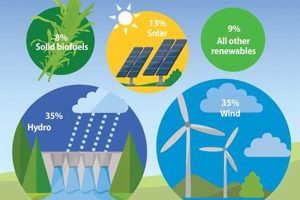
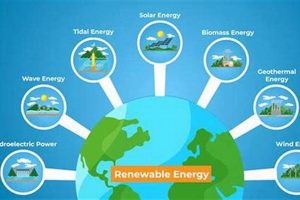
A sustainable energy source replenishes naturally on a human timescale. Examples include solar, wind, geothermal, hydropower, and biomass. These resources stand in contrast to finite sources like fossil fuels and nuclear energy, which deplete over time.
Harnessing these resources offers significant advantages. Reduced reliance on fossil fuels mitigates greenhouse gas emissions, combats climate change, and improves air quality. Furthermore, many of these sectors drive economic growth through job creation and technological innovation.
The subsequent sections will detail specific types of sustainable energy options, examining their operational principles, environmental impacts, and potential for widespread adoption in the global energy landscape.
Guidance on Prioritizing Sustainable Energy Options
The following provides actionable steps for individuals and organizations aiming to increase their use of sustainable energy.
Tip 1: Conduct a Comprehensive Energy Audit: A thorough assessment of energy consumption patterns identifies areas of inefficiency and potential savings. Analyze building insulation, appliance efficiency, and energy usage habits to pinpoint targets for improvement.
Tip 2: Explore Solar Energy Potential: Evaluate the suitability of solar panel installation for residential, commercial, or industrial properties. Consider factors such as roof orientation, shading, and local solar irradiance levels. Investigate available government incentives and tax credits to offset initial costs.
Tip 3: Invest in Energy-Efficient Appliances and Equipment: Replace outdated appliances and machinery with models certified for energy efficiency. Look for labels such as Energy Star to ensure adherence to established efficiency standards.
Tip 4: Support Renewable Energy Initiatives: Advocate for policies that promote the development and deployment of sustainable energy infrastructure. Engage with local and national policymakers to express support for renewable energy projects.
Tip 5: Utilize Smart Home Technologies: Implement smart thermostats, lighting controls, and energy management systems to optimize energy consumption automatically. These technologies enable remote monitoring and adjustment of energy usage, maximizing efficiency and minimizing waste.
Tip 6: Consider Renewable Energy Certificates (RECs): Even without direct access to renewable energy generation, purchase RECs to support projects that generate electricity from sustainable sources. RECs represent the environmental attributes of renewable energy generation, effectively offsetting carbon emissions associated with traditional electricity consumption.
These measures collectively contribute to a more sustainable energy future, reducing environmental impact and promoting long-term energy security.
The next section will present concluding remarks about the role of this field in a global context.
1. Sustainability

Sustainability is the cornerstone when evaluating renewable energy options. It directly addresses the long-term viability of an energy source, differentiating it from depletable resources. The capacity of a resource to renew itself within a reasonable timeframe is paramount to its classification as sustainable.
- Resource Replenishment Rate
The rate at which a resource naturally regenerates is critical. Solar energy, continuously replenished by the sun, exemplifies high sustainability. Biomass, while renewable, requires careful management to ensure harvesting does not outpace regrowth, thereby compromising its sustainability.
- Environmental Impact Mitigation
Sustainability necessitates minimizing the environmental footprint of energy production. Wind and hydropower, while renewable, require careful siting and operational practices to avoid disrupting ecosystems and affecting biodiversity. Sustainable practices aim to balance energy needs with ecological preservation.
- Long-Term Resource Availability
A sustainable energy resource must be available for use over extended periods without significant depletion. Geothermal energy, tapping into Earth’s internal heat, presents a long-term resource but requires responsible management to avoid localized depletion of thermal reservoirs.
- Social and Economic Considerations
True sustainability extends beyond environmental aspects, encompassing social and economic factors. Energy projects must be equitable, providing benefits to local communities and fostering economic growth without exacerbating social inequalities. Fair labor practices and community engagement are integral components of sustainable energy development.
These interlinked facets underscore the complexity of sustainability in energy. A renewable source is not inherently sustainable; responsible management, environmental protection, and socio-economic equity are vital components in ensuring its long-term viability and contribution to a truly sustainable energy future.
2. Environmental Impact

The choice of energy source directly correlates with environmental impact. Renewable energy options generally exhibit a reduced environmental footprint compared to fossil fuels. However, even among renewables, the degree of environmental impact varies considerably. Solar energy, for instance, can require significant land use and potentially impact desert ecosystems during construction and operation. Wind energy raises concerns about avian and bat mortality and noise pollution. Hydropower projects can alter river ecosystems and displace communities. Biomass energy, if unsustainably sourced, can lead to deforestation and increased carbon emissions.
Quantifying and mitigating these environmental impacts is essential for responsible energy development. Life cycle assessments evaluate the full environmental consequences of an energy technology, from resource extraction to decommissioning. These assessments consider factors like greenhouse gas emissions, water consumption, land use change, and waste generation. Understanding these impacts informs strategies for minimizing environmental harm, such as optimizing site selection, implementing pollution control measures, and promoting sustainable resource management practices. For example, solar farms can be designed to minimize habitat fragmentation, wind turbines can be equipped with bird deterrent systems, and hydropower operations can be managed to maintain river flows and support aquatic life.
Ultimately, the environmental impact is a critical factor in evaluating the suitability of different energy sources. While renewable energy offers significant advantages over fossil fuels, a comprehensive understanding of the potential environmental consequences is necessary to ensure its sustainable implementation. Prioritizing low-impact renewable technologies and implementing mitigation strategies can minimize environmental harm and contribute to a cleaner, more sustainable energy future.
3. Resource Availability

Resource availability fundamentally determines the feasibility and scalability of renewable energy deployment. Uneven geographical distribution and fluctuating availability patterns introduce challenges and necessitate tailored strategies for harnessing sustainable energy options.
- Geographic Distribution of Solar Irradiance
Solar energy’s viability hinges on consistent and intense solar irradiance. Regions near the equator and those with minimal cloud cover, such as deserts, exhibit higher potential for solar power generation. This necessitates strategic placement of solar installations and efficient energy transmission mechanisms to supply regions with lower solar resource availability.
- Wind Resource Variability and Location
Wind energy relies on consistent wind patterns, typically found in coastal areas, mountainous regions, and open plains. The intermittent nature of wind requires advanced forecasting techniques and energy storage solutions to ensure grid stability and reliable power supply. Optimal turbine placement considers wind speed, direction, and environmental impact to maximize energy capture.
- Geothermal Resource Hotspots
Geothermal energy taps into the Earth’s internal heat, concentrated in volcanically active regions and areas with high geothermal gradients. Geothermal power plants require access to these specific locations, limiting widespread deployment. However, advancements in enhanced geothermal systems are expanding the potential for geothermal energy extraction in previously inaccessible areas.
- Hydropower Potential and River Systems
Hydropower relies on the availability of water resources and suitable river systems. Large-scale hydropower projects can significantly impact river ecosystems and displace communities, necessitating careful environmental impact assessments and mitigation strategies. Small-scale hydropower projects offer a more decentralized and environmentally friendly approach to harnessing water energy.
These examples illustrate how resource availability directly impacts the suitability and scalability of various renewable energy technologies. Strategic planning, technological innovation, and careful consideration of environmental and social factors are essential for maximizing the potential of renewable energy resources and ensuring a sustainable energy future.
4. Technological Advancements
Technological advancements are pivotal in maximizing the efficiency, reducing the costs, and expanding the applicability of sustainable energy. Continuous innovation drives the evolution of energy generation, storage, and distribution, impacting the viability and scalability of the resource.
- Enhanced Solar Panel Efficiency
Advancements in photovoltaic materials and cell design increase the conversion rate of sunlight into electricity. Higher efficiency panels generate more power from the same surface area, lowering the overall cost per kilowatt-hour. Examples include perovskite solar cells and multi-junction cells, which promise significantly higher efficiencies than traditional silicon-based panels. These improvements directly enhance the economic competitiveness of solar power, making it a more attractive energy source.
- Advanced Wind Turbine Designs
Innovations in wind turbine technology focus on increasing energy capture and reducing maintenance costs. Larger rotor diameters, taller towers, and improved blade aerodynamics enhance the turbine’s ability to harness wind energy. Floating offshore wind turbines enable access to stronger and more consistent winds in deeper waters. These advancements contribute to higher capacity factors and lower levelized cost of energy for wind power.
- Grid-Scale Energy Storage Solutions
Energy storage technologies are crucial for addressing the intermittent nature of many sustainable sources. Battery storage systems, pumped hydro storage, and compressed air energy storage enable the storage of excess energy generated during peak production periods, ensuring a reliable energy supply when demand exceeds generation. Improved energy storage capacity and efficiency are vital for integrating large-scale variable sustainable resources into the electricity grid.
- Smart Grid Technologies
Smart grids utilize advanced communication and control systems to optimize energy distribution and improve grid reliability. Smart meters, real-time monitoring, and automated control systems enable efficient management of electricity flow, reducing transmission losses and enhancing grid stability. Smart grids facilitate the integration of distributed resources, such as rooftop solar and electric vehicles, creating a more resilient and sustainable energy infrastructure.
These technological breakthroughs collectively reduce the cost of these resources while simultaneously increasing their practicality. Continuous investment in research and development is crucial for further advancing these technologies and unlocking the full potential of sustainable energy resources.
5. Economic Viability

Economic viability is a critical determinant in the widespread adoption of various renewable energy resources. The ability of a renewable energy technology to compete economically with traditional fossil fuels directly influences its market penetration and overall contribution to the energy mix. Understanding the factors that impact the economic viability of renewables is essential for informed policy decisions and investment strategies.
- Initial Capital Investment Costs
The upfront costs associated with constructing renewable energy facilities often represent a significant barrier to entry. Solar power plants, wind farms, and geothermal installations require substantial capital investments in equipment, infrastructure, and land acquisition. Government incentives, tax credits, and innovative financing mechanisms can help reduce these initial costs and improve the economic attractiveness of renewable energy projects. For example, feed-in tariffs guarantee a fixed price for electricity generated from renewable sources, providing a stable revenue stream and encouraging investment.
- Operating and Maintenance Expenses
While renewable energy sources generally have lower fuel costs compared to fossil fuels, ongoing operating and maintenance (O&M) expenses can still impact their economic viability. Wind turbines require regular maintenance to ensure optimal performance, and solar panels may need periodic cleaning to remove dust and debris. Geothermal power plants require careful management of geothermal reservoirs to maintain steam production. Reducing O&M costs through technological advancements and efficient management practices can significantly improve the competitiveness of renewable energy projects.
- Levelized Cost of Energy (LCOE)
The levelized cost of energy (LCOE) is a key metric used to compare the economic viability of different energy sources. LCOE represents the average cost of producing one kilowatt-hour of electricity over the lifetime of a power plant, taking into account all capital costs, operating expenses, and financing costs. Renewable energy technologies have seen significant reductions in LCOE in recent years, making them increasingly competitive with fossil fuels. Factors such as technological innovation, economies of scale, and government support have contributed to these cost reductions.
- External Costs and Benefits
Traditional economic analyses often fail to account for the external costs associated with fossil fuel energy production, such as air pollution, climate change, and public health impacts. Renewable energy sources, on the other hand, offer significant external benefits, including reduced greenhouse gas emissions, improved air quality, and energy security. Incorporating these external costs and benefits into economic assessments provides a more accurate and comprehensive evaluation of the true economic value of different energy sources. Carbon pricing mechanisms, such as carbon taxes or cap-and-trade systems, can help internalize the external costs of fossil fuels and create a more level playing field for renewable energy.
In summary, economic viability encompasses initial costs, operating expenses, levelized cost of energy, and external costs and benefits. These factors collectively determine the competitiveness of renewable energy resources compared to conventional fossil fuels. As technological advancements continue to drive down costs and policies promote sustainable energy development, the economic viability of this field is expected to improve, further accelerating its adoption worldwide.
Frequently Asked Questions about Sustainable Energy Options
The following addresses common inquiries regarding sustainable energy resources and their implications.
Question 1: What fundamentally differentiates sustainable energy from conventional energy sources?
Sustainable energy sources replenish naturally on a human timescale, ensuring long-term availability. Conventional sources, such as fossil fuels, are finite and deplete over time.
Question 2: How does utilizing sustainable energy contribute to mitigating climate change?
Sustainable energy technologies generally produce significantly lower greenhouse gas emissions compared to fossil fuels. This reduction lessens the impact on global warming and helps to stabilize the climate.
Question 3: What are the primary challenges associated with integrating sustainable energy into existing power grids?
The intermittent nature of some sustainable sources, such as solar and wind, presents challenges for grid stability. Effective energy storage solutions and advanced grid management techniques are necessary to address this variability.
Question 4: Are sustainable energy technologies economically competitive with fossil fuels?
The economic competitiveness of sustainable energy is increasing due to technological advancements and declining costs. In many regions, sustainable options are now cost-competitive with, or even cheaper than, fossil fuels.
Question 5: What role do government policies and incentives play in promoting the adoption of sustainable energy?
Government policies, such as tax credits, subsidies, and renewable energy mandates, create a supportive environment for sustainable energy development. These policies can help overcome market barriers and accelerate the transition to a cleaner energy future.
Question 6: How can individuals contribute to the widespread adoption of sustainable energy?
Individuals can support sustainable energy by adopting energy-efficient practices, investing in renewable energy systems, and advocating for policies that promote sustainable energy development. Collective action at the individual level can significantly impact the transition to a more sustainable energy future.
The above answers clarify commonly-held misconceptions related to this field. Addressing this issues is important for a better understanding.
The next section will provide concluding thoughts on the matter.
Conclusion
This exploration into which energy source is renewable underscores a critical necessity for a sustainable global energy transition. The preceding sections detailed the multifaceted nature of renewable energy, analyzing its inherent sustainability, environmental impacts, resource availability, technological advancements, and economic viability. Each of these factors plays a vital role in determining the feasibility and potential for widespread adoption of different renewable energy technologies.
The imperative to transition toward renewable energy sources is undeniable, driven by the escalating consequences of climate change and the finite nature of fossil fuels. Prioritizing and investing in viable renewable energy solutions is not merely an option but a responsibility. Future energy security, environmental stewardship, and global economic stability depend on a commitment to harnessing the power of renewable resources responsibly and effectively.