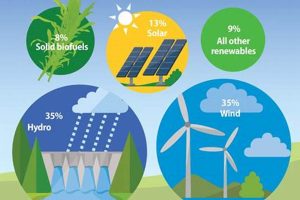
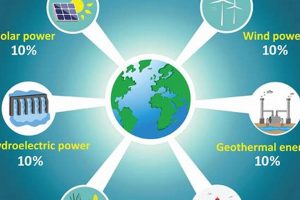
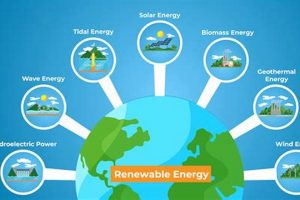
Harnessing naturally replenishing resources offers a sustainable pathway to meet global energy demands. These resources, unlike finite fossil fuels, are continuously replenished, ensuring a long-term energy supply. Examples include solar radiation, wind currents, flowing water, geothermal heat, and biomass.
The utilization of these resources presents numerous advantages. Reduced reliance on fossil fuels mitigates greenhouse gas emissions, thereby combating climate change. Furthermore, these energy options enhance energy security by diversifying energy portfolios and reducing dependence on volatile global markets. Historically, communities have utilized these resources in rudimentary forms, but advancements in technology have enabled efficient and large-scale energy generation.
The following sections will explore specific modalities, detailing their operational principles, advantages, disadvantages, and current deployment status. This exploration will encompass photovoltaic systems, wind turbines, hydroelectric power plants, geothermal energy extraction, and biomass conversion technologies.
Harnessing Natural Replenishment
Effective implementation of energy systems derived from naturally replenishing resources requires careful planning and execution. The following considerations are crucial for maximizing efficiency and minimizing environmental impact.
Tip 1: Conduct a Thorough Resource Assessment: Before investing in any system, a detailed analysis of available resources is essential. This includes evaluating solar irradiance levels, wind speed patterns, hydro potential, geothermal gradients, and biomass availability within the project area.
Tip 2: Prioritize Grid Integration and Energy Storage: The intermittent nature of some modalities, such as solar and wind, necessitates robust grid integration strategies and energy storage solutions. Battery storage, pumped hydro, and other technologies can help ensure a reliable energy supply.
Tip 3: Evaluate Lifecycle Costs and Environmental Impacts: A comprehensive lifecycle assessment should be conducted to determine the total cost of ownership, including manufacturing, installation, operation, maintenance, and decommissioning. Environmental impacts, such as land use and habitat disruption, should also be carefully considered.
Tip 4: Implement Smart Grid Technologies: Utilizing smart grid technologies, such as advanced metering infrastructure and demand response programs, can optimize energy distribution and consumption, enhancing the overall efficiency of the system.
Tip 5: Secure Community Engagement and Stakeholder Buy-in: Successful projects require active engagement with local communities and stakeholders. Addressing concerns, providing economic benefits, and ensuring transparency can foster support and facilitate project implementation.
Tip 6: Focus on Research and Development: Continuous investment in research and development is crucial for improving the efficiency, reliability, and affordability of technologies. This includes exploring new materials, designs, and operational strategies.
Tip 7: Establish Supportive Policy Frameworks: Governments should establish clear and consistent policy frameworks that incentivize deployment, promote investment, and streamline regulatory processes. Feed-in tariffs, tax credits, and carbon pricing mechanisms can play a significant role.
Strategic planning and diligent execution are essential for successfully leveraging naturally replenishing resources. By adhering to these guidelines, stakeholders can maximize the benefits while minimizing potential drawbacks, contributing to a sustainable energy future.
The subsequent discussion will summarize the current status and future prospects of these energy resources, outlining key challenges and opportunities for continued growth.
1. Solar Irradiation

Solar irradiation, the electromagnetic radiation emitted by the sun, serves as a fundamental input for several naturally replenishing energy technologies. Understanding its characteristics and variability is essential for optimizing its utilization as a crucial component of our resource strategy.
- Photovoltaic Energy Conversion
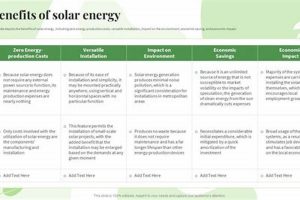
Photovoltaic (PV) cells directly convert sunlight into electricity via the photoelectric effect. Solar panels composed of these cells are deployed on rooftops, in solar farms, and in integrated building systems. The amount of electricity generated is directly proportional to the intensity and duration of solar irradiation, making site selection and tracking systems important for maximizing energy yield.
- Concentrated Solar Power (CSP)
CSP systems use mirrors or lenses to focus a large area of sunlight onto a small receiver. The concentrated solar energy heats a working fluid, which is then used to generate electricity via a conventional steam turbine. CSP systems often incorporate thermal energy storage, allowing for electricity generation even when sunlight is not directly available.
- Solar Thermal Heating
Solar thermal collectors absorb solar irradiation to heat water or air for domestic or industrial use. These systems are commonly used for water heating, space heating, and industrial process heating. Solar thermal heating reduces reliance on fossil fuels for heating purposes, contributing to lower carbon emissions.
- Indirect Solar Energy: Hydropower and Wind
Solar irradiation indirectly drives the water cycle, leading to precipitation that feeds rivers and creates hydro potential. Furthermore, differential heating of the Earth’s surface by the sun generates wind patterns, which can be harnessed by wind turbines. Therefore, even these options have their origins in solar energy.
The multifaceted applications of solar irradiation highlight its significance in the renewable energy landscape. Continued advancements in solar technologies, coupled with strategic deployment and grid integration, will further enhance its role in meeting global energy demands sustainably.
2. Wind kinetic energy

Wind kinetic energy, a manifestation of atmospheric motion, directly contributes to the portfolio of available renewable energy sources. Atmospheric pressure differences, generated primarily by solar heating and the Earth’s rotation, create air currents that possess significant kinetic energy. Wind turbines, engineered to convert this kinetic energy into mechanical energy and subsequently electrical energy, represent a tangible application of this natural resource. The operational principle involves the interception of wind flow by turbine blades, causing them to rotate. This rotation drives a generator, which converts mechanical energy into electricity. The amount of electrical energy produced is directly proportional to the cube of the wind speed, highlighting the importance of siting turbines in locations with consistent and strong wind resources. Wind farms, clusters of wind turbines strategically positioned in areas with favorable wind regimes, are increasingly common sights in many regions, exemplifying the large-scale deployment of wind energy technology. These installations contribute significantly to grid electricity supply in countries like Denmark, Germany, and the United States.
Further augmenting the efficacy of wind energy utilization involves considering environmental factors and technological advancements. Detailed wind resource assessments, employing meteorological data and computational fluid dynamics modeling, are crucial for optimizing turbine placement and maximizing energy capture. Furthermore, advancements in turbine design, including larger rotor diameters, taller towers, and improved blade aerodynamics, continually enhance energy production capabilities. Integration of wind energy into existing power grids presents unique challenges due to the intermittent nature of wind. Addressing these challenges requires the implementation of advanced grid management technologies, such as energy storage systems and smart grids, to ensure grid stability and reliability. Offshore wind farms, situated in coastal areas with stronger and more consistent wind resources, represent a promising avenue for expanding wind energy production. However, offshore installations pose additional challenges, including higher construction costs and environmental concerns related to marine ecosystems.
In summary, wind kinetic energy serves as a substantial and increasingly important constituent of renewable energy sources. Harnessing this resource requires careful consideration of resource assessment, technological innovation, grid integration, and environmental impact. The continued development and deployment of wind energy technologies offer a significant pathway towards a sustainable energy future, reducing reliance on fossil fuels and mitigating greenhouse gas emissions. Challenges related to intermittency and environmental considerations remain, but ongoing advancements and strategic planning are paving the way for broader adoption and enhanced contributions to the global energy mix.
3. Hydro potential

Hydro potential, the energy inherent in flowing or falling water, constitutes a significant and established component of naturally replenishing energy options. Its effective conversion into electricity represents a key strategy for sustainable power generation, offering a reliable and versatile alternative to fossil fuel-based sources.
- Conventional Hydropower Dams
Conventional hydropower dams utilize large reservoirs to store water at elevated levels. This stored water is then released through turbines, converting the potential energy of the water into mechanical energy, which in turn drives generators to produce electricity. Examples include the Three Gorges Dam in China and the Hoover Dam in the United States. These projects provide substantial electricity generation capacity but often face concerns related to environmental impacts, such as habitat disruption and altered river flow regimes.
- Run-of-River Hydropower
Run-of-river hydropower plants, in contrast to conventional dams, generate electricity from the natural flow of a river, with little or no water storage. These systems typically have a smaller environmental footprint compared to large dams, minimizing impacts on river ecosystems. However, their electricity generation capacity is more dependent on the river’s natural flow rate, leading to greater variability in output. Examples can be found in mountainous regions with consistent water flow.
- Pumped Hydro Storage
Pumped hydro storage serves as an energy storage solution that complements other renewable energy sources. During periods of low electricity demand, water is pumped from a lower reservoir to an upper reservoir, storing energy in the form of potential energy. When electricity demand increases, the stored water is released through turbines to generate electricity. This technology provides a means of balancing electricity supply and demand, enhancing grid stability. Several installations exist worldwide, demonstrating its viability as a large-scale energy storage option.
- Small-Scale Hydroelectric Systems
Small-scale hydroelectric systems, also known as micro-hydro, generate electricity from small streams or rivers. These systems can provide electricity to individual homes, farms, or small communities, often in remote locations. They offer a decentralized energy solution with minimal environmental impact, providing a viable alternative to extending grid infrastructure to isolated areas.
Harnessing hydro potential requires careful consideration of environmental impacts, technological advancements, and grid integration strategies. Balancing electricity generation with ecosystem preservation remains a key challenge. The diverse range of hydroelectric technologies, from large dams to small-scale systems, provides a versatile set of options for utilizing water resources to generate electricity, contributing to the overarching goal of diversifying and decarbonizing the energy supply.
4. Geothermal gradient

Geothermal gradient, the rate of increasing temperature with respect to increasing depth in the Earth’s interior, represents a substantial and continually replenished energy source. Its accessibility and utilization as a renewable energy option have gained increasing attention. This resource offers distinct advantages in terms of base-load power generation, as it is not subject to the intermittency associated with solar or wind energy.
- Direct Use Applications
Direct use of geothermal energy involves harnessing the heat directly from the Earth without converting it to electricity. This includes geothermal heating systems for buildings, greenhouses, and aquaculture facilities. Geothermal heat pumps, also known as ground-source heat pumps, utilize the relatively constant temperature of the shallow Earth to provide heating and cooling. Examples include district heating systems in Iceland and geothermal spas in Japan. These applications significantly reduce reliance on fossil fuels for heating and cooling purposes.
- Geothermal Power Plants
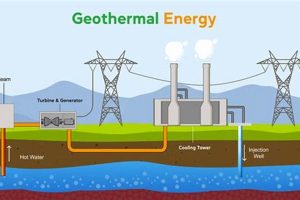
Geothermal power plants convert geothermal heat into electricity. There are three main types of geothermal power plants: dry steam, flash steam, and binary cycle. Dry steam plants directly use steam from underground reservoirs to power turbines. Flash steam plants use high-pressure hot water, which is then flashed into steam to drive turbines. Binary cycle plants pass hot geothermal water through a heat exchanger to vaporize a secondary fluid with a lower boiling point, which then drives the turbines. The Geysers in California is an example of a dry steam geothermal field, while many binary cycle plants operate in the western United States. These power plants provide a continuous and reliable source of electricity.
- Enhanced Geothermal Systems (EGS)
Enhanced Geothermal Systems (EGS) represent a promising technology for accessing geothermal energy in areas without naturally occurring hydrothermal resources. EGS involves creating artificial fractures in hot, dry rock formations to allow water to circulate and extract heat. This technology expands the geographical potential of geothermal energy. Pilot projects are underway in various locations, demonstrating the feasibility of EGS for power generation.
- Geothermal Cogeneration
Geothermal cogeneration, also known as combined heat and power (CHP), involves simultaneously producing electricity and heat from geothermal resources. This integrated approach maximizes the utilization of geothermal energy, enhancing overall efficiency. Geothermal cogeneration systems can provide electricity for industrial processes and heat for district heating, offering a cost-effective and environmentally sound energy solution.
The diverse applications of geothermal gradient as a renewable energy source underscore its strategic importance. From direct use applications to geothermal power plants and enhanced geothermal systems, geothermal energy offers a stable and reliable source of power and heat. Continued technological advancements and strategic deployment will further unlock the potential of geothermal energy in contributing to a sustainable energy future.
5. Biomass feedstock

Biomass feedstock, encompassing organic matter derived from plants and animals, constitutes a critical component of renewable energy sources. The energy stored within biomass, initially captured through photosynthesis, can be converted into various forms of usable energy, contributing significantly to diversifying the energy supply and reducing reliance on fossil fuels. The selection and sustainable management of biomass feedstock are essential for maximizing its benefits and minimizing potential environmental impacts. For instance, dedicated energy crops, such as switchgrass and miscanthus, are cultivated specifically for energy production, offering higher yields and lower input requirements compared to traditional agricultural crops. Agricultural residues, such as corn stover and wheat straw, represent readily available and underutilized biomass resources. Forestry residues, including logging slash and thinning debris, can also be converted into energy, reducing wildfire risk and improving forest health.
Conversion technologies play a crucial role in transforming biomass feedstock into usable energy. Combustion, a direct thermal conversion process, involves burning biomass to generate heat for electricity production or heating applications. Anaerobic digestion, a biological conversion process, utilizes microorganisms to break down biomass in the absence of oxygen, producing biogas, a mixture of methane and carbon dioxide, which can be used as a fuel. Pyrolysis, a thermochemical conversion process, involves heating biomass in the absence of oxygen to produce bio-oil, biochar, and syngas, all of which can be used as fuels or chemical feedstocks. Gasification, another thermochemical conversion process, converts biomass into syngas, a mixture of carbon monoxide and hydrogen, which can be used to generate electricity or produce liquid fuels. The choice of conversion technology depends on the characteristics of the biomass feedstock, the desired energy output, and economic considerations. The deployment of biomass energy projects often faces challenges related to feedstock availability, transportation costs, and land use competition.
Ultimately, biomass feedstock’s role within renewable energy sources is multifaceted and complex. Sustainable sourcing practices, efficient conversion technologies, and supportive policy frameworks are essential for maximizing its contribution to a sustainable energy future. Challenges related to land use, environmental impacts, and economic viability must be carefully addressed to ensure that biomass energy is deployed in a responsible and sustainable manner. Its strategic integration alongside other renewable energy options provides a pathway toward energy diversification and decarbonization of the energy sector.
6. Oceanic processes

Oceanic processes, encompassing tidal movements, wave action, and thermal gradients, represent a largely untapped reservoir of renewable energy. These naturally occurring phenomena, driven by gravitational forces, wind patterns, and solar radiation, offer several potential pathways for electricity generation and other forms of energy extraction. The connection between these processes and renewable energy lies in their ability to be harnessed through specialized technologies, transforming kinetic and thermal energy into usable power. For example, tidal barrages and tidal stream generators convert the kinetic energy of tidal currents into electricity, while wave energy converters capture the oscillatory motion of waves to produce power. Ocean thermal energy conversion (OTEC) utilizes the temperature difference between warm surface water and cold deep water to drive a heat engine, generating electricity.
The practical significance of understanding oceanic processes as a component of renewable energy sources stems from their potential to contribute to energy diversification and decarbonization. Coastal regions, in particular, stand to benefit from the development of ocean energy resources, reducing their reliance on fossil fuels and enhancing energy security. Furthermore, the predictability of tidal movements, in contrast to the intermittency of solar and wind energy, offers a relatively stable source of power. Examples of operational or planned ocean energy projects include the Sihwa Lake Tidal Power Station in South Korea, which is currently the world’s largest tidal power plant, and various wave energy test sites in Europe and North America. These projects demonstrate the technological feasibility of harnessing ocean energy, albeit with varying degrees of economic viability and environmental impact.
Despite the potential benefits, the development of ocean energy resources faces several challenges. High capital costs, technological complexities, and environmental concerns, such as impacts on marine ecosystems, present significant barriers to widespread deployment. The corrosive nature of seawater and the harsh marine environment also pose engineering challenges for the design and maintenance of ocean energy devices. Nevertheless, ongoing research and development efforts are focused on improving the efficiency and reducing the costs of ocean energy technologies, as well as minimizing their environmental footprint. Successfully navigating these challenges will be crucial for unlocking the full potential of oceanic processes as a significant contributor to the global renewable energy mix.
Frequently Asked Questions About Renewable Energy Sources
This section addresses common inquiries regarding the nature, viability, and implications of renewable energy sources.
Question 1: What distinguishes energy sources described as “renewable” from conventional alternatives?
The defining characteristic lies in the resource replenishment rate. Renewable sources derive from processes that are naturally replenished, such as solar radiation, wind, and flowing water. Conventional sources, like fossil fuels, are finite and exhaustible on a human timescale.
Question 2: What are the primary categories of renewable energy currently utilized for electricity generation?
The main categories include solar power (photovoltaic and concentrated solar), wind power (onshore and offshore), hydropower (large-scale and small-scale), geothermal energy (direct use and power generation), and biomass (combustion, gasification, and anaerobic digestion).
Question 3: Is renewable energy a consistently reliable energy source, given the variability of some resources?
The reliability of some resources, particularly solar and wind, is subject to intermittency. Mitigation strategies involve grid integration, energy storage solutions (batteries, pumped hydro), and diversification of energy sources. Other resources, such as geothermal and biomass, offer more consistent power generation.
Question 4: What are the environmental implications associated with the deployment of renewable energy technologies?
While generally considered cleaner than fossil fuels, renewable energy technologies can have environmental impacts. Hydropower can alter river ecosystems. Wind farms can pose risks to avian wildlife. Biomass combustion can release air pollutants. Lifecycle assessments are necessary to evaluate the full environmental footprint.
Question 5: Is renewable energy economically competitive with conventional energy sources?
The economic competitiveness varies depending on the technology, geographic location, and policy incentives. Solar and wind power have become increasingly cost-competitive in recent years. Government subsidies and carbon pricing mechanisms can further enhance the economic viability of renewable energy projects.
Question 6: What policy frameworks are conducive to promoting the widespread adoption of renewable energy?
Effective policy frameworks include feed-in tariffs, renewable portfolio standards, tax credits, carbon pricing mechanisms, and streamlined permitting processes. Government support for research and development is also crucial for advancing renewable energy technologies.
In summary, understanding the characteristics, challenges, and opportunities associated with different renewable energy sources is essential for informed decision-making and effective implementation.
The subsequent section will explore future trends and technological advancements in the realm of renewable energy.
Conclusion
This exploration has detailed “what renewable energy sources are there,” encompassing solar irradiation, wind kinetic energy, hydro potential, geothermal gradients, biomass feedstock, and oceanic processes. Each resource presents distinct opportunities and challenges regarding technological application, economic viability, and environmental impact. Effective integration of these resources into the global energy mix necessitates strategic planning, robust infrastructure development, and supportive policy frameworks.
The sustained advancement and responsible deployment of renewable energy technologies remain paramount to achieving a sustainable energy future. Continued research, innovation, and diligent assessment of environmental consequences are essential for maximizing the benefits and minimizing the risks associated with “what renewable energy sources are there.” The transition towards a diversified and decarbonized energy system hinges on a comprehensive understanding and judicious utilization of these resources.