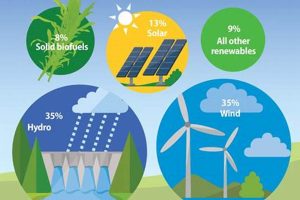
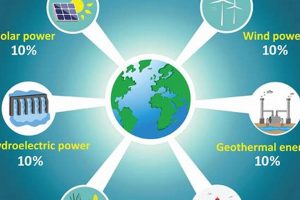
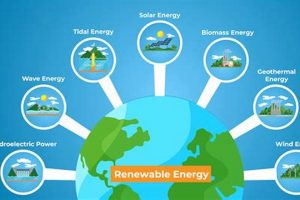
The quantity of energy options relying on naturally replenishing resources is a topic of increasing interest. These resources, unlike fossil fuels, are continuously renewed by natural processes within the Earth’s system. Examples of such sources include solar radiation, wind, flowing water, geothermal heat, and biomass.
The significance of these energy alternatives stems from their potential to reduce greenhouse gas emissions, mitigate climate change, and enhance energy security. Historically, societies have relied on readily available renewable resources like wood and water. However, technological advancements have enabled the efficient harnessing of a wider range of these resources, leading to more diversified energy portfolios.
A thorough examination of this topic necessitates a detailed look at specific types of renewable energy, including their current contribution to global energy production, their technological maturity, and their potential for future growth. Furthermore, understanding the geographical distribution of these resources and the associated infrastructure requirements is crucial for informed energy planning and policy development.
Effective engagement with diverse energy alternatives requires a comprehensive understanding of their nuances and deployment strategies.
Tip 1: Identify Core Categories: Differentiate between major categories, such as solar (photovoltaic and thermal), wind (onshore and offshore), hydropower (large-scale and small-scale), geothermal (direct use and power generation), and biomass (solid, liquid, and gaseous fuels). Each category possesses distinct operational characteristics and environmental impacts.
Tip 2: Evaluate Resource Availability: Assess the geographic distribution and temporal variability of each resource. Solar irradiance varies significantly with latitude and cloud cover, while wind resources depend on regional atmospheric patterns. Understanding these variations is crucial for selecting appropriate technologies.
Tip 3: Analyze Technology Maturity: Consider the technological readiness level (TRL) of different energy technologies. Solar and wind energy are relatively mature, with established supply chains and decreasing costs. Other technologies, such as enhanced geothermal systems, are still under development and require further research.
Tip 4: Account for Environmental Impacts: Evaluate the full life cycle environmental impacts of each energy pathway, including resource extraction, manufacturing, operation, and decommissioning. Even renewable sources can have environmental consequences, such as land use changes and potential impacts on wildlife.
Tip 5: Examine Grid Integration Challenges: Understand the challenges associated with integrating variable renewable energy sources, like solar and wind, into existing electricity grids. These challenges include intermittency, forecasting errors, and the need for grid modernization.
Tip 6: Research energy storage solutions: Energy Storage solutions are paramount to the efficient and reliable integration of renewable resources. Energy storage solutions are batteries, pumped hydro storage, and thermal energy storage.
Tip 7: Consider Policy Incentives: Be aware of governmental policies and incentives designed to promote the adoption of diverse energy sources. These policies can include tax credits, feed-in tariffs, and renewable portfolio standards. Understanding these incentives can significantly impact investment decisions.
By carefully considering these factors, individuals and organizations can make informed decisions regarding the deployment and utilization of a wide spectrum of energy alternatives.
This enhanced understanding will facilitate a more effective transition towards a sustainable energy future.
1. Solar Irradiance Potential

Solar irradiance potential, the measure of solar power available at a given location, significantly influences the feasibility and economic viability of solar energy technologies, directly impacting the practical number of renewable energy sources deployable in a specific region.
- Geographic Distribution of Solar Resources
Variations in solar irradiance across the globe determine where solar energy technologies, such as photovoltaic (PV) systems and concentrated solar power (CSP) plants, can be effectively utilized. Regions with high solar irradiance, like deserts, can support large-scale solar energy projects, increasing the overall contribution of solar power to the total number of viable renewable energy options. For example, the Sahara Desert’s immense solar potential is a focus for transnational renewable energy initiatives.
- Technological Adaptations for Varying Irradiance
Different solar technologies are designed to operate under specific irradiance conditions. PV systems are more adaptable to diffuse irradiance, making them suitable for regions with cloud cover, whereas CSP requires direct sunlight. The ability to utilize a range of solar technologies expands the applicability of solar energy, adding to the list of accessible renewable energy sources. Bifacial solar panels, which capture light from both sides, exemplify adaptation for varied irradiance.
- Economic Viability and Grid Integration
Higher solar irradiance potential typically translates to greater energy production, improving the economic competitiveness of solar projects. However, efficient grid integration is essential to handle the intermittent nature of solar power. Energy storage solutions and smart grid technologies can help address this intermittency, enabling a more reliable supply of solar energy and, in turn, justifying the consideration of solar as a dependable renewable source. Germany’s investment in grid infrastructure demonstrates a proactive approach to solar integration.
- Impact on Hybrid Renewable Energy Systems
Solar irradiance potential is often a key factor in designing hybrid renewable energy systems, which combine solar with other renewable sources like wind or hydro. Complementary resources can create a more consistent power supply and maximize the use of available renewable energy. For example, a region with high solar irradiance during the day and consistent winds at night can leverage both solar and wind power for continuous energy generation, increasing the diversity and reliability of renewable energy sources.
The diverse aspects of solar irradiance potential underscore its pivotal role in defining the suitability and proliferation of solar energy technologies. The ability to effectively harness solar energy, adapted to local conditions and integrated with other resources and technologies, significantly expands the scope and number of renewable energy sources available for meeting global energy demands.
2. Wind Speed Variability

Wind speed variability, characterized by fluctuations in wind speed over various time scales, significantly influences the feasibility and reliability of wind energy conversion systems. Consequently, it directly affects the determination of whether wind energy constitutes a dependable and predictable renewable energy source within a given portfolio. The higher the variability, the greater the need for mitigation strategies, affecting the overall attractiveness and practical applicability of wind as a viable renewable option.
Areas with consistent wind regimes, such as the Great Plains of North America or coastal regions exposed to trade winds, are naturally more conducive to large-scale wind energy development. However, areas with high wind speed variability require advanced forecasting techniques, energy storage solutions, or integration with other energy sources to ensure a stable power supply. For example, wind farms in mountainous regions often experience turbulent wind patterns, necessitating robust turbine designs and sophisticated control systems. The effectiveness of these measures directly impacts the quantification of wind energy as a reliable renewable resource.
Ultimately, understanding and managing wind speed variability is crucial for assessing the true potential of wind energy. While wind is undeniably a major renewable energy source, its inherent variability presents challenges that must be addressed through technological innovation and strategic planning. The extent to which these challenges are overcome dictates the real-world contribution of wind energy and, therefore, its place in the count of dependable renewable energy sources. Continued research into advanced materials, grid integration technologies, and predictive modeling will be essential for maximizing the benefit from wind energy resources.
3. Hydropower resource availability

Hydropower resource availability directly influences the practical count of viable renewable energy sources within a given region or globally. The presence of suitable rivers, sufficient rainfall, and appropriate topography determines the potential for hydroelectric power generation. This potential is a fundamental component of a region’s renewable energy capacity. For example, nations with extensive mountainous terrain and abundant precipitation, such as Norway or Nepal, possess significant hydropower potential, which inherently increases their number of available renewable energy options. Conversely, arid regions or countries with limited river systems have constrained hydropower capacity, limiting their renewable energy portfolio.
The impact of hydropower availability extends beyond mere resource presence. The economic and environmental feasibility of hydropower development also plays a crucial role. While a river may exist, factors such as population displacement, ecological disruption, and high construction costs can preclude the construction of hydroelectric dams. This means that even if technically available, a hydropower resource may not be practically accessible, reducing the effective number of renewable energy sources. Brazil, despite having substantial river systems, faces environmental and social challenges in expanding its hydropower capacity further, highlighting the complexities in translating resource availability into actual energy production. Smaller-scale hydropower projects, such as run-of-river systems, can mitigate some of these impacts and expand the array of viable hydropower options, but their output is often limited.
In conclusion, hydropower resource availability is a critical, yet not sole, determinant of the number of renewable energy sources available to a region. Its practical significance lies in the intersection of geographical endowment, technological feasibility, environmental sustainability, and socioeconomic considerations. A comprehensive assessment of renewable energy potential must account for the complexities inherent in harnessing hydropower, recognizing that resource availability is but one factor in defining the overall composition and potential of a renewable energy mix.
4. Geothermal heat gradients

Geothermal heat gradients, representing the rate of temperature increase with depth within the Earth, directly influence the accessibility and economic viability of geothermal energy, thereby affecting the assessment of renewable energy source availability.
- Global Distribution of Geothermal Resources
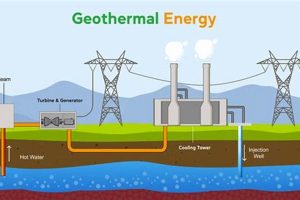
The uneven distribution of geothermal gradients globally determines regions where geothermal energy exploitation is feasible. High geothermal gradients are typically found near tectonic plate boundaries and volcanic hotspots, facilitating easier access to high-temperature resources suitable for electricity generation. Iceland, situated on the Mid-Atlantic Ridge, exemplifies a location with abundant high-enthalpy geothermal resources. Conversely, regions with low geothermal gradients require enhanced geothermal systems (EGS) to extract heat economically, impacting the overall assessment of geothermal energy as a readily available renewable option.
- Technological Requirements and Depth Dependence
The technology required for geothermal energy extraction is highly dependent on the geothermal gradient. High-temperature resources, readily accessible near the surface, allow for conventional geothermal power plants using steam turbines. Lower temperature resources necessitate binary cycle power plants, which use a secondary fluid with a lower boiling point. EGS, employed in areas with low gradients, require fracturing of hot dry rocks deep underground, increasing complexity and cost. The level of technological intervention directly correlates with the number of geothermal resources deemed economically viable.
- Economic Viability and Investment Considerations
The economic viability of geothermal projects is intricately linked to the geothermal gradient and the associated drilling depth. Shallow, high-temperature resources are more economically attractive due to lower drilling costs and higher energy output. Deeper resources require significant capital investment for drilling and infrastructure, affecting the profitability and attractiveness of geothermal energy projects. The Geysers geothermal field in California demonstrates the economic viability of exploiting shallow, high-temperature geothermal resources, while EGS projects often require government subsidies to incentivize investment.
- Integration with Other Renewable Sources
Geothermal energy’s baseload power generation capability can complement intermittent renewable sources such as solar and wind. Stable geothermal output can provide a reliable energy supply, reducing the need for energy storage solutions and enhancing grid stability. This integration potential strengthens the case for geothermal energy as a reliable renewable source and contributes to a more diversified renewable energy portfolio. The integration of geothermal energy with hydropower in New Zealand exemplifies this synergistic approach to renewable energy deployment.
In summary, geothermal heat gradients are a primary determinant of the practical accessibility and economic feasibility of geothermal energy. The distribution, technological requirements, economic viability, and integration potential associated with geothermal resources collectively shape the overall assessment of how geothermal energy contributes to the total count of viable renewable energy sources.
5. Biomass feedstock sustainability

The sustainability of biomass feedstocks is intrinsically linked to the determination of renewable energy source availability. Biomass, encompassing organic matter from plants and animals, can serve as a fuel source. However, its classification as a sustainable renewable energy source hinges on responsible feedstock management. Unsustainable practices, such as deforestation or the depletion of agricultural lands, undermine the renewable nature of biomass. If feedstocks are not replenished at a rate equal to or exceeding their consumption, the energy source ceases to be truly renewable, thereby reducing the verifiable count of available renewable energy options.
The cultivation and harvesting methods employed for biomass feedstocks profoundly impact their sustainability. Monoculture farming, reliant on heavy pesticide and fertilizer use, can degrade soil quality and biodiversity, negating the environmental benefits of biomass energy. Conversely, sustainable forestry practices, crop rotation, and the use of agricultural residues promote soil health, reduce reliance on synthetic inputs, and ensure long-term feedstock availability. For instance, the sustainable harvesting of forest residues for wood pellets can provide a renewable energy source without contributing to deforestation. Similarly, utilizing agricultural waste, such as corn stover or rice husks, minimizes the need for dedicated energy crops, reducing land-use competition and promoting circular economy principles. The implementation of certification standards, such as the Sustainable Biomass Program (SBP), aims to ensure that biomass feedstocks are sourced from responsibly managed forests, contributing to the credibility of biomass as a sustainable renewable energy source.
In conclusion, biomass feedstock sustainability is not merely an adjunct to renewable energy assessment; it is a critical determinant of whether biomass can legitimately be counted among viable renewable energy sources. Achieving true sustainability requires careful consideration of land use, agricultural practices, and resource management. Without a commitment to sustainable feedstock sourcing, biomass risks becoming a depletion-based energy source, diminishing its contribution to the overall renewable energy landscape and jeopardizing long-term environmental goals. Only through rigorous sustainability standards and responsible practices can biomass realize its potential as a reliable and ecologically sound renewable energy resource, contributing to the accurate quantification of available renewable energy options.
6. Oceanic energy capture

Oceanic energy capture, encompassing a range of technologies designed to harness the energy present in oceans, directly influences the enumeration of renewable energy sources. The successful implementation and scaling of oceanic energy technologies add to the total number of viable renewable options. This addition contributes to energy portfolio diversification and reduces reliance on conventional fossil fuels. Oceanic energy sources include wave energy, tidal energy, ocean thermal energy conversion (OTEC), and salinity gradient power. Each of these represents a distinct mechanism for converting ocean-based resources into usable energy, expanding the spectrum of available renewable energy pathways. Wave energy converters, for instance, transform the kinetic energy of ocean waves into electricity, while tidal barrages and turbines harness the predictable energy of tidal flows. The potential of OTEC lies in exploiting the temperature differential between warm surface water and cold deep ocean water to drive a heat engine. And salinity gradient power aims to capitalize on the energy released when freshwater and saltwater mix.
The contribution of oceanic energy capture to the overall count of renewable energy sources is not solely dependent on technological feasibility. Economic viability, environmental impact, and societal acceptance play critical roles. High capital costs, potential disruption of marine ecosystems, and navigational hazards can impede the deployment of oceanic energy technologies. However, advancements in materials science, engineering design, and environmental monitoring are addressing these challenges. For instance, submerged tidal turbines minimize visual impact and reduce risks to marine life compared to traditional tidal barrages. Furthermore, government incentives, research funding, and international collaborations can accelerate the development and deployment of oceanic energy projects. The MeyGen tidal energy project in Scotland serves as an example of a large-scale tidal energy initiative aiming to demonstrate the commercial viability of tidal power.
In summary, oceanic energy capture represents a significant potential addition to the list of renewable energy sources. While challenges remain in terms of cost, environmental impact, and technological maturity, ongoing innovation and strategic deployment efforts are paving the way for the increased utilization of ocean-based energy resources. The successful integration of oceanic energy into the global energy mix will not only increase the number of available renewable energy options but also contribute to a more sustainable and diversified energy future. The progressive realization of oceanic energy’s potential stands as a testament to the expanding scope and possibilities within the renewable energy sector.
7. Technology maturity levels

Technology maturity levels are a critical determinant in the realistic evaluation of renewable energy source availability. The practical contribution of a renewable energy technology to the overall energy mix is directly tied to its stage of development and commercial viability. Emerging technologies, while promising, may not yet be considered dependable sources due to unresolved technical challenges and economic uncertainties.
- Research and Development Phase
Renewable energy technologies in the early stages of research and development, such as advanced geothermal systems or novel wave energy converters, hold future potential but are not yet deployable on a large scale. These technologies face significant technical hurdles and require substantial investment before they can be considered viable. The number of truly available renewable energy sources is thus limited by the exclusion of technologies still in the experimental phase.
- Demonstration and Pilot Projects
Technologies undergoing demonstration and pilot projects have shown promise but require real-world testing to validate their performance and reliability. These projects often involve government support and private investment to overcome technical and economic barriers. While these technologies represent a step closer to commercialization, their limited deployment and potential for unforeseen challenges mean they cannot yet be counted as established renewable energy sources. An example is pilot projects for floating offshore wind turbines.
- Commercialization and Deployment
Renewable energy technologies that have achieved commercialization and are being deployed at scale, such as solar photovoltaic and onshore wind, are considered proven and reliable sources. These technologies have established supply chains, competitive costs, and a track record of performance. Their widespread adoption contributes significantly to the overall share of renewable energy in the energy mix. Therefore, the number of commercially mature technologies directly influences the practical calculation of how many renewable energy sources are effectively available.
- Market Penetration and Grid Integration
Even commercially available technologies can face challenges related to market penetration and grid integration. Intermittent sources like solar and wind require grid modernization and energy storage solutions to ensure a stable and reliable power supply. The successful integration of these technologies into existing energy infrastructure is crucial for maximizing their contribution to the overall renewable energy portfolio. Until these challenges are addressed, the full potential of these renewable sources may not be realized, affecting the realistic assessment of their availability.
In conclusion, technology maturity levels serve as a filter in the assessment of renewable energy source availability. While a wide range of renewable energy technologies exist in various stages of development, only those that have reached commercial maturity and can be reliably integrated into the energy grid can be considered truly available. This perspective underscores the importance of continued investment in research, development, and deployment of renewable energy technologies to expand the practical range of renewable options.
Frequently Asked Questions
This section addresses common inquiries regarding the quantity and categorization of renewable energy sources, providing clarity on their assessment and contribution to the global energy landscape.
Question 1: What constitutes a “renewable energy source” for the purpose of this discussion?
A renewable energy source is defined as an energy resource that is naturally replenished on a human timescale, such as solar radiation, wind, flowing water, geothermal heat, and biomass. The replenishment rate must be sustainable to ensure long-term availability.
Question 2: Is there a definitive, universally agreed-upon number for “how many renewable energy sources are there”?
No single, definitive number exists. The count varies depending on the granularity of categorization and the inclusion criteria. Some classifications may group similar technologies together, while others differentiate based on specific subcategories or operational characteristics. The stage of technology development also influences whether a potential source is deemed sufficiently mature for inclusion.
Question 3: Why does technology maturity matter when assessing the number of renewable energy sources?
Technology maturity is critical because it reflects the practical viability and scalability of a renewable energy technology. Sources in early research or demonstration phases cannot be reliably counted as contributing significantly to the current energy mix.
Question 4: How do geographic location and resource availability influence the number of renewable energy sources that are practically accessible?
Geographic location and resource availability are fundamental constraints. A region’s solar irradiance, wind speed, hydropower potential, geothermal gradients, and biomass feedstock potential determine which renewable energy sources can be effectively harnessed. A resource may be theoretically renewable, but its practical accessibility is limited by geographic and resource factors.
Question 5: What role does sustainability play in determining the number of renewable energy sources?
Sustainability is paramount. A resource, like biomass, is only genuinely renewable if its feedstock is managed sustainably, ensuring long-term replenishment without environmental degradation. Unsustainable practices disqualify a source from being considered a viable renewable energy option.
Question 6: How do economic factors affect the number of renewable energy sources that are realistically deployable?
Economic viability is a key consideration. Even if a renewable energy source is technically feasible, its deployment depends on cost-competitiveness relative to conventional energy sources. High capital costs, operational expenses, and grid integration challenges can limit the economic attractiveness of a renewable energy technology, thereby affecting its practical accessibility.
In summary, the enumeration of renewable energy sources is not a simple counting exercise. It requires a nuanced assessment of technology maturity, resource availability, sustainability, and economic viability. These factors collectively determine which renewable energy sources are truly available and can contribute to a sustainable energy future.
The exploration of specific renewable energy technologies and their contributions will be covered in the subsequent section.
Concluding Remarks on Renewable Energy Source Quantification
The preceding analysis elucidates that ascertaining the precise quantity of renewable energy sources necessitates careful consideration. Factors encompassing technological maturity, sustainable resource management, economic viability, and geographic constraints exert considerable influence. While various energy resources exhibit inherent renewability, their practical deployment is contingent upon navigating the complexities of resource availability, environmental impact, and infrastructural adaptability.
Consequently, the pursuit of a sustainable energy future mandates a holistic approach. This encompasses continuous innovation in renewable energy technologies, responsible stewardship of natural resources, and strategic policy frameworks that foster the integration of diverse renewable sources. Recognizing the multifaceted nature of renewable energy source availability is crucial for informed decision-making and effective energy planning on local, national, and global scales.