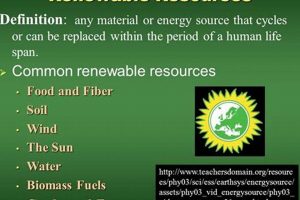
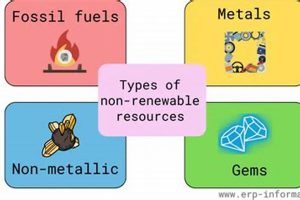
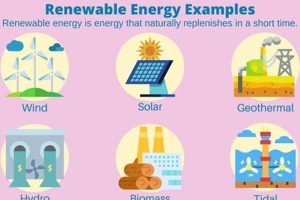
The notion that resources replenish through human creation is inaccurate regarding conventional understanding. Typically, these are naturally replenished at a rate comparable to their consumption. Examples include solar energy, wind power, and sustainably harvested biomass. Their defining characteristic is the capacity to regenerate through natural processes within a human timescale, unlike finite resources such as fossil fuels.
The reliance on resources exhibiting natural replenishment cycles offers substantial advantages. It reduces dependence on geographically concentrated and exhaustible energy sources, leading to greater energy security and geopolitical stability. The employment of these resources often results in diminished environmental impact compared to traditional methods, mitigating pollution and greenhouse gas emissions. This contributes to enhanced air and water quality, along with the preservation of ecosystems.
This distinction is crucial when considering strategies for long-term sustainability. Understanding the difference between resources produced by nature and those created artificially is essential for developing effective policies related to energy production, resource management, and environmental conservation. Subsequent discussions will explore the specific technologies and practices used to harness naturally replenishing resources and their role in a sustainable future.
Considerations Regarding Resource Classification
The following points address the misconceptions associated with artificially synthesizing resources compared to relying on naturally replenished ones.
Tip 1: Acknowledge Natural Replenishment: Prioritize resources that regenerate naturally. These include solar irradiance, wind currents, and sustainable forestry practices. Their inherent regenerative capacity reduces reliance on finite reserves.
Tip 2: Evaluate Environmental Footprint: Assess the complete environmental impact of resource utilization, considering extraction, processing, and waste disposal. Naturally replenished sources often exhibit lower overall environmental burdens compared to artificially synthesized ones.
Tip 3: Examine Resource Availability: Analyze the long-term availability of resources. Synthesized resources may rely on finite inputs or complex manufacturing processes, potentially limiting their scalability and long-term viability.
Tip 4: Promote Sustainable Practices: Implement responsible resource management strategies that minimize waste and promote circular economy principles. This enhances the efficiency of resource utilization and reduces environmental degradation.
Tip 5: Invest in Research and Development: Support ongoing research into the optimization of naturally replenished resource technologies, such as improved solar panel efficiency or enhanced geothermal energy extraction methods.
Tip 6: Policy and Regulatory Frameworks: Governments should establish clear policies and regulations that promote the adoption of naturally replenished resources, incentivizing their use and discouraging reliance on unsustainable alternatives.
Adopting these considerations facilitates a more informed and sustainable approach to resource management. This leads to a decrease in environmental impact, increased resource security, and long-term ecological stability.
Subsequent sections will focus on practical applications of these principles and explore specific examples of successful naturally replenished resource management strategies.
1. Misconception of renewal.

The assertion that human synthesis equates to resource renewability constitutes a fundamental misconception. This viewpoint incorrectly assumes that artificially created materials inherently possess the regenerative properties characteristic of genuinely renewable resources like solar or wind energy. The core issue lies in confusing the act of manufacturing with the ability of a resource to replenish itself naturally within a reasonable timeframe. For example, the creation of “synthetic wood” from recycled plastics, while diverting waste from landfills, still depends on the initial extraction and processing of fossil fuels to produce those plastics. The synthesis process does not inherently create more plastic; it merely transforms existing material.
This misunderstanding carries practical implications for policy and sustainability efforts. If resource renewability is solely defined by human synthesis, the focus shifts away from conserving natural resources and developing truly regenerative systems. Consider the production of biofuels. While derived from biomass, their synthesis into fuel often necessitates intensive agricultural practices, including the use of fertilizers and pesticides, which can degrade soil quality and pollute water sources. This undermines the purported environmental benefits and highlights the importance of critically evaluating the entire lifecycle of synthesized materials.
Therefore, recognizing the “misconception of renewal” is crucial for adopting a more realistic and effective approach to resource management. It necessitates a shift from simply creating “new” materials to prioritizing the conservation and sustainable utilization of naturally replenishing resources. This involves rigorously assessing the energy inputs, material sources, and environmental impacts associated with any synthesized material before classifying it as “renewable.” Only through this comprehensive analysis can genuine progress towards long-term sustainability be achieved.
2. Energy expenditure involved.

The energy expenditure associated with the synthesis of resources directly influences their categorization as truly renewable. While human-made materials might appear to alleviate resource scarcity, the energy required for their creation often undermines their environmental viability, particularly when juxtaposed with naturally replenishing alternatives.
- Fossil Fuel Dependency in Synthesis
The production of numerous synthesized materials, including plastics and synthetic fabrics, relies heavily on fossil fuels as a primary energy source. This dependence results in substantial greenhouse gas emissions throughout the production process, effectively negating the claimed benefits of resource renewability. For instance, manufacturing biodegradable plastics often requires intensive agricultural processes, which are fueled by petroleum-based fertilizers and machinery. The energy input for these processes can outweigh the environmental advantages of using a biodegradable material.
- Energy Intensity of Recycling Processes
Recycling, a common form of resource synthesis, frequently demands considerable energy to collect, process, and transform waste materials into usable forms. The energy intensity of these processes can be significant, particularly for materials like aluminum and certain plastics. The electricity used for operating recycling plants, transportation vehicles, and processing equipment can contribute substantially to the overall carbon footprint. If the energy used in recycling derives from non-renewable sources, the net environmental benefit diminishes significantly.
- Lifecycle Energy Assessment Challenges
Accurately assessing the energy expenditure associated with resource synthesis requires a comprehensive lifecycle assessment (LCA). This assessment must account for all stages of the production process, from raw material extraction to manufacturing, transportation, and end-of-life disposal. However, conducting a thorough LCA can be challenging due to data limitations, methodological complexities, and varying regional energy mixes. Without a complete picture of the energy inputs and outputs, it becomes difficult to determine whether synthesizing a resource is truly more sustainable than using a naturally replenishing alternative.
- Opportunities for Energy Efficiency Improvements
Despite the current energy challenges, opportunities exist to improve the energy efficiency of resource synthesis processes. Implementing advanced manufacturing technologies, optimizing supply chain logistics, and transitioning to renewable energy sources can significantly reduce the energy footprint of these processes. For example, utilizing solar or wind power to operate recycling plants can decrease their reliance on fossil fuels and enhance their environmental performance. Investing in research and development of energy-efficient synthesis methods is crucial for maximizing the sustainability of human-made resources.
The energy expenditure involved in resource synthesis necessitates a critical evaluation of its role in a sustainable future. While synthesized materials can offer potential benefits, such as waste reduction and resource diversification, their environmental viability hinges on minimizing energy inputs and transitioning to renewable energy sources. A holistic approach that considers the entire lifecycle of synthesized resources is essential for determining their true contribution to a more sustainable economy and avoiding the misconception that human-made materials are inherently renewable.
3. Sustainability implications questioned.

The assertion that synthetic processes render resources inherently renewable raises serious concerns about long-term sustainability. The core issue resides in the potential for overlooking the complexities and unintended consequences of human intervention in natural resource cycles.
- Resource Depletion Disguised
Synthesizing materials can mask the depletion of finite resources used as inputs. For instance, the production of biodegradable plastics from corn requires arable land, water, and fertilizers. If these inputs are not managed sustainably, the process contributes to soil degradation, water scarcity, and ecosystem disruption, undermining the intended environmental benefits. The synthesis, therefore, may simply transfer the environmental burden rather than eliminate it.
- Externalized Environmental Costs
The environmental costs associated with resource synthesis are often externalized, meaning they are not fully accounted for in the market price of the synthesized material. These costs can include pollution from manufacturing processes, habitat destruction from raw material extraction, and the disposal of byproducts or waste. If these externalized costs are ignored, synthesized materials may appear more sustainable than they actually are, leading to suboptimal resource allocation and policy decisions.
- System Complexity and Unintended Consequences
Synthesizing resources introduces greater complexity into resource management systems. This complexity increases the likelihood of unintended consequences, such as the development of new forms of pollution or the disruption of natural ecosystems. For example, the widespread use of nanomaterials in synthesized products raises concerns about their potential toxicity and environmental persistence. Without careful risk assessment and management, these unintended consequences can outweigh the benefits of resource synthesis.
- Economic Viability and Social Equity
The economic viability and social equity of resource synthesis must also be considered. Synthesized materials may be more expensive than naturally derived alternatives, making them inaccessible to low-income populations. Furthermore, the manufacturing processes associated with resource synthesis can create or exacerbate social inequalities, such as the displacement of communities from resource extraction areas or the concentration of pollution in disadvantaged neighborhoods. A truly sustainable approach to resource management must address these economic and social dimensions.
Questioning the sustainability implications of synthesized resources is crucial for promoting responsible innovation and informed decision-making. A comprehensive assessment of the environmental, economic, and social costs and benefits is essential for determining whether resource synthesis contributes to genuine sustainability or simply perpetuates unsustainable practices under a veneer of renewability.
4. Finite source dependency.

The notion that resources can be deemed renewable solely based on their synthesis by humans is directly challenged by the dependence of these processes on finite source materials. This dependency necessitates a critical examination of the sustainability claims associated with human-synthesized resources, as the ultimate renewability hinges on the availability and responsible management of the underlying raw materials.
- Raw Material Extraction and Depletion
Many synthesized resources rely on raw materials extracted from the Earth’s crust, such as minerals, metals, and fossil fuels. The extraction of these materials often involves environmentally damaging practices like mining and drilling, which can lead to habitat destruction, water pollution, and greenhouse gas emissions. Moreover, these raw materials are finite, meaning their supply is limited. As the demand for synthesized resources increases, the extraction of these finite raw materials will likely accelerate, leading to their depletion and exacerbating environmental problems. For example, the production of lithium-ion batteries, essential for electric vehicles and energy storage, depends on lithium extracted from brine deposits or hard rock mines. The growing demand for lithium poses significant challenges to sustainable resource management, as lithium extraction can consume large amounts of water and disrupt fragile ecosystems.
- Energy Inputs and Fossil Fuel Reliance
The synthesis of resources typically requires significant energy inputs, often derived from fossil fuels. The production of plastics, for instance, is heavily reliant on petroleum-based feedstocks and energy-intensive manufacturing processes. This reliance on fossil fuels undermines the claim that synthesized resources are inherently renewable, as the production process contributes to greenhouse gas emissions and climate change. Even when renewable energy sources are used in synthesis, the overall environmental impact depends on the sustainability of the raw materials and the efficiency of the manufacturing process. The development of genuinely sustainable synthesized resources requires a transition away from fossil fuel-based energy sources and a focus on minimizing energy consumption throughout the production chain.
- Lifecycle Assessment and Circular Economy Principles
A comprehensive lifecycle assessment (LCA) is essential for evaluating the true environmental impact of synthesized resources. LCA considers all stages of the production process, from raw material extraction to manufacturing, transportation, use, and end-of-life disposal. By accounting for all environmental impacts, LCA can reveal the extent to which synthesized resources depend on finite sources and contribute to environmental degradation. To promote sustainability, synthesized resources should be designed for recyclability and reuse, following circular economy principles. This involves minimizing waste, maximizing material recovery, and reducing the demand for virgin raw materials. For example, designing plastic products for easy disassembly and recycling can help reduce reliance on fossil fuel-based feedstocks and minimize plastic pollution.
- Geopolitical Considerations and Resource Security
The dependence on finite sources for resource synthesis can also raise geopolitical concerns and impact resource security. The distribution of raw materials is often uneven, with certain countries controlling a significant share of global reserves. This can create dependencies and vulnerabilities, particularly for countries that rely on imported raw materials. The production of rare earth elements, essential for many high-tech applications, is heavily concentrated in China, giving that country significant leverage in global markets. Diversifying supply chains, promoting domestic resource extraction (where environmentally responsible), and developing alternative materials can help mitigate these geopolitical risks and enhance resource security.
The finite source dependency inherent in the synthesis of many resources challenges the notion that they are inherently renewable. Achieving true sustainability requires a holistic approach that considers the entire lifecycle of synthesized resources, minimizes reliance on finite raw materials, and promotes circular economy principles. By addressing the challenges associated with finite source dependency, society can move towards a more sustainable and resilient resource management system.
5. Environmental consequences examined.

The proposition linking human synthesis to renewable resources necessitates a rigorous examination of environmental consequences. Attributing renewability based solely on human intervention neglects the potential for significant adverse impacts throughout the lifecycle of synthesized materials. Assessing environmental consequences is not merely an ancillary consideration but a fundamental component in determining whether a resource genuinely aligns with sustainability principles. For instance, the synthesis of ammonia for fertilizer production, while essential for modern agriculture, is an energy-intensive process relying heavily on fossil fuels. This contributes significantly to greenhouse gas emissions, negating the potential benefits of increased crop yields. Ignoring such consequences leads to a distorted perception of renewability, favoring potentially harmful practices.
A crucial aspect of this examination involves lifecycle assessment (LCA), which evaluates the environmental burdens associated with a resource from extraction to end-of-life disposal. LCA enables a comparative analysis of synthesized materials versus naturally replenished alternatives. Consider the production of synthetic rubber. While it can replace natural rubber, reducing pressure on rainforest ecosystems, the synthesis process often involves the use of hazardous chemicals and generates substantial waste. If the environmental impacts of synthetic rubber production outweigh the benefits of reduced deforestation, it cannot be deemed a sustainable alternative. The application of LCA provides a data-driven basis for assessing environmental trade-offs and guiding informed decision-making.
In conclusion, the assertion that resources are renewable due to human synthesis requires a thorough examination of environmental consequences. This examination must extend beyond the immediate production process to encompass the entire lifecycle of the material, accounting for energy inputs, resource depletion, pollution, and waste generation. Failing to conduct such an assessment risks promoting unsustainable practices under the guise of renewability. A genuine commitment to sustainability necessitates prioritizing resources with minimal environmental burdens, regardless of whether they are naturally replenished or human-synthesized.
Frequently Asked Questions Regarding Resource Renewability Through Human Synthesis
The following questions and answers address common misconceptions and concerns surrounding the concept of considering resources renewable solely based on human synthesis capabilities.
Question 1: Is it accurate to define a resource as renewable simply because humans can synthesize it?
No. The conventional definition of renewable resources pertains to those replenished naturally at a rate comparable to or exceeding their consumption. Human synthesis does not automatically confer renewability, as the synthesis process itself may rely on finite resources and energy inputs.
Question 2: What are some of the key limitations of considering human-synthesized resources as renewable?
Key limitations include the dependence on finite raw materials, high energy consumption (often derived from fossil fuels), potential for pollution during the synthesis process, and the failure to account for lifecycle environmental impacts.
Question 3: How does the energy expenditure involved in synthesizing resources affect their overall sustainability?
If the energy required for synthesis is derived from non-renewable sources, the environmental benefits of the synthesized resource are significantly diminished. High energy expenditure also increases the carbon footprint of the resource, counteracting sustainability goals.
Question 4: What is lifecycle assessment (LCA), and why is it important in evaluating the sustainability of synthesized resources?
Lifecycle assessment (LCA) is a comprehensive method for evaluating the environmental impacts of a resource from raw material extraction to end-of-life disposal. It is crucial for identifying potential environmental burdens associated with synthesized resources that might be overlooked when considering only the synthesis process itself.
Question 5: Can recycling be considered a form of resource synthesis that inherently leads to renewability?
Recycling, while beneficial for reducing waste and conserving resources, is not inherently a renewable process. It requires energy and resources to collect, process, and transform waste materials. The renewability of recycled materials depends on the efficiency of the recycling process and the source of energy used.
Question 6: What are some alternative approaches to achieving sustainability beyond relying solely on human-synthesized resources?
Alternative approaches include prioritizing the conservation of natural resources, promoting the efficient use of existing resources, transitioning to renewable energy sources, and adopting circular economy principles that minimize waste and maximize material reuse.
The perspective that human synthesis inherently equates to resource renewability is a simplification that overlooks crucial environmental and resource management considerations. A holistic approach that considers the entire lifecycle of a resource is essential for making informed decisions about sustainability.
Further discussions will delve into specific strategies for promoting resource conservation and sustainable consumption patterns.
Concluding Remarks
The preceding analysis underscores the limitations inherent in the assertion that “renewable resources are those that can be synthesized by humans.” While human ingenuity enables the creation of materials and resources through synthetic processes, such processes do not automatically confer the qualities of genuine renewability. A comprehensive assessment necessitates consideration of factors including finite resource dependencies, energy expenditure, potential environmental consequences, and the overall sustainability of the entire lifecycle, from raw material extraction to end-of-life disposal.
A rigorous and holistic approach is imperative to guide future resource management strategies. A focus on mitigating environmental impacts, prioritizing naturally replenishing resources, and promoting circular economy principles offers a more sustainable pathway. The pursuit of true renewability requires informed decision-making based on comprehensive analysis, ensuring that efforts to create resources do not inadvertently undermine long-term environmental stability.

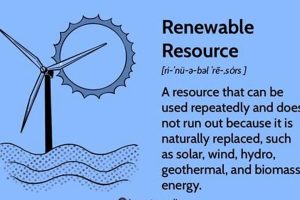
![Guide to What Energy Resources Are Renewable [+Future] | Renewable Energy Solutions for a Sustainable Future | Clean & Green Power](https://pplrenewableenergy.com/wp-content/uploads/2026/03/th-516-300x200.jpg "Guide to What Energy Resources Are Renewable [+Future] Renewable Energy Solutions for a Sustainable Future | Clean & Green Power")