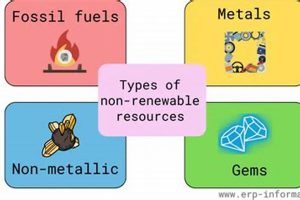
These finite energy sources are characterized by their inability to be replenished at a rate comparable to their consumption. They originate from geological processes occurring over millions of years. Examples include coal, a sedimentary rock formed from decayed plant matter; petroleum, a liquid mixture of hydrocarbons; natural gas, primarily methane; and uranium, a radioactive element used in nuclear fission.
Their significance stems from their historical role in powering industrial revolutions and supporting modern economies. They provided concentrated and readily available energy, fueling transportation, electricity generation, and manufacturing. However, reliance on these resources has led to environmental consequences, including greenhouse gas emissions and habitat destruction, necessitating a transition to more sustainable alternatives.
The following sections will delve deeper into each of these energy commodities, examining their formation, extraction methods, environmental impact, and current role in the global energy landscape. The discussion will also explore the challenges and opportunities associated with shifting away from these traditional power sources.
Strategic Considerations Regarding Exhaustible Energy Assets
The responsible management of finite energy reserves requires careful planning and informed decision-making, considering both immediate energy needs and long-term sustainability.
Tip 1: Diversify Energy Portfolios: Reduce dependence on single sources through investment in a range of energy options, including renewables, to mitigate price volatility and supply disruptions.
Tip 2: Prioritize Energy Efficiency: Implement measures to minimize energy consumption across all sectors, from building design to industrial processes, thereby extending the lifespan of existing reserves.
Tip 3: Invest in Carbon Capture Technologies: Support research and development of technologies to capture and store carbon dioxide emissions from power plants and industrial facilities utilizing fossil fuels.
Tip 4: Promote Recycling and Reuse: Implement comprehensive programs to recycle and reuse materials, reducing the energy required for new production and minimizing waste.
Tip 5: Strengthen Regulatory Frameworks: Establish clear and enforceable regulations governing the exploration, extraction, and transportation of exhaustible energy resources to minimize environmental impact.
Tip 6: Develop International Cooperation: Foster collaboration among nations to share best practices and coordinate efforts to transition to a sustainable energy future.
Tip 7: Support Research and Development: Invest in innovative technologies, such as advanced battery storage and next-generation nuclear reactors, to unlock new energy sources and improve efficiency.
Strategic implementation of these measures can enhance energy security, reduce environmental harm, and facilitate a more equitable transition to a sustainable energy system.
The subsequent sections will explore the role of policy and technological innovation in shaping the future of energy production and consumption.
1. Finite Supply

The concept of finite supply is fundamentally linked to these primary energy sources. Their geological formation processes require millions of years, rendering them incapable of being replenished within a human timescale. This inherent limitation dictates strategic considerations for their use and necessitates exploration of alternative energy pathways.
- Resource Depletion
The continuous extraction and consumption of these resources inevitably leads to a decline in available reserves. As easily accessible deposits are exhausted, extraction becomes more complex and costly, potentially impacting energy prices and availability. For example, the gradual depletion of conventional oil fields has spurred exploration into unconventional sources like shale oil and tar sands, each with their own economic and environmental challenges.
- Strategic Reserves
Recognizing the finite nature of these commodities, many nations maintain strategic reserves of petroleum and other critical fuels. These reserves serve as a buffer against supply disruptions caused by geopolitical instability, natural disasters, or unforeseen production shortfalls. The effectiveness of strategic reserves depends on their size, accessibility, and the responsiveness of distribution mechanisms.
- Peak Production Theories
The theory of peak oil, and similar concepts for other finite resources, posits that production rates will eventually reach a maximum and then decline. While the exact timing of peak production remains debated, the underlying principle highlights the unsustainable nature of relying solely on these finite resources. Predictions of peak production influence investment decisions, policy choices, and the urgency of developing alternative energy sources.
- Price Volatility
The scarcity inherent in a finite supply can lead to price volatility, particularly in response to changes in demand, supply disruptions, or geopolitical events. Price fluctuations can significantly impact economies, especially those heavily reliant on these resources for transportation, industry, and electricity generation. Managing price volatility requires diversification of energy sources and effective market regulation.
Understanding the ramifications of finite supply is crucial for developing sustainable energy strategies. The eventual exhaustion of these resources compels a transition to renewable alternatives and promotes responsible consumption practices to mitigate potential economic and environmental disruptions.
2. High Energy Density

The characteristic of high energy density is a defining attribute of these conventional energy sources, signifying the substantial amount of energy contained within a relatively small volume or mass. This property has been instrumental in their widespread adoption and utilization throughout history.
- Efficient Energy Storage
High energy density facilitates efficient energy storage and transportation. For example, a barrel of crude oil can power numerous vehicles over considerable distances, making it economically viable to transport across continents. Similarly, a kilogram of uranium can generate far more electricity than an equivalent mass of renewable fuel like biomass. This efficiency reduces infrastructure requirements and logistical complexities.
- Compact Power Generation
Power plants utilizing coal, natural gas, or nuclear fuels benefit from the compact nature of their energy source. This enables the construction of relatively small facilities capable of generating significant amounts of electricity. The compactness reduces land requirements and infrastructure costs compared to renewable energy installations, which often require vast areas for energy capture.
- Mobile Applications
The high energy density of petroleum-based fuels is essential for mobile applications, particularly in transportation. Airplanes, ships, and automobiles rely heavily on gasoline and diesel due to their ability to provide a high power-to-weight ratio. Electric vehicles, while improving, still face challenges in achieving comparable energy density and range due to battery limitations.
- Industrial Processes
Many industrial processes, such as steel manufacturing and cement production, require high temperatures and large amounts of energy. The concentrated energy content of coal and natural gas makes them well-suited for these applications. Transitioning to renewable energy sources for these processes often requires significant technological advancements and infrastructure upgrades.
The implications of this characteristic are multifaceted. While enabling efficient power generation and transportation, it has also contributed to the dominance of these established energy infrastructures. The challenge lies in developing renewable energy technologies that can match or exceed the energy density of finite resources, thus facilitating a transition to a sustainable energy future without compromising energy availability or economic competitiveness.
3. Environmental Impact

The extraction, processing, and utilization of coal, petroleum, natural gas, and uranium present substantial environmental challenges, representing a core concern associated with these primary energy commodities. Combustion of fossil fuels releases greenhouse gases, including carbon dioxide, methane, and nitrous oxide, which contribute to global warming and climate change. Furthermore, the extraction processes, such as mining and drilling, can lead to habitat destruction, water contamination, and soil erosion. For instance, mountaintop removal coal mining devastates ecosystems and pollutes waterways, while oil spills damage marine environments and threaten wildlife populations.
Nuclear energy, while not emitting greenhouse gases during electricity generation, poses risks related to radioactive waste disposal and the potential for nuclear accidents. The safe storage of nuclear waste, which remains radioactive for thousands of years, presents a long-term challenge. Events such as the Chernobyl and Fukushima disasters underscore the potential for catastrophic environmental damage and human health consequences. The utilization of these resources, therefore, necessitates rigorous environmental safeguards and responsible waste management practices. Implementation of carbon capture technologies and advanced waste treatment methods is crucial to mitigating some of these negative effects.
Ultimately, the environmental consequences of reliance on exhaustible energy resources necessitate a transition towards more sustainable energy systems. Recognizing the multifaceted impact, from air and water pollution to habitat loss and climate change, informs the imperative to diversify energy portfolios and invest in renewable alternatives. The long-term health of ecosystems and human populations depends on reducing dependence on these resources and embracing cleaner energy options.
4. Geopolitical Significance

The geographical distribution of these energy sources is uneven, concentrating reserves in specific nations or regions. This asymmetry creates inherent geopolitical dependencies, where countries possessing substantial reserves wield significant influence over global energy markets and international relations. Nations heavily reliant on imports for their energy needs become vulnerable to supply disruptions, price manipulation, and political pressure from resource-rich exporting nations. The control of strategic waterways, such as the Strait of Hormuz, through which a significant portion of global oil supply transits, further amplifies the geopolitical importance of these energy commodities. For instance, disruptions in oil supply from the Middle East have historically triggered economic crises and political instability worldwide.
International energy agreements, trade agreements, and military alliances are often shaped by the strategic importance of these energy commodities. The pursuit of energy security drives foreign policy decisions, influencing diplomatic relations and military interventions. Competing interests in controlling or securing access to these resources can exacerbate regional conflicts and international tensions. The exploration and development of new reserves, particularly in politically unstable regions, often involve complex negotiations, risk assessments, and security considerations. The construction of pipelines and other energy infrastructure projects can also become geopolitical flashpoints, as they traverse multiple countries and involve competing interests. For example, the Nord Stream pipelines transporting natural gas from Russia to Europe have been subject to intense political scrutiny and controversy.
In conclusion, the location of these energy sources is a crucial determinant in global power dynamics. Recognizing this is vital for effective international relations and energy security. The world’s dependence on these localized commodities creates vulnerabilities and fosters competition, impacting diplomatic strategies and economic stabilities. Diversification of energy sources and development of renewable energy alternatives are essential for mitigating these geopolitical risks and achieving a more balanced and sustainable global energy landscape.
5. Infrastructure Dependence

These energy sources are characterized by a substantial reliance on extensive and specialized infrastructure systems for extraction, processing, transportation, and distribution. This infrastructure dependence is a critical component defining the operational landscape of these commodities. The extraction of coal necessitates mining operations, often requiring railways and port facilities for transport. Petroleum and natural gas rely on drilling platforms, pipelines, and refineries. Nuclear energy demands specialized reactors, waste storage facilities, and complex safety systems. This intricate network of assets forms an integrated energy delivery system, with any disruption potentially impacting the entire chain. For instance, a pipeline rupture can halt the supply of natural gas to entire regions, impacting electricity generation and heating.
The existing infrastructure is largely tailored to the characteristics of these energy sources. Power plants are specifically designed to burn coal, natural gas, or nuclear fuel, generating electricity transmitted through high-voltage grids. Transportation networks are optimized for moving large volumes of liquids and solids. This specialized infrastructure presents a barrier to transitioning towards alternative energy sources, as significant investments are needed to adapt or replace existing systems. The economic lifespan of these infrastructures also influences energy policy decisions, as decommissioning and replacement require careful planning and substantial capital allocation. The historical investment in these infrastructures, along with associated technological advancements, reinforces their continued utilization, even amidst growing concerns about environmental sustainability.
The reliance on pre-existing systems poses challenges for integrating renewable energy sources. The intermittent nature of solar and wind power necessitates upgrades to grid infrastructure to ensure a reliable and stable electricity supply. Adapting existing power grids to accommodate decentralized renewable energy generation requires investment in smart grid technologies and energy storage solutions. In conclusion, the infrastructure intertwined with these energy sources is a determining factor in shaping energy landscapes and influencing the pace of transition towards sustainable energy alternatives. Addressing infrastructure dependence is essential for realizing future energy goals.
6. Economic Influence

The presence and exploitation of these power resources exert a profound influence on global economies, operating as a significant driver of wealth, trade, and industrial development. The abundance or scarcity of these resources within a nations borders directly impacts its economic standing and its participation in international commerce. Nations possessing substantial deposits can generate considerable revenue through extraction and export activities, supporting various sectors and government programs. Conversely, nations lacking these natural assets often face economic challenges, potentially relying on imports and experiencing vulnerability to price fluctuations and supply disruptions. The market value of these commodities, particularly crude oil and natural gas, is a key indicator followed by economists and investors, reflecting global demand and supply dynamics. For example, fluctuations in oil prices often trigger ripple effects across transportation, manufacturing, and consumer spending, impacting overall economic growth.
Beyond direct extraction revenues, these play a central role in numerous industries and sectors. Energy-intensive manufacturing processes, transportation networks, and power generation facilities rely heavily on the availability and affordability of these energy inputs. The competitiveness of these industries is thus directly linked to energy prices and supply chains. Moreover, the development and operation of energy infrastructure create substantial employment opportunities in fields such as engineering, construction, and resource management. Significant investment in refining, pipeline construction, and power plant development boosts regional economies. However, the economic benefits are often accompanied by environmental costs, necessitating careful balancing of economic gains with ecological protection. Carbon taxation and emissions trading schemes represent attempts to internalize the environmental costs of energy consumption and to incentivize investments in cleaner energy technologies.
In summary, the economic influence of these commodities is multifaceted and deeply entrenched within the global economic framework. They generate wealth, drive industrial activity, and shape international trade patterns. However, their extraction and consumption also pose environmental challenges and create geopolitical dependencies. Managing these competing interests requires a comprehensive approach that considers economic growth, environmental sustainability, and energy security. As the world transitions towards a more sustainable energy future, the economic implications of shifting away from these traditional resources will be central to policy debates and investment decisions.
7. Combustion Byproducts

The combustion of specific energy resources inevitably yields a range of byproducts. The relationship between these products and the energy resources is causal; the former is an intrinsic consequence of utilizing the latter. These byproducts represent a critical facet of considering energy sources, shaping environmental impacts and influencing regulatory frameworks. Coal, for instance, when combusted for electricity generation, produces carbon dioxide (CO2), a primary greenhouse gas, as well as sulfur dioxide (SO2) and nitrogen oxides (NOx), which contribute to acid rain and respiratory problems. Petroleum combustion in internal combustion engines releases CO2, NOx, particulate matter, and unburned hydrocarbons, each posing distinct environmental and health hazards. Natural gas combustion is generally cleaner than coal or oil but still emits CO2 and, if incomplete, methane, a potent greenhouse gas. Even nuclear energy, while not involving combustion, produces radioactive waste that must be managed safely for extended periods.
Quantifying and understanding these are essential for evaluating the full lifecycle costs of different energy options. The environmental and health damages associated with releases into the atmosphere and other release cases contribute to the overall cost. Efforts to mitigate these impacts include implementing technologies such as flue gas desulfurization to reduce SO2 emissions from coal-fired power plants, catalytic converters to control NOx and hydrocarbon emissions from vehicles, and carbon capture and storage (CCS) to sequester CO2 emissions from large industrial facilities. The effectiveness and economic viability of these mitigation strategies play a significant role in shaping energy policy and investment decisions. For example, the implementation of stricter air quality regulations has driven the adoption of cleaner combustion technologies and the transition to fuels with lower sulfur content.
Ultimately, recognizing the implications of these products is paramount for devising sustainable energy solutions. They are intrinsic to processes related to conventional resources, necessitating a balanced appraisal of benefits and detriments. The development and deployment of cleaner combustion technologies, coupled with a transition to renewable energy sources, are essential strategies for reducing these unwanted products and mitigating environmental burdens. A comprehensive understanding of these byproducts, their sources, and their impacts is crucial for informing energy policy, guiding technological innovation, and fostering a more sustainable energy future.
Frequently Asked Questions about Key Energy Commodities
This section addresses common inquiries regarding widely utilized energy commodities, offering concise and authoritative answers to enhance understanding.
Question 1: What distinguishes coal from natural gas in terms of environmental impact?
Coal combustion typically produces a greater volume of greenhouse gases and air pollutants per unit of energy compared to natural gas combustion. Coal also presents greater challenges related to mining and waste disposal.
Question 2: How does uranium contribute to energy production?
Uranium undergoes nuclear fission in reactors, releasing vast amounts of energy that heat water to produce steam. This steam then drives turbines to generate electricity.
Question 3: What is the primary concern associated with the disposal of radioactive waste?
The primary concern centers on the long-term isolation of radioactive materials from the biosphere. These materials remain hazardous for thousands of years, requiring secure and geologically stable disposal sites.
Question 4: In what ways does petroleum play a role in modern economies?
Petroleum serves as a fundamental energy source for transportation, industry, and heating. It is also a crucial raw material for manufacturing plastics, chemicals, and synthetic materials.
Question 5: How do extraction methods impact the environment?
Extraction techniques such as mining, drilling, and hydraulic fracturing (fracking) can lead to habitat destruction, water contamination, soil erosion, and air pollution, depending on the specific methods and geological conditions.
Question 6: Why is energy diversification a critical energy strategy?
Diversifying energy sources reduces dependence on individual energy commodities, mitigating price volatility and supply disruptions. A diverse energy portfolio also promotes greater energy security and resilience in the face of geopolitical instability.
Understanding these points is essential for navigating the complex landscape. Each has unique implications for the planet and future energy plans.
This exploration concludes, yet the imperative for sustainable alternatives remains. Subsequent material will address these options and associated challenges.
Conclusion
The preceding analysis has delineated the salient features, advantages, disadvantages, and strategic implications associated with select conventional energy commodities. These commoditiescoal, petroleum, natural gas, and uraniumhave indelibly shaped the global energy landscape and underpinned economic development for over a century. Their high energy density and established infrastructure have facilitated rapid industrialization and enabled modern transportation and power generation systems. However, the finite nature of these resources, coupled with their substantial environmental impacts, necessitates a paradigm shift toward more sustainable energy solutions.
The prudent management and gradual phasing out of dependence on these commodities is an urgent imperative. Concerted efforts must prioritize the development and deployment of renewable energy technologies, coupled with aggressive energy efficiency measures. Innovation in energy storage, grid modernization, and carbon capture technologies will be critical for enabling a smooth and equitable transition to a low-carbon energy future. Furthermore, responsible environmental stewardship and robust regulatory frameworks are essential for mitigating the adverse impacts of existing energy operations. The pursuit of a sustainable energy future demands a holistic approach that balances economic growth, environmental protection, and energy security, ensuring a prosperous and resilient future for generations to come.

![Guide to What Energy Resources Are Renewable [+Future] | Renewable Energy Solutions for a Sustainable Future | Clean & Green Power](https://pplrenewableenergy.com/wp-content/uploads/2026/03/th-516-300x200.jpg "Guide to What Energy Resources Are Renewable [+Future] Renewable Energy Solutions for a Sustainable Future | Clean & Green Power")