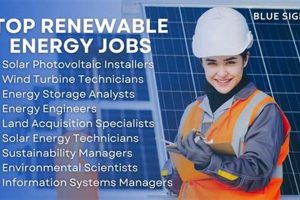
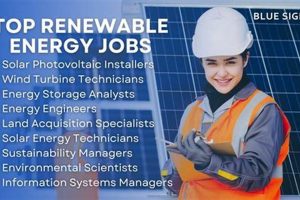
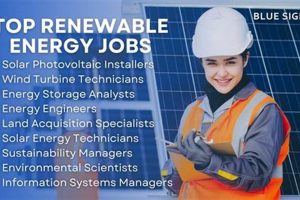
The renewable energy sector offers numerous career paths spanning various skill sets and educational backgrounds. These career opportunities contribute to mitigating climate change and fostering sustainable development. Examples include roles in research and development, engineering, installation, maintenance, project management, sales, and policy.
Employment within this sector provides individuals with the chance to participate in a rapidly expanding industry crucial for future global well-being. It offers competitive salaries, intellectual stimulation, and the satisfaction of contributing to environmentally sound solutions. Historically, growth in this sector has been driven by technological advancements, increasing environmental awareness, and favorable government policies. This confluence of factors continues to propel job creation and innovation within renewable energy.
A deeper exploration into specific career options, required qualifications, and future projections will offer a more comprehensive understanding of the dynamic and rewarding nature of this field.
Tips for Pursuing a Career in Renewable Energy
Navigating the renewable energy job market requires strategic planning and a clear understanding of the industry landscape. The following tips offer guidance for individuals seeking opportunities within this dynamic field.
Tip 1: Develop Specialized Skills: Acquiring expertise in areas like solar panel installation, wind turbine maintenance, or energy storage technologies significantly enhances employability.
Tip 2: Network Strategically: Attending industry conferences, joining professional organizations, and connecting with professionals on online platforms can lead to valuable opportunities.
Tip 3: Research Industry Trends: Staying informed about emerging technologies, policy changes, and market demands provides a competitive edge.
Tip 4: Gain Relevant Experience: Internships, volunteer work, and entry-level positions offer practical experience and build a strong foundation for career advancement.
Tip 5: Consider Further Education: Pursuing advanced degrees or certifications in specialized areas can demonstrate expertise and unlock higher-level positions.
Tip 6: Emphasize Transferable Skills: Highlighting skills like project management, data analysis, and communication effectively positions candidates from diverse backgrounds.
Tip 7: Explore Geographic Opportunities: Researching regions with high growth potential in renewable energy can expand employment prospects.
By focusing on these strategies, individuals can effectively position themselves for success within the expanding and impactful field of renewable energy.
These insights pave the way for a comprehensive overview of specific career paths and future projections within the renewable energy sector.
1. Solar Panel Installation

Solar panel installation holds a prominent position within the renewable energy job market. The increasing demand for solar energy solutions directly correlates with a surge in opportunities for skilled installers. This connection stems from the growing global focus on sustainable energy sources and declining costs associated with solar photovoltaic (PV) technology. As governments and individuals increasingly adopt solar energy, the need for qualified professionals to install and maintain these systems intensifies. For example, the expanding solar farms across the United States and the rising adoption of rooftop solar panels in Europe directly translate into a greater need for installation experts.
The importance of solar panel installation as a component of the broader renewable energy landscape cannot be overstated. Installers serve as the crucial link between the manufacturing of solar technology and its practical application. Their expertise ensures the safe, efficient, and effective integration of solar panels into homes, businesses, and utility-scale projects. A well-trained installer maximizes energy production and system longevity. Furthermore, the increasing sophistication of solar technologies, including smart inverters and battery storage systems, necessitates continuous skills development within the installation workforce. This evolution reinforces the long-term career potential within this field.
Understanding the pivotal role of solar panel installation within the renewable energy sector provides valuable context for individuals exploring career options. While challenges such as workforce training and standardization remain, the sustained growth in solar energy adoption positions installation as a secure and impactful career path. The ongoing transition towards sustainable energy underscores the vital contribution of skilled solar panel installers in mitigating climate change and building a cleaner energy future.
2. Wind Turbine Technician
The escalating global demand for clean energy sources positions wind turbine technician as a critical role within the renewable energy sector. This demand drives significant growth in the wind energy market, directly translating into increased opportunities for qualified technicians. The causal link between rising energy needs and the expansion of wind farms necessitates a skilled workforce capable of installing, maintaining, and repairing these complex systems. For instance, the burgeoning offshore wind farms in the North Sea and the extensive wind turbine installations across the American Midwest exemplify this growing need. Wind turbine technicians form the backbone of operational wind energy projects, ensuring efficient energy generation and grid stability.
The importance of wind turbine technicians stems from their essential contribution to the overall functionality and longevity of wind energy infrastructure. Their specialized skills encompass troubleshooting mechanical and electrical issues, performing preventative maintenance, and optimizing turbine performance. This expertise ensures continuous energy production and minimizes downtime, directly impacting the profitability and sustainability of wind energy projects. Moreover, as turbine technology advances, technicians must adapt to new systems and control software, emphasizing the need for continuous professional development and training. The increasing complexity of modern wind turbines reinforces the long-term career prospects and the critical nature of this profession within the renewable energy sector.
Understanding the vital role of wind turbine technicians provides essential context for evaluating career opportunities within the renewable energy landscape. Although challenges such as working at height and remote locations exist, the continued expansion of wind energy globally solidifies this profession as a secure and impactful career path. The ongoing transition to a cleaner energy future underscores the indispensable contribution of skilled wind turbine technicians in meeting global energy demands while mitigating climate change.
3. Energy Storage Engineer

The intermittent nature of renewable energy sources like solar and wind power necessitates efficient energy storage solutions. This requirement positions energy storage engineers at the forefront of innovation within the renewable energy sector, making it a highly sought-after career path. These engineers play a critical role in developing and implementing technologies that store excess energy generated during peak production periods for use during periods of low generation or high demand. This capability is crucial for grid stability and the reliable delivery of renewable energy.
- Battery Systems Engineering
A significant focus for energy storage engineers lies in designing and optimizing battery storage systems. This involves selecting appropriate battery chemistries, designing thermal management systems, and integrating battery systems with power electronics and control systems. Examples include large-scale battery installations supporting solar farms, or residential battery systems coupled with rooftop solar panels. These systems enhance the overall effectiveness and reliability of renewable energy integration into the power grid.
- Pumped Hydro Storage Development
Pumped hydro storage represents a mature technology within the energy storage landscape. Energy storage engineers contribute to optimizing the design and operation of pumped hydro facilities, which utilize excess energy to pump water uphill to a reservoir, releasing it to generate electricity when demand increases. Examples include existing facilities like the Bath County Pumped Storage Station in Virginia, USA, and ongoing projects worldwide seeking to expand this form of storage. These projects demonstrate the ongoing relevance of pumped hydro in grid-scale energy storage.
- Thermal Energy Storage Research
Thermal energy storage offers innovative solutions for storing energy as heat or cold. Energy storage engineers research and develop advanced thermal storage materials and systems for applications ranging from domestic hot water to industrial process heat. Examples include molten salt storage for concentrating solar power plants and ice-based thermal storage for cooling buildings. These advancements contribute to increasing the efficiency and applicability of renewable energy solutions across various sectors.
- Grid Integration and Optimization
Integrating energy storage systems seamlessly into the existing power grid presents significant challenges. Energy storage engineers work to develop advanced control algorithms and communication protocols that enable efficient and reliable grid integration. This includes managing the charging and discharging of storage systems to optimize grid stability and minimize energy losses. These efforts are crucial for maximizing the benefits of energy storage and facilitating the transition to a more flexible and resilient power grid.
The multifaceted expertise of energy storage engineers encompasses various technological domains, from battery chemistries to grid management systems. This breadth of knowledge makes them essential contributors to the ongoing expansion and optimization of renewable energy infrastructure. As renewable energy penetration increases, the demand for skilled energy storage engineers will continue to rise, solidifying its position as a top job in the renewable energy sector. The development and implementation of advanced energy storage solutions are crucial for realizing a future powered by sustainable and reliable renewable energy sources.
4. Renewable Project Manager
The increasing complexity and scale of renewable energy projects necessitate specialized oversight, positioning renewable project managers as essential players in the sector. This demand stems from the growing number of large-scale solar farms, wind turbine installations, and energy storage projects worldwide. Renewable project managers bridge the gap between technical expertise and strategic implementation, ensuring projects are completed on time, within budget, and to the required specifications. Their responsibilities encompass coordinating diverse teams, managing resources, mitigating risks, and ensuring regulatory compliance. For example, the successful completion of a large offshore wind farm requires meticulous project management to coordinate the manufacturing, transportation, installation, and connection of numerous wind turbines. Similarly, managing the development of a utility-scale solar power plant necessitates effective coordination between engineering teams, environmental consultants, and government agencies. These complex projects highlight the crucial role project managers play in the successful deployment of renewable energy technologies.
The importance of renewable project managers as a component of the broader renewable energy landscape derives from their ability to translate ambitious visions into tangible outcomes. Their expertise ensures efficient resource allocation, minimizes delays, and maximizes the return on investment for renewable energy projects. This efficiency is crucial for attracting further investment and accelerating the transition to a sustainable energy future. Effective project management also mitigates potential risks, including environmental impacts, community concerns, and technical challenges. For example, a skilled project manager can proactively address community concerns regarding the visual impact of a wind farm by implementing appropriate mitigation strategies and fostering open communication with local stakeholders. This proactive approach builds public trust and ensures the smooth execution of renewable energy projects. Furthermore, as the renewable energy industry continues to evolve, project managers must adapt to new technologies, regulatory frameworks, and market dynamics. This adaptability reinforces the long-term career potential and the critical nature of this profession within the renewable energy sector.
Understanding the vital role of renewable project managers provides essential context for individuals evaluating career opportunities within this dynamic field. While challenges such as managing complex stakeholder relationships and adapting to rapidly changing technologies exist, the sustained growth in renewable energy deployment solidifies project management as a secure and impactful career path. The ongoing global commitment to decarbonization underscores the indispensable contribution of skilled renewable project managers in delivering successful renewable energy projects and driving the transition towards a cleaner energy future.
5. Sustainability Consultant
The growing imperative for businesses and organizations to adopt sustainable practices positions sustainability consultants as key players in the transition to a greener economy. Their expertise in environmental regulations, renewable energy integration, and sustainable business strategies makes them highly sought-after professionals, particularly within the renewable energy sector. Sustainability consultants guide organizations in minimizing their environmental footprint while maximizing operational efficiency and long-term sustainability. This role bridges the gap between environmental responsibility and economic viability, making it a crucial component of the broader renewable energy landscape.
- Renewable Energy Integration
Sustainability consultants play a vital role in guiding organizations towards integrating renewable energy sources into their operations. This involves conducting energy audits, evaluating the feasibility of different renewable energy options (solar, wind, geothermal), and developing implementation strategies. For example, a consultant might assist a manufacturing company in transitioning to solar power by analyzing their energy consumption patterns, designing a rooftop solar installation, and navigating the permitting process. This expertise directly contributes to the growth of renewable energy adoption across various sectors.
- Environmental Compliance and Reporting
Navigating complex environmental regulations is a crucial aspect of sustainability consulting. Consultants help organizations understand and comply with relevant environmental laws and reporting requirements. This includes conducting environmental impact assessments, developing emissions reduction strategies, and preparing sustainability reports. For instance, a consultant might advise a construction company on minimizing the environmental impact of a new project by implementing erosion control measures, managing waste responsibly, and obtaining necessary environmental permits. This expertise ensures responsible environmental stewardship and minimizes legal risks.
- Sustainable Business Strategy Development
Developing comprehensive sustainability strategies is a core function of sustainability consulting. Consultants work with organizations to define sustainability goals, implement sustainable practices across their operations, and measure their progress. This includes developing sustainable supply chain strategies, implementing energy efficiency measures, and promoting circular economy principles. For example, a consultant might help a retail company develop a sustainable packaging strategy by analyzing the environmental impact of different packaging materials and recommending eco-friendly alternatives. This holistic approach integrates sustainability into the core business operations.
- Stakeholder Engagement and Communication
Effective communication and stakeholder engagement are essential for successful sustainability initiatives. Consultants facilitate communication between organizations and their stakeholders (investors, customers, communities) regarding sustainability performance and goals. This includes developing communication strategies, organizing stakeholder workshops, and preparing sustainability reports for public dissemination. For instance, a consultant might assist a municipality in engaging with the community on a new renewable energy project by organizing public forums, addressing concerns, and providing transparent information about the project’s environmental and economic benefits. This transparent communication builds trust and fosters support for sustainable initiatives.
The diverse expertise of sustainability consultants positions them as essential advisors for organizations seeking to navigate the complex landscape of environmental responsibility and sustainable development. Their contributions to renewable energy integration, regulatory compliance, strategic planning, and stakeholder engagement make them valuable partners in driving the transition towards a cleaner, more sustainable future. As the demand for sustainable practices continues to grow across all sectors, the role of sustainability consultant will remain a prominent and impactful career path within the broader context of top jobs in renewable energy. The increasing focus on environmental, social, and governance (ESG) factors further reinforces the importance of this profession in shaping a responsible and sustainable future for businesses and society.
Frequently Asked Questions about Renewable Energy Careers
Addressing common inquiries regarding renewable energy careers provides clarity for individuals exploring this dynamic field. The following questions and answers offer valuable insights into career paths, required qualifications, and industry trends.
Question 1: What educational background is required for renewable energy jobs?
Educational requirements vary depending on the specific role. Entry-level positions in areas like solar panel installation may require vocational training or an associate’s degree, while engineering and research positions typically necessitate a bachelor’s or advanced degree in a relevant field. Specialized certifications can enhance career prospects across various roles.
Question 2: What are the typical salary expectations in the renewable energy sector?
Salaries within the renewable energy sector are competitive and often commensurate with experience and qualifications. Entry-level positions typically offer competitive starting salaries, while specialized roles like engineering and project management command higher earning potential. Geographic location and company size can also influence salary expectations.
Question 3: Are renewable energy jobs geographically concentrated?
While some regions may experience higher concentrations of renewable energy activity due to favorable geographic conditions or policy incentives, career opportunities exist across diverse geographies. The global nature of the renewable energy transition creates employment prospects worldwide. Researching regional market trends can provide insights into specific geographic opportunities.
Question 4: How stable is employment within the renewable energy sector?
The renewable energy sector is characterized by significant growth and long-term stability. Driven by global decarbonization efforts and increasing demand for clean energy solutions, employment prospects within this sector are projected to remain strong. Continuous technological advancements and policy support contribute to the long-term viability of renewable energy careers.
Question 5: What are some of the challenges associated with working in renewable energy?
Challenges within the renewable energy sector can include working in remote locations, adapting to rapidly evolving technologies, and navigating complex regulatory landscapes. However, these challenges are often offset by the opportunity to contribute to a meaningful and impactful industry that addresses critical global challenges like climate change.
Question 6: How can one gain practical experience in renewable energy?
Practical experience can be gained through internships, volunteer work, and entry-level positions within renewable energy companies or related organizations. Participating in research projects, joining student clubs focused on sustainability, and pursuing relevant certifications can also provide valuable hands-on experience.
Understanding the key questions surrounding renewable energy careers empowers individuals to make informed decisions about pursuing opportunities within this dynamic and impactful field. Thorough research, strategic planning, and a commitment to continuous learning are essential for success in this rapidly evolving sector.
Further exploration of specific career paths and future projections within renewable energy will provide a more comprehensive understanding of this exciting field.
Top Jobs in Renewable Energy
Exploration of leading renewable energy career paths reveals a dynamic and evolving landscape. From solar panel installers contributing to residential energy independence to energy storage engineers pioneering grid-scale solutions, diverse opportunities exist for skilled professionals. Renewable project managers ensure the successful execution of complex projects, while sustainability consultants guide organizations toward environmentally responsible practices. The increasing global commitment to decarbonization and sustainable development underscores the long-term growth potential within this sector.
The transition to a sustainable energy future necessitates a skilled and dedicated workforce. Embracing careers within renewable energy offers not only competitive employment prospects but also the profound satisfaction of contributing to a cleaner, more sustainable world. Continued exploration of educational opportunities, skill development, and industry trends will empower individuals to navigate this evolving landscape and contribute meaningfully to the global energy transformation. The future of energy is renewable, and the future of work lies in the hands of those who power it.