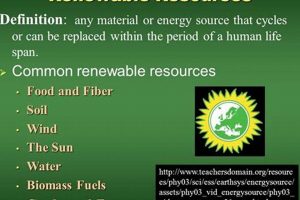
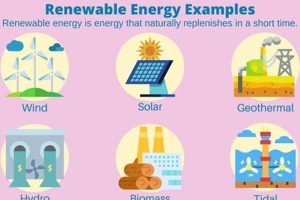
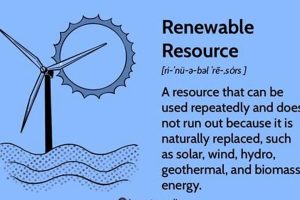
The term identifies energy sources that are naturally replenished on a human timescale. These resources are derived from natural processes, such as sunlight, wind, rain, tides, and geothermal heat. Examples include solar power generated through photovoltaic cells, wind energy harnessed by turbines, hydroelectric power derived from flowing water, and geothermal energy extracted from the Earth’s internal heat.
Utilization of these energy sources offers several significant advantages. It reduces reliance on finite fossil fuels, mitigating concerns regarding resource depletion and price volatility. Furthermore, it minimizes environmental impact by generating electricity with lower greenhouse gas emissions compared to traditional methods. Historically, harnessing such power sources dates back centuries, but advancements in technology have drastically increased their efficiency and scalability, making them viable alternatives to fossil fuels.
Understanding the fundamental characteristics and benefits of these power sources is crucial for informing discussions on sustainable energy policies and exploring the potential for a global transition towards cleaner, more environmentally friendly energy production. The following sections will delve into specific types, technological advancements, and policy implications related to the broad concept of sustainable power generation.
Guidance on Renewable Energy Resource Implementation
The following guidelines offer insights into the successful adoption and management of resources that naturally replenish, supporting a transition towards sustainable energy systems.
Tip 1: Conduct Thorough Resource Assessments: Comprehensive evaluations of potential renewable sources (solar irradiance, wind speeds, geothermal gradients) at specific locations are essential. Accurate data informs technology selection and project feasibility.
Tip 2: Prioritize Energy Efficiency Measures: Before investing in new capacity, reducing energy consumption through improved insulation, efficient appliances, and smart building design minimizes the overall demand and enhances the impact of renewable deployments.
Tip 3: Diversify Resource Portfolio: Relying on a single type of resource introduces vulnerability to fluctuations (e.g., intermittent solar radiation). Integrating multiple sources enhances grid stability and supply security.
Tip 4: Invest in Energy Storage Solutions: Technologies like batteries, pumped hydro, and thermal storage can mitigate intermittency challenges and provide a reliable power supply, especially during peak demand or periods of low resource availability.
Tip 5: Modernize Grid Infrastructure: Accommodating distributed generation and variable energy flows requires upgrades to existing transmission and distribution networks. Smart grids with advanced monitoring and control systems are essential.
Tip 6: Foster Supportive Policy Frameworks: Governments play a crucial role in incentivizing development through feed-in tariffs, tax credits, and regulatory frameworks that streamline permitting processes and encourage investment.
Tip 7: Promote Public Awareness and Education: Building public acceptance and understanding of the benefits is crucial for successful implementation. Educational campaigns can address concerns and foster support for renewable projects.
Effective strategies for incorporating natural and sustainable energy involve meticulous planning, diversification of energy sources, advancement of grid infrastructure, and establishment of supportive governmental policies. By focusing on these key areas, stakeholders can accelerate the transition toward sustainable energy systems, mitigating environmental impact and promoting long-term energy security.
The subsequent section will present a compilation of frequently asked questions (FAQ) regarding the adoption and application of resources that replenish on a human timescale.
1. Replenishment

Replenishment forms a cornerstone in the context, emphasizing the constant and natural restoration of energy sources over a human timescale. This intrinsic characteristic sets them apart from finite fossil fuels and underpins their sustainability.
- Solar Energy Restoration
Solar energy’s continuous supply from the sun exemplifies replenishment. Photovoltaic cells convert sunlight into electricity, and as long as the sun shines, this energy source remains available. Its widespread adoption reduces reliance on depleting fossil fuels and lessens the environmental impact.
- Wind Power Reconstitution
Wind, driven by atmospheric pressure differences and solar heating, constantly regenerates. Wind turbines convert the kinetic energy of wind into electrical power. Variability in wind speed requires sophisticated grid management, but the continuous nature of wind makes it a dependable sustainable resource.
- Hydrological Cycle Renewal
The water cycle, driven by solar evaporation and precipitation, ensures the continuous replenishment of water resources used in hydroelectric power generation. Dams harness the potential energy of water stored at higher elevations. The sustainability of hydropower depends on maintaining healthy watersheds and managing water resources effectively.
- Geothermal Heat Regeneration
The Earth’s internal heat, stemming from radioactive decay and residual heat from planetary formation, continuously renews geothermal resources. Geothermal power plants tap into this heat to generate electricity or provide direct heating. The rate of heat extraction must be managed sustainably to avoid depleting the resource locally.
Replenishment, therefore, is a fundamental aspect of sustainable energy systems. The continuous availability of solar, wind, hydro, and geothermal energy ensures that these resources can support long-term energy needs without contributing to resource depletion. Harnessing replenishment effectively requires careful planning, technological innovation, and sustainable management practices.
2. Sustainability

Sustainability is intrinsically linked to the concept, representing a core attribute of these energy sources. It signifies the capacity to meet current energy needs without compromising the ability of future generations to meet their own. Unlike finite fossil fuels, which deplete with extraction and combustion, energy sources characterized by renewal offer a pathway to a sustainable energy future by utilizing resources that naturally replenish.
The effect of transitioning to these resources on ecological systems is substantial. The reduction in greenhouse gas emissions, a direct result of relying on naturally replenishing sources such as solar and wind, mitigates climate change. Furthermore, the reduced dependence on extractive industries minimizes habitat destruction and pollution associated with fossil fuel extraction and transportation. Germany’s “Energiewende,” a nationwide transition to sustainable resources, exemplifies a large-scale effort to prioritize long-term ecological and economic stability through reliance on sources with renewal capabilities. The practical significance of understanding this connection lies in informing policy decisions that promote long-term energy security while minimizing environmental damage.
In conclusion, sustainability serves as the defining characteristic that distinguishes these resources from conventional energy sources. Prioritizing sources defined by their ability to replenish naturally is essential for building a resilient and environmentally responsible energy infrastructure. The challenges involved in achieving widespread adoption are significant, requiring technological innovation, policy support, and public awareness. However, the potential benefits for ecological health and long-term resource availability underscore the critical importance of integrating the concept of sustainability into energy planning and implementation.
3. Environmental Impact

The environmental consequences of energy generation are a primary concern driving the adoption of energy sources characterized by their ability to replenish naturally. Evaluating the impact of these resources requires a nuanced understanding of their life cycle, from resource extraction and manufacturing to operation and decommissioning.
- Greenhouse Gas Emissions
The reduction of greenhouse gas emissions constitutes a significant advantage. Sources that naturally replenish, such as solar, wind, and hydro, produce minimal to no greenhouse gases during operation, unlike fossil fuel combustion. However, the manufacturing and installation of equipment (e.g., solar panels, wind turbines) can involve emissions. Life cycle assessments are essential to quantify and minimize these indirect emissions.
- Land Use
Land use implications vary considerably. Large-scale solar farms and wind farms require substantial land areas, potentially affecting natural habitats and agricultural land. Hydropower projects can alter river ecosystems and displace communities. Careful site selection, mitigation strategies, and community engagement are critical to minimize negative impacts.
- Water Consumption
Water consumption is a relevant consideration, particularly in arid regions. Concentrated solar power plants that use thermal energy storage may require significant amounts of water for cooling. Hydropower projects can alter downstream water flow and affect aquatic ecosystems. Employing water-efficient technologies and integrated water resource management are essential.
- Waste Management
Waste management aspects are increasingly important as aging infrastructure reaches the end of its operational life. Solar panels and wind turbine blades contain materials that require specialized recycling processes. Developing effective waste management strategies is necessary to prevent environmental pollution and promote a circular economy.
The evaluation of environmental effects is complex and multifaceted. While exhibiting a significant reduction in carbon emissions compared to fossil fuels, careful consideration must be given to land use, water consumption, and waste management to ensure sustainability. Continuous technological innovation and robust regulatory frameworks are vital for optimizing the environmental performance throughout the entire life cycle, promoting a balance between human needs and ecological integrity.
4. Resource Diversity
Resource diversity is a critical component of energy systems relying on sources that naturally replenish, mitigating inherent limitations associated with individual sources. Intermittency, a characteristic of solar and wind energy due to variations in weather patterns, necessitates a diversified portfolio to ensure consistent energy supply. The strategic integration of geographically dispersed and technologically varied sources enhances grid stability and resilience.
Germany’s energy transition provides a practical example of resource diversification. While solar and wind contribute significantly, biomass, hydropower, and geothermal resources also play a role in the country’s energy mix. This approach reduces vulnerability to fluctuations in any single resource and leverages the complementary strengths of different technologies. Furthermore, investments in energy storage solutions and smart grid infrastructure are essential to manage the variability introduced by renewable sources. Regions with limited renewable potential due to geographical constraints can benefit from interconnected transmission networks, allowing access to geographically diverse resources.
The pursuit of resource diversity is not without challenges. It requires careful planning, infrastructure investments, and policy frameworks that support the integration of diverse energy sources. However, the benefits of enhanced grid stability, reduced environmental impact, and increased energy security outweigh the complexities. A comprehensive strategy that promotes technological innovation, grid modernization, and market incentives is essential to unlock the full potential of resource diversity in energy systems reliant on sources that naturally replenish.
5. Energy Security
Energy security, defined as the uninterrupted availability of energy sources at an affordable price, is intrinsically linked to energy sources that naturally replenish. Reliance on finite fossil fuels exposes nations to geopolitical risks, price volatility, and supply disruptions. Diversifying energy sources through the integration of naturally replenishing alternatives enhances energy security by reducing dependence on a limited number of suppliers and mitigating the impact of international market fluctuations.
The European Union’s strategy to reduce dependence on Russian gas serves as a pertinent example. Investments in solar, wind, and other sustainable resources aim to bolster domestic energy production, thereby lessening vulnerability to external supply shocks. Furthermore, decentralized energy generation, facilitated by distributed resources, enhances grid resilience and reduces the risk of widespread blackouts. The implementation of smart grid technologies and energy storage solutions further strengthens energy security by improving grid management and ensuring a stable supply during periods of peak demand or intermittent resource availability.
Achieving long-term energy security requires a holistic approach that encompasses infrastructure investments, policy support, and technological innovation. The transition to a sustainable energy system, characterized by diversified resources and decentralized generation, strengthens national energy independence and reduces exposure to global market uncertainties. Addressing challenges associated with intermittency and grid integration is essential to fully realize the energy security benefits offered by natural and replenishing power sources. The practical significance of understanding this connection lies in informing strategic energy planning and promoting a resilient and secure energy future.
6. Technological Advancements
Technological advancements are inextricably linked to the viability and widespread adoption of energy resources defined by their natural replenishment. The inherent intermittency and, at times, lower energy density of these sources necessitate ongoing innovation to enhance efficiency, reduce costs, and ensure reliable energy delivery. Advancements directly influence the economic feasibility and scalability of deployment efforts.
Specific examples highlight this connection. The increased efficiency of photovoltaic cells, driven by material science and engineering breakthroughs, has significantly lowered the cost of solar energy. Similarly, advancements in wind turbine design, including taller towers and larger rotor blades, have increased energy capture and reduced the cost per kilowatt-hour. Battery storage technologies, rapidly evolving in terms of energy density and lifespan, are crucial for addressing the intermittency of solar and wind power, enabling them to provide baseload power capabilities. Furthermore, the development of smart grid technologies, utilizing advanced sensors, communication networks, and control systems, enables the efficient integration of distributed and variable energy sources into the existing grid infrastructure. The evolution of geothermal drilling techniques has expanded access to geothermal resources and improved extraction rates. These advancements collectively contribute to making energy sources that naturally replenish more competitive with traditional fossil fuels.
The practical significance of understanding this relationship lies in informing investment decisions and policy development. Prioritizing research and development in key technological areas is essential to further reducing costs, improving performance, and overcoming challenges associated with grid integration. Supportive policies that incentivize innovation and deployment accelerate the transition to a sustainable energy future. As technological capabilities continue to advance, resources characterized by their ability to replenish naturally will become increasingly central to global energy systems, contributing to energy security, environmental sustainability, and economic growth.
Frequently Asked Questions
The following addresses common inquiries and clarifies pertinent aspects relating to sources characterized by natural replenishment, providing a foundation for informed decision-making.
Question 1: What distinguishes sources that naturally replenish from conventional sources?
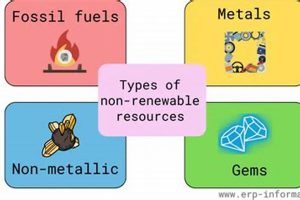
The primary distinction lies in the rate of resource regeneration. Sources characterized by replenishment regenerate within a human timescale, such as solar, wind, and hydro. Conventional sources, like fossil fuels, are finite resources that deplete upon extraction.
Question 2: What are the primary benefits of transitioning to a system reliant on sources with natural replenishment?
Significant benefits include reduced greenhouse gas emissions, decreased dependence on finite resources, enhanced energy security, and the potential for long-term price stability compared to volatile fossil fuel markets.
Question 3: How is the issue of intermittency addressed in systems dominated by sources that replenish naturally?
Intermittency challenges are mitigated through a combination of strategies, including geographical diversification of resources, advanced energy storage solutions (e.g., batteries, pumped hydro), and smart grid technologies that enhance grid management and flexibility.
Question 4: What are the main barriers to widespread adoption?
Key barriers include high upfront capital costs for infrastructure development, the need for grid modernization to accommodate distributed generation, regulatory hurdles, and, in some regions, a lack of public awareness and acceptance.
Question 5: How does governmental policy influence the development and deployment of sources that naturally replenish?
Governmental policies, such as feed-in tariffs, tax credits, renewable energy standards, and carbon pricing mechanisms, play a critical role in incentivizing investment, promoting technological innovation, and creating a level playing field for energy technologies characterized by natural regeneration.
Question 6: What is the future outlook for sources exhibiting natural replenishment in the global energy mix?
The future outlook is positive, with projections indicating a significant increase in the share of resources characterized by natural renewal in the global energy mix. Continued technological advancements, decreasing costs, and growing environmental concerns are expected to drive further adoption.
Understanding the aforementioned clarifies the role of power sources with consistent renewal. Long-term ecological and financial stability is only possible through their integration. These points assist in fostering knowledge and dispelling misunderstandings.
The subsequent segment transitions into a synopsis of sustainable practices, focusing on how organizations and individuals can contribute to a cleaner and more reliable system.
Defining Renewable Energy Resources
This exploration has elucidated the core characteristics, benefits, and challenges associated with the definition of renewable energy resources. Emphasis has been placed on their continuous replenishment, positive environmental impact, contribution to energy security through diversification, and the enabling role of technological advancements. Policy frameworks and public awareness were identified as crucial elements in facilitating widespread adoption. The analysis underscores that a transition towards energy systems relying on these power sources requires a holistic approach, encompassing strategic planning, infrastructure investments, and ongoing innovation.
The imperative to transition towards sustainable energy practices is clear. Continued efforts to refine technologies, develop supportive policies, and educate the public are essential for realizing the full potential of power sources characterized by consistent renewal. Prioritizing these resources constitutes a strategic investment in a more secure, environmentally responsible, and economically resilient future for the planet.
![Guide to What Energy Resources Are Renewable [+Future] | Renewable Energy Solutions for a Sustainable Future | Clean & Green Power](https://pplrenewableenergy.com/wp-content/uploads/2026/03/th-516-300x200.jpg "Guide to What Energy Resources Are Renewable [+Future] Renewable Energy Solutions for a Sustainable Future | Clean & Green Power")