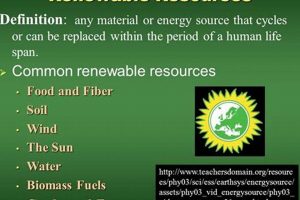
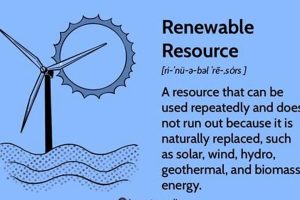
The essence lies in naturally replenished resources over a human timescale. These sources of energy and materials are continuously available, differentiating them from finite reserves that deplete with extraction. Solar radiation, wind, geothermal heat, and sustainably managed forests exemplify this category, representing a constant flow rather than a fixed stock.
The significance of these resources is multifaceted. Their utilization mitigates reliance on exhaustible fuels, contributing to energy security and reducing price volatility. Furthermore, adopting these sources offers environmental advantages by decreasing greenhouse gas emissions and minimizing pollution associated with conventional extraction and combustion processes. Historically, societies have utilized these resources, albeit often on a smaller scale. Increased awareness and technological advancements are driving their widespread adoption.
Understanding this foundation is crucial for exploring the diverse types of these resources, their technological applications, and the policy frameworks that encourage their development and deployment. Subsequent sections will delve into specific examples, addressing their potential and limitations within the broader context of sustainable energy and resource management.
Strategic Considerations for Harnessing Replenishable Resources
Effective implementation of systems reliant on naturally replenished resources necessitates careful planning and execution. The following considerations are crucial for maximizing benefits and mitigating potential challenges.
Tip 1: Conduct Thorough Resource Assessments: Prior to investment, rigorously assess the availability and consistency of the intended resource. For example, solar irradiance varies significantly by location, necessitating detailed meteorological data analysis. Similarly, wind patterns require long-term monitoring to determine optimal turbine placement.
Tip 2: Prioritize System Efficiency: Maximize energy conversion efficiency throughout the resource utilization chain. Investment in advanced technologies, such as high-efficiency solar panels or improved turbine designs, can significantly reduce overall resource consumption and cost.
Tip 3: Integrate Storage Solutions: Address the intermittent nature of many replenishable sources by incorporating energy storage systems. Battery storage for solar and wind power, or pumped hydro storage for hydropower, can smooth out supply and ensure a reliable energy flow.
Tip 4: Emphasize Grid Integration: Ensure seamless integration of replenishable energy sources into the existing grid infrastructure. Smart grid technologies and advanced control systems are essential for managing variable generation and maintaining grid stability.
Tip 5: Promote Policy Support: Advocate for supportive policy frameworks that incentivize the development and deployment of replenishable resources. Tax credits, feed-in tariffs, and renewable energy standards can create a favorable investment climate.
Tip 6: Foster Community Engagement: Engage with local communities to address concerns and ensure project acceptance. Transparency, open communication, and benefit-sharing arrangements are crucial for building support and minimizing potential opposition.
Tip 7: Consider Lifecycle Impacts: Evaluate the entire lifecycle of replenishable resource systems, including manufacturing, installation, operation, and decommissioning. Minimize environmental impacts throughout the process through responsible material sourcing, waste management, and end-of-life planning.
Adhering to these strategic considerations will optimize the benefits associated with these naturally replenished resources, contributing to a more sustainable and resilient energy future.
The subsequent sections will build upon these strategic considerations by examining specific resource applications and exploring future trends in resource technology.
1. Replenishment Rate

The replenishment rate is intrinsically linked to the essence of these resources. It dictates whether a resource qualifies as replenishable and defines its long-term viability as a sustainable energy source.
- Sustained Availability
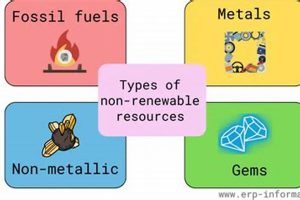
The rate at which a resource renews itself determines its sustained availability. Solar energy, for instance, has a high replenishment rate due to the constant influx of solar radiation. This contrasts sharply with fossil fuels, which have replenishment rates measured in millions of years, effectively rendering them non-replenishable within a human timescale.
- Resource Management Strategies
Understanding the replenishment rate is crucial for developing appropriate resource management strategies. For forests, the harvesting rate must not exceed the rate of tree growth to ensure long-term sustainability. Overexploitation, even of a resource with a finite renewal rate, can lead to depletion and ecological damage.
- Technological Implications
The replenishment rate influences the technological solutions required to harness a resource. Intermittent sources like wind and solar necessitate energy storage systems to compensate for fluctuations in availability. The development of efficient energy storage technologies is therefore critical for the widespread adoption of resources with variable replenishment rates.
- Economic Considerations
The replenishment rate impacts the economic viability of these energy sources. Resources with high replenishment rates, like solar and wind, offer long-term price stability as their availability is not subject to depletion. This can lead to lower long-term energy costs and reduced vulnerability to price shocks associated with finite resources.
In summary, the rate at which a resource replenishes itself is a defining characteristic that separates these resources from their finite counterparts. This rate dictates their long-term sustainability, informs resource management strategies, shapes technological development, and influences economic considerations, thereby establishing its pivotal role in the understanding and application of the core principle.
2. Environmental impact

The consideration of environmental impact is central to the concept of these resources. The comparative advantage lies in their potential to mitigate the detrimental effects associated with conventional energy sources. Reduced emissions and minimization of ecological disturbance are primary objectives.
- Reduced Greenhouse Gas Emissions
The displacement of fossil fuels by these resources directly reduces greenhouse gas emissions, a major contributor to climate change. Solar, wind, and hydropower, for example, produce minimal to zero carbon dioxide emissions during operation, unlike coal and natural gas power plants. The extent of this reduction is a critical metric for assessing the environmental benefits of renewable energy projects.
- Minimized Air and Water Pollution
These sources often result in less air and water pollution compared to conventional energy production. Burning fossil fuels releases pollutants such as sulfur dioxide, nitrogen oxides, and particulate matter, contributing to respiratory problems and acid rain. Hydropower can affect river ecosystems if not managed correctly, while solar and wind energy have minimal impact on air and water quality during operation.
- Land Use Considerations
The deployment of these resources can require significant land use, which can impact ecosystems and biodiversity. Large-scale solar farms and wind turbine installations, for instance, may alter habitats and displace wildlife. However, responsible planning and siting practices can minimize these impacts by considering ecological sensitivities and implementing mitigation measures.
- Resource Depletion Mitigation
These naturally replenished resources, by definition, do not deplete finite resources like fossil fuels and uranium. This characteristic reduces the environmental impacts associated with resource extraction, such as mining, drilling, and transportation. The shift towards reliance on these sources contributes to the preservation of natural resources for future generations.
These facets highlight the inherent connection between environmental impact and the definition of these resources. While no energy source is entirely without environmental consequences, the comparatively lower impact of these sources is a key justification for their increased adoption and integration into global energy systems. Continued innovation and responsible deployment are essential for maximizing their environmental benefits.
3. Long-term availability

Long-term availability constitutes a fundamental aspect in defining naturally replenished resources. The ability of a resource to sustain its availability indefinitely, or over extended periods relevant to human timescales, distinguishes it from exhaustible sources. This characteristic is pivotal for ensuring energy security and fostering sustainable development.
- Resource Replenishment vs. Depletion
The core distinction lies in the balance between resource replenishment and depletion. Unlike fossil fuels, which deplete with extraction, these resources are either continuously replenished or have the capacity to regenerate within a reasonable timeframe. Solar radiation, wind energy, and sustainably managed forests are prime examples, showcasing consistent supply or regenerative capacity.
- Investment and Infrastructure Planning
The assurance of long-term availability underpins investment decisions and infrastructure planning. Power plants designed to harness solar or wind energy can expect a continuous flow of the resource for decades, enabling long-term financial planning and return on investment. This contrasts with fossil fuel-based infrastructure, which faces the uncertainty of resource depletion and fluctuating fuel costs.
- Climate Change Mitigation
Long-term availability directly supports climate change mitigation efforts. By transitioning from exhaustible fuels to resources with sustained availability, societies can reduce greenhouse gas emissions and minimize their contribution to global warming. The longevity of supply ensures that these benefits are sustained over time, contributing to long-term climate stability.
- Resilience and Energy Security
Resources with assured long-term availability enhance resilience and energy security. Reliance on diverse naturally replenished sources reduces dependence on volatile global energy markets and mitigates the risk of supply disruptions. This enhanced energy independence strengthens national economies and promotes social stability.
The facets of replenishment, investment security, climate mitigation, and energy independence all highlight the critical role of long-term availability in defining and justifying the importance of these resources. The certainty of sustained supply is a cornerstone of sustainable energy systems, driving innovation, investment, and policy decisions aimed at securing a stable and environmentally responsible energy future.
4. Source diversity

Source diversity plays a critical role in the practical application of the core concept. It acknowledges the array of naturally replenished resources available, highlighting the strategic importance of not relying solely on any single resource type. This diversification mitigates risks and enhances overall energy system resilience.
- Geographic Resilience
Diversifying sources across various geographic locations reduces vulnerability to localized disruptions. For instance, a region reliant solely on hydropower faces risks from droughts, while a region with wind and solar energy sources can compensate for fluctuations in either resource. Geographic distribution enhances the stability of the overall renewable energy supply.
- Technological Redundancy
Employing a mix of technologies, such as solar photovoltaic, wind turbines, geothermal plants, and biomass energy systems, offers redundancy against technological failures or resource limitations. If one technology faces performance issues or resource constraints, other technologies can fill the gap, ensuring a more reliable energy supply.
- Market Stability
Diversified resources contribute to market stability by reducing dependence on specific commodities or energy markets. A portfolio of renewable energy sources hedges against price volatility associated with fossil fuels or the fluctuating availability of specific resources, creating a more predictable and stable energy market.
- Environmental Mitigation
Different sources offer varying environmental benefits and drawbacks. By combining resources, it is possible to mitigate some of the environmental impacts associated with individual renewable energy technologies. For example, pairing wind energy with energy storage systems can minimize reliance on fossil fuel peaker plants, reducing overall emissions.
The integration of geographically diverse sources, technological redundancies, market stability measures, and environmental mitigation strategies collectively strengthens the foundational concept. By embracing diverse resources, energy systems become more robust, secure, and environmentally sustainable, fully embodying the principles.
5. Technological feasibility

Technological feasibility is a defining factor in determining the practical application of naturally replenished resources. It assesses the practicality and maturity of technologies required to harness, convert, and integrate these resources into existing energy systems, and its influence determines scalability of different alternatives.
- Conversion Efficiency
The efficiency with which a technology converts these resources into usable energy directly impacts its viability. Higher conversion efficiencies reduce the amount of raw resource needed to generate a given amount of energy. Examples include advancements in solar cell efficiency and wind turbine blade design, directly affecting the economic viability of those alternatives. Improved efficiency translates directly into broader applicability.
- Infrastructure Integration
The capacity to seamlessly integrate these energy sources into existing infrastructure is critical. Smart grid technologies, advanced energy storage solutions, and grid modernization initiatives facilitate the incorporation of variable resources like wind and solar power. Successful integration minimizes disruptions and ensures a reliable energy supply. This capacity directly determines scalability of renewable options.
- Materials Science and Manufacturing
Advancements in materials science and manufacturing techniques drive down the costs and improve the durability of renewable energy technologies. Innovations in materials for solar panels, wind turbines, and energy storage systems enhance performance and reduce maintenance requirements. Materials breakthroughs widen applicability and increase efficiency.
- Energy Storage Solutions
The development of effective and affordable energy storage solutions addresses the intermittent nature of many resources. Battery technologies, pumped hydro storage, and thermal energy storage systems enable the storage of excess energy for later use. The availability of robust storage fundamentally shapes the feasibility of renewable resources. The storage capacity will contribute to increase the value of feasibility.
These components of efficiency, infrastructure, advanced materials, and storage underscore the vital link between technological feasibility and the meaning of naturally replenished resources. Continued innovation and investment in these areas are essential for realizing the full potential of these resources and transitioning towards a sustainable energy future. Each piece mentioned above will impact directly in the feasibility.
6. Economic viability

The economic viability of harnessing naturally replenished resources is a crucial determinant in their widespread adoption and overall significance. Without economic competitiveness, even environmentally sound and technologically feasible options face barriers to large-scale implementation. The confluence of cost-effectiveness, investment incentives, and market forces ultimately dictates the role of these resources in the global energy landscape.
- Levelized Cost of Energy (LCOE)
LCOE serves as a primary metric for comparing the cost-effectiveness of different energy sources. It calculates the total cost of an energy project over its lifetime divided by the total energy produced. As the LCOE of renewable technologies decreases, they become increasingly competitive with traditional fossil fuels. Examples include solar and wind energy, which have seen significant LCOE reductions due to technological advancements and economies of scale. Lower LCOE translates to enhanced adoption, expanding their impact on energy portfolios.
- Investment and Financing
The availability of investment and financing is essential for developing renewable energy projects. Government incentives, tax credits, and loan guarantees can reduce the financial risk for investors, encouraging private sector participation. Renewable energy projects often require significant upfront capital investment, and access to affordable financing is crucial for their successful implementation. Consistent policies attract private investment, expanding the naturally replenished energy sector.
- Market Integration and Grid Parity
Achieving grid parity, where the cost of renewable energy equals or falls below the cost of electricity from the grid, is a major milestone in their economic viability. As renewable energy becomes more cost-competitive, it can be integrated into the electricity market without subsidies. This integration requires grid modernization and smart grid technologies to manage the variable nature of certain options. Once grid parity is attained, these sources become market-driven, diminishing dependency on government interventions.
- Job Creation and Economic Growth
The expansion of renewable energy industries can stimulate economic growth and create new job opportunities. Manufacturing, installation, maintenance, and research and development in these sectors contribute to local and national economies. The economic benefits of renewable energy can extend beyond energy production, creating a positive feedback loop that further enhances their economic viability and attractiveness. Job creation improves the economical factor to be considered.
The interplay of LCOE, investment incentives, market integration, and economic growth demonstrates the integral role of economic viability in realizing the potential of naturally replenished resources. Ongoing advancements and supportive policies are essential for ensuring that these resources not only contribute to a sustainable future but also offer compelling economic advantages. The points above must be combined to get more applicability.
Frequently Asked Questions About the Meaning of Renewable Resources
This section addresses common inquiries surrounding resources that replenish naturally, providing clarity on their characteristics, benefits, and applications.
Question 1: What distinguishes naturally replenished resources from non-replenished alternatives?
Naturally replenished resources regenerate within a human timescale, ensuring sustained availability. Non-replenished resources, such as fossil fuels, are finite and deplete with extraction.
Question 2: Do naturally replenished resources have any environmental drawbacks?
While generally cleaner than fossil fuels, these sources can have environmental impacts. Large-scale hydropower can alter river ecosystems, and wind farms or solar arrays may require significant land use. Responsible planning and mitigation can minimize these effects.
Question 3: How reliable are energy systems reliant on naturally replenished resources given their often intermittent nature?
The intermittency of some resources like solar and wind is addressed through energy storage systems, grid modernization, and diversified energy portfolios. Integrating these strategies enhances grid stability and ensures reliable energy supply.
Question 4: Are naturally replenished resources economically competitive with fossil fuels?
The economics of these sources has improved significantly. In many regions, solar and wind energy are now cost-competitive with fossil fuels. Government incentives, technological advancements, and economies of scale continue to drive down costs.
Question 5: What are the main types of naturally replenished resources?
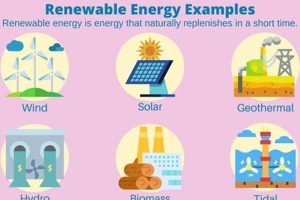
Common types include solar energy, wind energy, hydropower, geothermal energy, and biomass. Each resource has unique characteristics, advantages, and limitations.
Question 6: What role do government policies play in promoting naturally replenished resources?
Government policies, such as tax credits, feed-in tariffs, and renewable energy standards, can create a favorable investment climate and accelerate the adoption of these resources. These policies incentivize private sector participation and drive innovation.
Understanding the nuances of these frequently asked questions illuminates the importance of naturally replenished resources in shaping a sustainable and secure energy future.
The subsequent sections will explore the future trends impacting the resource space.
Reiterating the Essence of Naturally Replenished Resources
This exposition has elucidated the fundamental tenets of resources that replenish naturally, underscoring their capacity for regeneration within a human timescale. Crucially, it highlighted their distinction from finite reserves, their comparatively reduced environmental burden, and the significance of factors such as technological feasibility and economic viability in their widespread adoption. Furthermore, the discussion explored the strategic considerations for their effective implementation and addressed common queries surrounding their role in a sustainable energy future.
The pursuit of energy systems predicated on naturally replenished resources is not merely an environmental imperative but a strategic necessity for long-term energy security and economic stability. Continued research, innovation, and policy support are essential to unlocking their full potential and ensuring their sustained contribution to a resilient and environmentally responsible global energy landscape. Their responsible development remains a crucial undertaking for future generations.
![Guide to What Energy Resources Are Renewable [+Future] | Renewable Energy Solutions for a Sustainable Future | Clean & Green Power](https://pplrenewableenergy.com/wp-content/uploads/2026/03/th-516-300x200.jpg "Guide to What Energy Resources Are Renewable [+Future] Renewable Energy Solutions for a Sustainable Future | Clean & Green Power")