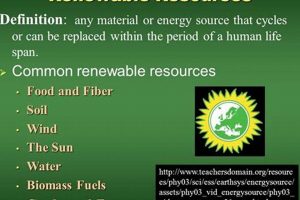
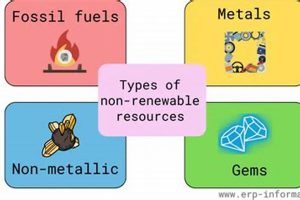
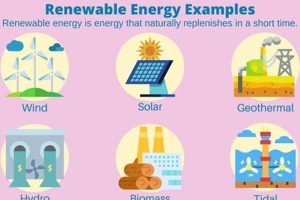
The proportion of power generation derived from sources that are naturally replenished, such as solar, wind, hydro, geothermal, and biomass, represents a significant indicator of energy sustainability. This figure quantifies the contribution of these sources to the overall energy mix, providing a measure of the extent to which a region or nation relies on non-depletable energy options. For example, if a country generates 25% of its electricity from wind, solar, and hydroelectric dams, that represents the proportion of energy derived from these renewable sources.
Increasing the contribution of these sources offers multiple advantages, including reduced greenhouse gas emissions, diversified energy supplies leading to enhanced energy security, and decreased reliance on fossil fuels. Historically, the proportion of energy from these sources was low, but with technological advancements, supportive policies, and growing environmental awareness, this percentage has generally been on the rise in many parts of the world. Its increase plays a pivotal role in mitigating climate change and fostering a more environmentally responsible energy future.
The ensuing discussion will delve into the factors influencing the proportion of power generation from sustainable sources, examine regional variations in its adoption, and explore the ongoing challenges and opportunities associated with its further expansion. This includes analysis of technological innovations, policy frameworks, and economic considerations that are shaping the future of energy production.
Strategies for Enhancing Renewable Energy Adoption
Optimizing the proportion of energy obtained from sustainable sources requires a multi-faceted approach. Strategic implementation across various sectors can significantly impact this vital metric.
Tip 1: Implement Supportive Policy Frameworks: Governments should enact policies that incentivize renewable energy development and deployment. Feed-in tariffs, tax credits, and renewable portfolio standards are effective mechanisms to encourage investment and growth in the sector.
Tip 2: Invest in Research and Development: Continued investment in technological advancements is essential for improving the efficiency and cost-effectiveness of renewable energy technologies. This includes research into energy storage solutions, grid integration technologies, and new materials for solar panels and wind turbines.
Tip 3: Promote Energy Efficiency: Reducing overall energy consumption minimizes the demand that must be met by any energy source. Programs that encourage energy-efficient buildings, appliances, and transportation systems are crucial complements to renewable energy adoption.
Tip 4: Develop Robust Grid Infrastructure: A modern and resilient grid is necessary to integrate intermittent renewable energy sources like wind and solar effectively. Investments in smart grid technologies, transmission lines, and energy storage systems are crucial for ensuring reliable power delivery.
Tip 5: Foster Public Awareness and Education: Raising public awareness about the benefits of renewable energy and the importance of sustainability can drive greater support for its adoption. Educational programs, community outreach initiatives, and public information campaigns can play a vital role.
Tip 6: Encourage Decentralized Generation: Promoting distributed generation, such as rooftop solar and community wind projects, can enhance energy security, reduce transmission losses, and empower individuals and communities to participate in the energy transition.
Tip 7: Streamline Permitting Processes: Reducing the bureaucratic hurdles involved in permitting renewable energy projects can accelerate their deployment. Efficient and transparent permitting processes can attract investment and reduce project development timelines.
Implementing these strategies fosters a favorable environment for increasing the proportion of power derived from sustainable sources. This approach supports both environmental sustainability and long-term economic growth.
The ensuing sections will examine specific case studies of successful renewable energy transitions and explore the challenges associated with scaling up these initiatives on a global scale.
1. Global adoption trends

Global adoption trends in renewable energy directly influence the overall proportion of energy production derived from sustainable sources. As more nations and regions implement renewable energy technologies like solar, wind, hydro, and geothermal, the total energy generated from these sources increases, thereby raising the proportional representation of renewable energy in the global energy mix. This is a direct cause-and-effect relationship. The rate and scale of global adoption are thus critical components in determining the percentage of total energy originating from sustainable means.
For example, the European Union’s commitment to renewable energy targets has led to significant investments in wind and solar farms, substantially increasing the contribution of these sources to the EU’s energy production. Similarly, China’s massive investments in solar power have positioned it as a global leader in renewable energy capacity, impacting global statistics. The practical significance of understanding these trends lies in the ability to forecast future energy landscapes, develop informed energy policies, and assess the effectiveness of global efforts to transition away from fossil fuels. Furthermore, tracking global adoption enables identification of best practices and promotes knowledge sharing across nations.
In conclusion, global adoption trends serve as a primary driver behind shifts in the proportion of energy produced by sustainable resources. Monitoring these trends provides critical insights for policymakers, investors, and researchers, enabling more effective strategies to address climate change and promote a sustainable energy future. The challenge lies in ensuring equitable access to renewable energy technologies across all regions and overcoming barriers to adoption, such as infrastructure limitations and policy inconsistencies.
2. Technology cost reduction

The decline in the cost of renewable energy technologies directly influences the increased proportion of energy generated from sustainable sources. Reduced costs make renewable energy options more competitive with traditional fossil fuels, thereby encouraging wider adoption across various sectors. This cost reduction effect enhances economic viability for both large-scale utility projects and smaller distributed generation systems, driving overall expansion of the renewable energy sector. This mechanism is crucial; as renewable energy becomes cheaper, the barrier to entry for consumers, businesses, and governments decreases, leading to a greater share of energy derived from these sources.
Solar photovoltaic (PV) systems provide a prime example. Over the past decade, the cost of solar PV modules has decreased dramatically, making solar energy an economically attractive alternative in many regions. Wind power has followed a similar trajectory, with advancements in turbine technology and manufacturing processes reducing the levelized cost of energy (LCOE) from wind farms. Consequently, investment in wind and solar projects has surged globally, contributing significantly to the increased percentage of energy derived from renewable sources. Similarly, advancements in battery storage technology, albeit at an earlier stage, promise to mitigate the intermittency challenges associated with solar and wind, further bolstering their competitiveness.
In summary, technology cost reduction is a fundamental enabler of renewable energy expansion, driving increased uptake and contributing substantially to a higher proportion of energy generated from sustainable sources. Continued investment in research, development, and deployment of renewable energy technologies is vital for sustaining this downward cost trend, accelerating the transition to a cleaner, more sustainable energy system. Overcoming challenges related to financing, grid infrastructure, and policy uncertainties will further enhance the impact of technology cost reduction on global energy production.
3. Government policy impact

Government policies exert a direct and significant influence on the proportion of energy generated from renewable resources. These policies create a framework that either incentivizes or disincentivizes investment and development in the renewable energy sector. Effective policies can accelerate the deployment of renewable technologies, leading to a higher percentage of overall energy production derived from these sources. Conversely, the absence of supportive policies or the presence of policies favoring fossil fuels can hinder the growth of renewable energy, limiting its contribution to the energy mix. Therefore, governmental action serves as a primary determinant of the extent to which renewable energy contributes to a nation’s or region’s total energy supply.
Examples of impactful government policies include feed-in tariffs, which guarantee a price for renewable energy fed into the grid, thereby encouraging investment in renewable generation. Renewable portfolio standards (RPS) mandate that a certain percentage of electricity must come from renewable sources, driving demand and stimulating market growth. Tax credits and subsidies can reduce the upfront costs of renewable energy projects, making them more financially attractive. Furthermore, regulations that discourage or penalize fossil fuel emissions, such as carbon taxes or emission trading schemes, can create a more level playing field for renewable energy sources. Germany’s Energiewende, a comprehensive energy transition policy, demonstrates the transformative potential of strong governmental commitment, although challenges remain in implementation. Similarly, California’s RPS has played a crucial role in driving renewable energy development within the state. The practical significance of understanding the impact of policies lies in the ability to design and implement effective measures that accelerate the transition to a cleaner energy future.
In summary, government policy acts as a crucial catalyst in determining the percentage of energy derived from renewable resources. Supportive policies can unlock significant investment, drive technological innovation, and facilitate the integration of renewable energy into existing energy systems. While effective policies can yield substantial benefits, poorly designed or implemented policies can impede progress. Challenges remain in adapting policies to specific regional contexts, ensuring policy stability, and addressing potential conflicts of interest. However, the power of government policy to shape the energy landscape and promote sustainable energy production cannot be overstated.
4. Grid integration challenges

Grid integration challenges directly impede the potential to increase the proportion of power generation derived from sustainable sources. The inherent variability of many renewable energy sources, such as solar and wind, poses significant challenges to maintaining grid stability and reliability. Unlike conventional power plants, which can dispatch electricity on demand, renewable sources are dependent on weather conditions. This intermittency introduces complexities in matching electricity supply with demand, potentially leading to grid imbalances, voltage fluctuations, and frequency deviations. The effective integration of renewable energy necessitates sophisticated grid management systems, advanced forecasting capabilities, and flexible grid infrastructure.
For instance, in regions with high penetration of solar power, periods of peak solar generation may exceed local demand, requiring curtailment of solar output or the ability to transmit excess power to other areas. Conversely, during cloudy days or at night, solar generation diminishes, necessitating reliance on alternative power sources to meet demand. Wind power similarly exhibits variability, with fluctuating wind speeds impacting electricity generation. To address these challenges, investments in grid modernization, including smart grids, energy storage solutions (such as batteries and pumped hydro), and enhanced transmission capacity, are crucial. Additionally, advanced forecasting tools can help anticipate variations in renewable energy output, enabling grid operators to proactively manage the system. The absence of adequate grid integration capabilities limits the ability to effectively utilize renewable energy resources, thereby constraining the proportion of energy that can be sustainably generated.
In summary, grid integration challenges represent a significant impediment to expanding the percentage of energy produced by sustainable sources. Overcoming these challenges requires a multifaceted approach involving technological innovation, infrastructure investments, and policy support. Addressing intermittency, enhancing grid flexibility, and improving forecasting accuracy are essential for ensuring grid stability and reliability while accommodating a higher proportion of variable renewable energy. Failure to effectively address these challenges will constrain the potential for achieving a sustainable energy future.
5. Investment Opportunities

Investment opportunities in the renewable energy sector directly influence the proportion of energy derived from sustainable sources. Capital allocation towards renewable energy projects, research and development, and infrastructure development is a primary driver for increasing this proportion. As investment grows, new renewable energy facilities are constructed, existing ones are expanded, and technological advancements accelerate, thereby augmenting the contribution of renewable sources to the overall energy mix. This relationship is fundamentally causal; greater investment begets increased renewable energy capacity and generation, translating to a larger percentage of total energy output from sustainable resources. The absence of adequate investment constrains the growth of the renewable energy sector and limits its ability to displace conventional, fossil fuel-based energy sources.
Consider the rapid growth of solar energy in recent years. This expansion is largely attributable to substantial investment in solar panel manufacturing, project development, and supportive policies. Similarly, the offshore wind industry has witnessed significant growth driven by large-scale investments in turbine technology, installation vessels, and grid interconnection infrastructure. Investment in energy storage solutions, such as battery technology and pumped hydro storage, is also crucial for addressing the intermittency challenges associated with renewable energy sources. Private equity firms, venture capital funds, and institutional investors are increasingly allocating capital to renewable energy, recognizing the long-term growth potential and the alignment with environmental, social, and governance (ESG) investment principles. Governments also play a critical role by providing incentives, subsidies, and tax credits to attract investment and accelerate the deployment of renewable energy technologies.
In conclusion, investment opportunities are a critical determinant of the percentage of energy produced by renewable resources. Increased capital allocation to the renewable energy sector fuels technological innovation, expands renewable energy capacity, and drives down costs, making renewable energy more competitive with fossil fuels. While challenges remain in attracting sufficient investment, particularly in developing countries, the growing recognition of the economic and environmental benefits of renewable energy is driving increased investor interest and accelerating the transition to a cleaner, more sustainable energy future. Effective policies and clear regulatory frameworks are essential for creating a stable investment environment and unlocking the full potential of renewable energy resources.
6. Environmental benefits

The proportion of power generation derived from sustainable sources exhibits a direct and profound relationship with environmental well-being. As the percentage of energy produced by sustainable resources increases, a corresponding suite of environmental benefits becomes more pronounced, influencing air and water quality, ecosystem health, and overall climate stability.
- Reduced Greenhouse Gas Emissions
A primary environmental advantage linked to a higher proportion of sustainable energy generation is the substantial reduction in greenhouse gas emissions. Renewable energy sources, such as solar, wind, and hydro, produce minimal or no greenhouse gases during operation, contrasting sharply with fossil fuel-based power plants. Decreasing reliance on coal, oil, and natural gas for electricity generation directly lowers the release of carbon dioxide, methane, and other potent greenhouse gases into the atmosphere, mitigating climate change. For instance, replacing a coal-fired power plant with a wind farm significantly reduces carbon emissions, contributing to a slower rate of global warming and decreased risks of extreme weather events.
- Improved Air Quality
Elevating the proportion of energy derived from sustainable resources contributes to marked improvements in air quality. Fossil fuel combustion releases particulate matter, sulfur dioxide, nitrogen oxides, and other air pollutants, resulting in respiratory illnesses, cardiovascular diseases, and other adverse health outcomes. Shifting towards cleaner energy sources mitigates these harmful emissions, leading to cleaner air and improved public health. For example, a city that transitions from coal-based electricity to solar power will experience a reduction in smog and other forms of air pollution, resulting in fewer cases of respiratory ailments and improved overall quality of life for its inhabitants.
- Water Conservation
Certain renewable energy technologies, particularly solar photovoltaic and wind power, require minimal water for operation, offering a significant advantage over conventional power plants that rely on water for cooling. Fossil fuel and nuclear power plants consume substantial amounts of water, contributing to water stress in regions with limited water resources. Increasing the proportion of energy derived from sources that minimize water consumption helps conserve water resources, ensuring their availability for other essential uses, such as agriculture and drinking water. For instance, transitioning from a coal-fired power plant to a wind farm can significantly reduce water consumption, particularly in arid and semi-arid regions.
- Ecosystem Preservation
A greater proportion of energy production from sustainable resources supports ecosystem preservation. The extraction, transportation, and combustion of fossil fuels can have detrimental impacts on ecosystems, including habitat destruction, oil spills, and acid rain. Renewable energy sources, when developed responsibly, can minimize these impacts, protecting biodiversity and preserving natural habitats. For example, siting wind farms in ecologically sensitive areas requires careful planning and mitigation measures to minimize impacts on bird and bat populations. Similarly, developing solar farms on previously disturbed land can avoid habitat loss and promote ecosystem restoration.
The constellation of environmental benefits associated with a higher proportion of energy derived from sustainable resources underscores the importance of transitioning to a cleaner energy future. Reduced greenhouse gas emissions, improved air quality, water conservation, and ecosystem preservation collectively contribute to a more sustainable and resilient planet. While challenges remain in scaling up renewable energy technologies and integrating them into existing energy systems, the environmental imperative for increasing the proportion of energy derived from sustainable resources is clear and compelling.
7. Energy security implications

The proportion of power generation derived from sustainable sources is intrinsically linked to a nation’s energy security. A higher percentage of energy production from renewable resources directly correlates with enhanced energy security, due primarily to the diversification of energy sources and reduced dependence on volatile global fossil fuel markets. Reliance on imported fossil fuels renders a nation vulnerable to price fluctuations, supply disruptions, and geopolitical instability. By increasing the share of domestic renewable energy sources, countries can mitigate these risks and foster greater energy independence. Renewable resources, such as solar, wind, hydro, and geothermal, are geographically diverse, and their availability is not subject to the same geopolitical constraints as fossil fuels. Thus, their utilization strengthens a nation’s energy sovereignty and reduces its exposure to external energy shocks. For instance, a country heavily reliant on natural gas imports from a single supplier is susceptible to supply curtailments or price manipulation. Investing in domestic renewable energy capacity mitigates this risk by providing an alternative, indigenous energy source.
Furthermore, the decentralized nature of many renewable energy technologies enhances energy security by creating a more resilient and distributed energy system. Distributed generation, such as rooftop solar panels, reduces the strain on centralized power plants and transmission infrastructure, making the energy system less vulnerable to disruptions caused by natural disasters or terrorist attacks. Microgrids powered by renewable energy sources can provide reliable electricity to critical facilities, such as hospitals and emergency services, during grid outages. The European Union’s efforts to increase renewable energy deployment are, in part, motivated by a desire to reduce reliance on Russian natural gas, thereby enhancing the EU’s energy security. Similarly, island nations often face high energy costs due to reliance on imported fossil fuels. Investing in renewable energy can reduce these costs and improve energy security by providing a stable, locally sourced energy supply.
In summary, the proportion of power derived from sustainable sources is a critical determinant of a nation’s energy security. Increasing the share of renewable energy in the energy mix enhances energy independence, reduces exposure to volatile global energy markets, and fosters a more resilient and decentralized energy system. While challenges remain in scaling up renewable energy technologies and integrating them into existing energy infrastructure, the energy security benefits of renewable energy provide a compelling rationale for prioritizing its deployment. Effective policies, strategic investments, and technological innovation are essential for realizing the full energy security potential of renewable resources.
Frequently Asked Questions
The following addresses commonly asked questions to provide greater clarity and understanding.
Question 1: What constitutes “renewable resources” in the context of energy production?
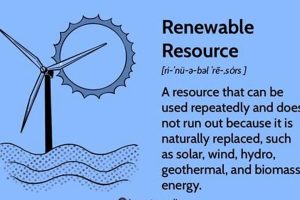
Renewable resources are defined as energy sources that are naturally replenished over a human timescale. These typically include solar, wind, hydro, geothermal, and biomass.
Question 2: How is the “percentage of energy produced by renewable resources” calculated?
The percentage is calculated by dividing the total energy produced from renewable sources by the total energy produced from all sources (renewable and non-renewable) within a specified region or timeframe, then multiplying by 100 to express as a percentage.
Question 3: Why is increasing the “percentage of energy produced by renewable resources” considered important?
Increasing this percentage reduces greenhouse gas emissions, enhances energy security, diversifies energy supplies, and mitigates the environmental impacts associated with fossil fuel extraction and combustion.
Question 4: What are the primary challenges in increasing the “percentage of energy produced by renewable resources”?
Challenges include the intermittency of some renewable sources, the need for grid modernization and energy storage solutions, policy inconsistencies, and the upfront costs associated with renewable energy infrastructure.
Question 5: Does a high “percentage of energy produced by renewable resources” guarantee environmental sustainability?
While a high percentage is a positive indicator, it does not guarantee complete sustainability. Responsible land use, sustainable sourcing of biomass, and mitigation of impacts on wildlife are also necessary.
Question 6: How does government policy impact the “percentage of energy produced by renewable resources”?
Government policies, such as feed-in tariffs, renewable portfolio standards, tax incentives, and carbon pricing, significantly influence the deployment and adoption of renewable energy technologies, thereby directly affecting this percentage.
Understanding the nuances of this figure facilitates informed decision-making regarding energy policy and sustainability efforts.
The subsequent sections will delve into case studies examining successful implementations.
Conclusion
The preceding analysis has underscored the multifaceted significance of the proportion of energy derived from sustainable sources. From driving technological innovation and investment opportunities to fortifying energy security and mitigating environmental harm, this metric serves as a critical indicator of progress toward a sustainable energy future. Fluctuations in its value reflect the complex interplay of policy decisions, market forces, and technological advancements.
Continued efforts to elevate the percentage of energy produced by renewable resources remain paramount. Sustained policy support, strategic infrastructure investments, and ongoing research and development will be essential for accelerating the transition to a cleaner, more resilient energy system. The future energy landscape hinges on a steadfast commitment to expanding the deployment and optimizing the integration of sustainable energy technologies.
![Guide to What Energy Resources Are Renewable [+Future] | Renewable Energy Solutions for a Sustainable Future | Clean & Green Power](https://pplrenewableenergy.com/wp-content/uploads/2026/03/th-516-300x200.jpg "Guide to What Energy Resources Are Renewable [+Future] Renewable Energy Solutions for a Sustainable Future | Clean & Green Power")