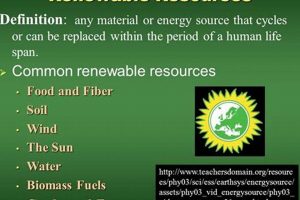
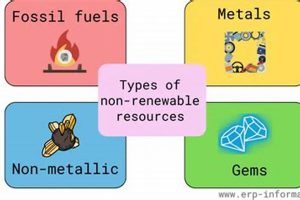
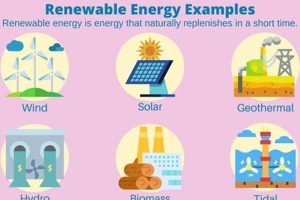
The question of whether water-driven electricity generation constitutes a sustainable energy source is a topic of considerable discussion. This method relies on the kinetic energy of flowing or falling water to turn turbines, which in turn power generators. A common example is a dammed river where the water stored in the reservoir is released to spin the turbines.
Its significance stems from its capacity to provide a large-scale, relatively consistent energy supply. Historically, this energy source has been a cornerstone of electricity grids in many regions, offering a stable alternative to fossil fuels and contributing to energy independence. Furthermore, it can offer co-benefits such as flood control and water storage.
The following sections will delve into the arguments surrounding this energy generation method’s classification as sustainable, examining both its advantages and the environmental consequences associated with its implementation.
Considerations Regarding Water-Driven Electricity Generation
The assessment of this technology as a sustainable energy solution necessitates careful consideration of various factors to ensure responsible deployment and long-term viability.
Tip 1: Prioritize Environmental Impact Assessments: Comprehensive evaluations must be conducted prior to project commencement to identify potential ecological consequences, including alterations to river ecosystems, fish migration patterns, and sediment transport.
Tip 2: Optimize Dam Design and Operation: Implement designs and operational strategies that minimize disruptions to natural water flow regimes. Consider variable flow releases to mimic natural seasonal variations and support downstream ecosystems.
Tip 3: Implement Fish Passage Technologies: Integrate effective fish ladders and bypass systems to facilitate the safe upstream and downstream migration of fish populations, mitigating the impact on aquatic biodiversity.
Tip 4: Address Sedimentation Issues: Implement strategies for managing sediment accumulation in reservoirs, such as sediment bypass or removal techniques, to maintain reservoir capacity and prevent downstream sediment starvation.
Tip 5: Monitor Greenhouse Gas Emissions: Recognize that reservoirs can be sources of greenhouse gas emissions, particularly methane. Employ monitoring systems and mitigation measures to minimize emissions, especially in tropical regions.
Tip 6: Evaluate Social Impacts: Engage with local communities to assess and address potential social impacts, including displacement, loss of livelihoods, and changes to cultural heritage. Ensure equitable distribution of benefits.
Tip 7: Modernize Existing Infrastructure: Instead of solely focusing on new projects, invest in upgrading existing facilities to improve efficiency, reduce environmental impacts, and extend their lifespan.
By carefully addressing these aspects, the implementation of this energy source can be made more environmentally responsible and socially beneficial.
The subsequent sections will provide an overall discussion about this topic.
1. Water Cycle Dependence

The operation of facilities that harness water’s energy is fundamentally tied to the continuous cycling of water through evaporation, precipitation, and runoff. This dependency underpins its potential classification as a sustainable resource. Precipitation replenishes reservoirs, providing the water volume necessary to drive turbines and generate electricity. Disruptions to this cycle, whether through natural variability or climate change, directly impact the capacity of facilities to produce electricity consistently.
The importance of this dependence cannot be overstated. Sustained droughts, for example, can lead to significantly reduced water levels in reservoirs, curtailing electricity generation and potentially impacting regional energy grids. The Hoover Dam on the Colorado River serves as a pertinent example; prolonged drought conditions have resulted in reduced power output and heightened concerns about water availability for both energy production and other essential uses. Conversely, periods of intense rainfall can lead to reservoir overflow, necessitating the release of water and potentially bypassing turbine operation, thus reducing overall energy generation efficiency.
Understanding this dependence is practically significant for long-term energy planning and infrastructure management. Accurate hydrological forecasting and climate modeling are essential to anticipate potential fluctuations in water availability. Diversification of energy sources and implementation of water management strategies, such as demand-side management and improved irrigation practices, can mitigate the risks associated with water cycle variability, ensuring the continued viability of water-driven power as a component of a sustainable energy portfolio. The sustainable operation of this technology requires consistent water cycle.
2. Dam ecosystem impacts

The construction of dams for this technology fundamentally alters river ecosystems, affecting the classification of the energy source as sustainable. Damming a river transforms a free-flowing aquatic environment into a reservoir, leading to significant changes in water temperature, oxygen levels, and nutrient distribution. These alterations directly impact aquatic life, often resulting in habitat loss for native species and the proliferation of invasive organisms adapted to reservoir conditions. Fish migration patterns are disrupted, preventing spawning and limiting access to feeding grounds. The downstream effects include reduced sediment transport, leading to erosion of riverbanks and altered coastal habitats. These cascading ecological consequences raise questions about the overall environmental footprint of dam-based energy generation.
Consider the impact of the Aswan High Dam on the Nile River. The dam’s construction has significantly altered the Nile’s flow, reducing sediment deposition on the Nile Delta and contributing to coastal erosion. The decline in nutrient-rich sediment has also impacted fisheries in the Eastern Mediterranean. Similarly, dams on the Columbia River in the Pacific Northwest have contributed to the decline of salmon populations, disrupting indigenous cultures and regional economies. These examples illustrate the complex interplay between energy production and environmental sustainability.
The long-term viability of this approach as a sustainable energy option hinges on mitigating dam-induced ecosystem damage. Strategies such as implementing fish passage technologies, managing reservoir water levels to mimic natural flow regimes, and restoring degraded downstream habitats are crucial. Comprehensive environmental impact assessments prior to dam construction and ongoing monitoring of ecological conditions are necessary to inform adaptive management strategies and minimize the ecological footprint of water-driven power generation. Balancing energy needs with ecological preservation remains a central challenge.
3. Sedimentation disruption
Sedimentation disruption, an intrinsic consequence of dam construction for water-driven power, presents a significant challenge to the long-term sustainability classification of this energy source. Dams impede the natural flow of sediment downstream, leading to accumulation in reservoirs and deprivation of sediment to downstream ecosystems. This altered sediment regime initiates a cascade of environmental effects, impacting river morphology, deltaic processes, and aquatic habitats. The trapping of sediment reduces reservoir storage capacity, diminishing the effectiveness of the facility for electricity generation and water management over time. River deltas, dependent on sediment deposition for land accretion and stability, are particularly vulnerable, facing increased erosion and saltwater intrusion.
The Aswan High Dam on the Nile River exemplifies the consequences of sedimentation disruption. Prior to the dam’s construction, the annual flood deposited fertile silt onto the Nile Delta, sustaining agricultural productivity. The dam’s presence has curtailed this process, leading to decreased soil fertility and increased reliance on artificial fertilizers. Furthermore, coastal erosion has accelerated, threatening coastal communities and ecosystems. Similarly, dams on the Colorado River have reduced sediment flow to the Colorado River Delta, contributing to habitat loss and ecosystem degradation in the Gulf of California. Managing sedimentation requires strategies such as sediment bypass tunnels, sediment flushing operations, and artificial sediment replenishment projects. However, these measures are often costly and may not fully mitigate the environmental impacts.
Addressing sedimentation disruption is critical for ensuring the long-term viability and sustainability of water-driven energy. Failure to manage sediment accumulation reduces reservoir lifespan, jeopardizes downstream ecosystems, and compromises the overall ecological integrity of river basins. Sustainable management practices must incorporate comprehensive sediment management strategies, considering the ecological and socio-economic consequences of altered sediment regimes. Integrating these considerations into the planning and operation of facilities is essential for reconciling energy production with environmental stewardship, moving toward a more sustainable approach.
4. Methane emissions potential

The generation of methane from reservoirs associated with water-driven energy presents a complex challenge to its designation as a sustainable energy source. The decomposition of organic matter in inundated areas, particularly in tropical regions, can result in substantial methane emissions, a potent greenhouse gas with a significantly higher global warming potential than carbon dioxide over a shorter timeframe. This aspect necessitates a thorough evaluation of the overall carbon footprint associated with water-driven facilities.
- Anaerobic Decomposition:
Reservoirs create anaerobic (oxygen-deprived) conditions in bottom sediments due to the decomposition of submerged vegetation and organic matter carried in by rivers. This anaerobic environment is conducive to the production of methane by methanogenic archaea. Warmer temperatures in tropical regions accelerate this process, leading to higher emission rates. An example is the Balbina Dam in Brazil, where studies have shown significant methane emissions contributing to its overall greenhouse gas footprint.
- Ebullition and Diffusion:
Methane is released from reservoirs through two primary pathways: ebullition (bubbling) and diffusion. Ebullition involves the episodic release of large quantities of methane bubbles from the sediment, while diffusion occurs as methane gradually moves from the water column to the atmosphere. Ebullition events can be particularly significant contributors to total methane emissions, especially during periods of water level fluctuations or sediment disturbances. Studies of various reservoirs have demonstrated that ebullition can account for a substantial proportion of total methane release.
- Turbine Release:
Methane dissolved in reservoir water can also be released as water passes through turbines during electricity generation. The pressure changes experienced by the water as it flows through the turbines can cause dissolved methane to degas, directly entering the atmosphere. This pathway contributes to the overall greenhouse gas emissions associated with the operation of water-driven facilities. Research on the Petit Saut Dam in French Guiana has quantified methane emissions from turbine releases, highlighting the importance of considering this pathway in emission inventories.
- Vegetation Management:
Strategies to mitigate methane emissions focus on reducing the amount of organic matter available for decomposition in reservoirs. Removing vegetation prior to inundation, managing nutrient inputs to the reservoir, and implementing aeration techniques can help reduce the formation of anaerobic conditions and subsequently lower methane production rates. Reforestation efforts in the watershed can also help to reduce soil erosion and nutrient runoff into the reservoir, minimizing organic matter inputs. However, these strategies may be costly or difficult to implement on a large scale.
The methane emissions potential from water-driven reservoirs underscores the necessity for a comprehensive life-cycle assessment when evaluating the technologys sustainability. While it may offer a renewable source of electricity, the associated greenhouse gas emissions can offset some of its climate benefits, particularly in specific geographic locations and under certain reservoir management conditions. Consideration of these emissions is crucial for accurate comparison with other energy sources and for informed decision-making regarding energy policy and infrastructure development.
5. Climate change vulnerability

The resilience of water-driven electricity generation in the face of a changing climate is paramount when considering its long-term viability as a sustainable energy source. The potential for altered precipitation patterns, increased frequency of extreme weather events, and rising temperatures introduces significant uncertainties regarding the consistent operation of facilities and the reliability of their energy output.
- Altered Precipitation Patterns
Climate change is projected to intensify the hydrological cycle, leading to both increased droughts and more intense rainfall events in different regions. For water-driven facilities, this translates to periods of reduced water availability, limiting electricity generation capacity, and conversely, periods of excessive rainfall that can overwhelm infrastructure and necessitate water release without generating electricity. The Hoover Dam, reliant on the Colorado River, is already experiencing reduced water levels due to prolonged drought conditions, impacting its power output. Similarly, increased flooding in other regions can damage facilities and disrupt operations.
- Glacial Melt and Snowpack Reduction
Many facilities are fed by rivers originating in mountainous regions with significant glacial and snowpack accumulation. As global temperatures rise, glaciers are retreating, and snowpack is diminishing, leading to altered river flow regimes. Initially, increased meltwater may result in higher river flows, but this is followed by a long-term decline as glaciers disappear and snowpack decreases. This poses a significant threat to facilities in regions such as the Himalayas and the Andes, where glacial melt contributes substantially to river flows. Reduced river flows translate directly to diminished electricity generation capacity.
- Increased Evaporation Rates
Rising temperatures directly increase evaporation rates from reservoirs, reducing water storage capacity and impacting electricity generation potential. This effect is particularly pronounced in arid and semi-arid regions, where water scarcity is already a concern. As evaporation losses increase, the efficiency of facilities declines, and competition for water resources intensifies between energy production and other essential uses, such as agriculture and domestic water supply. This exacerbates water stress and can lead to conflicts over water allocation.
- Extreme Weather Events
Climate change is expected to increase the frequency and intensity of extreme weather events, such as hurricanes, cyclones, and severe storms. These events can cause significant damage to water-driven infrastructure, disrupting electricity generation and potentially leading to dam failures. Dam failures can have catastrophic consequences, causing flooding, loss of life, and widespread environmental damage. The vulnerability of facilities to extreme weather events necessitates investments in infrastructure upgrades and improved emergency preparedness measures to enhance resilience and minimize the risk of disruptions and failures.
The vulnerability of water-driven electricity generation to climate change underscores the importance of incorporating climate change projections into energy planning and infrastructure development. Diversification of energy sources, investment in water management strategies, and implementation of adaptive management practices are essential for ensuring the long-term viability of this energy source in a changing climate. Recognizing and addressing these vulnerabilities is critical for accurately assessing whether hydroelectric power is a truly sustainable resource in the face of an uncertain future.
Frequently Asked Questions Regarding Hydroelectric Power as a Renewable Resource
This section addresses common queries and misconceptions surrounding the categorization of water-driven energy generation as a sustainable resource. The aim is to provide clear, factual answers to enhance understanding of this complex topic.
Question 1: Is hydroelectric power inherently environmentally benign simply because it utilizes water?
No. While it does not directly combust fossil fuels, the creation of large reservoirs can lead to significant environmental alterations, including habitat destruction, altered river flow regimes, and methane emissions from decomposing organic matter.
Question 2: Does the size of a facility influence its classification as a renewable energy source?
The size of a water-driven facility is not the sole determinant. Both large-scale dams and smaller, run-of-river systems have environmental impacts, although the nature and magnitude of these impacts may differ. The focus should be on minimizing the overall ecological footprint, regardless of scale.
Question 3: How does climate change affect the sustainability of this energy?
Climate change poses a significant threat. Altered precipitation patterns, increased drought frequency, and glacial melt can reduce water availability, impacting the reliability and output of facilities. The long-term sustainability is contingent on adapting to these changing conditions.
Question 4: Are there mitigation strategies to address the environmental impacts?
Yes. Fish passage technologies, sediment management techniques, and strategies to minimize methane emissions can help reduce the ecological footprint. However, these measures may not completely eliminate all negative impacts.
Question 5: Is this energy always a low-carbon energy source?
While it typically has a lower carbon footprint than fossil fuels, the greenhouse gas emissions from reservoir decomposition, particularly methane, can be significant. The carbon footprint varies depending on location, climate, and reservoir management practices.
Question 6: Can a facility ever be truly sustainable?
Achieving full sustainability is challenging. However, through careful planning, implementation of mitigation strategies, and adaptive management practices, the environmental impacts can be minimized. Continuous monitoring and assessment are essential to ensure long-term ecological integrity.
Ultimately, the sustainability of water-driven power hinges on a balanced approach that considers both energy needs and environmental preservation. A holistic perspective is crucial for informed decision-making.
The subsequent sections will discuss the benefits and drawbacks in conclusion.
Conclusion
The exploration of whether water-driven power represents a sustainable energy resource reveals a nuanced reality. While it harnesses a naturally replenishing source, the construction and operation of facilities bring about considerable environmental consequences. Dams alter river ecosystems, disrupt sediment transport, and can contribute to greenhouse gas emissions. Climate change further complicates the matter, threatening the reliability of water supply and impacting electricity generation capacity.
Ultimately, acknowledging both the benefits and drawbacks is critical for responsible energy planning. Moving forward, a continued emphasis on mitigating environmental impacts, improving infrastructure resilience, and adopting comprehensive life-cycle assessments will be necessary to determine its role in a sustainable energy future. Balancing energy needs with ecological preservation remains a fundamental challenge.

![Guide to What Energy Resources Are Renewable [+Future] | Renewable Energy Solutions for a Sustainable Future | Clean & Green Power](https://pplrenewableenergy.com/wp-content/uploads/2026/03/th-516-300x200.jpg "Guide to What Energy Resources Are Renewable [+Future] Renewable Energy Solutions for a Sustainable Future | Clean & Green Power")