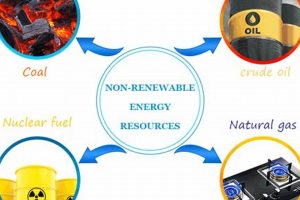
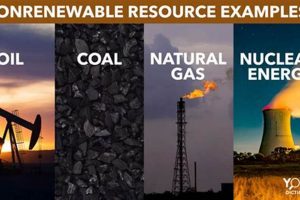
The remaining global reserves of fossil fuelscoal, oil, and natural gasare finite. Estimating these reserves is a complex process involving geological surveys, extraction technologies, and economic factors. For instance, proven oil reserves represent the amount of oil that can be extracted with reasonable certainty using current technology at current prices. However, technological advancements and price fluctuations can significantly impact these estimations.
Understanding the remaining quantities of these resources is crucial for energy security, economic planning, and addressing climate change. Historically, fossil fuels have fueled industrialization and economic growth. However, their combustion releases greenhouse gases, contributing to global warming. Accurate assessments of remaining reserves inform strategies for transitioning to sustainable energy sources and mitigating the environmental impact of fossil fuel consumption. This knowledge empowers policymakers, businesses, and individuals to make informed decisions about energy production, consumption, and investment in renewable energy infrastructure.
This understanding leads to crucial discussions about energy transition, resource management, and the future of global energy consumption. The following sections will delve into specific estimations of remaining fossil fuel reserves, the challenges of resource extraction, and the development of sustainable energy alternatives.
Given the finite nature of fossil fuels, proactive measures are essential to ensure a sustainable energy future. The following tips offer guidance for individuals, businesses, and policymakers:
Tip 1: Invest in Energy Efficiency: Reducing energy consumption through improved insulation, energy-efficient appliances, and optimized industrial processes minimizes reliance on non-renewable resources.
Tip 2: Support Renewable Energy Development: Promoting the development and adoption of renewable energy technologies, such as solar, wind, and geothermal, diversifies energy sources and reduces dependence on fossil fuels.
Tip 3: Advocate for Sustainable Transportation: Transitioning to electric vehicles, utilizing public transport, and promoting cycling and walking reduce reliance on oil-based fuels.
Tip 4: Support Carbon Capture and Storage Technologies: Investing in technologies that capture and store carbon emissions from power plants and industrial facilities can mitigate the environmental impact of fossil fuel use.
Tip 5: Promote Responsible Resource Management: Implementing policies that encourage responsible extraction and utilization of remaining fossil fuel reserves minimizes waste and environmental damage.
Tip 6: Foster International Collaboration: Global cooperation on energy research, technology development, and policy implementation accelerates the transition to a sustainable energy future.
Tip 7: Educate and Raise Awareness: Public awareness campaigns and educational programs on the importance of energy conservation and sustainable practices empower individuals to make informed choices.
By implementing these strategies, societies can mitigate the challenges associated with dwindling non-renewable energy resources and ensure a more sustainable future.
These considerations underscore the urgency of transitioning to a sustainable energy landscape. The concluding section offers a synthesis of these key points and a perspective on the path forward.
1. Reserve Estimations

Reserve estimations play a critical role in understanding the remaining quantities of non-renewable energy resources. These estimations, categorized as proven, probable, and possible reserves, reflect varying degrees of certainty regarding the economically recoverable amount of resources. Proven reserves represent the quantity of resources that can be extracted with a high degree of confidence using current technology and economic conditions. Probable and possible reserves indicate increasing levels of uncertainty associated with extraction feasibility. For example, advancements in hydraulic fracturing technology have significantly altered estimations of recoverable shale gas reserves, demonstrating the dynamic nature of these estimations.
The accuracy of reserve estimations directly influences strategic planning for energy transitions. Overestimations can lead to a false sense of security regarding resource availability, delaying investments in renewable energy technologies. Conversely, underestimations can trigger premature divestment from fossil fuel industries, potentially creating energy shortages. Accurate estimations are essential for balancing energy security with the need for sustainable practices. For instance, countries heavily reliant on coal-fired power plants require precise estimations of remaining coal reserves to inform decisions regarding power plant retirements and investments in alternative energy infrastructure.
Despite their importance, reserve estimations face inherent challenges. Geological complexity, technological limitations, and fluctuating economic conditions introduce uncertainties into the estimation process. Moreover, estimations often exclude resources that are currently technologically or economically unfeasible to extract, potentially underrepresenting the true extent of available resources. Understanding the limitations of reserve estimations, coupled with ongoing efforts to improve estimation methodologies, is crucial for informed decision-making in the energy sector. This understanding allows for a more realistic assessment of the remaining lifespan of non-renewable energy resources, facilitating a smoother transition to a sustainable energy future.
2. Extraction Challenges
Extraction challenges significantly influence the accessibility of remaining non-renewable energy resources. While substantial reserves might exist, technical and economic hurdles can limit the portion that is practically recoverable. These challenges directly impact the amount of non-renewable energy effectively available for consumption. Factors such as geological complexity, technological limitations, and environmental concerns all play a role in determining the feasibility and cost of extraction. For instance, extracting oil from deepwater offshore reservoirs presents greater technical difficulties and higher costs compared to onshore conventional oil extraction. Similarly, exploiting tar sands requires energy-intensive processes, impacting the net energy gain and environmental footprint.
The relationship between extraction challenges and available resources is dynamic and multifaceted. As easily accessible resources are depleted, the industry shifts towards more challenging and costly extraction methods. This progression can lead to diminishing returns, where the energy required to extract a unit of fuel approaches the energy content of the fuel itself. Furthermore, increasing extraction difficulty often correlates with heightened environmental risks. Examples include the potential for spills in deepwater drilling and the land disturbance associated with tar sands extraction. These challenges underscore the limitations of relying solely on readily available reserves when evaluating “how much non-renewable energy is left.” A comprehensive assessment must consider the interplay between resource quantity and extraction feasibility.
Understanding extraction challenges is crucial for making informed decisions regarding energy policy and investment. Recognizing these limitations encourages the development and adoption of alternative energy sources and promotes more efficient utilization of existing resources. Moreover, it necessitates careful consideration of the environmental impacts associated with increasingly complex extraction methods. Ignoring these challenges can lead to unrealistic expectations about future energy supply and hinder the transition towards a sustainable energy landscape.
3. Consumption Rates

Consumption rates of non-renewable energy resources directly impact the timeline of their depletion. The higher the global consumption rate, the faster remaining reserves are diminished. This relationship creates a critical feedback loop: increasing energy demands, driven by population growth and economic development, accelerate depletion, potentially leading to energy scarcity and price volatility. For example, the rapid industrialization of developing economies significantly impacts global energy demand, placing increased pressure on remaining fossil fuel reserves. Understanding current consumption trends, coupled with projected future demand, is essential for forecasting the lifespan of these finite resources. This understanding allows for more accurate assessments of “how much non-renewable energy is left” in a practical, usable timeframe.
Analyzing consumption rates requires considering various factors, including population growth, economic development, technological advancements, and energy efficiency improvements. Population growth increases overall energy demand, while economic development typically correlates with higher per capita energy consumption. Technological advancements can improve energy efficiency, potentially mitigating the impact of growing demand. However, these advancements can also unlock new applications for non-renewable resources, potentially leading to increased consumption. For instance, the development of more fuel-efficient vehicles could theoretically reduce gasoline consumption. However, if this leads to increased vehicle usage or a slower adoption of electric vehicles, the net effect on gasoline consumption could be minimal or even positive. Therefore, assessing the interplay of these factors is crucial for accurately projecting future consumption patterns and understanding their implications for remaining non-renewable energy resources.
Accurately forecasting consumption rates is essential for informed decision-making in the energy sector. These projections inform policies related to energy conservation, investment in renewable energy technologies, and strategic management of remaining non-renewable resources. Without a clear understanding of consumption trends, effective planning for a sustainable energy future becomes significantly more challenging. The link between consumption rates and the remaining lifespan of non-renewable energy resources underscores the urgency of transitioning towards more sustainable energy sources and promoting responsible energy consumption practices.
4. Geopolitical Implications

The distribution and availability of non-renewable energy resources significantly influence geopolitical dynamics. Uneven distribution creates dependencies between nations, with resource-rich countries wielding considerable economic and political leverage. Control over these resources can become a source of international tension and conflict, impacting global stability. The quantity of remaining resources further exacerbates these dynamics. As resources dwindle, competition for access intensifies, potentially leading to resource nationalism and trade disputes. For example, control over oil and natural gas pipelines has historically been a point of contention between nations, impacting energy security and regional alliances. The anticipated scarcity of readily accessible resources adds another layer of complexity to these geopolitical interactions.
The interplay between energy security and geopolitical influence is further complicated by the transition to renewable energy sources. Nations heavily reliant on non-renewable energy exports face economic vulnerability as the world shifts towards sustainable alternatives. This transition can reshape global power dynamics, potentially diminishing the influence of traditional energy exporters and creating new opportunities for countries leading in renewable energy technologies. Furthermore, access to critical minerals required for renewable energy technologies, such as lithium and cobalt, is becoming a new focal point for geopolitical competition, mirroring historical patterns observed with fossil fuels. These emerging dynamics underscore the evolving nature of geopolitical implications in the context of declining non-renewable energy reserves and the rise of sustainable energy alternatives.
Understanding the geopolitical implications of non-renewable energy availability is crucial for informed policymaking and international diplomacy. Recognizing the potential for resource-driven conflicts and economic vulnerabilities allows for proactive strategies to mitigate these risks. This understanding promotes international cooperation on energy security, resource management, and the development of sustainable energy solutions. Furthermore, it highlights the need for diversified energy portfolios and reduced reliance on single-source suppliers to enhance national resilience. Ignoring these geopolitical dimensions can have significant consequences for global stability and economic prosperity, particularly as non-renewable energy resources become increasingly scarce and competition intensifies.
5. Technological Advancements
Technological advancements play a dual role in the context of remaining non-renewable energy resources. On one hand, they can enhance extraction techniques, enabling access to previously unrecoverable resources. Horizontal drilling and hydraulic fracturing, for example, have significantly increased the accessibility of shale oil and gas, expanding the estimated reserves of these resources. Enhanced oil recovery techniques, such as injecting carbon dioxide into reservoirs, similarly improve extraction efficiency from existing fields. Such advancements can create the perception of increased resource abundance, potentially delaying the transition to sustainable alternatives.
On the other hand, technological advancements drive the development of renewable energy technologies and improve energy efficiency, reducing reliance on non-renewable resources. Advancements in solar photovoltaic technology, wind turbine design, and energy storage solutions have significantly reduced the cost and increased the efficiency of renewable energy generation. Similarly, advancements in building insulation, electric vehicle technology, and industrial process optimization improve energy efficiency, lessening demand for non-renewable energy. This parallel development creates a complex dynamic where advancements simultaneously expand access to non-renewable resources while promoting their eventual replacement.
Understanding the complex interplay between technological advancements and non-renewable energy resources is crucial for informed decision-making. While advancements in extraction technologies can offer short-term benefits by increasing access to resources, they must be balanced against the long-term imperative of transitioning to a sustainable energy future. Policy decisions should incentivize innovation in both extraction and renewable energy technologies while promoting responsible resource management and energy efficiency improvements. A balanced approach, recognizing both the opportunities and challenges presented by technological advancements, is essential for navigating the transition away from non-renewable energy sources and ensuring a sustainable energy future.
Frequently Asked Questions
This section addresses common inquiries regarding the remaining quantities and future implications of non-renewable energy resources.
Question 1: How are remaining reserves of non-renewable energy estimated?
Estimating remaining reserves involves complex geological surveys, analysis of extraction technologies, and economic considerations. Proven reserves represent the most confidently recoverable portion, while probable and possible reserves indicate increasing uncertainty.
Question 2: What are the primary challenges associated with extracting remaining non-renewable resources?
Extraction challenges include geological complexity, technological limitations, high costs, and environmental risks. As readily accessible resources are depleted, extraction becomes more difficult and potentially less environmentally sound.
Question 3: How do current consumption rates influence the availability of non-renewable energy?
Higher consumption rates accelerate depletion, potentially leading to energy scarcity and price volatility. Population growth, economic development, and technological advancements influence consumption patterns.
Question 4: What are the geopolitical implications of dwindling non-renewable energy resources?
Uneven resource distribution creates dependencies and can lead to international tensions. Competition for remaining resources may intensify, potentially impacting global stability and economic relations.
Question 5: How do technological advancements impact the future of non-renewable energy?
Advancements can enhance extraction, enabling access to previously unrecoverable resources. Simultaneously, they drive the development of renewable energy technologies and energy efficiency improvements, promoting a transition away from non-renewable dependence.
Question 6: What are the key considerations for a future with limited non-renewable energy resources?
Key considerations include investing in renewable energy technologies, improving energy efficiency, promoting sustainable consumption patterns, and fostering international cooperation to address energy security and environmental sustainability.
Understanding these key aspects provides a foundation for informed discussion and decision-making regarding the future of energy.
The following section offers a concluding perspective on the trajectory of non-renewable energy resources and the path towards a sustainable energy future.
The Future of Energy
The exploration of remaining non-renewable energy reserves reveals a complex interplay of factors influencing global energy security and environmental sustainability. Finite resources, coupled with increasing consumption rates and extraction challenges, underscore the limitations of continued reliance on fossil fuels. Geopolitical implications arising from uneven resource distribution further complicate the landscape, highlighting the need for international cooperation and diversified energy strategies. While technological advancements offer potential solutions through enhanced extraction and renewable energy development, they also present challenges in balancing short-term gains with long-term sustainability goals.
The finite nature of these resources necessitates a fundamental shift towards sustainable energy practices. Investing in renewable energy technologies, improving energy efficiency, and promoting responsible resource management are crucial steps towards mitigating the challenges associated with dwindling non-renewable reserves. The transition to a sustainable energy future requires a concerted global effort, encompassing policy changes, technological innovation, and a fundamental shift in energy consumption patterns. The choices made today will determine the energy landscape of tomorrow and the planet’s ability to support future generations.