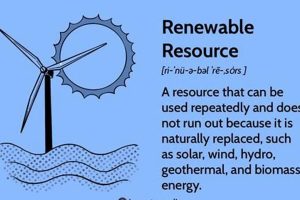
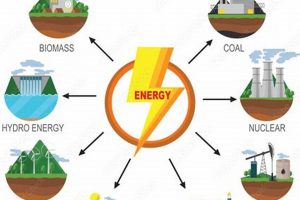
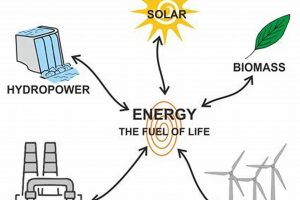
Harnessing power from naturally replenishing resources represents a significant shift in global energy production. These resources, unlike finite fossil fuels, offer a sustainable pathway to meeting increasing energy demands. Examples include solar radiation, wind currents, geothermal heat, and flowing water, all of which can be converted into usable electricity or heat.
The adoption of energy derived from these methods offers numerous advantages. Reduced greenhouse gas emissions mitigate climate change, while diversified energy portfolios enhance energy security and lessen reliance on volatile global markets. Historically, these energy options faced challenges related to cost and intermittency; however, technological advancements and economies of scale have significantly improved their viability.
The following sections will detail the prevalent forms of sustainable power generation, exploring the underlying technologies, current deployment, and future potential of each.
Optimizing the Integration of Renewable Energy
Effectively incorporating prominent forms of sustainable power generation requires careful planning and strategic implementation. The following considerations are crucial for maximizing the benefits and minimizing potential drawbacks.
Tip 1: Prioritize Resource Assessment: Conduct thorough evaluations of local renewable resources, such as solar irradiance, wind patterns, and hydro potential, to determine the most suitable technologies for a given region. Data-driven decisions regarding technology selection optimize energy output and economic efficiency.
Tip 2: Implement Smart Grid Technologies: Employ smart grid infrastructure to manage the intermittent nature of some renewable sources. Advanced sensors, communication networks, and control systems enable real-time monitoring, optimized energy distribution, and enhanced grid stability.
Tip 3: Invest in Energy Storage Solutions: Integrate energy storage systems, such as battery storage or pumped hydro, to address the variability of solar and wind power. Storage capacity allows for energy to be captured during periods of high production and released during periods of peak demand or low generation.
Tip 4: Diversify Renewable Energy Portfolio: Avoid over-reliance on a single renewable energy source. A diversified portfolio, combining solar, wind, hydro, and geothermal, mitigates risks associated with resource variability and enhances overall system reliability.
Tip 5: Streamline Permitting and Regulatory Processes: Establish clear and efficient permitting processes for renewable energy projects. Reduced administrative burdens and expedited approval timelines encourage investment and accelerate the deployment of sustainable technologies.
Tip 6: Promote Public Awareness and Education: Increase public understanding of the benefits and opportunities associated with renewable energy. Informed communities are more likely to support renewable energy projects and adopt energy-efficient practices.
Tip 7: Incentivize Private Sector Investment: Design and implement financial incentives, such as tax credits, feed-in tariffs, and loan guarantees, to attract private sector investment in renewable energy infrastructure. Public-private partnerships can accelerate the transition to a sustainable energy future.
By adhering to these guidelines, stakeholders can facilitate the seamless integration of clean energy solutions, contributing to a cleaner, more resilient, and economically vibrant energy system.
The subsequent sections will explore policy frameworks and technological advancements that further support the widespread adoption of clean energy technologies.
1. Solar photovoltaic systems

Solar photovoltaic (PV) systems are intrinsically linked to the category of widely utilized renewable energy sources. These systems directly convert sunlight into electricity through the photovoltaic effect, a process that does not involve combustion and consequently produces minimal emissions during operation. The rising prominence of solar PV is a direct result of decreasing manufacturing costs, technological advancements that improve efficiency, and supportive government policies promoting renewable energy adoption. Widespread implementation of solar PV technology directly contributes to diversifying the global energy mix and reducing dependence on fossil fuels. Examples can be seen worldwide, from large-scale solar farms in desert regions to residential rooftop installations that empower individual consumers to generate their electricity.
The practical significance of understanding the connection between solar PV and commonly employed renewable energy resources lies in the capacity to inform strategic energy planning. Considering the modular nature of solar PV technology, implementation is scalable to meet diverse energy needs, ranging from distributed generation to centralized power plants. Understanding the resource potential, energy storage capacity, and grid integration demands for solar PV enhances the effectiveness of resource allocation and infrastructure development. Furthermore, exploring the interplay between solar PV systems and other renewable technologies can reveal synergistic opportunities that optimize the overall performance of renewable energy portfolios.
In summary, solar photovoltaic systems represent a crucial component of the most commonly used renewable energy options. While challenges related to intermittency and land use remain, continued research and development, coupled with supportive policy frameworks, promise to further enhance the role of solar PV in achieving a sustainable energy future. The growing adoption of this technology significantly contributes to decarbonizing energy production and promoting environmental stewardship.
2. Wind turbine technology

Wind turbine technology forms a cornerstone of the most widely used renewable energy resources, directly converting kinetic energy from wind into electrical power. The significance of wind energy lies in its potential to reduce reliance on fossil fuels, mitigate greenhouse gas emissions, and enhance energy security. The deployment of wind turbines has increased substantially globally, driven by technological advancements that have improved efficiency and reduced costs. Examples include large-scale wind farms located onshore and offshore, contributing significantly to national electricity grids. Understanding wind turbine technology is essential for optimizing energy resource management, forecasting energy production, and addressing challenges associated with grid integration.
The practical application of this understanding encompasses multiple domains. Detailed analysis of wind patterns and turbine performance enables strategic placement of wind farms to maximize energy capture. Advanced control systems and forecasting models optimize power output and ensure grid stability, addressing the intermittency inherent in wind energy. Ongoing research focuses on improving turbine design, materials, and maintenance strategies, further enhancing the economic viability and environmental sustainability of wind energy. Furthermore, integration of wind energy with other renewable sources, such as solar power and energy storage, creates more resilient and reliable energy systems.
In summary, wind turbine technology is an integral part of commonly utilized renewable energy options, playing a pivotal role in the transition to a sustainable energy future. Despite challenges related to visual impact and wildlife concerns, continued innovation and careful planning promise to further solidify the position of wind energy in diversified energy portfolios. Understanding the technical, economic, and environmental aspects of wind turbine technology is crucial for effectively harnessing its potential and contributing to decarbonizing the global energy sector.
3. Hydropower generation

Hydropower generation stands as a historically significant and presently substantial contributor to the spectrum of renewable energy sources. Its connection to the broader category stems from the fundamental principle of harnessing the kinetic energy of flowing water to drive turbines, subsequently generating electricity. The cause-and-effect relationship is direct: the consistent, controlled flow of water through a dam or diversion structure results in the continuous generation of electrical power. As a component, hydropower offers a dispatchable renewable energy source, meaning its output can be adjusted relatively quickly to meet fluctuating demand, a crucial advantage over some other intermittent renewable technologies. For instance, the Three Gorges Dam in China and the Itaipu Dam on the Brazil-Paraguay border serve as large-scale examples, providing significant portions of their respective nations’ electricity while displacing fossil fuel-based generation. Understanding this connection is practically significant because it allows for informed decisions regarding energy resource planning, grid stabilization, and the balancing of competing environmental concerns.
Further analysis reveals that the practical applications of understanding hydropower’s role extend beyond simple electricity generation. Hydropower facilities often provide co-benefits such as flood control, irrigation, and water supply. However, these benefits must be weighed against the environmental consequences, including alterations to river ecosystems, disruption of fish migration patterns, and potential methane emissions from reservoirs. The development of run-of-river hydropower projects, which minimize or eliminate reservoir creation, represents an attempt to mitigate some of these negative impacts. Moreover, pumped hydro storage, which utilizes excess electricity to pump water uphill for later release and generation, serves as a valuable means of energy storage, enhancing the overall reliability of renewable energy systems.
In conclusion, hydropower generation remains a key element within the suite of widely adopted renewable energy options. Despite facing environmental challenges that require careful consideration and mitigation strategies, its ability to provide dispatchable power and multiple co-benefits underscores its continued importance. Optimizing the design and operation of hydropower facilities, alongside ongoing research into innovative technologies like pumped hydro storage, is essential for maximizing its contribution to a sustainable energy future while minimizing adverse environmental effects.
4. Geothermal energy extraction

Geothermal energy extraction constitutes a notable, albeit geographically constrained, component of prevalent renewable energy options. Its connection to the broader category of frequently utilized renewable energy is rooted in its harnessing of thermal energy from the Earth’s interior. This energy, continuously generated by radioactive decay and residual heat from planetary formation, manifests as steam or hot water, which can be brought to the surface and converted into electricity or used directly for heating purposes. As a result, geothermal energy provides a consistent and reliable energy source, independent of weather conditions, a characteristic that distinguishes it from intermittent renewables like solar and wind. Iceland, for example, derives a substantial portion of its electricity and heating from geothermal resources, showcasing the viability of this energy source in geologically suitable regions. Understanding the interplay between geothermal energy extraction and other common renewable sources is practically significant for optimizing energy portfolios and enhancing grid stability.
Further examination reveals the diverse practical applications of geothermal energy. Beyond electricity generation, geothermal resources can be directly utilized for heating buildings, greenhouses, and industrial processes, increasing energy efficiency and reducing reliance on fossil fuels. Geothermal heat pumps, which leverage the relatively constant temperature of the shallow subsurface, provide efficient heating and cooling solutions for residential and commercial buildings. Enhanced Geothermal Systems (EGS), a technology still under development, aims to expand the accessibility of geothermal energy by creating artificial reservoirs in areas with hot, dry rocks. However, challenges associated with geothermal energy extraction include the potential for induced seismicity, land use considerations, and the release of greenhouse gases, such as hydrogen sulfide and carbon dioxide, although these emissions are typically significantly lower than those from fossil fuel power plants.
In conclusion, geothermal energy extraction remains a valuable contributor to the spectrum of frequently employed renewable energy alternatives. While its geographical constraints and potential environmental impacts necessitate careful planning and mitigation strategies, its capacity to provide consistent, baseload power underscores its enduring relevance. Continued research into advanced geothermal technologies, such as EGS and closed-loop systems, holds the promise of expanding the reach and sustainability of geothermal energy, further solidifying its position in the transition to a decarbonized energy future.
5. Biomass energy conversion

Biomass energy conversion represents a complex and often debated facet of the most commonly utilized renewable energy resources. Its relevance stems from the potential to leverage organic matter derived from plants and animals as a fuel source, thus reducing dependence on fossil fuels. However, its inclusion among the “most common sources” necessitates careful consideration of its sustainability and environmental impact.
- Combustion for Heat and Electricity
Combustion involves burning biomass directly to generate heat, which can then be used for space heating, industrial processes, or to produce steam for electricity generation. Examples include wood-burning stoves, biomass power plants, and co-firing biomass with coal in existing power plants. The implications for “most common sources of renewable energy” are mixed: while it utilizes a renewable resource, inefficient combustion can release significant air pollutants and greenhouse gases.
- Anaerobic Digestion for Biogas Production
Anaerobic digestion is a biological process where microorganisms break down organic matter in the absence of oxygen, producing biogas, a mixture primarily of methane and carbon dioxide. This biogas can then be used as a fuel for heating, electricity generation, or upgraded to biomethane for injection into natural gas pipelines. Wastewater treatment plants and agricultural operations commonly employ anaerobic digestion. Within the context of “most common sources of renewable energy,” anaerobic digestion offers a potentially sustainable pathway to energy production, especially when utilizing waste materials.
- Gasification for Syngas Production
Gasification involves converting biomass into syngas, a mixture of carbon monoxide, hydrogen, and other gases, through partial combustion at high temperatures. Syngas can then be used as a fuel or further processed into liquid biofuels or chemicals. Gasification is often employed for processing diverse biomass feedstocks. In relation to the broader discussion of “most common sources of renewable energy,” gasification represents a more advanced conversion technology that can potentially produce a wider range of products than direct combustion, but it also requires more sophisticated infrastructure and higher capital investment.
- Fermentation for Biofuel Production (Ethanol)
Fermentation is a biological process where microorganisms convert sugars into ethanol, a liquid biofuel that can be used as a gasoline substitute or additive. Corn and sugarcane are common feedstocks for ethanol production. Ethanol is widely blended into gasoline, particularly in the United States and Brazil. Its contribution to “most common sources of renewable energy” is subject to debate due to concerns about land use, water consumption, and the energy balance of ethanol production from certain feedstocks.
In conclusion, biomass energy conversion encompasses a diverse range of technologies, each with its own advantages and disadvantages. Its overall contribution to and sustainability within the “most common sources of renewable energy” is contingent on careful feedstock selection, efficient conversion processes, and responsible land management practices. The future of biomass energy will likely depend on advancements in conversion technologies, improved resource management, and the development of sustainable biomass supply chains.
6. Concentrated solar power

Concentrated solar power (CSP) represents a subset of solar energy technologies with the potential to contribute significantly to the portfolio of renewable energy sources. Its inclusion within discussions of commonly utilized renewable energy options hinges on its capacity for large-scale electricity generation and its ability to incorporate thermal energy storage, addressing intermittency challenges associated with other solar technologies.
- Parabolic Trough Systems
Parabolic trough systems employ curved, mirrored reflectors to focus sunlight onto a receiver tube containing a heat transfer fluid, such as oil or molten salt. The heated fluid is then used to generate steam, which drives a turbine to produce electricity. The Andasol plant in Spain is a prominent example. Parabolic trough systems, especially those with thermal energy storage, can provide dispatchable power, making them a valuable asset within a broader renewable energy mix.
- Solar Power Towers
Solar power towers utilize a field of heliostats, individually controlled mirrors, to focus sunlight onto a central receiver located atop a tall tower. The concentrated sunlight heats a heat transfer fluid, which is then used to generate steam and electricity. The Ivanpah Solar Electric Generating System in California, although facing operational challenges, exemplifies this technology. Solar power towers offer high operating temperatures and potential for high efficiencies, enhancing their contribution to reliable renewable energy supply.
- Linear Fresnel Reflectors
Linear Fresnel reflectors use multiple rows of flat or slightly curved mirrors to focus sunlight onto a receiver tube located above the mirrors. This technology generally has lower capital costs compared to parabolic trough systems but may also have lower efficiencies. The Kimberlina Solar Thermal Energy Plant in California demonstrates the application of linear Fresnel reflector technology. These systems provide a cost-effective alternative for solar thermal electricity generation, broadening the range of viable options among commonly used renewable energy resources.
- Dish/Engine Systems
Dish/engine systems utilize parabolic dish reflectors to focus sunlight onto a receiver located at the focal point of the dish. The heat is then used to drive a Stirling engine, which generates electricity. Dish/engine systems are often deployed in modular units, making them suitable for distributed generation applications. While less prevalent than other CSP technologies, dish/engine systems offer potential for high efficiency and scalability, contributing to the diversification of renewable energy sources.
The various configurations of CSP technology, while not as ubiquitous as solar photovoltaic systems or wind turbines, offer unique advantages, particularly in regions with high solar irradiance. Integrating thermal energy storage capabilities enhances the dispatchability of CSP, addressing the intermittency challenges inherent in many renewable energy resources. Continued advancements in materials, system design, and energy storage technologies are essential to further enhance the competitiveness of CSP and solidify its position among the suite of viable and commonly employed renewable energy options.
Frequently Asked Questions
This section addresses frequently asked questions concerning prevalent renewable energy sources, providing concise and factual information.
Question 1: What defines a source as being among the “most common sources of renewable energy?”
A source is typically categorized within this designation based on several factors, including its current contribution to global energy production, technological maturity, economic viability, geographical accessibility, and potential for future growth and widespread adoption.
Question 2: Are all renewable energy sources equally sustainable?
No. While all renewable sources replenish naturally, their sustainability varies. Factors such as land use requirements, water consumption, potential impacts on ecosystems, and greenhouse gas emissions associated with their lifecycle need to be considered.
Question 3: Why are some renewable energy sources more prevalent than others?
Prevalence depends on a combination of factors: the availability of the resource (e.g., solar irradiance, wind speed), the maturity and cost-effectiveness of the associated technology, policy support (e.g., subsidies, mandates), and existing infrastructure for transmission and distribution.
Question 4: How does the intermittency of some renewable sources impact grid reliability?
The fluctuating nature of solar and wind power can pose challenges to grid stability. Mitigation strategies include grid modernization through smart grid technologies, energy storage solutions (e.g., batteries, pumped hydro), and diversification of renewable energy portfolios to balance intermittent and dispatchable sources.
Question 5: What are the primary barriers to wider adoption of renewable energy?
Key barriers include the initial capital costs associated with renewable energy projects, the intermittency of some sources, the need for grid upgrades to accommodate distributed generation, permitting and regulatory hurdles, and competition from established fossil fuel industries.
Question 6: How can individuals contribute to the wider adoption of renewable energy?
Individuals can support renewable energy through various actions, including installing rooftop solar panels, purchasing electricity from renewable energy providers, advocating for supportive policies, and adopting energy-efficient practices to reduce overall energy consumption.
This FAQ provides a foundational understanding of frequently encountered renewable energy sources. Further research and investigation are encouraged to explore the complexities and nuances of specific technologies and their applications.
The subsequent section will address the policy frameworks influencing the progression and integration of most common renewable energy options.
Conclusion
The preceding analysis has detailed the operational principles, benefits, challenges, and prevalence of several energy generation methods categorized as “most common sources of renewable energy.” Solar photovoltaic systems, wind turbine technology, hydropower generation, geothermal energy extraction, biomass energy conversion, and concentrated solar power represent the technological vanguard in the global transition toward sustainable energy production. Each source possesses unique characteristics that determine its suitability for specific geographical locations, grid infrastructures, and energy demand profiles.
The sustained, responsible development and deployment of these technologies are crucial to mitigating climate change, enhancing energy security, and fostering economic growth. Continued innovation, strategic policy implementation, and responsible resource management will be critical to realizing the full potential of these renewable resources and achieving a sustainable energy future for generations to come. Active engagement and the ongoing pursuit of knowledge are essential for stakeholders navigating the evolving landscape of global energy production and consumption.