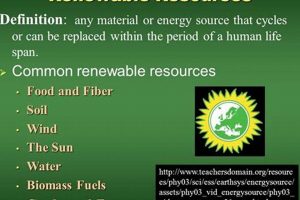
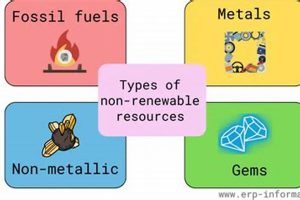
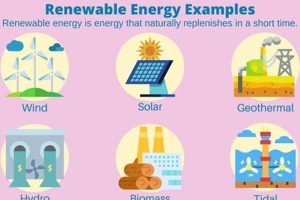
Harnessing naturally replenishing energy sources offers a multitude of advantages. These advantages encompass environmental protection, economic growth, and increased energy security. Examples include reduced greenhouse gas emissions leading to improved air and water quality, the creation of new jobs in manufacturing and installation sectors, and decreased reliance on volatile global fossil fuel markets.
The shift toward these energy options is pivotal for sustainable development. Historically, reliance on fossil fuels has resulted in significant environmental degradation, contributing to climate change and resource depletion. Alternative energy provides a pathway towards mitigating these harmful effects, preserving ecosystems, and ensuring a more stable and resilient energy supply for future generations. This transition fosters innovation, drives down technology costs, and enhances energy independence.
The following sections will explore the specific environmental, economic, and social advantages inherent in the widespread adoption of sustainable energy practices, providing a detailed overview of their transformative potential.
Practical Guidance for Maximizing Renewable Energy Advantages
Optimizing the positive effects of sustainable energy requires strategic implementation and informed decision-making. The following guidelines outline key considerations for individuals, businesses, and policymakers aiming to leverage the potential of renewable resources.
Tip 1: Prioritize Energy Efficiency: Before investing in renewable energy generation, implement measures to reduce overall energy consumption. Improved insulation, energy-efficient appliances, and smart building management systems can significantly decrease demand, maximizing the impact of renewable sources.
Tip 2: Diversify Renewable Energy Portfolio: Consider a mix of different renewable technologies to mitigate the risks associated with intermittency. Combining solar, wind, and geothermal resources can create a more stable and reliable energy supply.
Tip 3: Implement Smart Grid Technologies: Integrate renewable energy sources into smart grids to optimize distribution and balance supply and demand. Advanced metering infrastructure and real-time monitoring can improve grid stability and reduce energy waste.
Tip 4: Encourage Community-Based Projects: Support local renewable energy initiatives, such as community solar gardens or wind farms. These projects can provide affordable energy to residents, create local jobs, and foster community ownership.
Tip 5: Advocate for Supportive Policies: Engage with policymakers to promote incentives for renewable energy development, such as tax credits, feed-in tariffs, and renewable portfolio standards. Clear and consistent policies are essential for attracting investment and driving widespread adoption.
Tip 6: Invest in Energy Storage: Deploy energy storage systems, such as batteries or pumped hydro, to address the intermittency of renewable energy sources. Storage can improve grid reliability and allow for greater integration of variable renewable generation.
Tip 7: Conduct a Life Cycle Assessment: Evaluate the environmental impact of renewable energy technologies across their entire life cycle, from manufacturing to decommissioning. This assessment can help identify areas for improvement and ensure that renewable energy projects are truly sustainable.
By implementing these strategies, stakeholders can amplify the beneficial outcomes of renewable energy, contributing to a cleaner, more resilient, and economically vibrant future. This approach sets the stage for a more in-depth look at the long-term prospects and challenges associated with widespread renewable energy integration.
1. Reduced Emissions

Mitigation of atmospheric pollutants and greenhouse gases constitutes a primary advantage of employing renewable resources. The following details outline the multifaceted impact of decreased emissions achieved through the utilization of sustainable energy alternatives.
- Decreased Greenhouse Gas Concentrations
Renewable energy sources, such as solar, wind, and hydro, produce minimal to no greenhouse gas emissions during operation, unlike fossil fuels. This reduction directly addresses climate change by limiting the accumulation of carbon dioxide, methane, and other heat-trapping gases in the atmosphere. For instance, a wind farm displacing a coal-fired power plant significantly lowers the overall carbon footprint of electricity generation.
- Improved Air Quality
The combustion of fossil fuels releases harmful air pollutants, including particulate matter, nitrogen oxides, and sulfur dioxide, contributing to respiratory illnesses and other health problems. Renewable energy sources, by avoiding combustion, substantially improve air quality, reducing the incidence of respiratory diseases and related healthcare costs. Solar panels, for example, generate electricity without emitting any air pollutants.
- Reduced Acid Rain
Sulfur dioxide and nitrogen oxides released from burning fossil fuels can react with water in the atmosphere to form acid rain, which damages ecosystems and infrastructure. The shift to renewable energy sources significantly reduces these emissions, protecting forests, lakes, and buildings from the corrosive effects of acid rain. Geothermal energy, for example, can provide a stable source of power with minimal acid rain precursors.
- Mitigation of Environmental Degradation
Extraction and transportation of fossil fuels often result in environmental degradation, including habitat destruction, oil spills, and water contamination. Renewable energy sources, especially those utilizing distributed generation, minimize these risks by reducing the need for extensive fossil fuel infrastructure. Rooftop solar panels, for example, avoid the environmental impacts associated with large-scale fossil fuel extraction and transportation.
The multifaceted reduction in emissions, from greenhouse gases to harmful air pollutants, underscores a fundamental benefit of transitioning to renewable resources. This shift not only addresses climate change but also yields substantial improvements in public health, ecosystem integrity, and overall environmental quality.
2. Energy Independence

The concept of energy independence is intrinsically linked to the utilization of renewable resources, serving as a significant advantage derived from their adoption. Dependence on foreign energy sources, particularly fossil fuels, exposes nations to price volatility, geopolitical instability, and potential supply disruptions. Renewable energy, sourced from domestic resources like solar, wind, geothermal, and hydro, directly reduces reliance on external entities, bolstering national security and economic stability. For example, countries with abundant solar irradiance can invest in large-scale solar farms, generating electricity locally and decreasing their dependence on imported oil or natural gas.
Furthermore, energy independence empowers nations to pursue independent energy policies tailored to their specific needs and priorities. By controlling their energy supply, governments can implement policies that promote sustainable development, incentivize innovation in renewable technologies, and create domestic jobs. Germany’s Energiewende, a transition to a low-carbon economy, exemplifies this approach. Through substantial investments in renewable energy infrastructure, Germany has reduced its dependence on imported fossil fuels and established itself as a global leader in renewable energy technologies. This national energy security enhances a country’s geopolitical standing.
In conclusion, the pursuit of energy independence provides a compelling rationale for transitioning to renewable resources. By harnessing domestic energy sources, nations can mitigate the risks associated with foreign energy dependence, foster economic growth, and exercise greater control over their energy future. Overcoming barriers to renewable energy deployment, such as grid integration challenges and intermittency concerns, remains crucial to realizing the full potential of energy independence and securing a more sustainable and resilient energy future.
3. Resource Conservation

Renewable resources inherently promote resource conservation, a critical facet of their overall advantages. Traditional energy generation methods, particularly those reliant on fossil fuels and nuclear fission, deplete finite resources. The extraction, processing, and transportation of these resources cause significant environmental damage and contribute to long-term resource scarcity. Conversely, renewable energy sources such as solar, wind, hydro, and geothermal utilize naturally replenishing resources, minimizing depletion and preserving natural capital for future generations. Solar energy, for instance, harnesses sunlight, a virtually inexhaustible resource, requiring only the physical materials for initial infrastructure construction. Wind energy taps into air currents driven by solar heating, an ongoing atmospheric process. Hydroelectric power utilizes the continuous water cycle, leveraging precipitation and gravity to generate electricity.
The conservation aspect extends beyond the energy source itself to include reduced water consumption, land use optimization, and minimized waste generation. Fossil fuel extraction and processing often require substantial water resources, contributing to water scarcity in arid and semi-arid regions. Renewable energy technologies like solar photovoltaic systems and wind turbines generally have lower water footprints compared to conventional power plants. Careful planning and siting of renewable energy projects can also minimize land use impacts, ensuring the preservation of valuable ecosystems and agricultural lands. Moreover, renewable energy systems typically produce less waste during operation compared to nuclear power plants, mitigating the challenges associated with long-term radioactive waste disposal. A notable example is Iceland’s reliance on geothermal energy. By tapping into its abundant geothermal resources, Iceland has achieved near-complete energy independence while simultaneously conserving fossil fuel reserves and minimizing carbon emissions.
Resource conservation through renewable energy adoption is therefore not merely an environmental benefit but also a strategic imperative. By reducing dependence on finite resources, nations can enhance their energy security, promote sustainable economic development, and mitigate the long-term risks associated with resource depletion and environmental degradation. Continued investment in renewable energy technologies, coupled with responsible resource management practices, is essential to securing a sustainable and prosperous future for all. The shift towards renewable is important.
4. Job Creation

The expansion of renewable energy sectors is intrinsically linked to the creation of new employment opportunities. This stems from the labor-intensive nature of renewable energy projects, encompassing manufacturing, installation, maintenance, and research activities. Unlike the fossil fuel industry, which is often capital-intensive and reliant on automation, renewable energy development generates jobs across a wide spectrum of skill levels, ranging from specialized engineering positions to skilled trades and construction workers. A significant example is the solar photovoltaic (PV) industry, which has experienced rapid growth in recent years, resulting in a substantial increase in jobs related to panel manufacturing, system installation, and grid integration. Wind energy projects also generate numerous jobs in turbine manufacturing, site construction, and ongoing maintenance.
The economic benefits extend beyond direct employment. The growth of renewable energy industries stimulates local economies by increasing demand for related services and materials, creating indirect employment opportunities. For instance, the development of a large-scale wind farm can boost local businesses, such as construction companies, transportation providers, and hospitality services. Furthermore, investments in renewable energy technologies often attract venture capital and private equity, fostering innovation and entrepreneurship. States and regions that actively promote renewable energy development tend to experience higher rates of job growth and economic diversification. The German Energiewende, a comprehensive energy transition program, serves as a prime example, having generated hundreds of thousands of jobs in the renewable energy sector and related industries.
In summary, the connection between renewable energy and job creation is a significant advantage to consider. Renewable energies generate employment possibilities that span multiple sectors and can bolster local economies. To maximize job creation, it is important to implement job training and to develop clear goals. The global shift towards renewable energy not only mitigates climate change and enhances energy security but also drives economic growth through the creation of sustainable employment opportunities.
5. Stable Prices

Price stability in the energy sector is a crucial advantage stemming from the utilization of renewable resources. Conventional energy sources, particularly fossil fuels, are susceptible to price fluctuations driven by geopolitical events, supply disruptions, and market speculation. Renewable energy offers a buffer against these external pressures, enhancing economic predictability and benefiting both consumers and businesses.
- Reduced Fuel Price Volatility
Renewable energy sources like solar and wind do not require ongoing fuel purchases. Once the initial infrastructure is in place, the operational costs are significantly lower and less vulnerable to market volatility. This stability translates to predictable electricity prices for consumers and reduced exposure to price spikes caused by geopolitical instability or supply shortages in the global fossil fuel market. For example, long-term power purchase agreements (PPAs) for solar or wind energy can provide utilities with a fixed electricity price for decades, shielding consumers from fluctuations in natural gas prices.
- Decreased Reliance on External Markets
Nations heavily reliant on imported fossil fuels are vulnerable to price shocks and supply disruptions dictated by external factors. Renewable energy development reduces this dependence, allowing countries to generate electricity from domestic resources and stabilize energy prices. A country with abundant solar irradiance can invest in solar power, diminishing its need to import expensive oil or natural gas, thereby insulating its economy from global market volatility. This approach strengthens national energy security and enhances economic stability.
- Long-Term Cost Predictability
Renewable energy projects often involve high upfront capital costs but offer long-term cost predictability. Once the initial investment is made, the marginal cost of electricity generation is minimal, primarily consisting of maintenance and operational expenses. This predictability allows businesses and consumers to plan their energy budgets more effectively and make informed investment decisions. For instance, homeowners who install solar panels on their roofs can significantly reduce their long-term electricity costs and gain greater control over their energy expenses.
- Mitigation of Carbon Pricing Impacts
As governments implement carbon pricing mechanisms, such as carbon taxes or cap-and-trade systems, fossil fuel-based energy becomes more expensive. Renewable energy sources, with their minimal carbon emissions, are less affected by these policies, providing a competitive advantage and stabilizing electricity prices. Companies that invest in renewable energy can reduce their carbon footprint and mitigate the financial impacts of carbon pricing, enhancing their long-term profitability and competitiveness.
These components collectively highlight the role of renewable energy in fostering price stability within the energy sector. By reducing reliance on volatile fuel markets, promoting domestic energy production, ensuring long-term cost predictability, and mitigating the impacts of carbon pricing, renewable energy contributes to a more stable and resilient energy system. Widespread adoption not only mitigates climate change and enhances energy security but also fosters economic stability and predictability for consumers and businesses alike.
6. Grid Resilience

The enhancement of grid resilience is a notable benefit derived from the integration of renewable energy resources. Traditional centralized power grids, reliant on a limited number of large-scale power plants and extensive transmission networks, are vulnerable to cascading failures caused by natural disasters, cyberattacks, or equipment malfunctions. The distributed nature of many renewable energy sources, such as solar photovoltaic (PV) systems and wind farms, enhances grid resilience by creating a more decentralized and diversified energy supply.
Distributed generation from renewable energy sources can act as a buffer against large-scale outages. During extreme weather events or other grid disturbances, localized renewable energy systems can continue to provide power to critical infrastructure and residential areas, minimizing disruptions and enhancing community resilience. Microgrids, which combine local renewable energy sources with energy storage and smart grid technologies, can operate independently from the main grid during emergencies, providing a reliable power supply to hospitals, emergency shelters, and other essential facilities. For example, after Hurricane Maria devastated Puerto Rico in 2017, microgrids powered by solar and energy storage provided critical electricity to hospitals and communities, highlighting the value of distributed renewable energy in enhancing grid resilience during disasters.
In summation, the distributed nature of many renewable energy resources contributes significantly to enhancing grid resilience. By diversifying the energy supply, reducing reliance on centralized infrastructure, and enabling the formation of microgrids, renewable energy technologies strengthen the ability of the power grid to withstand disruptions and maintain reliable electricity service during emergencies. The increased use of renewable energy is linked to a resilient and secure energy future.
7. Clean Environment
A pristine environment is inextricably linked to the adoption of renewable energy resources. Traditional energy generation methods, primarily reliant on fossil fuels, introduce a multitude of pollutants into ecosystems, impacting air, water, and soil quality. Renewable energy offers a pathway to mitigate these environmental burdens, fostering cleaner and healthier surroundings.
- Reduced Air Pollution
Fossil fuel combustion releases particulate matter, nitrogen oxides, sulfur dioxide, and other harmful pollutants into the atmosphere, leading to respiratory illnesses and cardiovascular diseases. Renewable energy sources, such as solar, wind, and hydro, generate electricity with minimal to no air pollutants, significantly improving air quality and public health. A transition to renewable energy reduces smog formation and respiratory problems.
- Water Quality Protection
Fossil fuel extraction and processing can contaminate water sources through oil spills, chemical runoff, and acid mine drainage. Renewable energy technologies generally have lower water footprints and pose fewer risks to water quality. Hydroelectric power, while reliant on water resources, can be managed sustainably to minimize environmental impacts. Geothermal energy also presents opportunities for responsible water management.
- Soil Conservation
Deforestation, mining, and other land-intensive activities associated with fossil fuel extraction can degrade soil quality and disrupt ecosystems. Renewable energy projects can be designed and sited to minimize land use impacts, preserving soil resources and biodiversity. Offshore wind farms, for instance, utilize marine environments with minimal disruption to terrestrial ecosystems.
- Mitigation of Climate Change Impacts
Greenhouse gas emissions from fossil fuel combustion drive climate change, leading to rising temperatures, sea-level rise, and extreme weather events. Renewable energy sources offer a clean alternative, reducing greenhouse gas emissions and mitigating the impacts of climate change on ecosystems and human populations. Widespread adoption of renewable energy can help stabilize the climate and preserve the planet for future generations.
The adoption of renewable energy resources offers a wide path toward a “Clean Environment”, reducing pollution, protect water sources, conserve soil, and mitigate climate change. Renewable enegry enhances the quality of life, improving the sustainability for future.
Frequently Asked Questions
The following questions address common inquiries regarding the positive impacts of utilizing renewable resources in energy production and consumption.
Question 1: What constitutes the primary environmental advantage of using renewable resources?
The most significant environmental benefit lies in the reduction of greenhouse gas emissions. Renewable energy sources, such as solar, wind, and hydro, produce minimal to no greenhouse gases during operation, mitigating climate change compared to fossil fuel combustion.
Question 2: How does the adoption of renewable resources contribute to national security?
Renewable energy sources enhance national security by reducing dependence on foreign energy imports. By utilizing domestically available renewable resources, nations can decrease their vulnerability to geopolitical instability and supply disruptions in the global fossil fuel market.
Question 3: What is the impact of renewable resource utilization on the cost of energy?
While initial investments in renewable energy infrastructure can be substantial, renewable energy sources offer long-term price stability. They are not subject to the volatile fuel costs associated with fossil fuels, providing more predictable energy expenses for consumers and businesses.
Question 4: How do renewable energy projects contribute to job creation?
Renewable energy projects are labor-intensive, generating jobs in manufacturing, installation, maintenance, and related services. The expansion of renewable energy industries stimulates local economies and creates opportunities for skilled and unskilled workers.
Question 5: In what ways do renewable resources enhance the resilience of the electrical grid?
The distributed nature of many renewable energy sources, such as solar and wind, creates a more decentralized and diversified energy supply. This enhances grid resilience by reducing vulnerability to large-scale outages caused by natural disasters or other disruptions.
Question 6: How does the widespread adoption of renewable resources contribute to public health?
Renewable energy sources produce minimal air pollutants compared to fossil fuels. This reduces the incidence of respiratory illnesses and other health problems associated with air pollution, improving public health outcomes.
In summary, renewable resources offer compelling benefits in terms of environmental protection, energy security, economic stability, and public health. Addressing existing challenges, such as grid integration and intermittency, is crucial for maximizing these benefits and transitioning to a more sustainable energy future.
The following section will explore potential future trends and challenges associated with the integration of renewable resources into the global energy landscape.
Conclusion
This exploration has outlined the significant advantages associated with employing renewable resources for energy production. Mitigation of emissions, enhanced energy independence, conservation of finite resources, creation of employment opportunities, stabilization of energy pricing, bolstering of grid resilience, and cultivation of a cleaner environment emerge as central benefits. These factors collectively underscore the transformative potential of transitioning to sustainable energy sources.
The widespread adoption of renewable resources is not merely an environmentally sound choice, but a strategic imperative for long-term global stability and prosperity. Continued research, development, and policy support are essential to overcome existing barriers and unlock the full potential of renewable energy, securing a more sustainable and equitable future for all.
![Guide to What Energy Resources Are Renewable [+Future] | Renewable Energy Solutions for a Sustainable Future | Clean & Green Power](https://pplrenewableenergy.com/wp-content/uploads/2026/03/th-516-300x200.jpg "Guide to What Energy Resources Are Renewable [+Future] Renewable Energy Solutions for a Sustainable Future | Clean & Green Power")