Substances utilized for energy generation that cannot be replenished at a rate comparable to their consumption are a finite resource. These encompass materials extracted from the Earth and transformed to power various sectors.
The utilization of these finite sources has historically underpinned industrial development and societal advancement, enabling electricity production, transportation, and manufacturing. However, their extraction and combustion are associated with environmental consequences, including greenhouse gas emissions and habitat disruption, underscoring the importance of responsible management and exploration of alternatives.
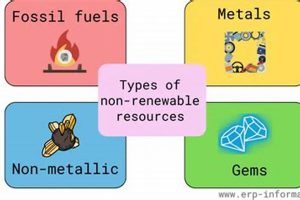
Chief among these energy sources are fossil fuels such as coal, petroleum, and natural gas. Additionally, nuclear energy, derived from uranium, falls under this category, owing to the limited availability of uranium ore. Understanding their characteristics and implications is crucial for developing sustainable energy policies.
Strategies for Managing Finite Energy Assets
Effective management of limited energy sources is paramount for long-term energy security and mitigating environmental impact. Prudent resource allocation and strategic investment are essential.
Tip 1: Diversify Energy Portfolio. Reduce reliance on single finite sources by integrating renewables like solar and wind power into the energy mix. This buffers against price volatility and supply disruptions.
Tip 2: Enhance Energy Efficiency. Implement energy-efficient technologies across sectors, from industrial processes to residential appliances. This minimizes consumption and extends the lifespan of existing resources.
Tip 3: Invest in Carbon Capture Technologies. Support research and development of technologies that capture carbon dioxide emissions from power plants and industrial facilities. This can mitigate the environmental impact of continued utilization.
Tip 4: Implement Stricter Environmental Regulations. Enforce rigorous environmental standards for extraction, processing, and combustion. This minimizes pollution and protects sensitive ecosystems.
Tip 5: Promote Responsible Consumption. Encourage conservation through public awareness campaigns and incentives for adopting energy-saving practices. This reduces overall demand and extends the availability of reserves.
Tip 6: Explore Advanced Extraction Techniques. While potentially controversial, research into enhanced extraction methods for existing reserves can increase accessibility, provided it adheres to stringent environmental safeguards.
Tip 7: Support Research into Alternative Fuels. Invest in the development of alternative fuels, such as biofuels and hydrogen, to diversify energy sources and reduce dependence on traditional finite resources.
Adopting these strategies can contribute to a more sustainable energy future, minimizing the negative consequences of utilizing Earth’s finite resources.
Ultimately, these combined efforts contribute to a more resilient and environmentally responsible energy landscape.
1. Coal
Coal, a combustible sedimentary rock composed primarily of carbon, is a prominent component of the category encompassing energy sources that cannot be replenished within a human lifespan. Its formation, a process spanning millions of years, involves the accumulation and compression of plant matter in swampy environments. The resulting resource, finite in quantity, is extracted through surface or underground mining operations for subsequent combustion to generate electricity or provide heat.
The profound impact of coal-fired power plants on global greenhouse gas emissions underscores its environmental significance. The combustion process releases carbon dioxide, a primary driver of climate change, alongside other pollutants such as sulfur dioxide and nitrogen oxides, contributing to acid rain and respiratory ailments. Despite its established role in industrialization and energy security, the long-term reliance on coal presents substantial environmental challenges, necessitating a transition towards cleaner, renewable alternatives. Practical examples include the closure of coal-fired plants in developed nations and the increasing investment in renewable energy infrastructure globally.
In summary, coal’s inclusion within the classification of resources that lack renewability stems from its geological origin and the protracted timeframe required for its formation. Its continued utilization demands careful consideration of environmental implications, driving the pursuit of sustainable energy strategies to mitigate adverse effects and ensure a responsible energy future. The imperative to transition away from coal reflects the need for a balanced approach that addresses energy demands while minimizing environmental harm, in service of long-term sustainability.
2. Petroleum

Petroleum, a naturally occurring, yellowish-black liquid found beneath the Earth’s surface, is a critical component within the broader classification of finite energy sources. Its designation as a non-renewable resource arises from its geological formation process, a transformation of organic matter over millions of years. The extraction of petroleum, primarily through drilling, supplies the raw material for a vast array of products, including gasoline, diesel, jet fuel, and plastics. The global economy’s heavy reliance on petroleum underscores its significance, yet simultaneously highlights the inherent challenges associated with its finite nature.
The importance of understanding petroleum’s role within the context of non-renewable sources extends beyond mere recognition of its limited availability. Its extraction, transportation, and combustion present significant environmental challenges. Oil spills, such as the Deepwater Horizon incident, demonstrate the potential for ecological devastation. Furthermore, the combustion of petroleum-based fuels releases greenhouse gases, contributing to climate change. The practical significance of this understanding lies in the imperative to develop and implement strategies for responsible resource management, including exploration of alternative energy sources and adoption of energy-efficient technologies. Governmental policies, such as carbon taxes and fuel efficiency standards, reflect this practical application.
In summary, petroleum’s position within the category of finite energy sources is inextricably linked to its geological origin, its widespread utilization, and its environmental impact. Recognizing this connection is crucial for informed decision-making regarding energy policy, technological innovation, and individual consumption patterns. Addressing the challenges associated with petroleum reliance requires a multi-faceted approach, balancing energy demands with environmental stewardship to ensure a sustainable future.
3. Natural Gas

Natural gas, primarily composed of methane, is a significant contributor to the global energy supply and a prime example within the category of resources that cannot be renewed within a practical human timescale. Its formation, occurring over millions of years through the decomposition of organic matter under specific geological conditions, dictates its finite nature. While often touted as a cleaner alternative to coal, its non-renewable status and associated environmental concerns warrant careful consideration.
- Formation and Composition
Natural gas originates from the anaerobic decomposition of organic matter deep beneath the Earth’s surface. This process, unfolding over vast geological epochs, transforms the remains of ancient organisms into methane-rich reservoirs. The composition can vary, including ethane, propane, butane, and other hydrocarbons, but methane typically constitutes the majority. This geological timescale establishes its classification as a non-renewable energy source.
- Extraction and Processing
The extraction of natural gas involves drilling into subsurface reservoirs, often requiring advanced techniques such as hydraulic fracturing (“fracking”). Once extracted, the raw gas undergoes processing to remove impurities like water, carbon dioxide, and sulfur compounds. This processing is essential for efficient and safe transport and utilization. These techniques, while enabling access to previously inaccessible reserves, carry potential environmental risks, demanding responsible operational practices.
- Combustion and Environmental Impact
The combustion of natural gas produces carbon dioxide and water vapor, making it a less carbon-intensive fuel compared to coal or petroleum. However, methane leakage during extraction, processing, and transportation poses a significant climate change concern, as methane is a potent greenhouse gas. Mitigating these leaks is crucial for minimizing the overall environmental impact of natural gas utilization.
- Applications and Future Role
Natural gas finds widespread applications in electricity generation, industrial processes, residential heating, and transportation. Its relative abundance and lower carbon emissions have positioned it as a “bridge fuel” in the transition to a low-carbon economy. However, the long-term sustainability of natural gas depends on effectively addressing methane leakage and transitioning to renewable energy sources to fulfill future energy demands.
These facets underscore the complex relationship between natural gas and the finite nature of fossil fuels. While it offers certain advantages over other non-renewable sources, its inherent limitations and potential environmental consequences necessitate a strategic approach to its utilization. The push for renewable energy and advancements in methane leak detection and mitigation are vital steps in ensuring a more sustainable energy future, reducing reliance on all “examples of non renewable energy resources”.
4. Uranium

Uranium, a naturally occurring radioactive element, occupies a distinct position within the classification of resources that cannot be replenished at a rate comparable to their consumption. Its significance stems from its role as the primary fuel source for nuclear power generation, a process that harnesses the energy released during nuclear fission. Although nuclear power offers a low-carbon alternative to fossil fuels, the finite availability of uranium ore necessitates its inclusion among non-renewable energy sources.
The connection between uranium and the category of limited resources is characterized by cause and effect. The demand for uranium, driven by the global need for electricity, directly impacts the depletion of uranium reserves. The importance of uranium lies in its high energy density; a small amount of uranium can produce a substantial amount of electricity, reducing the reliance on fossil fuels. However, this benefit is counterbalanced by the challenges associated with uranium mining, processing, and the safe disposal of radioactive waste. Real-life examples include the operation of nuclear power plants worldwide, such as those in France and the United States, which rely on uranium as their primary fuel source. The practical significance of this understanding lies in the need for responsible uranium resource management and the development of advanced reactor technologies that can utilize uranium more efficiently or even tap into other nuclear fuels.
The utilization of uranium as an energy source presents a complex interplay of benefits and drawbacks. While nuclear power offers a pathway to reduce carbon emissions, the finite nature of uranium reserves and the associated environmental risks require a comprehensive and sustainable approach. This approach should encompass responsible mining practices, efficient reactor designs, and robust waste management strategies. Furthermore, research into alternative nuclear fuel cycles and fusion energy may offer long-term solutions to address the limitations of uranium as a non-renewable energy source. The ongoing debate surrounding nuclear energy highlights the importance of informed decision-making, balancing the need for energy security with environmental stewardship.
5. Environmental Impact
The extraction and utilization of finite energy sources exert a multifaceted influence on the environment. This connection between these energy sources and their environmental consequences is characterized by direct and indirect effects across various ecosystems and atmospheric conditions. The reliance on resources such as coal, petroleum, natural gas, and uranium necessitates a critical examination of the environmental impact as an intrinsic component of their overall evaluation.
The combustion of fossil fuels, including coal, petroleum, and natural gas, represents a significant contributor to greenhouse gas emissions, directly impacting global climate patterns. The release of carbon dioxide, methane, and other pollutants into the atmosphere intensifies the greenhouse effect, leading to rising global temperatures, altered precipitation patterns, and increased frequency of extreme weather events. Furthermore, the extraction processes associated with these fuels, such as mining and drilling, can disrupt terrestrial and aquatic habitats, impacting biodiversity and ecosystem integrity. Real-life examples include the detrimental effects of coal mining on mountain ecosystems, the devastating consequences of oil spills on marine life, and the impact of fracking on local water resources. The practical significance of this understanding lies in the imperative to develop and implement sustainable energy policies that prioritize renewable energy sources and minimize the environmental footprint of energy production.
Uranium mining and nuclear power generation also present unique environmental challenges. The mining process can release radioactive materials into the environment, posing risks to human health and ecological systems. The disposal of nuclear waste, which remains radioactive for thousands of years, requires long-term storage solutions and poses an ongoing environmental concern. Examples such as the Chernobyl and Fukushima disasters underscore the potential for catastrophic environmental damage associated with nuclear power. In summation, the utilization of Earth’s finite energy resources necessitates a comprehensive assessment of their environmental impact, driving the pursuit of sustainable energy alternatives and responsible resource management strategies to mitigate adverse effects and ensure a healthy planet for future generations.
Frequently Asked Questions
This section addresses common inquiries concerning energy sources that cannot be replenished at a rate commensurate with their consumption. The information provided aims to clarify misconceptions and provide a deeper understanding of the complexities associated with these vital resources.
Question 1: Why are fossil fuels considered non-renewable?
Fossil fuels, including coal, petroleum, and natural gas, are classified as non-renewable due to their geological formation process. These fuels originate from the remains of ancient organisms subjected to intense heat and pressure over millions of years. This protracted formation timescale renders them effectively irreplaceable within a human lifespan.
Question 2: What makes uranium a finite resource?
Uranium, utilized as fuel in nuclear power plants, is a finite resource because it is a naturally occurring element found in limited quantities within the Earth’s crust. While uranium is relatively abundant compared to some other rare elements, its availability is finite and subject to depletion through extraction and consumption.
Question 3: How does the extraction of these resources affect the environment?
The extraction of finite energy sources carries a range of environmental consequences. Mining activities can disrupt ecosystems, lead to deforestation, and contaminate water resources. Drilling for oil and natural gas can result in habitat fragmentation, potential spills, and greenhouse gas emissions. Uranium mining can release radioactive materials into the environment.
Question 4: Are there any alternatives to these resources?
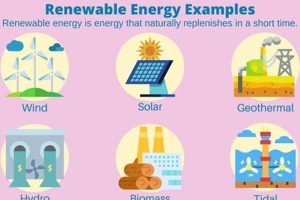
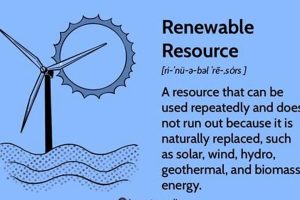
Numerous alternative energy sources exist, including solar, wind, hydro, geothermal, and biomass. These renewable resources offer sustainable alternatives to finite fossil fuels and uranium, reducing greenhouse gas emissions and minimizing environmental impact. However, widespread adoption of renewable energy requires technological advancements and policy support.
Question 5: What are the long-term implications of relying on these resources?
Continued reliance on finite energy resources presents long-term challenges related to resource depletion, climate change, and environmental degradation. Depletion of these resources can lead to price volatility and geopolitical instability. Greenhouse gas emissions from fossil fuel combustion contribute to global warming and its associated consequences.
Question 6: What steps can be taken to conserve these resources?
Various strategies can promote the conservation of finite energy sources. These include improving energy efficiency in buildings, transportation, and industry; adopting energy-saving practices in daily life; investing in renewable energy technologies; and implementing policies that encourage sustainable energy consumption.
Understanding the limitations and implications of these energy sources is crucial for fostering responsible resource management and promoting a sustainable energy future. Transitioning to renewable alternatives is essential for mitigating environmental damage and ensuring long-term energy security.
The following sections will delve deeper into specific strategies for sustainable energy management and the exploration of alternative resources.
The Imperative of Transition
This exploration of prominent energy resources, including coal, petroleum, natural gas, and uranium, underscores their classification as non-renewable entities. The inherent limitations of these resources, coupled with their significant environmental consequences, necessitate a strategic shift towards sustainable alternatives. The long-term reliance on these “examples of non renewable energy resources” poses risks to energy security, environmental integrity, and global climate stability.
Continued reliance on finite energy sources carries substantial implications for future generations. The responsible stewardship of Earth’s resources demands a concerted effort to reduce dependence on these sources, accelerate the development and deployment of renewable energy technologies, and implement policies that promote energy efficiency and conservation. The future well-being of both the environment and society hinges on the collective commitment to a sustainable energy transition.
![Guide to What Energy Resources Are Renewable [+Future] | Renewable Energy Solutions for a Sustainable Future | Clean & Green Power](https://pplrenewableenergy.com/wp-content/uploads/2026/03/th-516-300x200.jpg "Guide to What Energy Resources Are Renewable [+Future] Renewable Energy Solutions for a Sustainable Future | Clean & Green Power")