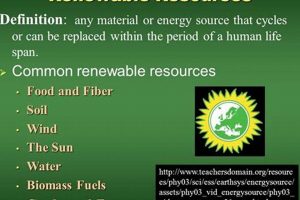
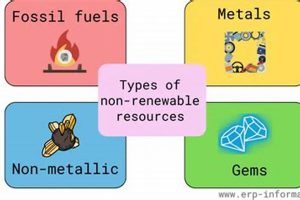
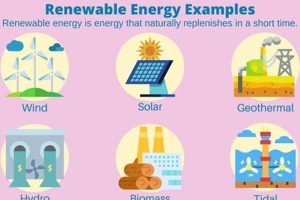
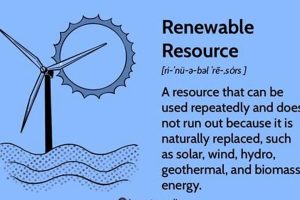
Energy sources are broadly classified based on their replenishment rate and availability. One category includes sources that naturally replenish themselves over a relatively short period. Common instances of these include solar energy captured from sunlight, wind power harnessed by turbines, hydroelectric power generated from flowing water, geothermal energy derived from the Earth’s internal heat, and biomass, which originates from organic matter. Conversely, another category encompasses finite resources formed over geological timescales that cannot be readily replaced once depleted. Coal, oil, natural gas, and nuclear fuels such as uranium are prime cases. The distinction lies in the rate of formation versus the rate of consumption.
The utilization of replenishable sources offers significant environmental advantages by minimizing greenhouse gas emissions and reducing reliance on finite reserves. This approach contributes to long-term energy security and promotes sustainable practices. Historically, societies have relied heavily on exhaustible sources, leading to environmental degradation and geopolitical concerns. Shifting towards sustainable options mitigates these risks and fosters a more resilient energy infrastructure. Further, the continuous advancements in related technologies improve energy conversion efficiency and lower costs.
Understanding the characteristics and applications of these distinct categories is critical for developing informed energy policies and promoting responsible resource management. The following sections will delve into specific instances and the considerations associated with their utilization, exploring the impact of each on the environment and global energy landscape.
Practical Guidance on Resource Management
Effective resource management hinges on informed decision-making regarding consumption patterns and technological investments. Understanding the implications of utilizing distinct energy source classifications is paramount for sustainable practices.
Tip 1: Prioritize Renewables for Energy Production: Transition towards solar, wind, hydro, and geothermal energy to decrease dependence on exhaustible options and minimize carbon emissions. Implement supportive policies like feed-in tariffs and tax incentives to encourage renewable energy adoption.
Tip 2: Improve Energy Efficiency: Reduce overall energy demand through improvements in building insulation, appliance efficiency standards, and industrial processes. Lowering consumption lessens the strain on both resource classifications.
Tip 3: Invest in Research and Development: Support advancements in renewable energy technologies, energy storage solutions (e.g., batteries, pumped hydro), and carbon capture techniques. Technological innovation is crucial for transitioning to a sustainable energy future.
Tip 4: Diversify Energy Sources: Avoid over-reliance on any single source by developing a diverse portfolio of energy generation options, including a balanced mix of replenishable and exhaustible resources where necessary during the transition.
Tip 5: Implement Carbon Pricing Mechanisms: Introduce carbon taxes or cap-and-trade systems to internalize the environmental costs associated with the consumption of exhaustible options. This incentivizes emission reductions and investment in cleaner alternatives.
Tip 6: Promote Sustainable Transportation: Encourage the adoption of electric vehicles, public transportation, and cycling infrastructure to reduce reliance on fossil fuels in the transportation sector. Support the development of sustainable biofuels as a transition strategy.
Tip 7: Educate and Engage the Public: Raise awareness about the environmental and economic benefits of utilizing replenishable sources and the consequences of unsustainable consumption patterns. Foster public support for policies promoting resource efficiency and sustainability.
Adopting these practices promotes long-term energy security, reduces environmental impact, and stimulates economic growth. A holistic approach to resource management, incorporating both technological advancements and policy interventions, is essential for a sustainable future.
The subsequent sections will further elaborate on these strategies and provide case studies illustrating their practical implementation across various sectors.
1. Replenishment Rate

Replenishment rate serves as a fundamental differentiator between resource categories. It directly determines a resource’s classification and influences its long-term availability, sustainability, and environmental impact. The temporal scale of replenishment dictates whether a resource is considered a replenishable or an exhaustible option, consequently shaping energy policies and resource management strategies.
- Solar Energy: Continuous Replenishment
Solar energy exemplifies resources with a virtually instantaneous replenishment rate. The sun continuously emits radiant energy, providing a perpetual supply that can be harnessed through photovoltaic cells or solar thermal systems. This characteristic positions solar energy as a cornerstone of sustainable energy strategies, mitigating reliance on finite reserves. Its impact is marked by reduced greenhouse gas emissions and diminished depletion of geological resources.
- Wind Energy: Rapid Atmospheric Renewal
Wind energy is indirectly reliant on solar radiation, as solar heating drives atmospheric circulation patterns that generate wind. While wind availability varies geographically and temporally, the underlying atmospheric processes ensure its continual replenishment. Wind turbines convert kinetic energy into electricity, offering a clean alternative to fossil fuels. The scale of wind power installations reflects its rapid renewal and contribution to energy diversification.
- Fossil Fuels: Geological Time Scales
Fossil fuels, encompassing coal, oil, and natural gas, represent the antithesis of rapid replenishment. These resources were formed over millions of years from the decomposition of organic matter under specific geological conditions. Their extraction and combustion release stored carbon, contributing to climate change. The slow pace of their formation renders them exhaustible within human time scales, necessitating a transition toward replenishable alternatives.
- Nuclear Fuels: Finite Geological Deposits
Nuclear fuels, primarily uranium, are sourced from finite geological deposits formed through specific geochemical processes over vast periods. While nuclear energy offers a low-carbon alternative to fossil fuels, the sustainability of nuclear power is constrained by the availability of uranium ore and the challenges associated with radioactive waste disposal. Research into breeder reactors and thorium fuel cycles aims to address these limitations, but the underlying constraint of finite resource availability remains.
The disparity in replenishment rates between solar and wind resources versus fossil and nuclear fuels underscores the imperative of transitioning towards sustainable energy systems. Understanding these differences is crucial for formulating effective energy policies, promoting resource conservation, and mitigating the environmental consequences of energy production and consumption. The emphasis on rapidly replenished sources aligns with long-term energy security and environmental stewardship.
2. Environmental Impact

The environmental impact associated with different energy resources varies significantly, serving as a critical differentiator between replenishable and exhaustible options. The extraction, processing, and utilization of each resource type impose distinct burdens on ecosystems, atmospheric composition, and overall planetary health. This contrast necessitates careful evaluation when formulating energy policies and promoting sustainable practices. The combustion of exhaustible sources, such as coal and oil, releases substantial quantities of greenhouse gases, contributing to global warming and climate change. In contrast, replenishable sources, like solar and wind, exhibit minimal greenhouse gas emissions during operation, offering a pathway to mitigate climate change. Furthermore, resource extraction processes contribute to land degradation, habitat loss, and water pollution. Coal mining, for example, often results in deforestation, soil erosion, and the contamination of water sources. Similarly, oil drilling can lead to spills and leaks, harming marine ecosystems. Choosing replenishable sources reduces the reliance on environmentally damaging extraction processes.
The production of solar panels and wind turbines involves the use of certain materials, and their manufacturing processes do have some environmental implications, including energy consumption and waste generation. However, these impacts are considerably lower compared to those associated with the lifecycle of fossil fuels. The long-term environmental benefits of renewable energy infrastructure significantly outweigh the initial impacts of production and installation. Hydropower, while a replenishable source, can also have notable environmental effects. Dam construction can alter river ecosystems, disrupt fish migration patterns, and lead to the inundation of land. Careful planning and mitigation strategies are crucial to minimize these impacts and maximize the benefits of hydropower as a clean energy source. Geothermal energy, derived from the Earth’s internal heat, generally exhibits a low environmental footprint, but geothermal power plants can release small amounts of greenhouse gases and require careful management of geothermal fluids to prevent groundwater contamination.
Assessing the comprehensive environmental consequences of energy resources is paramount for promoting a sustainable energy transition. This assessment should encompass lifecycle considerations, accounting for impacts related to resource extraction, processing, transportation, utilization, and waste disposal. Internalizing environmental costs through mechanisms such as carbon pricing can incentivize the adoption of cleaner energy sources and discourage reliance on environmentally damaging alternatives. Moving towards a diversified energy portfolio, prioritizing replenishable resources and promoting energy efficiency, can substantially reduce environmental degradation and enhance long-term sustainability. This approach safeguards ecosystems, protects public health, and fosters a more resilient energy future.
3. Resource Abundance

The concept of resource abundance directly influences the long-term viability and strategic significance of different energy sources. Exhaustible resources, by definition, are finite and characterized by diminishing supplies, whereas replenishable resources are either virtually inexhaustible or regenerate over relatively short timescales. This fundamental distinction shapes investment decisions, energy policies, and geopolitical considerations. The perceived abundance of a resource can initially drive its widespread adoption; for example, the readily available and inexpensive nature of coal propelled its dominance during the Industrial Revolution. However, depletion ultimately leads to increased extraction costs, environmental degradation, and heightened competition for remaining supplies.
Conversely, replenishable resources like solar and wind exhibit immense potential due to their virtually limitless availability. Solar energy, in particular, is globally distributed, although its intensity varies based on location and climate. Wind energy, while more geographically constrained by suitable wind patterns, also represents a vast and continuously replenished energy source. The abundance of these resources translates into long-term energy security and reduced reliance on finite and geographically concentrated supplies. However, harnessing these resources effectively requires technological advancements in energy conversion, storage, and distribution to address intermittency challenges and ensure reliable energy supply. Geothermal and hydroelectric resources, while replenishable, are subject to geographical constraints and environmental considerations that limit their widespread applicability. The abundance of available sites for geothermal and hydroelectric development is limited compared to solar and wind, requiring careful planning and environmental impact assessments to ensure sustainable utilization.
Understanding the relationship between resource abundance and the type of energy source is crucial for transitioning to a sustainable energy future. Recognizing the finite nature of exhaustible resources and the potential of replenishable alternatives is essential for formulating effective energy policies, promoting technological innovation, and ensuring long-term energy security. A strategic approach that prioritizes abundant and replenishable resources, coupled with investments in energy efficiency and sustainable infrastructure, is vital for mitigating climate change and fostering a resilient energy system for future generations.
4. Extraction Methods

The methods employed to extract energy resources exert a significant influence on their overall environmental impact, economic viability, and long-term sustainability. Distinct approaches are required for replenishable and exhaustible resources, each presenting its own set of challenges and consequences. These extraction processes can significantly alter ecosystems, contribute to pollution, and impact resource availability, underscoring the importance of carefully considering extraction methods when evaluating energy resources.
- Fossil Fuel Extraction: Environmental Disruption
Extraction of fossil fuels, such as coal, oil, and natural gas, typically involves environmentally disruptive methods. Coal mining can result in deforestation, habitat destruction, and acid mine drainage, which contaminates waterways. Oil and natural gas extraction often necessitates drilling, fracking, and pipeline construction, potentially leading to oil spills, methane leaks, and seismic activity. The scale and intensity of these operations have profound environmental consequences, including habitat loss, air and water pollution, and greenhouse gas emissions. These extraction methods contribute significantly to the environmental footprint associated with exhaustible resources.
- Nuclear Fuel Mining: Radioactive Risks
The mining of uranium, the primary fuel for nuclear power, presents unique challenges related to radioactivity. Uranium mining operations can release radioactive particles into the environment, posing risks to human health and ecosystems. Waste management is also a critical concern, as uranium mining generates large quantities of radioactive tailings that require long-term storage and monitoring. The careful handling and disposal of radioactive materials are essential to mitigate the potential environmental and health impacts associated with nuclear fuel extraction.
- Renewable Energy Harvesting: Resource Dependency
Replenishable energy resources, such as solar and wind, do not require direct resource extraction in the same way as fossil fuels or nuclear fuels. However, their utilization depends on the availability of sunlight and wind, which can vary geographically and temporally. The production of solar panels and wind turbines requires the mining of raw materials like silicon, rare earth minerals, and metals. While these mining activities generally have a smaller environmental footprint compared to fossil fuel extraction, they still contribute to habitat disruption and resource depletion. Sustainable sourcing and recycling of these materials are crucial for minimizing the environmental impacts associated with renewable energy technologies.
- Hydropower Development: Ecosystem Alteration
The development of hydroelectric power involves the construction of dams, which can significantly alter river ecosystems. Dam construction can disrupt fish migration patterns, inundate land, and change water flow regimes. These changes can have cascading effects on aquatic and terrestrial habitats, affecting biodiversity and ecosystem services. Careful planning and mitigation strategies are essential to minimize the environmental impacts associated with hydropower development, including fish passage facilities, environmental flow releases, and habitat restoration efforts.
The choice of extraction methods significantly influences the environmental sustainability and long-term viability of different energy resources. Transitioning towards cleaner extraction techniques, promoting sustainable material sourcing, and minimizing ecosystem disruption are essential for mitigating the environmental impacts associated with energy production. A holistic approach that considers the full lifecycle of energy resources, from extraction to utilization and disposal, is crucial for achieving a sustainable energy future.
5. Energy Security

Energy security, the uninterrupted availability of energy sources at an affordable price, is inextricably linked to the selection and management of both replenishable and exhaustible resources. Dependence on a limited number of geographically concentrated exhaustible resources, such as oil or natural gas, introduces vulnerabilities related to geopolitical instability, supply disruptions, and price volatility. These risks directly threaten energy security, impacting national economies and societal stability. Conversely, a diversified energy portfolio that incorporates a significant proportion of domestically available replenishable resources can enhance energy security by reducing reliance on external sources and mitigating exposure to price fluctuations and supply disruptions. Germany’s investment in solar and wind energy, for example, aimed to reduce its dependence on Russian natural gas.
The composition of a nation’s energy mix, balancing replenishable and exhaustible sources, is a strategic consideration for maintaining energy security. While exhaustible resources may offer high energy density and established infrastructure, their finite nature and environmental impact necessitate a transition towards more sustainable alternatives. Replenishable resources, such as solar, wind, hydroelectric, and geothermal, provide a long-term pathway to energy security by leveraging domestically available and continuously replenished energy sources. However, the intermittent nature of some replenishable resources, particularly solar and wind, requires investment in energy storage solutions, grid modernization, and demand response mechanisms to ensure a reliable and stable energy supply. The integration of smart grids and advanced forecasting technologies is crucial for effectively managing the variability of replenishable energy sources and maintaining grid stability. The Fukushima Daiichi nuclear disaster underscored the risks associated with reliance on a single exhaustible source, prompting many nations to re-evaluate their energy strategies and diversify their energy portfolios.
Ultimately, achieving energy security requires a comprehensive approach that encompasses resource diversification, technological innovation, and strategic policy interventions. By prioritizing the development and deployment of domestically available replenishable resources, while prudently managing the use of exhaustible sources, nations can enhance their energy independence, mitigate geopolitical risks, and foster a more resilient and sustainable energy future. The transition to a low-carbon energy system, driven by replenishable sources, is not only essential for addressing climate change but also for bolstering energy security and promoting long-term economic prosperity.
6. Economic Viability

Economic viability is a critical determinant in the selection and deployment of energy resources, influencing the widespread adoption of both replenishable and exhaustible options. The economic feasibility of a given energy source depends on a complex interplay of factors, including extraction costs, capital investments, operating expenses, fuel prices, regulatory policies, and technological advancements. Resources considered technologically advanced may not be implemented until the economic component is addressed. The initial capital costs associated with renewable energy projects, such as solar and wind farms, can be substantial, requiring significant upfront investments in equipment, construction, and grid integration. The long-term operating costs of these projects are typically lower due to the absence of fuel expenses, but maintenance costs and land lease payments must also be considered. In contrast, exhaustible resources like coal, oil, and natural gas often have lower initial capital costs but incur ongoing fuel expenses, which are subject to market volatility and geopolitical influences.
The economic competitiveness of renewable energy has improved dramatically in recent years, driven by technological advancements, economies of scale, and supportive government policies. The levelized cost of energy (LCOE), a metric that compares the total cost of energy production over the lifetime of a project, has declined significantly for solar and wind power, making them increasingly competitive with traditional fossil fuel-based generation. However, the economic viability of renewable energy projects can vary significantly depending on factors such as location, resource availability, financing costs, and regulatory frameworks. Government subsidies, tax incentives, and feed-in tariffs can play a crucial role in leveling the playing field and promoting the adoption of renewable energy. For example, Germany’s Energiewende policy, which provided generous subsidies for renewable energy, spurred significant growth in solar and wind power capacity, driving down costs and increasing their competitiveness. Similarly, the United States’ Production Tax Credit (PTC) has been instrumental in supporting the development of wind energy projects.
Ultimately, the economic viability of different energy resources is a dynamic and evolving landscape, influenced by technological advancements, market forces, and policy interventions. As the costs of renewable energy continue to decline and the environmental costs of fossil fuels become increasingly apparent, the economic case for transitioning to a low-carbon energy system becomes more compelling. A comprehensive approach that incorporates carbon pricing mechanisms, streamlined permitting processes, and targeted investments in renewable energy infrastructure can accelerate the transition to a sustainable and economically viable energy future. While challenges remain, the long-term economic benefits of renewable energy, including reduced fuel price volatility, job creation, and improved public health, justify the continued investment and policy support necessary to unlock their full potential.
7. Technological Maturity
Technological maturity significantly influences the viability and widespread adoption of different energy resources. The level of technological development dictates the efficiency, cost-effectiveness, and reliability of extracting, processing, and utilizing both exhaustible and replenishable energy sources. For exhaustible resources, advancements primarily focus on enhancing extraction efficiency, reducing environmental impact, and optimizing combustion processes. Examples include enhanced oil recovery techniques, clean coal technologies, and carbon capture and storage systems. The maturity of these technologies affects the overall cost and environmental footprint associated with using exhaustible sources. However, even with advancements, fundamental limitations related to resource depletion and greenhouse gas emissions remain.
Replenishable energy sources are particularly sensitive to technological maturity. Solar photovoltaic (PV) technology, for example, has seen substantial improvements in efficiency and cost reduction over the past decades, driving its widespread adoption. Similarly, wind turbine technology has evolved to capture more energy from lower wind speeds, expanding the geographic applicability of wind power. Advanced battery storage systems are also critical for addressing the intermittency challenges associated with solar and wind energy, enabling greater grid stability and reliability. Geothermal and hydroelectric technologies, while more established, continue to benefit from innovations in drilling techniques, turbine design, and environmental mitigation strategies. The level of technological maturity directly determines the economic competitiveness and scalability of replenishable energy sources.
The transition to a sustainable energy future hinges on continued technological advancements in replenishable energy technologies and supporting infrastructure. Investing in research and development, promoting technology transfer, and implementing supportive policies are essential for accelerating the deployment of mature and cost-effective renewable energy solutions. Addressing challenges related to energy storage, grid integration, and materials science is crucial for unlocking the full potential of renewable energy and building a resilient and sustainable energy system. Therefore, technological maturity is not merely a factor but a driving force in shaping the future energy landscape.
Frequently Asked Questions
The following section addresses common inquiries regarding energy resource classification, utilization, and long-term implications. A clear understanding of these concepts is vital for informed energy policy and responsible resource management.
Question 1: What distinguishes a renewable energy resource from a non-renewable one?
The key distinction lies in the rate of replenishment. Renewable resources replenish naturally over a relatively short period, such as solar, wind, or biomass. Non-renewable resources, like fossil fuels and uranium, require millions of years to form and are considered finite.
Question 2: Are renewable energy sources entirely free of environmental impact?
While renewable energy sources generally exhibit lower environmental impacts than non-renewable counterparts, they are not entirely impact-free. Manufacturing solar panels or constructing hydroelectric dams, for instance, can have localized environmental consequences.
Question 3: Why are fossil fuels still widely used despite environmental concerns?
Fossil fuels possess high energy density and benefit from established infrastructure and relatively low extraction costs, making them economically competitive in many regions. However, transitioning away from fossil fuels is essential for mitigating climate change.
Question 4: How can the intermittency of renewable energy sources be addressed?
Intermittency challenges can be addressed through energy storage solutions (e.g., batteries, pumped hydro), grid modernization (e.g., smart grids), and demand response management. Diversifying renewable energy sources also helps to smooth out variability.
Question 5: What role does technological innovation play in the future of energy resources?
Technological advancements are critical for improving the efficiency, cost-effectiveness, and reliability of both renewable and non-renewable energy technologies. Innovation is also crucial for developing new energy storage and grid management solutions.
Question 6: What policies can promote the transition to a sustainable energy system?
Effective policies include carbon pricing mechanisms (e.g., carbon taxes, cap-and-trade systems), renewable energy mandates, tax incentives for renewable energy investments, and regulations that promote energy efficiency.
A nuanced comprehension of the differences and challenges associated with each energy resource type is vital for fostering a sustainable and resilient energy future. Informed decision-making is paramount.
The following sections will delve into specific policy recommendations to promote the shift to sustainable energy practices.
Conclusion
This discussion has delineated examples of renewable and non-renewable resources, emphasizing their distinct characteristics, environmental impacts, and economic considerations. The critical differentiation lies in the replenishment rates and the long-term sustainability implications associated with their utilization. Understanding these differences is paramount for informed decision-making in energy policy and resource management.
Continued efforts to transition towards sustainable energy systems, prioritizing renewable options and responsible resource management, are essential for mitigating environmental risks and ensuring long-term energy security. A holistic approach encompassing technological innovation, strategic policy interventions, and societal awareness is crucial for a resilient and sustainable future. The choices made today regarding energy resource utilization will significantly shape the global landscape for generations to come.
![Guide to What Energy Resources Are Renewable [+Future] | Renewable Energy Solutions for a Sustainable Future | Clean & Green Power](https://pplrenewableenergy.com/wp-content/uploads/2026/03/th-516-300x200.jpg "Guide to What Energy Resources Are Renewable [+Future] Renewable Energy Solutions for a Sustainable Future | Clean & Green Power")