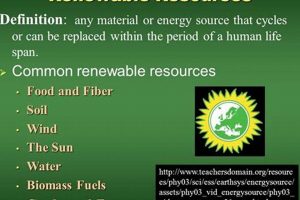
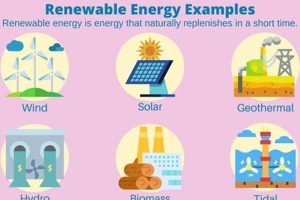
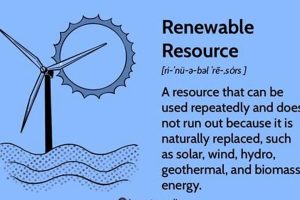
Identifying sources of sustainable power generation is fundamental to transitioning away from fossil fuels. These alternatives harness naturally replenishing processes, offering a cleaner and more secure energy future. Examples include solar power, derived from the sun’s radiation; wind energy, captured by turbines; hydroelectricity, generated from flowing water; geothermal energy, sourced from the Earth’s internal heat; and biomass energy, produced from organic matter.
The significance of employing these sustainable methods lies in their reduced environmental impact. Compared to conventional energy production, they emit fewer greenhouse gasses, mitigating climate change. Furthermore, they contribute to improved air and water quality, and enhance energy security by diversifying energy sources and reducing reliance on finite resources. Historically, societies have utilized some of these forms, such as wind and water power, for centuries, but modern technologies have greatly improved their efficiency and scalability.
Given their growing importance, subsequent discussions will delve into the individual characteristics, technological advancements, and economic considerations associated with each specific type of sustainable power generation. Exploring the potential and challenges of these alternatives is critical to charting a path toward a more environmentally sound and economically robust energy landscape.
Guidance on Identifying Sustainable Energy Sources
The subsequent points offer direction for precisely recognizing and categorizing power sources that rely on naturally replenished resources. Comprehending these distinctions is crucial for effective sustainable energy development and policy implementation.
Tip 1: Understand the Source of Energy: Determine if the energy originates from a source that is continuously replenished. For instance, solar energy is derived from the sun, a virtually inexhaustible resource, while fossil fuels are finite and deplete over time.
Tip 2: Assess the Rate of Replenishment: Verify that the energy source replenishes at a rate comparable to or exceeding its rate of consumption. Biomass energy, for example, is sustainable only if plant matter is regrown at a rate equivalent to its use as fuel.
Tip 3: Evaluate Environmental Impact: Consider the overall environmental footprint of the energy source. Even seemingly sustainable sources, such as large-scale hydroelectric dams, can have significant ecological consequences if not properly managed.
Tip 4: Research Technological Requirements: Investigate the technologies required to harness and convert the energy. Different renewable sources necessitate different technologies, each with its own set of environmental and economic implications.
Tip 5: Analyze Life Cycle Assessment: Conduct a comprehensive life cycle assessment of the energy source. This assessment should encompass all stages, from resource extraction and processing to energy generation and waste disposal, to ensure true sustainability.
Tip 6: Consider Geographical Limitations: Recognize that the availability of certain sustainable sources is geographically constrained. For example, geothermal energy is more readily accessible in regions with high geothermal activity.
Tip 7: Review Certification and Standards: Explore existing certifications and standards related to sustainable energy. These benchmarks provide a framework for assessing the sustainability of different energy sources and technologies.
Effectively recognizing sustainable power sources requires a thorough examination of their origins, rate of replenishment, environmental consequences, technological demands, and geographical constraints. Applying these considerations facilitates informed decision-making and promotes the adoption of truly sustainable energy practices.
Further discussion will examine the specific economic factors influencing the deployment and scalability of these identified sustainable energy options.
1. Solar radiation

Solar radiation is a fundamental component within the broader category of renewable energy resources. It serves as the primary energy input for multiple natural processes, including photosynthesis, which in turn supports biomass production, and the generation of wind patterns due to differential heating of the Earth’s surface. Directly harnessing solar radiation through photovoltaic (PV) systems or concentrated solar power (CSP) plants provides electricity or heat without depleting finite resources. This directly addresses the core characteristic of renewable energy: reliance on naturally replenishing energy flows. For instance, large-scale solar farms in arid regions like the southwestern United States convert sunlight into electricity, powering homes and industries while reducing reliance on fossil fuel-based power plants.
The importance of solar radiation as a renewable energy source stems from its abundance and global distribution. While geographical location and weather conditions influence the amount of available solar radiation, it is a resource accessible, to varying degrees, in virtually every region. The versatility of solar technologies further enhances its applicability; PV systems can be deployed on rooftops for individual residential use or scaled up to utility-scale power plants. CSP plants, though requiring more direct sunlight, offer the potential for thermal energy storage, allowing for electricity generation even when the sun is not shining. Furthermore, passive solar design, which utilizes architectural techniques to maximize solar gain for heating and lighting, minimizes energy consumption in buildings.
In conclusion, solar radiation constitutes a cornerstone of renewable energy portfolios. Its direct and indirect contributions to power generation and other energy needs make it a vital component of sustainable energy strategies. Challenges remain in terms of intermittency and storage, but ongoing technological advancements and policy support are continually enhancing the role of solar radiation in mitigating climate change and ensuring energy security. The practical significance of understanding the connection between solar radiation and renewable energy resources lies in its ability to inform investment decisions, policy development, and technological innovation aimed at a more sustainable energy future.
2. Wind kinetic energy

Wind kinetic energy is a critical aspect within the broader concept of renewable energy resources. It directly harnesses the movement of air masses, converting this kinetic energy into mechanical or electrical energy without depleting finite reserves. This process underscores the core principle of renewable energy: utilizing energy flows that are naturally replenished. Wind turbines, the primary technology for capturing wind kinetic energy, transform the wind’s motion into rotational energy, which then drives a generator to produce electricity. A prime example is the extensive wind farm infrastructure across the Great Plains region of the United States, which contributes significantly to the nation’s renewable energy portfolio by transforming prevailing winds into usable electrical power.
The significance of wind kinetic energy as a renewable source is rooted in its abundance, relative cleanliness, and scalability. Wind resources are geographically distributed, although certain regions possess more favorable conditions due to consistent wind patterns. Unlike fossil fuels, wind energy generation produces minimal air or water pollution. Wind farms can range in size from a few turbines providing power to a local community to large-scale installations feeding electricity into the national grid. Offshore wind farms, though more expensive to construct, can access stronger and more consistent winds, offering a substantial potential for electricity generation. The integration of advanced forecasting models allows for more efficient management of wind energy resources, mitigating concerns about intermittency.
In conclusion, wind kinetic energy plays a vital role in diversifying energy sources and reducing reliance on conventional power generation. Ongoing technological advancements, such as larger and more efficient turbines, coupled with supportive policies, are continually improving the viability and competitiveness of wind energy. Recognizing the fundamental connection between wind kinetic energy and the broader array of renewable energy resources is essential for fostering innovation, informed investment, and effective strategies toward a sustainable energy future. The practical value of this knowledge lies in guiding energy policy, incentivizing technological development, and promoting the widespread adoption of wind energy as a key component of a low-carbon energy system.
3. Hydropower potential

Hydropower potential constitutes a significant component within the broader category of renewable energy resources. It specifically refers to the energy inherent in flowing water, which can be harnessed to generate electricity without depleting a finite resource. This directly aligns with the fundamental characteristic of renewable energy: reliance on a continuously replenishing natural cycle. The operation of hydroelectric dams, for instance, converts the potential energy of stored water into kinetic energy as it flows through turbines, which in turn drive generators to produce electricity. A prominent example is the Three Gorges Dam in China, one of the world’s largest hydroelectric facilities, which supplies a substantial portion of the country’s electricity while mitigating reliance on fossil fuel-based power generation. The practical significance of understanding hydropower potential lies in its ability to inform infrastructure development, energy planning, and resource management decisions.
The importance of hydropower potential stems from its established technological feasibility, high energy conversion efficiency, and ability to provide baseload power. Hydroelectric power plants have a long operational history, with proven technologies and well-defined operational parameters. Compared to some other forms of renewable energy, hydropower can provide a relatively stable and predictable source of electricity, as water flow can be regulated through reservoir management. Furthermore, hydropower projects often offer additional benefits, such as flood control, irrigation water supply, and recreational opportunities. However, it is crucial to acknowledge the potential environmental impacts of hydropower projects, including habitat alteration, disruption of river ecosystems, and displacement of communities. Sustainable hydropower development necessitates careful planning, environmental impact assessments, and mitigation measures to minimize these negative consequences.
In conclusion, hydropower potential represents a valuable renewable energy resource, contributing substantially to global electricity generation. Its established technological viability and ability to provide baseload power make it a key component of diversified energy portfolios. However, responsible hydropower development requires careful consideration of environmental impacts and sustainable management practices. A comprehensive understanding of hydropower potential and its connection to renewable energy resources is essential for fostering informed decision-making, promoting sustainable energy solutions, and mitigating the environmental consequences of energy production.
4. Geothermal heat sources
Geothermal heat sources represent a significant category within renewable energy resources. These sources tap into the Earth’s internal heat, a perpetually replenished energy reservoir, differentiating them from finite fossil fuels. The utilization of geothermal resources aligns directly with the fundamental characteristic of renewable energy: reliance on naturally renewing processes. Geothermal energy is harnessed through various methods, including geothermal power plants that convert steam or hot water from underground reservoirs into electricity, and geothermal heat pumps that utilize the Earth’s constant temperature to heat and cool buildings. The Geysers geothermal field in California, for instance, is a large-scale geothermal power production complex that provides electricity to the grid, reducing reliance on conventional power plants. The practical significance of recognizing geothermal heat sources as a renewable energy resource lies in its capacity to diversify energy portfolios, reduce greenhouse gas emissions, and enhance energy security. The cause-and-effect relationship is clear: tapping geothermal heat reduces dependence on fossil fuels, directly lowering carbon emissions.
Furthermore, geothermal resources exhibit versatility in application. Geothermal power plants can provide baseload electricity, operating continuously regardless of weather conditions, unlike solar or wind power which are intermittent. Geothermal heat pumps offer energy-efficient heating and cooling solutions for residential and commercial buildings, reducing energy consumption and associated costs. Direct use applications of geothermal heat include greenhouse heating, aquaculture, and industrial processes. Iceland, a country with abundant geothermal resources, demonstrates the potential of geothermal energy to meet a substantial portion of a nation’s energy needs, encompassing electricity generation, district heating, and various industrial applications. This showcases the comprehensive integration of geothermal heat sources in a sustainable energy system.
In conclusion, geothermal heat sources constitute a vital component of renewable energy resources, offering a reliable and sustainable energy alternative. While geothermal resources are geographically concentrated, technological advancements are expanding their accessibility and applicability. Recognizing the importance of geothermal heat sources and their connection to renewable energy resources is crucial for promoting sustainable energy solutions, reducing environmental impacts, and securing a long-term, reliable energy supply. Challenges remain in terms of initial capital investment and potential environmental impacts, such as induced seismicity, but responsible development practices can mitigate these concerns, maximizing the benefits of geothermal energy for a sustainable future.
5. Biomass feedstock availability
Biomass feedstock availability is a critical factor in determining the viability and sustainability of biomass energy as a renewable resource. The sustained supply and environmental impact of biomass feedstock directly influence the potential for biomass to contribute to a diversified and environmentally responsible energy portfolio.
- Sustainability of Sourcing
Sustainable sourcing practices are crucial for biomass feedstock availability. Reliance on dedicated energy crops, agricultural residues, or forestry byproducts necessitates environmentally sound management to prevent soil depletion, deforestation, and other adverse ecological effects. Examples include utilizing sustainably harvested wood chips or employing no-till farming methods to preserve soil integrity when collecting crop residues. Failure to adopt sustainable practices compromises the long-term availability and renewability of the biomass resource.
- Logistical and Economic Considerations
The logistical aspects of biomass feedstock availability encompass transportation, storage, and processing. The distance between feedstock sources and conversion facilities, along with the cost of transporting bulky materials, can significantly affect the economic feasibility of biomass energy projects. Efficient supply chain management is essential to minimizing transportation costs and ensuring a reliable feedstock supply. Economic incentives and infrastructure investments can play a pivotal role in improving biomass feedstock availability and reducing logistical barriers.
- Competition with Other Land Uses
Biomass feedstock production can compete with other land uses, such as food production, conservation efforts, and urban development. Balancing these competing demands requires careful land-use planning and prioritization of sustainable practices. The cultivation of dedicated energy crops should not compromise food security or result in the conversion of valuable natural habitats. Integrated land-use strategies can optimize biomass feedstock availability while minimizing potential conflicts with other essential land uses.
- Technological Advancements in Feedstock Production
Technological advancements in biomass feedstock production are crucial for enhancing yields, improving resource efficiency, and reducing environmental impacts. Innovations in crop breeding, precision agriculture, and sustainable harvesting techniques can increase biomass productivity while minimizing the need for additional land resources. The development of improved energy crops with higher yields and lower input requirements is essential for maximizing biomass feedstock availability and enhancing the overall sustainability of biomass energy systems.
The sustained availability of biomass feedstock is integral to its viability as a renewable energy resource. Strategic sourcing, efficient logistics, responsible land-use planning, and technological advancements are critical for ensuring that biomass contributes to a diversified and environmentally sound energy future. In addressing the challenges associated with “name the renewable energy resources,” acknowledging biomass feedstock availability is vital for informed decision-making and promoting the responsible utilization of this resource.
6. Oceanic energy reserves

Oceanic energy reserves constitute a significant category within renewable energy resources. These reserves encompass various forms of energy derived from the ocean’s natural processes, thereby aligning with the renewable energy concept of utilizing perpetually replenished sources. Tidal energy, wave energy, ocean thermal energy conversion (OTEC), and salinity gradient power are primary examples of oceanic energy reserves. Tidal energy harnesses the kinetic energy of tidal flows, wave energy captures the mechanical energy of surface waves, OTEC utilizes the temperature difference between deep and shallow ocean water, and salinity gradient power exploits the energy released when freshwater and saltwater mix. The cause-and-effect is direct: extracting energy from these oceanic sources diminishes reliance on non-renewable fossil fuels. For instance, the Sihwa Lake Tidal Power Station in South Korea demonstrates the practical application of tidal energy, generating electricity from tidal currents.
The importance of oceanic energy reserves lies in their potential to provide a predictable and sustainable energy supply, albeit with technological and economic challenges. Unlike solar and wind energy, tidal flows exhibit predictable patterns, enabling more accurate energy forecasting. Wave energy, though less predictable than tidal energy, offers a vast and geographically diverse energy source. OTEC holds promise in tropical regions with stable temperature gradients. Salinity gradient power, while still in the developmental stage, could potentially harness the energy from the interface between freshwater and seawater. Real-world examples include wave energy test sites in Scotland and Australia, where ongoing research aims to improve the efficiency and cost-effectiveness of wave energy converters. The practical application involves ongoing research and development focused on improving conversion efficiency, reducing infrastructure costs, and mitigating environmental impacts.
In summary, oceanic energy reserves represent a diverse and potentially substantial component of renewable energy resources. Their exploitation requires technological advancements, careful environmental impact assessments, and supportive policy frameworks. A comprehensive understanding of oceanic energy resources is essential for fostering innovation, attracting investment, and promoting the responsible utilization of these resources toward a more sustainable energy future. The practical significance rests in the necessity of developing reliable, clean energy alternatives to mitigate climate change and meet growing global energy demands.
Frequently Asked Questions about Identifying Sustainable Energy Sources
The following questions and answers address common inquiries and misconceptions regarding the identification and classification of various renewable energy sources.
Question 1: What criteria definitively classify an energy source as renewable?
An energy source is classified as renewable if it is naturally replenished on a human timescale. This replenishment rate must equal or exceed the rate of consumption. The energy source must also not deplete finite resources or cause irreversible environmental damage.
Question 2: Does the environmental impact of a renewable energy technology disqualify it from being considered a renewable resource?
While renewable energy sources are generally considered environmentally benign compared to fossil fuels, any environmental impact, such as habitat disruption or emissions from manufacturing processes, must be carefully considered. Mitigating these impacts is crucial for the long-term sustainability of the energy source, but minimal impacts do not inherently disqualify it as renewable.
Question 3: How do intermittency issues affect the categorization of solar and wind power as renewable energy resources?
Intermittency, the variability of energy output due to weather conditions, does not preclude solar and wind power from being categorized as renewable. These sources are inherently variable but remain renewable due to their reliance on naturally replenishing sources. Energy storage solutions and grid management strategies are employed to address intermittency challenges.
Question 4: Is biomass always considered a renewable energy source?
Biomass is considered renewable only when sourced sustainably. Unsustainable harvesting practices, such as deforestation or the depletion of soil nutrients, can render biomass non-renewable. Sustainable biomass practices ensure that biomass is replenished at a rate equal to or exceeding its consumption.
Question 5: Are large-scale hydroelectric dams universally recognized as renewable energy sources?
Large-scale hydroelectric dams are not universally recognized as unambiguously renewable due to their potential for significant environmental impacts. These impacts can include habitat alteration, displacement of communities, and changes in river ecosystems. Smaller-scale hydroelectric projects with minimal environmental impacts are more consistently recognized as renewable.
Question 6: How does geothermal energy qualify as a renewable resource, given that it extracts heat from the Earth’s interior?
Geothermal energy is considered renewable because the Earth’s internal heat is a vast and continuously replenished energy reservoir. While geothermal resources can be depleted locally if extracted too rapidly, sustainable management practices ensure that the heat extraction rate does not exceed the rate of replenishment from the Earth’s core.
The accurate identification and responsible utilization of renewable energy sources are vital for transitioning to a sustainable energy future. Understanding the nuances of each resource, including its environmental impact and logistical challenges, is essential for informed decision-making.
Subsequent discussions will explore the economic and policy factors influencing the development and deployment of these recognized renewable energy resources.
Identifying Sustainable Energy Resources
This exploration has methodically detailed the diverse range of sustainable energy options available, from harnessing solar radiation and wind kinetic energy to tapping hydropower potential, geothermal heat sources, biomass feedstock availability, and oceanic energy reserves. A consistent thread has been the imperative for responsible and sustainable utilization, acknowledging both the opportunities and limitations inherent in each resource. Accurate identification remains paramount in formulating effective energy policies and investment strategies.
The transition to a sustainable energy future hinges on a comprehensive understanding of renewable options and a steadfast commitment to responsible deployment. Continued research, technological innovation, and informed policy decisions are essential to realizing the full potential of these resources, ensuring a secure and environmentally sound energy supply for generations to come. A sustained focus on these alternatives will pave the way for a future powered by sustainability.
![Guide to What Energy Resources Are Renewable [+Future] | Renewable Energy Solutions for a Sustainable Future | Clean & Green Power](https://pplrenewableenergy.com/wp-content/uploads/2026/03/th-516-300x200.jpg "Guide to What Energy Resources Are Renewable [+Future] Renewable Energy Solutions for a Sustainable Future | Clean & Green Power")