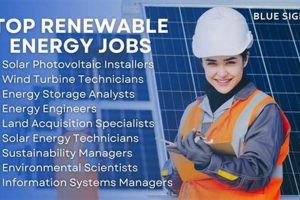
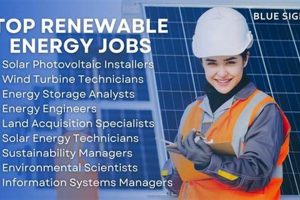
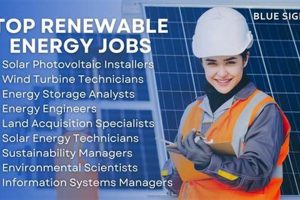
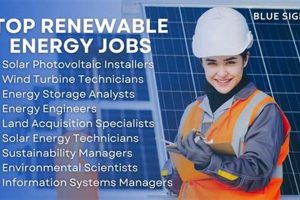
Employment opportunities within the renewable energy sector encompass a wide range of professions, from scientists and engineers developing new technologies to technicians installing and maintaining equipment. Examples include solar panel installers, wind turbine technicians, biofuel processing plant operators, and hydropower engineers. This diverse field also includes roles in project management, sales, finance, and policy.
The growing demand for clean energy solutions has created a significant positive economic impact by generating numerous well-paying positions across various skill levels and educational backgrounds. This dynamic job market contributes to economic diversification, reduces reliance on fossil fuels, and fosters a more sustainable future. Historically, energy production has been dominated by traditional fossil fuel industries. However, the shift towards sustainable practices has spurred rapid growth in the renewable energy sector, making it a key area for future job creation and economic development.
A deeper examination of this evolving employment landscape will explore specific career paths, required skill sets, educational prerequisites, and potential future trends within the renewable energy industry.
Tips for Pursuing Careers in Renewable Energy
Navigating the renewable energy job market requires strategic planning and focused effort. The following tips offer guidance for individuals interested in pursuing careers within this dynamic sector.
Tip 1: Identify Specific Areas of Interest: The renewable energy sector encompasses diverse fields. Researching specific areas like solar energy, wind power, or bioenergy allows for targeted skill development and career path selection.
Tip 2: Develop Relevant Skills: Technical skills are essential. Acquiring expertise in areas like engineering, data analysis, or installation and maintenance through educational programs or vocational training strengthens candidacy.
Tip 3: Network Strategically: Attending industry conferences, joining professional organizations, and connecting with professionals already working in the field provides valuable insights and potential employment opportunities.
Tip 4: Gain Practical Experience: Internships, volunteer work, or entry-level positions offer hands-on experience, enhancing practical skills and demonstrating commitment to potential employers.
Tip 5: Stay Updated on Industry Trends: The renewable energy landscape is constantly evolving. Following industry publications, attending webinars, and engaging in continuous learning are crucial for remaining competitive.
Tip 6: Highlight Transferable Skills: Individuals with experience in related fields can leverage transferable skills, such as project management, data analysis, or communication, to transition into renewable energy roles.
Tip 7: Research Employers and Their Values: Understanding the mission and values of potential employers ensures alignment with personal career goals and contributes to a more fulfilling work experience.
By focusing on these key areas, individuals can increase their chances of securing fulfilling and impactful careers within the growing renewable energy sector.
This exploration of career strategies within renewable energy provides a foundation for informed decision-making and proactive career development. The concluding section will summarize key takeaways and offer final recommendations for those seeking opportunities in this vital field.
1. Growth Potential

The renewable energy sector presents significant growth potential, directly translating into expanding employment opportunities. This growth is driven by increasing global demand for clean energy, supportive government policies, and continuous technological advancements. Understanding the facets of this growth is crucial for individuals and communities seeking to benefit from this evolving landscape.
- Global Energy Demand:
The worldwide shift towards sustainable energy sources creates a rapidly expanding market for renewable energy technologies. As nations commit to reducing carbon emissions and achieving energy independence, the demand for professionals in areas like solar and wind energy installation, maintenance, and manufacturing continues to rise. For example, the International Energy Agency projects substantial growth in renewable energy capacity in the coming years, indicating a corresponding increase in related job opportunities.
- Technological Advancements:
Continuous innovation in renewable energy technologies drives down costs and improves efficiency, further fueling market growth and creating new specialized roles. The development of more efficient solar panels, advanced energy storage solutions, and smart grid technologies necessitates skilled professionals in research, development, and implementation. These advancements not only improve the viability of renewable energy but also create new niches within the job market.
- Government Policies and Incentives:
Supportive government policies, such as tax incentives, subsidies, and renewable portfolio standards, play a vital role in accelerating the growth of the renewable energy sector. These policies create a favorable investment climate, attracting private sector investment and stimulating job creation. For example, government-backed loan programs for renewable energy projects can lead to significant employment opportunities in construction, operation, and maintenance.
- Investment and Funding:
Increasing investment in renewable energy projects, from both public and private sources, provides crucial capital for research, development, and deployment of new technologies. This influx of capital translates directly into job creation across the value chain, from manufacturing and installation to project management and finance. The growth of green finance initiatives further contributes to this expansion, creating specialized roles in areas like sustainable investing and impact assessment.
These interconnected factors contribute to a positive feedback loop, driving continuous growth within the renewable energy sector and solidifying its position as a key engine for future job creation and economic development. As the global transition to sustainable energy continues, the growth potential of renewable energy jobs remains a significant opportunity for individuals, communities, and economies worldwide.
2. Technological Innovation
Technological innovation serves as a primary driver for growth and diversification within renewable energy employment. Advancements in areas such as solar photovoltaic technology, wind turbine design, and energy storage solutions directly create new job opportunities and transform existing ones. For example, the development of more efficient and cost-effective solar panels has led to a significant increase in demand for solar panel installers and technicians. Similarly, advancements in wind turbine technology require specialized engineers and technicians for design, installation, and maintenance. The emergence of smart grid technologies creates roles for data analysts, software engineers, and cybersecurity experts to manage and optimize energy distribution.
The ongoing development of innovative energy storage solutions, such as advanced battery technologies and pumped hydro storage, is crucial for addressing the intermittency challenges associated with renewable energy sources. This, in turn, generates demand for specialized engineers, technicians, and researchers focused on energy storage systems. Furthermore, innovation in areas like bioenergy and geothermal energy creates niche employment opportunities in research, development, and implementation of these technologies. For example, advancements in biofuel production create roles for chemical engineers, process operators, and agricultural specialists. Likewise, the development of enhanced geothermal systems requires expertise in geology, drilling, and power plant engineering.
Technological innovation not only creates new jobs but also enhances the efficiency and cost-competitiveness of renewable energy technologies. This increased competitiveness further stimulates market growth, driving additional job creation and strengthening the overall economic impact of the renewable energy sector. However, this rapid pace of innovation also presents challenges, requiring continuous upskilling and adaptation within the workforce to meet the evolving demands of the industry. Addressing this skills gap through targeted education and training programs is essential for maximizing the job creation potential of technological advancements in renewable energy.
3. Environmental Sustainability

Environmental sustainability is intrinsically linked to the growth and development of renewable energy source jobs. The transition to a cleaner energy system inherently reduces reliance on fossil fuels, mitigating the environmental impacts associated with their extraction, processing, and combustion. This shift creates a positive feedback loop, where the increasing demand for renewable energy technologies stimulates job growth in the sector, further contributing to environmental protection.
- Reduced Greenhouse Gas Emissions
Renewable energy sources produce little to no greenhouse gas emissions during operation, a stark contrast to fossil fuel-based power generation. This reduction in emissions is crucial for mitigating climate change and its associated impacts. The expansion of renewable energy industries, such as solar and wind power, directly contributes to global efforts in reducing atmospheric carbon dioxide and other greenhouse gases. For example, the life-cycle emissions of solar photovoltaic systems are significantly lower than those of coal-fired power plants, demonstrating the substantial environmental benefits of transitioning to renewable energy sources. This environmental advantage drives policy support and investment in the sector, creating more job opportunities.
- Improved Air and Water Quality
Renewable energy sources offer significant improvements in air and water quality compared to fossil fuels. Fossil fuel combustion releases pollutants that contribute to respiratory illnesses and other health problems. Renewable energy technologies, being inherently cleaner, minimize these risks. For instance, wind and solar power generation do not produce air pollutants like sulfur dioxide and nitrogen oxides, which are major contributors to acid rain and smog. Similarly, renewable energy sources reduce water pollution associated with fossil fuel extraction and processing, preserving valuable water resources. This improvement in environmental quality further strengthens public support for renewable energy, driving market growth and job creation.
- Conservation of Natural Resources
Renewable energy sources rely on naturally replenishing resources, such as sunlight, wind, and water, unlike finite fossil fuel reserves. This reduces the pressure on natural resource extraction, minimizing habitat destruction and preserving biodiversity. For example, solar and wind farms can be integrated into existing landscapes with minimal environmental disruption, unlike the extensive land use changes associated with fossil fuel extraction. This conservation of natural resources contributes to long-term environmental sustainability, enhancing the appeal and social acceptance of renewable energy, further stimulating job growth in the sector.
- Sustainable Land Use
Renewable energy projects can contribute to sustainable land use practices. For instance, solar farms can be co-located with agricultural activities, maximizing land use efficiency. Wind farms can be integrated into existing agricultural or grazing lands, allowing for continued land use for other purposes. This minimizes the environmental footprint of renewable energy development, contributing to a more sustainable approach to land management. Additionally, decommissioned landfill sites can be repurposed for solar energy generation, transforming previously unusable land into productive renewable energy facilities.
The intrinsic link between environmental sustainability and renewable energy jobs reinforces the positive feedback loop between environmental protection and economic development. As the global commitment to sustainability strengthens, so too will the demand for professionals in the renewable energy sector, contributing to a greener and more prosperous future.
4. Diverse Skill Sets

The renewable energy sector’s multifaceted nature demands a broad spectrum of skills, creating a dynamic and inclusive employment landscape. From highly technical expertise to essential soft skills, the industry offers opportunities for individuals with diverse backgrounds and educational pathways. Understanding the various skill sets in demand is crucial for individuals seeking to enter or advance within this evolving field.
- Engineering and Technical Skills
Engineering disciplines, including electrical, mechanical, and chemical engineering, form the backbone of renewable energy development. These skills are crucial for designing, constructing, and maintaining renewable energy systems. For example, electrical engineers are essential for designing and optimizing solar power systems, while mechanical engineers play a vital role in wind turbine design and optimization. Chemical engineers contribute to advancements in biofuel production and other renewable energy technologies. Expertise in areas like data analysis and software engineering is also increasingly important for managing and optimizing the performance of renewable energy systems.
- Manufacturing and Installation Skills
The growing demand for renewable energy technologies requires skilled professionals for manufacturing, installing, and maintaining these systems. Examples include solar panel installers, wind turbine technicians, and biofuel plant operators. These roles often involve hands-on work and require specialized technical training and certifications. The increasing complexity of renewable energy systems necessitates continuous upskilling and adaptation to new technologies and installation methods within this workforce segment.
- Project Management and Business Development Skills
The successful implementation of renewable energy projects relies heavily on effective project management and business development expertise. Professionals in these roles are responsible for planning, budgeting, and executing projects, as well as securing financing and navigating regulatory requirements. Strong communication, negotiation, and leadership skills are essential for managing diverse teams and stakeholders throughout the project lifecycle. The increasing scale and complexity of renewable energy projects further elevates the importance of these skill sets.
- Policy and Advocacy Skills
Supportive policies and regulations are crucial for driving the growth of the renewable energy sector. Policy analysts, lobbyists, and advocates play a critical role in shaping the regulatory landscape and promoting favorable policies. Expertise in areas like environmental law, economics, and public policy is essential for developing effective strategies and influencing decision-making processes. The ongoing evolution of energy policies and regulations requires professionals in this field to stay abreast of emerging trends and adapt their strategies accordingly.
The diverse skill sets required within the renewable energy sector underscore its potential to create inclusive and accessible employment opportunities. By recognizing the broad range of skills in demand, individuals from various backgrounds can identify pathways into this growing field and contribute to a more sustainable future. This demand for diverse expertise further highlights the dynamic and evolving nature of renewable energy employment, offering continuous opportunities for professional growth and development.
5. Economic Impact

The burgeoning renewable energy sector offers substantial economic benefits, extending beyond job creation. Understanding the multifaceted economic impact of this industry is crucial for policymakers, investors, and communities seeking to leverage the full potential of the transition to sustainable energy.
- Job Creation
The renewable energy industry is a significant job creator, generating employment opportunities across various skill levels, from manufacturing and installation to research and development. For instance, the solar industry employs a substantial number of workers in manufacturing, installation, maintenance, and project development roles. Wind energy also contributes significantly to job growth, with technicians, engineers, and construction workers in high demand. These jobs often offer competitive wages and benefits, stimulating local economies and providing pathways to stable careers.
- Investment and Innovation
The renewable energy sector attracts significant investment, driving innovation and technological advancements. Investments in research and development lead to more efficient and cost-effective renewable energy technologies, further accelerating market growth. This influx of capital stimulates economic activity and creates new business opportunities within the supply chain, from component manufacturers to project developers. For example, investments in battery storage technology have spurred innovation and created new manufacturing jobs, further contributing to economic growth.
- Rural Development
Renewable energy projects often locate in rural areas, providing economic revitalization and diversification for these communities. Wind farms and solar installations generate revenue for landowners and create jobs in areas with limited employment opportunities. This economic activity can help stabilize rural populations, improve infrastructure, and enhance the overall quality of life in these communities. For example, wind energy projects in rural areas often provide lease payments to landowners, generating a stable income stream and boosting local economies.
- Energy Independence and Security
Developing domestic renewable energy sources reduces reliance on imported fossil fuels, enhancing energy independence and security. This reduced reliance on volatile global energy markets stabilizes energy prices and protects economies from price fluctuations. Furthermore, it strengthens national security by reducing dependence on foreign energy sources. Investing in renewable energy infrastructure creates domestic jobs and strengthens local supply chains, further bolstering economic resilience.
These facets of economic impact demonstrate that the renewable energy sector not only generates employment but also contributes to broader economic growth, technological advancement, and community development. As the global transition to sustainable energy continues, the economic benefits of renewable energy will become increasingly significant, driving further investment, innovation, and job creation. This positive feedback loop reinforces the role of renewable energy as a key driver of sustainable economic development.
Frequently Asked Questions
This section addresses common inquiries regarding employment within the renewable energy sector.
Question 1: What are the typical educational requirements for careers in renewable energy?
Educational requirements vary depending on the specific role. Many positions require at least a high school diploma or equivalent, with vocational training or associate degrees suitable for some technical roles. Engineering, research, and management positions typically require bachelor’s or advanced degrees in relevant fields.
Question 2: How can individuals with experience in other sectors transition into renewable energy careers?
Transferable skills, such as project management, data analysis, and communication, are highly valued in the renewable energy sector. Highlighting these skills and pursuing relevant certifications or additional training can facilitate a successful career transition.
Question 3: Are renewable energy jobs geographically concentrated, or are opportunities available nationwide?
While some regions may have higher concentrations of renewable energy activity, opportunities are increasingly available across diverse geographic locations. The distributed nature of many renewable energy technologies, such as solar and wind power, contributes to this wider geographic distribution of employment opportunities.
Question 4: What is the long-term job security outlook for the renewable energy sector?
The long-term outlook for renewable energy employment remains positive. The ongoing global transition to sustainable energy sources, coupled with continuous technological advancements, suggests sustained growth and demand for skilled professionals within the sector.
Question 5: How can one find and apply for renewable energy jobs?
Online job boards specializing in clean energy and sustainability, professional networking platforms, and company websites of renewable energy companies are valuable resources for job seekers. Attending industry conferences and career fairs also provides networking opportunities and direct access to potential employers.
Question 6: What are some of the key challenges facing the renewable energy job market?
Challenges include the need for a skilled workforce to meet the growing demand, ensuring equitable access to job opportunities, and adapting to the rapidly evolving technological landscape. Addressing these challenges through strategic workforce development initiatives and supportive policies is crucial for maximizing the job creation potential of the renewable energy sector.
Understanding these key aspects of renewable energy employment empowers individuals to make informed career decisions and contribute to a sustainable future. Exploring specific career pathways and skill requirements will further enhance preparedness for navigating this dynamic and impactful job market.
This FAQ section provides a foundational understanding of common inquiries regarding renewable energy careers. Further exploration of specific career paths, required skills, and available resources will provide a more comprehensive understanding of the diverse opportunities within this growing sector.
Conclusion
Employment opportunities related to renewable energy sources represent a crucial component of the global transition to a sustainable energy future. This exploration has highlighted the diverse range of careers available, the dynamic growth potential of the sector, the critical role of technological innovation, and the significant positive economic and environmental impacts associated with this expanding field. From engineering and manufacturing roles to policy and advocacy positions, the renewable energy sector offers diverse career pathways for individuals with a variety of skills and backgrounds.
The continued growth and evolution of the renewable energy sector present both opportunities and challenges. Addressing the workforce development needs, promoting equitable access to employment opportunities, and fostering ongoing innovation are crucial for maximizing the potential of this vital industry. Strategic investments in education, training, and research, coupled with supportive policies, will further unlock the transformative power of renewable energy sources, driving sustainable economic growth and contributing to a healthier planet.