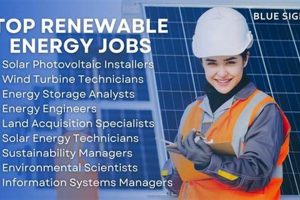
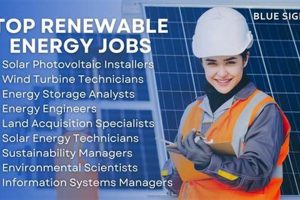
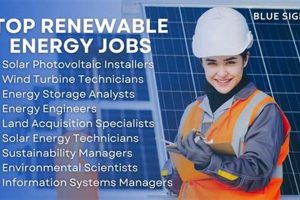
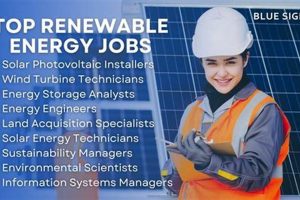
Careers focused on sustainable power generation using resources like solar, wind, hydro, geothermal, and biomass offer diverse opportunities across various skill levels and specializations. Examples include roles in research and development, design and engineering, installation and maintenance, project management, sales and marketing, and policy and advocacy within the clean energy sector.
These positions contribute significantly to mitigating climate change by reducing reliance on fossil fuels and promoting cleaner energy alternatives. This sector’s growth creates economic opportunities, fosters technological innovation, and enhances energy security. Historically, advancements in renewable energy technologies and increasing public awareness of environmental issues have spurred job creation in this field, leading to a global transition towards more sustainable practices.
This article will further explore specific career paths within the renewable energy sector, discuss required skills and education, and analyze future trends impacting this rapidly evolving job market. It will also delve into the economic and societal benefits of a workforce dedicated to sustainable energy solutions.
Tips for Pursuing Careers in Sustainable Energy
The following guidance offers practical advice for individuals interested in pursuing employment within the renewable energy sector.
Tip 1: Develop Specialized Skills: Acquiring expertise in areas like engineering, data analysis, or project management can significantly enhance career prospects. For example, proficiency in software used for designing solar panel systems is highly valuable.
Tip 2: Network Strategically: Attending industry conferences, joining professional organizations, and connecting with individuals already working in the field can provide valuable insights and potential job leads.
Tip 3: Gain Relevant Experience: Internships, volunteer work, or entry-level positions can provide practical experience and demonstrate commitment to the field. Participating in research projects related to renewable energy technologies can be particularly beneficial.
Tip 4: Stay Informed About Industry Trends: Keeping abreast of technological advancements, policy changes, and market trends within the renewable energy sector is essential for career advancement. Following industry publications and attending webinars can be helpful.
Tip 5: Highlight Transferable Skills: Individuals with experience in seemingly unrelated fields can often leverage transferable skills, such as communication, problem-solving, and project management, for a successful transition into renewable energy careers.
Tip 6: Consider Further Education: Pursuing advanced degrees or certifications in specialized areas like renewable energy engineering or sustainable business practices can demonstrate expertise and open doors to leadership roles.
Tip 7: Research Specific Companies: Understanding the values, missions, and projects of various companies within the renewable energy sector can assist in targeting job applications and aligning career goals.
Tip 8: Develop Strong Communication Skills: Effectively communicating complex technical information to diverse audiences, including clients, colleagues, and policymakers, is a valuable asset in this field.
By following these tips, aspiring professionals can position themselves for success in the dynamic and growing field of sustainable energy.
The transition towards a cleaner energy future presents numerous opportunities for individuals seeking meaningful and impactful careers. The following conclusion will summarize the key takeaways and offer a forward-looking perspective on the evolving landscape of renewable energy employment.
1. Career Diversity

Career diversity within the environmental renewable energy sector is a significant factor contributing to its dynamism and growth. This diversity offers individuals with varying backgrounds and skillsets opportunities to contribute to a sustainable future. Understanding the breadth of roles available is crucial for anyone considering a career in this field.
- Scientific Research and Development
Scientists and researchers play a crucial role in advancing renewable energy technologies. Physicists explore new materials for solar panels, while chemists develop more efficient battery storage solutions. These roles often require advanced degrees and a strong research background, contributing to the continuous innovation within the sector.
- Engineering and Technical Roles
Engineers design, install, and maintain renewable energy systems. Wind turbine technicians ensure the smooth operation of wind farms, while solar panel installers implement rooftop solar systems. These roles often require specialized technical skills and certifications, providing hands-on involvement in the deployment of clean energy solutions.
- Policy and Advocacy
Policy analysts and advocates work to shape the regulatory landscape that governs renewable energy development. They analyze policy proposals, lobby for supportive legislation, and educate the public about the benefits of clean energy. These roles require a strong understanding of policy and regulatory processes and play a vital role in creating a favorable environment for the industry’s growth.
- Finance and Investment
Financial analysts and investors assess the economic viability of renewable energy projects. They evaluate investment opportunities, manage risks, and secure funding for large-scale installations. These roles require strong financial acumen and play a crucial part in driving the financial growth of the renewable energy sector. For instance, evaluating the return on investment of a solar farm requires assessing factors such as energy production, operating costs, and government incentives.
The diverse range of career paths within environmental renewable energy jobs highlights the multifaceted nature of the industry. This diversity not only attracts individuals with varying skills and interests but also contributes to a robust and resilient workforce capable of addressing the complex challenges of transitioning to a sustainable energy future. From laboratory research to field installations, and from policy development to financial investment, each role plays a critical part in the ongoing growth and success of the renewable energy sector.
2. Skill Requirements

Skill requirements for environmental renewable energy jobs are diverse, reflecting the multifaceted nature of the industry. These requirements span technical expertise, analytical capabilities, project management skills, and policy understanding. Possessing the necessary skills is crucial for success in this rapidly evolving field. For instance, a wind turbine technician requires specialized technical skills to install, maintain, and repair complex machinery, while a solar project developer needs strong project management skills to oversee the entire project lifecycle, from site assessment to grid connection. The specific skill set required varies depending on the specific role, but a strong foundation in STEM fields is often advantageous.
The increasing complexity of renewable energy systems necessitates a skilled workforce capable of adapting to technological advancements. Data analysis skills are becoming increasingly important as the industry relies more on data-driven decision-making. For example, optimizing the performance of a solar power plant requires analyzing large datasets of energy production, weather patterns, and equipment performance. Furthermore, the integration of renewable energy sources into existing power grids requires expertise in grid management and energy storage solutions. As the industry matures, the demand for specialized skills in areas such as cybersecurity and artificial intelligence is also expected to grow. The intersection of information technology and renewable energy presents new opportunities for professionals with expertise in these areas.
Understanding the required skill sets for various roles within the renewable energy sector is essential for both job seekers and employers. Investing in training and development programs to enhance the skills of the workforce is crucial for meeting the growing demand for qualified professionals. Educational institutions play a vital role in equipping students with the necessary knowledge and skills to succeed in this field. Ultimately, a skilled workforce is essential for driving innovation, ensuring the efficient deployment of renewable energy technologies, and achieving a sustainable energy future. Addressing the skills gap within the industry is a key challenge that requires collaborative efforts from government, industry, and educational institutions.
3. Growth Potential

Growth potential within the environmental renewable energy job sector exhibits a strong positive trajectory. This projected expansion stems from several converging factors, including increasing global energy demands, declining costs of renewable energy technologies, and supportive government policies aimed at decarbonizing economies and mitigating climate change. The transition from fossil fuels to cleaner energy sources necessitates substantial investments in renewable energy infrastructure, creating a surge in demand for skilled professionals across the sector. For example, the burgeoning offshore wind industry requires specialized engineers, technicians, and project managers to design, construct, and maintain offshore wind farms. Similarly, the growing adoption of solar photovoltaic systems fuels demand for installers, maintenance technicians, and sales professionals.
This growth potential translates into significant career opportunities for individuals seeking to enter or advance within the renewable energy field. Furthermore, the dynamic nature of the industry fosters continuous innovation and technological advancements, leading to the emergence of new specialized roles and career paths. For instance, the increasing integration of smart grid technologies and energy storage solutions creates demand for professionals with expertise in data analytics, software engineering, and cybersecurity. The expanding electric vehicle market also generates opportunities for professionals involved in charging infrastructure development, battery technology, and grid integration. This continuous evolution within the renewable energy sector ensures a vibrant job market with long-term career prospects.
Understanding the growth potential within the renewable energy job market is crucial for policymakers, educational institutions, and individuals seeking career guidance. Targeted investments in education and training programs are essential for developing a skilled workforce capable of meeting the demands of this rapidly expanding sector. Furthermore, fostering collaboration between industry stakeholders, research institutions, and government agencies is crucial for driving innovation and accelerating the transition to a sustainable energy future. Addressing potential challenges such as workforce shortages and infrastructure limitations will be essential for realizing the full growth potential of the renewable energy sector and ensuring a smooth transition to a cleaner, more sustainable energy landscape.
4. Geographic Distribution

Geographic distribution significantly influences the landscape of environmental renewable energy jobs. Resource availability plays a crucial role; regions with abundant solar radiation naturally attract solar energy projects, creating demand for solar panel installers, engineers, and maintenance technicians. Similarly, areas with consistent wind patterns become hubs for wind energy development, requiring wind turbine technicians, meteorologists, and project managers. Hydroelectric projects concentrate around suitable water resources, necessitating civil engineers, environmental scientists, and power plant operators. This resource-driven distribution creates localized job clusters, impacting regional economic development and workforce demographics. For example, the coastal regions of the United Kingdom have seen significant growth in offshore wind energy jobs, while the sunny southwestern United States experiences high demand for solar energy professionals.
Beyond resource availability, government policies and incentives also shape the geographic distribution of renewable energy jobs. Tax credits, subsidies, and renewable portfolio standards can stimulate investment and job creation in specific regions. For instance, states with aggressive renewable energy targets often experience higher growth in related jobs. Furthermore, the presence of research institutions, manufacturing facilities, and supply chains influences job distribution. Areas with established renewable energy industries tend to attract further investment and job creation, leading to the development of specialized hubs. Understanding these geographic dynamics is crucial for workforce planning, education initiatives, and regional economic development strategies. It informs targeted investments in training programs, infrastructure development, and policy interventions to maximize the economic and environmental benefits of renewable energy.
In conclusion, the geographic distribution of environmental renewable energy jobs is a complex interplay of resource availability, policy incentives, and industrial infrastructure. Recognizing these factors is essential for effective policymaking, targeted workforce development, and sustainable economic growth. Addressing potential challenges, such as regional disparities in job creation and access to training opportunities, is vital for ensuring a just and equitable transition to a renewable energy future. Strategic planning and collaboration between government, industry, and educational institutions are crucial for optimizing the geographic distribution of renewable energy jobs and maximizing their societal benefits.
5. Educational Pathways

Educational pathways play a crucial role in shaping the workforce for environmental renewable energy jobs. These pathways provide individuals with the necessary knowledge and skills to contribute effectively to the growing renewable energy sector. A well-defined educational trajectory, starting from secondary education and extending through vocational training and higher education, is essential for meeting the diverse skill requirements of this dynamic field. For instance, a high school curriculum emphasizing science, technology, engineering, and mathematics (STEM) subjects provides a strong foundation for further specialization in renewable energy-related disciplines. Vocational training programs offer practical hands-on experience in areas such as solar panel installation, wind turbine maintenance, and energy-efficient building construction. Higher education institutions offer specialized degree programs in renewable energy engineering, sustainable development, and environmental policy, equipping graduates with the advanced knowledge and research skills needed to drive innovation in the sector. The availability of diverse educational pathways ensures a robust pipeline of qualified professionals, capable of meeting the evolving demands of the renewable energy industry.
The connection between educational pathways and environmental renewable energy jobs extends beyond technical skills development. A comprehensive understanding of the environmental, social, and economic aspects of renewable energy is equally important. Educational programs focusing on sustainability principles, policy frameworks, and market dynamics provide professionals with a broader perspective on the challenges and opportunities associated with the transition to a clean energy future. For example, understanding the lifecycle impacts of different renewable energy technologies is crucial for making informed decisions about their deployment. Knowledge of regulatory frameworks and permitting processes is essential for navigating the complex landscape of renewable energy project development. Furthermore, educational pathways that foster interdisciplinary collaboration and problem-solving skills equip professionals to address the systemic challenges associated with integrating renewable energy into existing infrastructure and markets.
In conclusion, robust educational pathways are essential for building a skilled and knowledgeable workforce capable of driving the growth and development of the environmental renewable energy sector. Investing in quality education and training programs at all levels, from vocational training to advanced research, is crucial for ensuring a sustainable pipeline of qualified professionals. Addressing potential challenges, such as access to education and training opportunities in underserved communities, is vital for fostering a just and equitable transition to a renewable energy future. By aligning educational pathways with the evolving needs of the renewable energy industry, we can unlock the full potential of this dynamic sector and accelerate the global shift towards a cleaner, more sustainable energy system.
6. Environmental Impact

Environmental impact forms the core rationale for the existence and expansion of environmental renewable energy jobs. These roles are intrinsically linked to mitigating the detrimental effects of traditional energy sources on the planet and fostering a transition towards a sustainable energy future. Understanding this connection is crucial for appreciating the significance of these careers and their contribution to global environmental well-being. The following facets explore this relationship in greater detail.
- Reduced Greenhouse Gas Emissions
A primary environmental impact of renewable energy jobs is the reduction of greenhouse gas emissions. Professionals involved in designing, installing, and maintaining renewable energy systems directly contribute to decreasing reliance on fossil fuels, the primary source of these emissions. For example, a wind turbine technician helps displace electricity generation from coal-fired power plants, reducing carbon dioxide emissions and mitigating climate change. This direct link between these jobs and emissions reduction underscores their importance in achieving global climate goals.
- Improved Air and Water Quality
Renewable energy sources produce minimal air and water pollution compared to fossil fuels. Jobs focused on renewable energy technologies contribute to cleaner air and water, protecting ecosystems and human health. Solar panel installers, for example, facilitate a shift away from coal-fired power plants, which release pollutants contributing to respiratory illnesses and acid rain. This positive impact on environmental quality highlights the broader benefits of these jobs beyond climate change mitigation.
- Conservation of Natural Resources
Renewable energy sources rely on naturally replenishing resources like sunlight, wind, and water, reducing the need to extract and consume finite resources like coal and oil. Jobs in the renewable energy sector, such as hydrologists working on hydropower projects, contribute to sustainable resource management and reduce the environmental damage associated with resource extraction. This focus on resource conservation underscores the long-term environmental sustainability of these career paths.
- Protection of Biodiversity and Ecosystems
Renewable energy projects, when implemented responsibly, can minimize their impact on biodiversity and ecosystems. Environmental consultants specializing in renewable energy development assess potential environmental impacts and recommend mitigation strategies. For instance, careful siting of wind farms can minimize disturbance to bird and bat populations. This commitment to environmental stewardship highlights the potential for renewable energy jobs to contribute to a healthier planet, preserving biodiversity for future generations.
In conclusion, the environmental impact of environmental renewable energy jobs is profound and multifaceted. From mitigating climate change to protecting biodiversity, these careers play a crucial role in creating a more sustainable future. The continued growth and development of this sector offer a pathway towards a healthier planet and a more resilient global ecosystem. As the world transitions towards cleaner energy sources, the importance of these jobs will only continue to grow, further solidifying their crucial role in safeguarding the environment.
Frequently Asked Questions
This section addresses common inquiries regarding careers in environmental renewable energy.
Question 1: What are the typical entry-level positions in renewable energy?
Entry-level roles often include installer or technician positions in solar, wind, or other renewable energy technologies. Other options include roles in sales, marketing, or project administration within renewable energy companies.
Question 2: What educational background is required for renewable energy jobs?
Educational requirements vary widely. Technical roles often require vocational training or associate degrees, while engineering and research positions typically necessitate bachelor’s or advanced degrees in relevant fields. Business-focused roles may benefit from degrees in business administration, marketing, or finance.
Question 3: Are renewable energy jobs geographically concentrated?
While job distribution is influenced by resource availability (e.g., solar jobs in sunny regions), the industry is becoming increasingly geographically diverse as technologies evolve and markets expand. Policy incentives also play a role in job creation in specific locations.
Question 4: How is the job market outlook for renewable energy careers?
The job market for renewable energy is generally considered to be experiencing strong growth and is projected to continue expanding as the world transitions to cleaner energy sources. Specific growth areas vary based on technological advancements and market demand.
Question 5: What are the key skills needed for success in renewable energy careers?
Essential skills include technical proficiency, problem-solving abilities, data analysis capabilities, communication skills, and project management expertise. Specific technical skills depend on the chosen career path within the sector.
Question 6: How can one gain experience in renewable energy prior to full-time employment?
Gaining practical experience through internships, volunteer work with environmental organizations, or participation in research projects can be highly beneficial. Networking with professionals in the field is also recommended.
Careful consideration of these questions can assist individuals in navigating career options within the renewable energy sector.
Further exploration of specific career paths and resources for job seekers will be presented in the following sections.
Conclusion
Exploration of environmental renewable energy jobs reveals a dynamic and multifaceted sector crucial for global sustainability. Career diversity, ranging from technical roles like turbine technicians to policy-focused positions, underscores the breadth of opportunities. Skill requirements emphasize technical proficiency, data analysis, and adaptability to evolving technologies. Significant growth potential, driven by increasing global energy demand and policy support, offers promising career prospects. Geographic distribution, influenced by resource availability and policy incentives, shapes regional economic development. Educational pathways, from vocational training to advanced degrees, equip individuals with necessary expertise. Ultimately, the positive environmental impact of these jobs, through emissions reduction and resource conservation, underscores their significance in mitigating climate change and fostering a sustainable future.
The transition to a cleaner energy future necessitates a robust and skilled workforce. Investing in education, training, and policy frameworks that support the growth of environmental renewable energy jobs is paramount. The future of sustainable energy relies on the continued expansion of this vital sector and the dedicated individuals who contribute to its advancement. Addressing the challenges and realizing the opportunities within this field are essential for ensuring a sustainable and prosperous future for all.