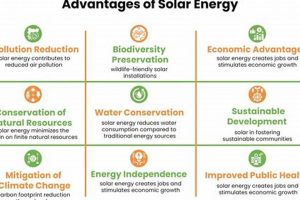
Harnessing the energy of the sun for power generation constitutes a sustainable approach to meeting energy demands. This method involves converting sunlight into electricity through photovoltaic cells or concentrating solar power systems. The inherent characteristic of the source is its continuous replenishment, setting it apart from finite resources.
Utilizing this energy source offers significant advantages, including reduced reliance on fossil fuels and diminished greenhouse gas emissions. This contributes to mitigating climate change and improving air quality. Historically, advancements in technology have steadily increased the efficiency and affordability of these energy systems, making them an increasingly viable alternative.
The following sections will delve into the operational mechanics of solar energy conversion, the factors influencing its efficiency, and the role it plays in the broader context of global energy transition and sustainability efforts. Consideration will also be given to the economic implications and environmental considerations associated with widespread implementation.
Solar Energy Utilization
Effective integration of solar energy requires careful planning and execution. The following points address critical aspects of harnessing this resource efficiently and responsibly.
Tip 1: Assess Geographic Suitability: Solar energy potential varies significantly by location. Evaluate insolation levels and climate conditions to determine the feasibility and optimal configuration for solar installations.
Tip 2: Optimize System Design: Tailor system specifications, including panel orientation, tilt angle, and inverter sizing, to maximize energy production based on site-specific factors and energy consumption patterns.
Tip 3: Prioritize Energy Storage Solutions: Implement battery storage systems to mitigate the intermittency of solar power. This ensures a consistent energy supply, particularly during periods of low sunlight or peak demand.
Tip 4: Implement Efficient Grid Integration: If connected to the electrical grid, ensure seamless integration through net metering agreements and adherence to grid stability requirements. This facilitates the bidirectional flow of energy and maximizes economic benefits.
Tip 5: Conduct Regular Maintenance: Implement a scheduled maintenance program to ensure optimal system performance. This includes panel cleaning, inverter checks, and addressing any performance degradation promptly.
Tip 6: Explore Energy Conservation Measures: Enhance the effectiveness of solar energy systems by implementing energy conservation measures. Reducing overall energy consumption minimizes the required solar capacity and associated costs.
Tip 7: Evaluate Environmental Impact: Consider the environmental footprint of solar panel manufacturing and disposal. Opt for panels with high recyclability ratings and explore responsible end-of-life management practices.
Adherence to these guidelines enhances the efficiency, reliability, and sustainability of solar energy systems, contributing to a more resilient and environmentally responsible energy infrastructure.
The subsequent sections will address the financial incentives, regulatory frameworks, and technological innovations shaping the future of this energy source.
1. Continuous solar radiation

The constant availability of solar irradiance is fundamental to categorizing solar energy as a renewable resource. The consistent influx of energy from the sun provides the underlying basis for all solar energy technologies and determines their long-term viability.
- Inexhaustible Energy Source
Solar radiation is effectively inexhaustible on human timescales. The sun’s energy output far surpasses global energy consumption, ensuring a theoretically limitless energy supply. This characteristic distinguishes solar from finite resources such as fossil fuels.
- Predictable Energy Input
While weather patterns influence the instantaneous availability of solar energy, long-term solar irradiance patterns are predictable. This predictability allows for accurate forecasting of solar energy production, facilitating grid integration and energy planning.
- Geographic Variability
Solar irradiance varies geographically, influencing the potential for solar energy generation. Regions with higher average solar irradiance are more suitable for solar energy deployment. However, advancements in technology are expanding the viability of solar energy in less sunny regions.
- Technological Harnessing
The ability to convert continuous solar radiation into usable forms of energy, such as electricity and heat, is crucial. Solar panels and concentrating solar power systems enable the capture and utilization of this energy source. The efficiency of these technologies directly impacts the overall contribution of solar energy to the global energy mix.
The continuous and predictable nature of solar radiation, coupled with technological advancements in energy conversion, solidifies the position of solar energy as a renewable and sustainable energy source. Further development and deployment of solar technologies are essential for mitigating climate change and ensuring long-term energy security.
2. Resource replenishment rate

The resource replenishment rate is a critical determinant in classifying solar energy as renewable. This rate, in essence, defines the speed at which a resource is naturally restored compared to its rate of consumption or depletion. For solar energy, the replenishment rate is exceptionally high, reinforcing its renewable character.
- Inherent Sustainability
The sun continuously emits energy, effectively replenishing the source faster than any conceivable human utilization rate. This inherent sustainability ensures that solar energy remains available indefinitely, unlike fossil fuels, which are consumed at a rate far exceeding their geological formation.
- Negligible Depletion Risk
The extraction of solar energy does not diminish the resource itself. Solar panels merely capture a fraction of the energy constantly radiating from the sun. This contrasts starkly with non-renewable resources, where extraction leads to a finite reduction in the overall available quantity.
- Impact on Energy Security
A high replenishment rate translates to enhanced energy security. Reliance on resources with rapid replenishment reduces dependence on politically volatile or geographically constrained energy sources. Solar energy’s accessibility contributes to a more stable and diversified energy portfolio.
- Environmental Implications
The sustained availability of solar energy mitigates the environmental consequences associated with resource extraction and combustion. Reduced reliance on fossil fuels translates to decreased greenhouse gas emissions and improved air quality. The renewable nature of solar energy supports long-term ecological health.
The confluence of these factors underscores the critical role of the replenishment rate in establishing solar energy as a fundamentally renewable resource. The sun’s perpetual energy emission ensures a continuous and sustainable energy supply, contributing to both energy security and environmental preservation.
3. Minimal resource depletion

The principle of minimal resource depletion is intrinsically linked to the classification of solar energy as a renewable resource. Solar energy systems, unlike those reliant on fossil fuels or nuclear fission, do not consume or significantly diminish a finite resource base. Solar panels capture a fraction of the sun’s radiant energy, a process that does not deplete the sun’s energy output or necessitate the extraction of materials from the Earth at a rate exceeding natural regeneration. This characteristic is a fundamental distinction between renewable and non-renewable energy sources, directly impacting long-term sustainability.
The importance of minimal resource depletion in the context of solar energy extends to the manufacturing and lifecycle of solar panels. While the production of solar panels requires raw materials such as silicon, these materials are relatively abundant, and technological advancements are continually reducing the material intensity of solar cells. Furthermore, efforts are underway to enhance the recyclability of solar panels, enabling the recovery and reuse of valuable materials, thereby further minimizing the demand for virgin resources. This closed-loop approach contributes to a more circular economy and reinforces the sustainability of solar energy systems.
In summary, the attribute of minimal resource depletion is a cornerstone of solar energy’s renewable status. This characteristic, coupled with ongoing efforts to improve material efficiency and recyclability, positions solar energy as a viable and environmentally responsible alternative to conventional energy sources, supporting long-term energy security and environmental stewardship. Failure to prioritize minimal resource depletion would undermine the fundamental sustainability claims associated with solar energy.
4. Decreased carbon emissions

The reduction of carbon emissions is a critical consequence and a defining characteristic of solar energy’s renewable nature. Solar energy systems, unlike fossil fuel-based power plants, do not generate carbon dioxide (CO2) or other greenhouse gases during electricity generation. This absence of direct emissions distinguishes solar power as a clean energy alternative, mitigating the adverse effects of climate change. The connection between the diminished output of carbon and the inherent attributes of renewability is causality; one results from the other.
Solar power’s impact on carbon emissions manifests at both individual and societal scales. A household adopting solar panels reduces its reliance on grid electricity, often generated from carbon-intensive sources. At the grid level, the integration of large-scale solar farms displaces fossil fuel-based generation, leading to an overall reduction in the carbon intensity of the electricity supply. Examples include California, where substantial investments in solar capacity have contributed to significant reductions in greenhouse gas emissions in the power sector. Similarly, countries such as Germany have demonstrated the feasibility of integrating high percentages of solar power into their electricity grids, resulting in quantifiable reductions in their carbon footprints. Further, technological developments around batteries and energy storage systems, allow capture and reuse of carbon emissions.
In conclusion, decreased carbon emissions are not merely a byproduct of solar energy; they are a fundamental reason for its designation as a renewable energy source. The elimination of direct carbon emissions during electricity production establishes solar power as a crucial tool in mitigating climate change and fostering a more sustainable energy future. Continuous support for solar energy development and deployment is essential to realize the full potential of this renewable resource in reducing global carbon emissions.
5. Long-term energy security

Long-term energy security, defined as the reliable and affordable availability of energy resources over an extended period, is inextricably linked to the deployment of renewable energy sources, of which solar power is a primary example. Solar energy’s renewability ensures a sustained and predictable energy supply, mitigating the risks associated with finite resources and geopolitical instability. The sun’s consistent energy output, harnessed through photovoltaic technologies, provides a stable and independent energy source, reducing reliance on volatile global markets and diminishing the vulnerability to supply disruptions. This inherent stability is a fundamental pillar of energy security, providing a shield against price fluctuations and geopolitical tensions often associated with fossil fuels. Countries investing heavily in solar energy are strengthening their domestic energy independence, safeguarding their economies from external shocks.
The diversification of energy sources is a crucial strategy for enhancing long-term energy security, and solar energy plays a pivotal role in this diversification. By incorporating solar power into the energy mix, nations reduce their dependence on any single energy source, decreasing the risk of supply disruptions or price volatility affecting the entire energy system. The modular nature of solar installations allows for distributed generation, enhancing grid resilience and reducing the vulnerability to centralized failures. Real-world examples include India’s ambitious solar energy targets and its commitment to reducing reliance on imported fossil fuels, as well as the European Union’s strategic focus on renewable energy to enhance energy security in the face of geopolitical challenges. These initiatives demonstrate the practical application of solar energy in bolstering long-term energy security.
In conclusion, long-term energy security is not merely a desirable outcome but a necessary condition for economic stability and societal well-being. The inherent characteristics of solar energy – its renewability, abundance, and decreasing cost – position it as a critical component of a secure and sustainable energy future. Overcoming challenges related to intermittency and grid integration is essential to fully realize the potential of solar energy in bolstering long-term energy security. Investments in storage solutions, grid modernization, and supportive policies are crucial to unlocking the full benefits of solar energy and ensuring a stable and resilient energy supply for generations to come.
6. Environmental sustainability
Environmental sustainability, as it relates to solar power, is paramount to validating its standing as a renewable energy source. This concept encompasses the long-term maintenance of environmental conditions capable of supporting human and ecological health, encompassing factors such as resource management, pollution reduction, and ecosystem preservation.
- Reduced Pollution and Emissions
Solar energy generation inherently avoids the combustion processes associated with fossil fuels. This eliminates emissions of pollutants such as sulfur dioxide (SO2), nitrogen oxides (NOx), particulate matter, and greenhouse gases, all of which have detrimental impacts on air and water quality. For example, the shift from coal-fired power plants to solar arrays demonstrably reduces respiratory illnesses in nearby populations.
- Resource Conservation
Solar energy harnesses a virtually inexhaustible resource, the sun’s radiation. This contrasts with finite resources like coal, oil, and natural gas, whose extraction and utilization lead to depletion and environmental degradation. Solar installations require land use, but careful site selection and mitigation strategies can minimize impacts on ecosystems and biodiversity, contributing to overall resource conservation.
- Water Usage Minimization
Traditional power plants often require significant amounts of water for cooling, leading to water stress in arid regions. Solar photovoltaic systems, conversely, use minimal water during operation. Concentrated solar power (CSP) plants, which use water for cooling, can implement dry-cooling technologies to minimize water consumption, mitigating potential ecological impacts.
- Lifecycle Environmental Impact
The lifecycle environmental impact of solar energy systems, including manufacturing, transportation, installation, operation, and decommissioning, must be considered. Efforts to reduce the energy intensity of panel production, improve recycling processes, and ensure responsible end-of-life management contribute to enhancing the overall environmental sustainability of solar energy.
The interwoven nature of these components highlights the contribution of solar power to wider environmental sustainability. By mitigating pollution, conserving resources, reducing water usage, and addressing lifecycle impacts, solar energy offers a pathway towards a more environmentally sound energy future. Continued innovation and responsible implementation are crucial to maximizing these benefits.
Frequently Asked Questions
The following section addresses common inquiries and clarifies key aspects regarding the renewable nature of solar energy.
Question 1: Is solar energy truly renewable, given the manufacturing processes involved in producing solar panels?
While the manufacturing of solar panels requires energy and resources, the energy generated over their lifespan significantly exceeds the energy input during production. Furthermore, ongoing advancements are focused on reducing the environmental impact of manufacturing processes and improving panel recyclability.
Question 2: How does the intermittency of sunlight affect the reliability of solar energy as a renewable source?
The intermittent nature of sunlight, due to weather patterns and diurnal cycles, necessitates the implementation of energy storage solutions and grid management strategies. Battery storage systems, pumped hydro storage, and smart grid technologies help to smooth out fluctuations in solar energy supply and ensure a reliable energy source.
Question 3: What is the potential for solar energy to meet global energy demands?
The theoretical potential of solar energy far exceeds global energy demands. Technological advancements and decreasing costs are making solar energy an increasingly viable option for large-scale deployment, capable of meeting a significant portion of global energy needs.
Question 4: Are there any environmental concerns associated with the disposal of solar panels at the end of their lifespan?
The disposal of solar panels poses environmental concerns due to the presence of certain materials. However, increasing emphasis on recycling and responsible end-of-life management aims to recover valuable materials and minimize environmental impact.
Question 5: How does the efficiency of solar panels impact the viability of solar energy as a renewable resource?
The efficiency of solar panels directly affects the amount of electricity generated per unit area. Technological advancements are continuously improving panel efficiency, leading to increased energy output and reduced land requirements.
Question 6: Does the geographical location influence the effectiveness of solar energy as a renewable resource?
Solar energy potential varies depending on geographical location, with regions receiving higher solar irradiance being more suitable for solar energy generation. However, technological advancements are expanding the viability of solar energy in less sunny regions, and distributed generation allows for localized energy production.
In summary, while challenges exist, ongoing technological developments and responsible management practices are continually enhancing the viability and sustainability of solar energy as a renewable resource.
The subsequent sections will address the financial incentives, regulatory frameworks, and technological innovations shaping the future of this energy source.
Is Solar Renewable
This analysis confirms that solar energy is unequivocally renewable. Its reliance on a perpetual energy sourcethe suncoupled with minimal resource depletion and diminished carbon emissions, positions it as a cornerstone of sustainable energy strategies. The continuous replenishment of solar radiation ensures long-term availability, distinguishing it from finite and environmentally impactful alternatives.
The sustained development and responsible implementation of solar technologies are essential for mitigating climate change and fostering energy security. A continued commitment to innovation, efficient resource management, and supportive policy frameworks will maximize the potential of solar energy to power a sustainable future for generations to come. The viability of global solar transition is not just a question but a path to energy stability and future viability.