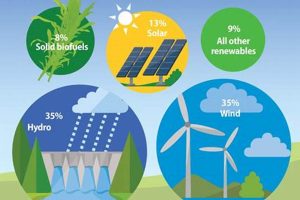
The interaction between methods of sustainable power generation and the natural world is a complex relationship. Utilizing resources such as solar radiation, wind, flowing water, geothermal heat, and biomass for electricity and heat production inevitably results in alterations to ecosystems, land use, and atmospheric conditions. Understanding the scope and nature of these alterations is crucial for informed energy policy and sustainable development.
The investigation of these interactions is important for mitigating unintended consequences and maximizing the overall benefit of transitioning away from fossil fuels. Historically, energy production has often prioritized output without full consideration of the wider ecological costs. Evaluating the effects of alternative power systems allows for a more holistic assessment of their viability and long-term sustainability. This includes consideration of resource depletion, pollution reduction, and habitat preservation.
Therefore, the following will examine specific examples of sustainable power systems and their interactions with the environment, focusing on areas such as land usage, wildlife disturbance, material requirements, and lifecycle emissions. This will involve analysis of different technological approaches within each energy sector, aiming to provide a nuanced understanding of their respective ecological footprints.
Mitigating Ecological Effects
Careful planning and technological innovation are essential to minimizing the ecological footprint of renewable energy projects. The following points highlight key considerations for responsible development and deployment.
Tip 1: Prioritize Siting Assessments. Thoroughly evaluate potential locations for wind and solar farms to minimize impacts on wildlife migration corridors and sensitive habitats. Use geographic information systems (GIS) to identify low-impact areas.
Tip 2: Employ Advanced Construction Techniques. Implement strategies to reduce habitat fragmentation during construction of hydroelectric dams and transmission lines. Consider directional drilling and underground cabling to minimize surface disturbance.
Tip 3: Invest in Recycling and Materials Innovation. Support research into sustainable materials for solar panels and wind turbine blades, focusing on recyclability and reduced reliance on rare earth elements. Implement robust recycling programs for end-of-life components.
Tip 4: Optimize Water Management Strategies. In regions with water scarcity, prioritize dry-cooled concentrating solar power (CSP) technologies and closed-loop geothermal systems to minimize water consumption.
Tip 5: Develop Biodiversity Monitoring Programs. Implement long-term monitoring of avian and aquatic populations near renewable energy facilities to assess potential impacts and adapt operational practices as needed. Utilize acoustic monitoring and camera traps to gather data.
Tip 6: Support Community Engagement. Engage local communities in the planning and development process to address concerns related to noise pollution, visual impacts, and land use changes. Transparency is essential for building trust and fostering acceptance.
Tip 7: Promote Distributed Generation. Encourage the adoption of rooftop solar panels and small-scale wind turbines to reduce the need for large-scale centralized facilities and associated transmission infrastructure. This minimizes land use and enhances energy security.
The successful integration of renewable energy into the power grid hinges on minimizing adverse effects on ecosystems. Implementing the above considerations ensures the transition towards a sustainable energy future that respects both environmental integrity and societal needs.
The subsequent sections will address the economic and social dimensions of the transition to renewable energy, recognizing that environmental considerations are just one facet of a complex and multifaceted challenge.
1. Land Use

Land usage is a primary consideration in evaluating the ecological effects of renewable energy technologies. The physical footprint required for energy generation facilities can result in habitat loss, altered land cover, and potential conflicts with existing land uses. Careful planning and mitigation strategies are necessary to minimize these impacts.
- Solar Energy Development and Habitat Conversion
Large-scale solar photovoltaic (PV) installations often necessitate substantial tracts of land, particularly in desert ecosystems. This can lead to the direct loss of habitat for native species, displacement of wildlife, and disruption of ecological processes. For example, the construction of solar farms in the Mojave Desert has raised concerns about impacts on the desert tortoise and other sensitive species.
- Wind Energy and Agricultural Land Compatibility
While wind turbines can often coexist with agricultural practices, large-scale wind farm development can still lead to significant changes in land use patterns. The presence of access roads, turbine pads, and transmission lines can fragment agricultural landscapes, potentially affecting farming operations and altering drainage patterns. Careful site selection is crucial to minimize these impacts.
- Hydropower Reservoirs and Inundation of Land
The construction of hydropower dams and the creation of reservoirs inevitably result in the inundation of large areas of land, leading to the loss of terrestrial habitats and the displacement of human populations. This can have significant environmental and social consequences, including the alteration of river ecosystems and the disruption of traditional land use practices. The Three Gorges Dam in China serves as a prominent example of the large-scale land use changes associated with hydropower development.
- Biomass Energy and Agricultural Land Competition
The cultivation of dedicated energy crops for biomass production can compete with food production for arable land. This can lead to indirect land use changes, such as the conversion of forests or grasslands to agricultural land to meet food demand. Sustainable biomass production practices are essential to minimize these impacts and ensure that energy crops are not displacing food production.
These examples illustrate the complexities of land use considerations in renewable energy development. Effectively managing the land-related effects of these technologies necessitates careful planning, comprehensive environmental impact assessments, and the implementation of appropriate mitigation measures to minimize ecological disruption and ensure the long-term sustainability of renewable energy deployment.
2. Wildlife Disturbance

Wildlife disturbance represents a significant facet of the interaction between renewable energy installations and the environment. The development and operation of these installations can disrupt animal behavior, alter migration patterns, and negatively affect population dynamics. Understanding the sources and consequences of wildlife disturbance is crucial for minimizing the overall ecological footprint of renewable energy generation.
Wind turbines, for example, pose a collision risk to avian and bat populations. Migratory birds and bats are particularly vulnerable, especially when turbines are located along established flight paths. This can lead to direct mortality and population declines. Noise pollution from wind turbines can also disrupt animal communication and foraging behavior. Similarly, solar energy facilities can alter habitat structure and create thermal gradients that affect the distribution and abundance of wildlife. The construction of transmission lines associated with renewable energy projects can further fragment habitats, hindering animal movement and gene flow. Aquatic ecosystems are not immune, as hydroelectric dams alter river flow regimes and impede fish migration, impacting spawning success and overall biodiversity. The effects may extend to marine environments as well.
Effective mitigation strategies are essential to minimizing the effects of wildlife disturbance. These include careful site selection to avoid sensitive habitats and migration corridors, the implementation of bird and bat deterrent systems on wind turbines, and the development of wildlife-friendly solar facility designs. Monitoring programs are also necessary to assess the effectiveness of these mitigation measures and adapt management practices as needed. Addressing wildlife disturbance is not merely an environmental imperative; it is also critical for ensuring the long-term sustainability and public acceptance of renewable energy technologies.
3. Material Extraction

The procurement of raw materials necessary for manufacturing renewable energy technologies represents a significant interface between sustainable energy aspirations and environmental burdens. The mining, processing, and transportation of these materials can lead to habitat destruction, pollution, and resource depletion, underscoring the need for a comprehensive evaluation of the “renewable energy sources environmental impact”.
- Rare Earth Elements in Wind Turbines and Solar Panels
The production of high-efficiency wind turbines and certain types of solar panels often relies on rare earth elements such as neodymium, dysprosium, and indium. The extraction of these elements typically involves open-pit mining and chemical processing, which can contaminate soil and water resources. The Bayan Obo mine in Inner Mongolia, a major source of rare earth elements, exemplifies the environmental degradation associated with this process. The implications include long-term ecosystem damage and potential health risks for local communities.
- Lithium and Cobalt for Battery Storage
The increasing demand for battery storage systems to support intermittent renewable energy sources like solar and wind has driven a surge in the extraction of lithium and cobalt. Lithium extraction, whether through brine evaporation or hard-rock mining, can deplete groundwater resources and disrupt fragile ecosystems, particularly in arid regions such as the Atacama Desert in South America. Cobalt mining, predominantly in the Democratic Republic of Congo, is often associated with ethical concerns related to labor practices and human rights, as well as environmental damage from unregulated mining activities. These factors directly influence the “renewable energy sources environmental impact”.
- Silicon for Solar Photovoltaics
Silicon, the primary material in most solar photovoltaic (PV) panels, is derived from quartz sand. The mining and processing of quartz sand can result in habitat loss, soil erosion, and water pollution. The production of metallurgical-grade silicon also requires significant energy inputs, often from fossil fuels, contributing to greenhouse gas emissions. Efficient recycling programs and alternative materials research are crucial for mitigating these impacts.
- Steel and Concrete for Infrastructure
The construction of renewable energy infrastructure, including wind turbine towers, solar panel mounting structures, and hydroelectric dams, necessitates large quantities of steel and concrete. The production of these materials is energy-intensive and contributes significantly to carbon emissions. Cement production, in particular, is a major source of carbon dioxide, a greenhouse gas. The adoption of low-carbon concrete mixes and the use of recycled steel can help reduce the environmental footprint of renewable energy infrastructure.
These considerations highlight the complex relationship between renewable energy technologies and material extraction. A comprehensive assessment of the “renewable energy sources environmental impact” must incorporate the environmental and social costs associated with the entire supply chain, from resource extraction to manufacturing and disposal. Strategies for minimizing these impacts include promoting responsible sourcing practices, investing in materials innovation, and implementing effective recycling programs to create a more circular economy for renewable energy technologies.
4. Water Consumption

Water consumption constitutes a critical element in the evaluation of the interaction between sustainable energy technologies and the environment. Various renewable energy systems require water for processes such as cooling, cleaning, or fuel production. The volume of water utilized, its source, and the treatment of wastewater generated each have profound effects on local and regional water resources, thereby directly influencing the overall “renewable energy sources environmental impact”. In regions experiencing water scarcity, the demands of certain renewable energy technologies can exacerbate existing stresses, potentially leading to conflicts over water allocation and impacting aquatic ecosystems. For instance, concentrating solar power (CSP) plants that utilize wet cooling systems can consume substantial quantities of water, comparable to or even exceeding the water demands of conventional fossil fuel power plants. This is particularly concerning in arid and semi-arid regions where solar resources are abundant but water is limited. Similarly, the production of biofuels may require significant irrigation, placing additional pressure on agricultural water supplies. The interplay between energy and water, often termed the “energy-water nexus,” underscores the importance of carefully considering water consumption when assessing the environmental implications of renewable energy deployment.
The implementation of water-efficient technologies and management practices is crucial for mitigating the adverse effects of renewable energy systems on water resources. Dry-cooled CSP plants, which utilize air rather than water for cooling, offer a promising alternative in water-stressed regions, albeit with potential trade-offs in terms of energy efficiency and cost. Similarly, closed-loop geothermal systems that recirculate water within the plant can minimize water consumption compared to open-loop systems. In the case of biofuel production, the selection of drought-resistant crops and the adoption of efficient irrigation techniques can reduce water demand. Furthermore, the treatment and reuse of wastewater generated by renewable energy facilities can help to conserve water resources and reduce pollution. Comprehensive water resource management plans that consider the needs of both energy production and other water users are essential for ensuring the sustainable deployment of renewable energy technologies.
In summary, water consumption represents a significant component of the “renewable energy sources environmental impact,” with potentially far-reaching consequences for water availability and aquatic ecosystems. While renewable energy technologies offer a pathway to decarbonize the energy sector, their deployment must be carefully managed to minimize water-related impacts. The adoption of water-efficient technologies, responsible water resource management practices, and integrated planning that considers the energy-water nexus are crucial for achieving a truly sustainable energy future. Overlooking these considerations risks undermining the environmental benefits of renewable energy and exacerbating existing water challenges.
5. Lifecycle Emissions

Lifecycle emissions represent the totality of greenhouse gases released throughout the entire lifespan of a renewable energy technology, from raw material extraction to manufacturing, operation, and eventual decommissioning or recycling. Assessing these emissions is crucial for accurately evaluating the “renewable energy sources environmental impact” and determining the true climate benefits of transitioning away from fossil fuels. While renewable energy sources inherently produce fewer emissions during operation compared to fossil fuel-based power plants, a comprehensive lifecycle analysis reveals that emissions are still present in other stages of the process.
- Manufacturing and Material Production
The production of components for renewable energy systems, such as solar panels, wind turbines, and batteries, requires energy-intensive manufacturing processes and the extraction of raw materials. These processes can release significant amounts of greenhouse gases, particularly carbon dioxide, depending on the energy sources used and the efficiency of the manufacturing processes. For instance, the production of polysilicon for solar panels and the mining of rare earth elements for wind turbines can have substantial carbon footprints.
- Transportation and Installation
The transportation of large and heavy components, such as wind turbine blades and solar panel arrays, from manufacturing facilities to project sites often involves long distances and the use of fossil fuel-powered transportation methods, such as trucks and ships. The installation process itself can also require heavy machinery and specialized equipment, contributing to further emissions. The geographic distribution of renewable energy resources and manufacturing centers plays a significant role in determining the transportation-related emissions.
- Operation and Maintenance
While renewable energy systems generally have low or zero emissions during operation, ongoing maintenance and repairs can still generate some greenhouse gases. This includes emissions from vehicles used to access remote sites, the production and transportation of replacement parts, and the use of lubricants and other materials. However, these operational emissions are typically far lower than those associated with fossil fuel-based power plants.
- Decommissioning and Recycling
At the end of their operational lifespan, renewable energy systems must be decommissioned and either recycled or disposed of. The decommissioning process involves dismantling the equipment and transporting the components to recycling or disposal facilities, which can generate emissions. The availability of effective recycling technologies and infrastructure for renewable energy components is crucial for minimizing end-of-life emissions and recovering valuable materials. Lack of proper recycling infrastructure can exacerbate the “renewable energy sources environmental impact.”
In conclusion, understanding and minimizing lifecycle emissions is essential for accurately assessing the “renewable energy sources environmental impact” and maximizing the climate benefits of transitioning to a sustainable energy system. By focusing on reducing emissions throughout the entire lifecycle, from material extraction to decommissioning and recycling, it is possible to create a truly low-carbon energy future and mitigate the adverse environmental effects associated with energy production. Optimizing supply chains and utilizing renewable energy in the manufacturing processes may further enhance the sustainability of these systems.
Frequently Asked Questions
This section addresses common inquiries and clarifies potential misconceptions concerning the interaction between renewable energy technologies and the environment. The aim is to provide concise, evidence-based answers to foster a deeper understanding of the complexities involved.
Question 1: Do renewable energy sources truly have zero environmental impact?
While renewable energy technologies produce minimal or no greenhouse gas emissions during operation, their lifecycle involves environmental impacts related to manufacturing, material extraction, transportation, and decommissioning. Therefore, a “zero impact” designation is inaccurate. A comprehensive lifecycle assessment is necessary to quantify the true environmental footprint.
Question 2: How does land use for solar and wind farms affect biodiversity?
The construction of large-scale solar and wind farms can result in habitat loss and fragmentation, potentially impacting local biodiversity. Careful site selection, impact assessments, and mitigation strategies, such as habitat restoration and wildlife protection measures, are crucial for minimizing these effects.
Question 3: What are the primary concerns regarding material extraction for renewable energy technologies?
The extraction of raw materials, including rare earth elements, lithium, and silicon, can lead to habitat destruction, water pollution, and resource depletion. Responsible sourcing practices, recycling programs, and materials innovation are essential for mitigating these impacts and ensuring a sustainable supply chain.
Question 4: How does water consumption in renewable energy systems compare to that of conventional power plants?
Some renewable energy technologies, such as concentrating solar power (CSP) with wet cooling, can consume significant amounts of water, comparable to or even exceeding the water demands of fossil fuel power plants. Dry-cooled CSP, geothermal systems, and efficient water management practices can help minimize water consumption.
Question 5: What role does recycling play in reducing the environmental impact of renewable energy?
Effective recycling programs for solar panels, wind turbine blades, and batteries can recover valuable materials, reduce waste, and minimize the need for new raw material extraction. The development of robust recycling infrastructure is crucial for creating a circular economy for renewable energy technologies.
Question 6: Are there any specific wildlife concerns associated with wind energy?
Wind turbines can pose a collision risk to avian and bat populations, particularly during migration seasons. Careful site selection to avoid sensitive habitats and migration corridors, along with the implementation of bird and bat deterrent systems, are important mitigation measures.
In summary, while renewable energy sources offer significant environmental benefits compared to fossil fuels, it is essential to acknowledge and address the potential negative impacts associated with their lifecycle. A comprehensive approach that considers land use, material extraction, water consumption, and wildlife protection is necessary for ensuring a truly sustainable energy future.
The subsequent section will delve into the economic and social dimensions of the renewable energy transition, recognizing that environmental considerations are just one aspect of a complex and multifaceted challenge.
Conclusion
This exploration has illuminated the multifaceted relationship between sustainable power generation methods and ecological systems. While offering a pathway towards decarbonization, renewable energy technologies are not without ecological consequences. Land use requirements, potential wildlife disturbances, material extraction processes, water consumption patterns, and lifecycle emissions profiles each contribute to the overall “renewable energy sources environmental impact”. Mitigating these impacts necessitates comprehensive planning, technological innovation, and responsible resource management throughout the entire lifecycle of renewable energy systems.
The pursuit of a sustainable energy future demands a commitment to minimizing environmental trade-offs and maximizing the long-term ecological benefits of renewable energy. By prioritizing responsible development practices, fostering innovation in sustainable materials and resource management, and engaging in continuous monitoring and adaptation, society can harness the potential of renewable energy while safeguarding the integrity of natural ecosystems. The challenge lies not simply in replacing fossil fuels with renewable alternatives, but in implementing these alternatives in a manner that truly embodies the principles of environmental stewardship and long-term sustainability.