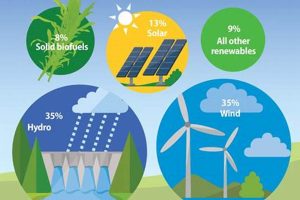
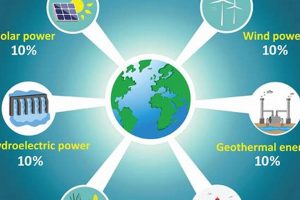
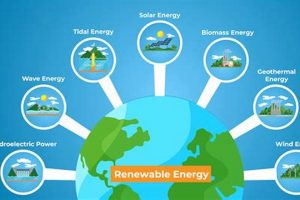
Energy derived from naturally replenishing sources characterizes a specific category of sustainable power generation. These resources, unlike finite fossil fuels, are continuously replenished by natural processes on a human timescale. Examples include solar radiation, wind currents, geothermal heat, flowing water, and biomass.
The utilization of these energy sources offers numerous advantages. Diminished reliance on fossil fuels translates to reduced greenhouse gas emissions and mitigated climate change impacts. Furthermore, the decentralization potential inherent in many installations fosters energy independence and enhances grid resilience. Historically, human civilizations have harnessed such power, albeit on a smaller scale, for centuries; modern technology enables us to exploit these resources with greater efficiency and scope.
The following sections will delve into the specific technologies used to harness these energy resources, examining their operational principles, economic viability, and environmental considerations. Topics such as solar photovoltaic systems, wind turbine technology, hydropower generation, geothermal energy extraction, and biomass conversion will be explored in detail.
Guidance on Using Replenishable Energy Resources
The effective integration of replenishable energy requires careful planning and informed decision-making. Adhering to these guidelines can enhance the sustainability and economic viability of such systems.
Tip 1: Conduct a Thorough Resource Assessment: Before investing in any system, evaluate the availability and consistency of the targeted resource. Solar irradiance, wind speeds, or geothermal gradients vary significantly by location and affect system performance.
Tip 2: Prioritize Energy Efficiency Measures: Reducing overall energy demand minimizes the size and cost of renewable energy systems. Implementing energy-efficient appliances, insulation, and lighting reduces reliance on external power.
Tip 3: Select Appropriate Technologies: Match the chosen technology to the specific resource characteristics and energy needs. For instance, solar photovoltaic systems are well-suited for sunny climates, while wind turbines are more effective in areas with consistent wind patterns.
Tip 4: Consider Energy Storage Solutions: Intermittent resources, such as solar and wind, require energy storage to ensure continuous power availability. Batteries, pumped hydro, and thermal storage can smooth out energy supply fluctuations.
Tip 5: Explore Grid Interconnection Opportunities: Connecting a renewable energy system to the electrical grid allows for surplus power to be exported and backup power to be drawn when needed. This increases system reliability and reduces overall costs.
Tip 6: Implement Regular Maintenance Procedures: Ensure the long-term performance and reliability of systems through scheduled maintenance. Inspect components, clean surfaces, and replace worn parts to prevent costly failures.
Tip 7: Stay Informed about Policy Incentives: Governmental policies, tax credits, and rebates can significantly reduce the initial investment cost. Track available incentives to maximize the economic benefits of renewable energy adoption.
Implementing these steps fosters a greater understanding of the efficient integration of replenishable energy technologies. Such practices contribute towards a reliable, sustainable and economically responsible energy future.
The subsequent sections will examine specific use cases and challenges associated with the widespread adoption of replenishable energy solutions.
1. Sustainability

Sustainability forms the bedrock upon which the entire concept of energy derived from naturally replenishing sources rests. Without a commitment to sustainability principles, the benefits of using these resources are undermined, and the long-term viability of such energy systems is jeopardized.
- Resource Depletion Mitigation
Sustainability ensures that the rate of energy extraction does not exceed the rate at which the resource is replenished. Unlike fossil fuels, which are finite and exhaustible, solar, wind, and geothermal energy are continuously available. Sustainable practices minimize the risk of resource depletion, ensuring energy security for future generations.
- Environmental Preservation
Sustainable energy practices prioritize minimizing adverse environmental impacts. This includes reducing greenhouse gas emissions, minimizing land use, protecting biodiversity, and preventing water pollution. Sustainable energy systems are designed to operate in harmony with the natural environment, fostering ecological integrity.
- Long-Term Economic Viability
Sustainability implies long-term economic feasibility. While initial investment costs for technologies harnessing energy from naturally replenishing sources can be significant, their operational costs are often lower due to minimal fuel requirements. Furthermore, sustainable energy systems create new jobs and industries, contributing to economic diversification and resilience.
- Social Equity and Justice
Sustainability encompasses social considerations, ensuring equitable access to energy and promoting community well-being. Sustainable energy projects should be designed and implemented in a manner that benefits all members of society, including marginalized communities. This involves engaging local stakeholders, respecting indigenous rights, and promoting fair labor practices.
The facets of sustainability outlined above are intrinsically linked to the successful and responsible utilization of energy from naturally replenishing sources. Embracing these principles ensures that these resources are harnessed in a manner that is environmentally sound, economically viable, and socially just, paving the way for a sustainable energy future.
2. Replenishment Rate

The replenishment rate defines a crucial characteristic of any energy source deemed renewable. It directly correlates with the sustainability of the resource, dictating the rate at which energy can be extracted without depleting the source. This replenishment rate significantly influences the long-term viability and scalability of various energy from naturally replenishing sources technologies. For example, solar energy boasts a high replenishment rate, essentially instantaneous, as the sun’s radiation is constant and predictable. Conversely, biomass, while replenishable, has a much slower replenishment rate, dependent on plant growth and ecological cycles. Overharvesting biomass can lead to deforestation and ecosystem degradation, negating its sustainability.
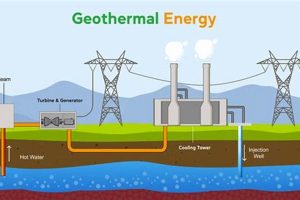
The understanding of replenishment rate is paramount in selecting appropriate energy technologies and designing sustainable energy systems. Hydropower, for instance, relies on the continuous flow of water in rivers and streams. Dam construction can alter river ecosystems, impacting downstream water availability and affecting the replenishment rate of the water source itself. Geothermal energy, although derived from the Earth’s internal heat, requires careful management to prevent the depletion of geothermal reservoirs. Over-extraction can lead to a decrease in reservoir pressure and temperature, diminishing the energy output and longevity of geothermal plants. Wind energy is considered consistently high since the wind is always blowing somewhere, to get the most of the source, strategic placement is required to not reduce the overall average.
In conclusion, the replenishment rate is a fundamental parameter in evaluating and implementing energy from naturally replenishing sources. A higher replenishment rate generally indicates a more sustainable and reliable energy source. However, even with highly replenishable resources, responsible management and technological innovations are necessary to ensure long-term sustainability and prevent unintended environmental consequences. Ignoring the replenishment rate can lead to unsustainable practices, undermining the core principles of renewable energy and jeopardizing future energy security.
3. Environmental Impact

The environmental impact of energy sources represents a critical consideration in the context of sustainable development. While energy from naturally replenishing sources are generally viewed as environmentally benign alternatives to fossil fuels, a nuanced understanding of their potential impacts is essential for responsible implementation.
- Greenhouse Gas Emissions Reduction
A primary benefit of energy from naturally replenishing sources is the significant reduction in greenhouse gas emissions compared to fossil fuel-based power generation. Solar, wind, and geothermal energy, for instance, produce minimal or no direct emissions during operation, mitigating climate change. However, the manufacturing and transportation of equipment do contribute to some emissions, requiring lifecycle assessments to quantify the overall impact.
- Land Use Considerations
Some installations, such as large-scale solar farms and wind farms, require substantial land areas. This can lead to habitat loss, deforestation, and displacement of agricultural activities. Careful site selection, environmental impact assessments, and mitigation strategies are necessary to minimize the ecological footprint and ensure compatibility with land use planning.
- Water Consumption Impacts
Certain energy from naturally replenishing sources technologies, like concentrated solar power and geothermal power, can require significant amounts of water for cooling or steam generation. This can strain water resources in arid and semi-arid regions, potentially impacting ecosystems and agricultural activities. Dry cooling technologies and water conservation measures can help mitigate these impacts.
- Wildlife Impacts
Wind turbines can pose a threat to birds and bats through collisions. Hydropower dams can disrupt fish migration patterns and alter river ecosystems. Careful siting, mitigation measures such as bird deterrents, and the development of fish-friendly turbines are crucial to minimize impacts on wildlife populations and maintain biodiversity.
Energy from naturally replenishing sources offer a pathway towards a more sustainable energy future. Minimizing environmental impacts requires comprehensive planning, responsible technology deployment, and continuous monitoring to ensure that these resources are harnessed in a manner that protects the environment and safeguards ecological integrity.
4. Technological Accessibility

Technological accessibility directly influences the widespread adoption and effectiveness of energy derived from naturally replenishing sources. The complexity and cost associated with specific technologies determine their feasibility for deployment in various regions and communities. If the technology required to harness a specific energy source is complex, requires specialized expertise, or involves significant upfront capital expenditure, its accessibility is inherently limited. Solar photovoltaic (PV) technology, for example, has become increasingly accessible due to advancements in manufacturing processes, resulting in lower panel costs and simplified installation procedures. This enhanced accessibility has driven its proliferation in both developed and developing nations.
Conversely, geothermal energy, while possessing significant potential, faces challenges related to technological accessibility. Deep geothermal resources necessitate sophisticated drilling techniques and specialized power plant infrastructure, resulting in higher initial investment costs and restricted deployment to regions with readily accessible geothermal reservoirs and the financial resources to support such projects. Similarly, advanced biofuels, derived from algae or other non-food crops, require complex biochemical conversion processes and specialized facilities, currently limiting their widespread commercialization. Grid infrastructure is also directly impacted on accessibility, as without the appropriate transmission lines and the capability of bidirectional movement, locations of renewable generation are limited to specific spots or only capable of off-grid use.
In conclusion, technological accessibility is a crucial factor dictating the practical implementation of energy derived from naturally replenishing sources. Overcoming technological barriers through research and development, cost reductions, and simplified deployment strategies is essential for unlocking the full potential of these resources and achieving a sustainable energy future. Improving technology accessibility leads to greater market penetration, contributing to reduced reliance on fossil fuels and mitigating the impacts of climate change. Furthermore, government policy and investment in research are major sources of access to renewable energy sources.
5. Economic Viability

Economic viability is a pivotal determinant in the large-scale adoption and sustained operation of energy derived from naturally replenishing sources. The cost-effectiveness of these technologies, relative to conventional fossil fuels and nuclear power, directly impacts their competitiveness in the energy market. A demonstrably positive return on investment, considering both initial capital costs and ongoing operational expenses, is often a prerequisite for attracting private sector investment and securing government support. Without economic viability, widespread deployment of energy from naturally replenishing sources will remain constrained, hindering progress towards climate change mitigation and energy independence. For example, solar photovoltaic technology has experienced significant cost reductions over the past decade, enhancing its economic viability and enabling its widespread adoption in various regions. However, other renewable technologies, such as offshore wind or enhanced geothermal systems, still face challenges related to high initial capital costs, limiting their deployment in the absence of government subsidies or carbon pricing mechanisms.
The economic viability of energy from naturally replenishing sources is not solely determined by direct costs but also influenced by external factors, including government policies, carbon pricing, and technological advancements. Subsidies, tax incentives, and feed-in tariffs can improve the economic competitiveness of systems, encouraging investment and deployment. Carbon pricing mechanisms, such as carbon taxes or cap-and-trade systems, internalize the environmental costs associated with fossil fuels, making energy derived from naturally replenishing sources more economically attractive. Furthermore, ongoing research and development efforts, aimed at improving the efficiency and reducing the costs of these technologies, are crucial for enhancing their long-term economic viability. The economic dynamics of renewable hydrogen production, for example, are heavily reliant on electrolysis costs and the cost of renewable electricity generation. As renewable electricity prices decline, and electrolyzer technology improves, the economic viability of renewable hydrogen is expected to increase significantly, enabling its use in transportation, industry, and energy storage.
In summary, economic viability is an essential factor in achieving a sustainable energy future. Continuous cost reductions, supportive government policies, carbon pricing mechanisms, and technological advancements are critical for improving the economic competitiveness of energy derived from naturally replenishing sources and facilitating their widespread adoption. Addressing the economic challenges associated with these technologies will unlock their full potential and enable a transition to a cleaner, more secure, and more sustainable energy system. Without a clear pathway to economic viability, the long-term success of energy derived from naturally replenishing sources is uncertain, potentially hindering the global effort to combat climate change and secure a sustainable energy future.
Frequently Asked Questions about Energy from Naturally Replenishing Sources
The following section addresses common inquiries and clarifies misconceptions surrounding energy derived from naturally replenishing sources.
Question 1: What constitutes a source as energy from naturally replenishing sources?
A source qualifies as energy from naturally replenishing sources if its rate of natural replenishment is at least as high as, or higher than, the rate of its consumption by humans. These sources derive from natural processes, such as solar radiation, wind currents, geothermal heat, and hydrological cycles.
Question 2: Are systems always environmentally friendly?
While systems generally have a lower environmental impact compared to fossil fuel-based energy systems, they are not entirely without impact. The construction, manufacturing, and disposal of equipment can have environmental consequences. Careful planning and responsible resource management are necessary to minimize these impacts.
Question 3: How reliable are resources for energy?
The reliability of energy derived from naturally replenishing sources varies depending on the specific resource and technology used. Solar and wind energy are intermittent, dependent on weather conditions. Hydropower and geothermal energy are generally more reliable, but their availability can be affected by seasonal variations and geological factors.
Question 4: What role does energy storage play in systems?
Energy storage is crucial for addressing the intermittency challenges associated with certain energy from naturally replenishing sources, particularly solar and wind power. Energy storage technologies, such as batteries, pumped hydro storage, and thermal energy storage, can store excess energy generated during peak production periods and release it when demand exceeds supply.
Question 5: Can energy derived from naturally replenishing sources meet global energy demands?
Studies suggest that energy derived from naturally replenishing sources have the potential to meet a significant portion of global energy demand, but challenges remain. These challenges include intermittency, land use considerations, and the need for grid infrastructure upgrades. A diversified energy mix, combining multiple energy from naturally replenishing sources with energy storage and smart grid technologies, is likely required.
Question 6: What are the primary barriers to the widespread adoption of energy from naturally replenishing sources?
The primary barriers to widespread adoption include high initial costs for some technologies, intermittency issues, regulatory hurdles, and a lack of public awareness. Overcoming these barriers requires government support, technological innovation, and increased public education.
In conclusion, energy from naturally replenishing sources present a viable pathway towards a more sustainable and secure energy future. Ongoing research, policy support, and responsible implementation are essential for maximizing their potential and overcoming existing challenges.
The subsequent section will examine future trends and emerging technologies in the field of energy from naturally replenishing sources.
Conclusion
The preceding analysis has detailed the characteristics, benefits, and challenges associated with what is a renewable sources of energy. The discussion encompassed sustainability, replenishment rates, environmental impacts, technological accessibility, and economic viability. Each of these facets plays a critical role in determining the feasibility and effectiveness of harnessing these power sources. Overcoming the limitations identified, such as intermittency and high initial costs for certain technologies, is paramount to realizing the full potential of this energy sector.
The transition toward wider implementation of what is a renewable sources of energy represents a necessary step in mitigating climate change and ensuring long-term energy security. Continued research, strategic policy implementation, and responsible resource management are essential to accelerate this transition and create a more sustainable energy future. The commitment to developing and deploying these resources remains vital for the well-being of the planet and future generations.