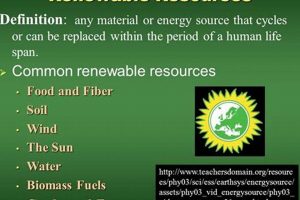
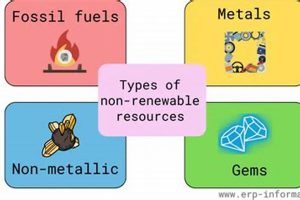
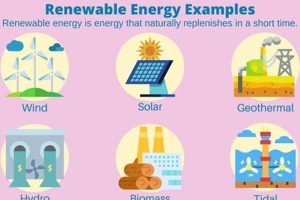
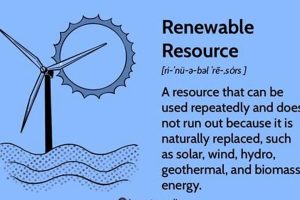
Harnessing power from sources that naturally replenish themselves is critical for a sustainable future. These resources offer alternatives to finite fossil fuels, mitigating environmental impact and bolstering energy security. Examples include solar, wind, hydro, geothermal, and biomass. Each possesses unique characteristics and contributes to a diversified energy portfolio.
The shift towards these sustainable options presents multiple advantages. Reduced greenhouse gas emissions contribute to combating climate change. Furthermore, reliance on domestic sources strengthens economies and reduces dependence on volatile global markets. Historically, the exploration and implementation of these resources have evolved significantly, driven by technological advancements and increasing environmental awareness.
This article will delve into the specifics of five key sustainable energy sources, examining their operational principles, current applications, and potential for future development.
Strategic deployment of various resource types is critical for effective and lasting impact.
Tip 1: Prioritize Resource Assessment: Conducting thorough site assessments is essential before implementation. Factors such as solar irradiance, wind speed patterns, and geothermal gradients significantly impact efficiency. A proper assessment minimizes risks and optimizes the return on investment.
Tip 2: Integrate Storage Solutions: The intermittent nature of some source types necessitates the integration of energy storage systems. Battery storage, pumped hydro, and thermal storage can smooth out energy supply, ensuring reliable power delivery even when the primary source is unavailable.
Tip 3: Diversify the Energy Mix: Avoid over-reliance on any single resource. A diversified portfolio enhances resilience and hedges against fluctuations in resource availability or technological advancements in one area.
Tip 4: Leverage Technological Advancements: Continuously monitor and adopt new technologies. Improvements in photovoltaic cell efficiency, wind turbine design, and geothermal drilling techniques can significantly improve performance and reduce costs.
Tip 5: Encourage Community Engagement: Successful projects require public support. Involving local communities in the planning and implementation process can address concerns, foster acceptance, and ensure that projects align with local needs and values.
These tips emphasize the importance of careful planning, diversification, and community involvement for maximizing the benefits.
Adopting these strategies will contribute to a more sustainable and secure energy future.
1. Solar Irradiance

Solar irradiance, defined as the power per unit area received from the sun, is a crucial determinant of the energy output from solar power systems. As one of the foundational resources, it underpins the viability and effectiveness of photovoltaic (PV) and solar thermal technologies. The intensity of solar radiation directly affects the amount of electricity generated by PV panels; higher irradiance yields greater energy production. For instance, regions with consistent high irradiance levels, such as the southwestern United States or the Sahara Desert, are particularly well-suited for large-scale solar energy deployments. Therefore, irradiance dictates the economic feasibility and geographical suitability.
The practical significance of understanding solar irradiance lies in optimizing the design and deployment of solar energy installations. Detailed solar resource assessments, often involving satellite data and ground-based measurements, are essential for accurate energy yield predictions. These predictions, in turn, inform investment decisions, technology selection, and grid integration strategies. For example, knowing the seasonal variations in irradiance allows for the design of hybrid systems that combine solar with other resources to ensure a consistent power supply. Furthermore, variations in spectral irradiance also influence the material science involved in solar panel design and optimization.
In summary, solar irradiance is an indispensable factor in the utilization of solar power. Its intensity directly impacts energy generation, its understanding is vital for optimal system design, and its variability necessitates careful planning and integration with other energy sources. Challenges remain in accurately forecasting irradiance, particularly for short-term variability due to cloud cover, but ongoing research and improved monitoring technologies are continuously refining our ability to harness its potential.
2. Wind Velocity
Wind velocity is a critical parameter in the context of wind energy, one of the core sustainable power sources. Wind turbines convert the kinetic energy of moving air into electricity; thus, wind speed directly determines the power output. Greater air movement results in a significantly higher energy yield. For instance, a doubling of wind speed theoretically leads to an eightfold increase in power generation, although practical limitations exist. Sites with consistently high average wind speeds, such as coastal areas and mountain passes, are preferred for wind farm developments.
The practical significance lies in the optimization of wind turbine placement and design. Meteorological studies and computational fluid dynamics are employed to identify areas with favorable wind regimes. This data guides the selection of appropriate turbine types, rotor diameters, and tower heights to maximize energy capture. Offshore wind farms, despite higher installation costs, often benefit from stronger and more consistent wind flows, resulting in higher capacity factors. Furthermore, predictive models for wind velocity are essential for grid operators to manage the intermittent nature of wind power and maintain grid stability. For example, Denmark leverages extensive wind velocity data to integrate a high percentage of wind energy into its national grid.
In conclusion, wind velocity is a fundamental factor affecting the feasibility and efficiency of this resource. Understanding its patterns and characteristics is essential for proper siting, design optimization, and grid integration. Challenges remain in accurately forecasting wind velocity, particularly in complex terrains and during extreme weather events, but continuous advancements in forecasting models are improving the reliability of wind power generation.
3. Hydropower Potential
Hydropower potential, as a component of renewable energy resources, refers to the amount of power that can be generated from flowing water. It is intrinsically linked to geographical and climatic factors, with significant implications for energy production and environmental impact.
- Geographic Factors
The terrain’s slope and altitude, coupled with the volume and consistency of water flow, determine the theoretical potential. Mountainous regions with high precipitation and steep river gradients offer significant opportunities. For example, Norway and Switzerland, with their extensive mountain ranges and abundant rainfall, are substantial generators of hydroelectricity.
- Environmental Considerations
Development involves dam construction and reservoir creation, affecting river ecosystems, sediment transport, and water quality. Fish migration patterns can be disrupted, and large-scale inundation of land can displace communities. Sustainable practices prioritize minimizing environmental impact through fish ladders, environmental flow releases, and careful site selection.
- Dam Infrastructure and Technology
Dam construction is a critical aspect, varying from conventional concrete dams to more environmentally sensitive run-of-river systems that divert a portion of the flow without creating large reservoirs. Turbine technology has advanced to improve efficiency and reduce environmental harm. The Three Gorges Dam in China exemplifies large-scale conventional systems, while smaller, run-of-river plants minimize environmental disruption.
- Economic and Social Impacts
Hydropower provides a reliable baseload power supply and contributes to grid stability. Projects can provide employment and revenue to local communities. However, displacement of populations due to reservoir creation and changes to downstream water availability can create social challenges. Careful planning and stakeholder engagement are crucial for equitable outcomes. The Itaipu Dam, jointly operated by Brazil and Paraguay, has had both substantial economic benefits and social ramifications.
Examining the interplay between these considerations provides a holistic understanding of the complexities associated with integrating hydro as a sustainable energy source. Effective management and innovative technological solutions are necessary to optimize energy generation while mitigating environmental and social costs.
4. Geothermal Gradients

Geothermal gradients, as a parameter within renewable energy resources, determine the feasibility of geothermal power generation. They represent the rate at which the Earth’s temperature increases with depth, influencing the accessibility and viability of subterranean heat for energy production.
- Gradient Measurement and Variability
The geothermal gradient is typically measured in degrees Celsius per kilometer of depth. It varies significantly across different geological regions, influenced by factors such as tectonic activity, rock composition, and groundwater circulation. Regions with high gradients, such as those near volcanic activity, are particularly suitable for geothermal power plants. For example, Iceland, situated on the Mid-Atlantic Ridge, exhibits some of the highest gradients and is a leader in geothermal energy utilization.
- Direct Use Applications
Geothermal gradients facilitate direct use applications, including heating and cooling systems for buildings, agricultural purposes, and industrial processes. Lower temperature gradients can be exploited for these applications, making geothermal energy accessible in a broader range of locations. For instance, geothermal heat pumps utilize the relatively constant subsurface temperatures to provide efficient heating and cooling for residential and commercial buildings.
- Power Generation Techniques
Higher temperature gradients are required for efficient electricity generation. Geothermal power plants typically utilize steam or hot water extracted from underground reservoirs to drive turbines and generate electricity. Enhanced Geothermal Systems (EGS) aim to access geothermal energy in areas with insufficient natural permeability by creating artificial fractures in hot, dry rocks. The Geysers geothermal field in California is an example of a naturally occurring high-temperature reservoir used for power generation.
- Environmental and Sustainability Considerations
While a sustainable option, geothermal energy is subject to environmental considerations. Geothermal power plants can release small amounts of greenhouse gases, such as carbon dioxide and hydrogen sulfide, although typically far less than fossil fuel plants. Proper management of geothermal resources is essential to prevent reservoir depletion and ensure long-term sustainability. Furthermore, the disposal of geothermal fluids requires careful handling to avoid groundwater contamination.
Understanding the role of gradients in energy production provides insights into the opportunities and limitations of this resource. Effective resource management and technological advancements will enhance the efficiency and sustainability of integrating geothermal gradients.
5. Biomass Availability

Biomass availability directly influences the feasibility and sustainability of biomass energy, a critical component of renewable energy resources. As one of the major sources, biomass encompasses organic matter derived from plants and animals, utilized for heat, electricity, and fuel production. The accessibility and sustainable supply of biomass resources dictate the scale and environmental impact of biomass energy systems. For example, abundant forestry residues in Scandinavian countries support large-scale combined heat and power plants, whereas limited biomass availability in arid regions necessitates alternative renewable energy strategies. Thus, biomass fuels the capacity and geographic viability of biomass systems.
The practical significance is evident in the strategic planning and implementation of biomass energy projects. Detailed assessments of biomass resources, including agricultural residues, forest products, and dedicated energy crops, are essential for ensuring a reliable and sustainable feedstock supply. These assessments inform investment decisions, technology selection, and supply chain logistics. For example, the development of efficient biomass gasification technologies and the utilization of sustainable agricultural practices can enhance the efficiency and environmental performance of biomass energy systems. Furthermore, biomass plays a crucial role in waste-to-energy strategies, reducing landfill waste and recovering energy from organic waste streams. The city of Vienna, Austria, exemplifies this with its waste incineration plants that provide district heating.
In summary, biomass availability is a cornerstone of biomass energy. Its sustainable sourcing and efficient utilization are essential for harnessing biomass as a sustainable source of energy. Challenges remain in ensuring sustainable feedstock supply, addressing land-use conflicts, and mitigating potential environmental impacts, but ongoing research and technological advancements continue to improve the sustainability and efficiency of biomass energy systems.
6. Energy Storage

Energy storage systems are integral to the effective utilization of sustainable power sources. The intermittent nature of many renewable options necessitates storage solutions to ensure a consistent and reliable power supply, mitigating fluctuations inherent in solar, wind, and other such resources.
- Battery Storage for Solar and Wind
Lithium-ion batteries are commonly employed to store electricity generated by solar photovoltaic (PV) arrays and wind turbines. This allows for the dispatch of electricity during periods of low sunlight or wind. For instance, large-scale battery storage installations are paired with solar farms to provide power during peak demand hours after sunset, thereby increasing the grid reliability of renewable sources.
- Pumped Hydroelectric Storage
Pumped hydro involves pumping water from a lower reservoir to a higher reservoir during periods of excess power generation, and then releasing the water to generate electricity when demand is high. This technique is suited for large-scale, long-duration energy storage. Numerous hydroelectric facilities worldwide utilize pumped hydro to balance grid load fluctuations, especially with the integration of intermittent sources like solar and wind.
- Thermal Storage for Geothermal and Solar Thermal
Thermal storage systems capture and store heat energy for later use. In geothermal applications, hot water or steam can be stored in insulated tanks or underground reservoirs. Solar thermal power plants employ molten salt to store heat, enabling electricity generation even when sunlight is not available. Such storage enhances the dispatchability of these thermal renewable options.
- Hydrogen Storage for Diverse Renewables
Hydrogen, produced via electrolysis powered by excess renewable energy, provides a means for long-term and large-scale energy storage. The stored hydrogen can then be used in fuel cells to generate electricity or as a feedstock for industrial processes. Several pilot projects are exploring hydrogen production and storage using surplus electricity from wind and solar installations.
These diverse energy storage technologies play a critical role in enabling the widespread adoption of solar, wind, hydro, geothermal, and biomass resources. By addressing the intermittency challenges associated with many sustainable generation methods, storage enhances grid stability, improves power reliability, and maximizes the potential of renewable energy portfolios.
Frequently Asked Questions About Renewable Energy
The following questions address common inquiries about sustainable power sources and their implementation.
Question 1: What constitutes a resource as “renewable?”
A resource is classified as “renewable” if it is naturally replenished at a rate comparable to or faster than its rate of consumption. This ensures long-term availability and sustainability.
Question 2: Are renewable energy sources entirely free from environmental impact?
While environmentally preferable to fossil fuels, these sources are not without impact. Hydropower can affect river ecosystems, wind farms can pose risks to avian populations, and biomass combustion can release some air pollutants.
Question 3: Why are renewable energy technologies not universally adopted?
Barriers to widespread adoption include higher initial costs, intermittency of some resources (such as solar and wind), and the need for infrastructure upgrades to accommodate decentralized generation.
Question 4: Can renewable energy sources reliably meet global energy demands?
With sufficient investment, technological advancements, and strategic deployment, sustainable sources possess the potential to meet a significant portion of global energy demand. A diversified approach, combining different technologies, is crucial.
Question 5: How do government policies impact the deployment of renewable energy resources?
Government policies, such as tax incentives, feed-in tariffs, and renewable portfolio standards, play a significant role in accelerating deployment by reducing financial barriers and creating market demand.
Question 6: What is the role of energy storage in maximizing the benefits of renewable energy?
Energy storage technologies, such as batteries and pumped hydro, address the intermittent nature of some sources, allowing for the reliable delivery of power even when sunlight or wind is unavailable, thus enhancing grid stability.
These answers provide a foundation for understanding the complexities associated with harnessing sustainable energy. Continued innovation and informed policymaking are vital for realizing the full potential of resources.
The subsequent sections will delve into emerging trends and future prospects.
Concluding Perspectives on Sustainable Energy
This exploration of solar irradiance, wind velocity, hydropower potential, geothermal gradients, and biomass availability underscores their individual importance and collective contribution to a diversified energy future. Strategic planning, technological advancements, and supportive policies are essential for effective resource utilization and grid integration. The insights presented illustrate the complexities inherent in each power source.
The shift toward these sources is not merely an environmental imperative but a strategic necessity for energy security and economic stability. Continued research, investment, and responsible implementation are crucial for maximizing the benefits of these resources, mitigating environmental impacts, and realizing the full potential of a sustainable energy future. The transition requires sustained effort, collaboration, and a commitment to innovation.
![Guide to What Energy Resources Are Renewable [+Future] | Renewable Energy Solutions for a Sustainable Future | Clean & Green Power](https://pplrenewableenergy.com/wp-content/uploads/2026/03/th-516-300x200.jpg "Guide to What Energy Resources Are Renewable [+Future] Renewable Energy Solutions for a Sustainable Future | Clean & Green Power")