

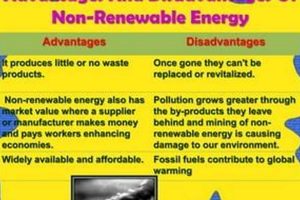

Non-renewable energy sources, primarily fossil fuels (coal, oil, and natural gas) and nuclear energy, derive from finite resources that cannot be replenished within a human timescale. Fossil fuels are formed from the... Read more »
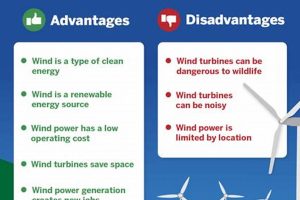
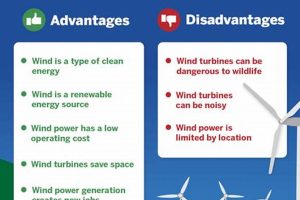
Harnessing the kinetic power of moving air to generate electricity presents a compelling alternative to traditional fossil fuel sources. This method offers a potentially sustainable pathway toward meeting global energy demands, but... Read more »

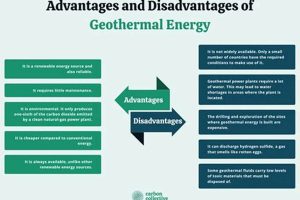
Geothermal energy harnesses the Earth’s internal heat for various applications, including electricity generation and direct heating. Exploring its potential requires a careful assessment of both its merits and drawbacks to ensure responsible... Read more »
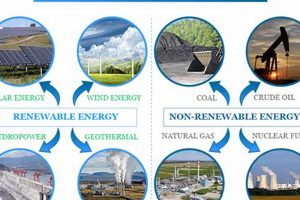
Non-renewable energy sources, such as fossil fuels (coal, oil, and natural gas) and nuclear energy, are finite resources that cannot be replenished at the rate they are consumed. A primary drawback stems... Read more »
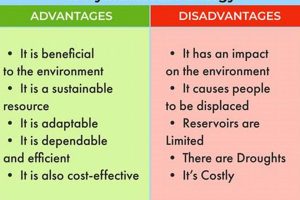
Harnessing the power of flowing water to generate electricity offers a clean alternative to fossil fuels. This process involves constructing dams and reservoirs to control water flow, channeling it through turbines to... Read more »
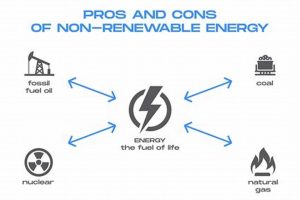
Finite resources like fossil fuels (coal, oil, and natural gas) and nuclear fuels (uranium) constitute the basis of non-renewable energy generation. Their utilization involves processes that pose significant environmental and societal challenges.... Read more »
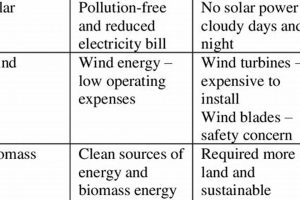
Renewable energy resources, defined as sources that naturally replenish, offer a compelling alternative to fossil fuels. These resources include solar, wind, hydro, geothermal, and biomass, each possessing unique characteristics and conversion methods.... Read more »

High upfront costs are a significant barrier to adopting renewable energy technologies. While the long-term operational costs are generally lower due to free fuel sources like sunlight and wind, the initial investment... Read more »
Fossil fuels (coal, oil, and natural gas) and nuclear energy are finite resources, meaning their reserves are limited and will eventually be depleted. Extraction and utilization of these resources often have significant... Read more »
Renewable energy sources, like solar, wind, hydro, geothermal, and biomass, offer an alternative to fossil fuels, providing power generation without depleting finite resources. Harnessing the power of the sun, wind, or water’s... Read more »