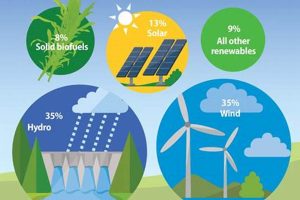
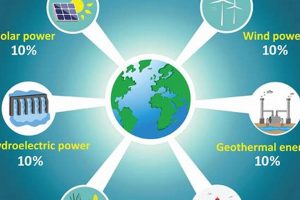
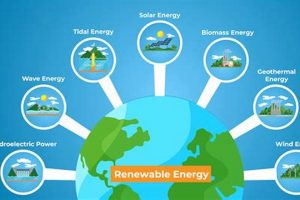
Harnessing power from naturally replenishing resources is crucial for sustainable energy production. These resources include sunlight, wind, flowing water, the Earth’s internal heat, and biomass. Each offers a pathway to generating electricity, heat, or mechanical power with minimal environmental impact compared to fossil fuels. For instance, photovoltaic cells convert sunlight directly into electricity, while wind turbines transform kinetic energy into usable power.
Utilizing these inexhaustible resources presents significant advantages. Reduced greenhouse gas emissions, decreased reliance on finite fossil fuel reserves, and the creation of energy independence are key benefits. Historically, societies have utilized some of these sources on a small scale for centuries, such as windmills for grinding grain or water wheels for powering mills. Modern technologies, however, have significantly enhanced their capacity and efficiency, making them viable alternatives to conventional power generation.
The subsequent sections will delve into several of these key energy generation methods, analyzing their technological advancements, economic viability, and environmental considerations. The discussion will cover solar power, wind power, hydropower, geothermal energy, and biomass energy, highlighting their respective contributions to the global energy landscape.
Harnessing Sustainable Energy
Effective implementation of sustainable energy generation necessitates a strategic approach. Consideration of resource availability, technological suitability, and economic feasibility is paramount.
Tip 1: Conduct a Thorough Resource Assessment: Before investing in any particular technology, carefully evaluate the availability and consistency of the resource. For instance, assess solar irradiance levels and wind patterns for solar and wind projects, respectively. Understanding seasonal variations is also critical.
Tip 2: Prioritize Energy Efficiency: Reduce overall energy demand through efficiency measures. Improving insulation, upgrading appliances to energy-efficient models, and implementing smart grid technologies can significantly decrease the scale and cost of required renewable energy generation.
Tip 3: Diversify Energy Portfolios: Reliance on a single energy method increases vulnerability to resource fluctuations and technological limitations. A mix of solar, wind, hydropower, and other methods provides a more stable and resilient energy supply.
Tip 4: Consider Energy Storage Solutions: Address the intermittency challenges inherent in solar and wind by incorporating energy storage systems. Battery storage, pumped hydro storage, and thermal energy storage can help stabilize the grid and ensure a continuous energy supply.
Tip 5: Engage in Community Involvement and Education: Foster public acceptance and support for sustainable energy initiatives. Educate stakeholders about the benefits and address any concerns regarding environmental impacts or aesthetic considerations. Transparent communication builds trust and facilitates project implementation.
Tip 6: Implement Smart Grid Technologies: Modernize the grid infrastructure to optimize the integration and distribution of generated power. Smart grids improve grid reliability, enhance energy efficiency, and enable the seamless incorporation of distributed energy resources.
Tip 7: Explore Hybrid Systems: Combine two or more energy generation methods to leverage their complementary strengths. A solar-wind hybrid system, for instance, can provide a more consistent energy supply by offsetting the variability of each individual resource.
By implementing these strategies, stakeholders can maximize the effectiveness and sustainability of energy generation projects. A holistic approach that considers resource availability, technological advancements, and community engagement is essential for achieving long-term energy security and environmental sustainability.
In conclusion, these practical considerations provide a framework for optimizing the adoption and integration of various methodologies. The subsequent sections will offer a detailed overview of the future prospects and challenges associated with harnessing various technologies.
1. Solar irradiance potential

Solar irradiance potential represents the measure of solar power available at a specific location over a period of time. Its direct relationship to key energy sources stems from its function as the fundamental input for solar photovoltaic (PV) and solar thermal energy systems. Variability in solar irradiance directly impacts the electrical output and efficiency of solar energy harvesting technologies. Regions with high irradiance, such as the southwestern United States or the Sahara Desert, possess a greater capacity for generating significant amounts of solar energy compared to areas with lower average irradiance. This inherent characteristic makes irradiance potential a decisive factor in determining the economic viability and geographical suitability of solar energy projects.
The practical significance of understanding solar irradiance potential extends to the planning and deployment of large-scale solar power plants. For example, accurate irradiance data influences the angle and orientation of PV panels to maximize sunlight absorption. Predictive modeling using historical irradiance data is employed to estimate power generation capacity, which is crucial for grid integration and energy storage planning. The development of concentrated solar power (CSP) plants, which use mirrors to focus sunlight and heat a fluid to drive a turbine, relies heavily on regions with consistently high solar irradiance to ensure efficient and cost-effective power production. Therefore, detailed knowledge of irradiance patterns underpins the effective utilization of solar energy as a significant resource.
In conclusion, solar irradiance potential is a critical component determining the feasibility and efficiency of solar energy conversion. Its accurate assessment is essential for optimizing solar energy project deployment, ensuring grid stability, and maximizing energy production. While geographic location significantly influences irradiance levels, ongoing research and technological advancements continually strive to enhance the performance and economic viability of solar energy conversion, irrespective of regional irradiance variations, thereby strengthening its role among substantial resources.
2. Wind turbine efficiency

Wind turbine efficiency is a crucial factor in determining the economic viability and overall contribution of wind power as a significant source. It directly impacts the amount of electricity generated from a given wind resource, influencing the profitability of wind farms and the competitiveness of wind energy compared to other energy sources.
- Aerodynamic Design and Blade Technology
Aerodynamic design of wind turbine blades directly influences how effectively the turbine extracts energy from the wind. Advanced blade profiles, such as those incorporating airfoils derived from aerospace engineering, maximize lift and minimize drag, leading to increased rotational speed and power output. The use of lightweight materials like fiberglass and carbon fiber allows for longer blades, capturing more wind energy. Innovations like blade twist and pitch control further optimize efficiency across a range of wind speeds.
- Generator and Power Conversion Systems
The generator converts the mechanical energy of the rotating turbine blades into electrical energy. High-efficiency generators, including direct-drive systems that eliminate the need for a gearbox, reduce energy losses during conversion. Power conversion systems, such as inverters, transform the generated electricity into a form suitable for grid integration, ensuring stable and reliable power delivery. Minimizing losses throughout the generator and power conversion stages is critical for maximizing overall turbine efficiency.
- Turbine Control Systems and Yaw Mechanisms
Sophisticated control systems continuously monitor wind speed and direction, adjusting the turbine’s yaw (horizontal orientation) and blade pitch to optimize energy capture. Yaw mechanisms align the turbine with the prevailing wind, while pitch control regulates the angle of the blades to prevent over-speeding in high winds and to maximize energy extraction in lower wind conditions. Advanced control algorithms enhance responsiveness to changing wind conditions, improving the overall efficiency and reliability of wind turbine operation.
- Site Selection and Wind Resource Assessment
Selecting optimal locations with consistently high wind speeds is essential for maximizing wind turbine efficiency. Thorough wind resource assessments, including meteorological data analysis and computational fluid dynamics modeling, identify areas with favorable wind patterns and minimal turbulence. Turbine placement within a wind farm is also critical to minimize wake effects, where the turbulence from one turbine reduces the efficiency of those downstream. Strategic site selection significantly impacts the long-term energy output and economic viability of wind energy projects.
The interconnectedness of these facets illustrates the multifaceted nature of wind turbine efficiency. Continuous advancements in materials science, aerodynamics, and control systems are driving improvements in turbine performance, making wind energy an increasingly competitive and sustainable source. These innovations are essential for wind power to further solidify its position in the global energy mix and contribute substantially to reducing reliance on conventional fossil fuels.
3. Hydropower capacity factors

Hydropower capacity factors are a critical determinant of hydropower’s contribution as a substantial resource. This metric reflects the ratio of actual energy output over a specific period to the maximum possible energy output under ideal conditions. High capacity factors indicate consistent and reliable energy generation, which directly enhances hydropower’s competitiveness and its role in fulfilling base-load energy demands. Hydropower’s capacity factor is intrinsically linked to water availability, reservoir management, and the operational efficiency of the power plant. For instance, a dam with a consistently high capacity factor provides a stable power supply, reducing the need for fluctuating energy sources, and, consequently, it reinforces the hydroelectric power station as a primary renewable energy resource.
The importance of hydropower capacity factors is evident in comparing different hydroelectric facilities. Large-scale dams, like the Three Gorges Dam in China, can achieve higher capacity factors due to significant water storage capacity, ensuring continuous electricity generation even during seasonal dry periods. Run-of-river hydropower projects, conversely, may exhibit lower capacity factors because their electricity output is directly dependent on the river’s natural flow, which varies with precipitation and seasonal changes. Understanding these nuances in capacity factors is crucial for grid operators and policymakers to integrate hydropower effectively into the broader energy mix. They also influence investment decisions in new or upgraded hydropower projects.
In conclusion, hydropower capacity factors are essential for evaluating the potential contribution of hydroelectricity as a core component. Optimizing these factors requires a comprehensive approach that includes efficient water management, technological upgrades to power plants, and careful consideration of environmental impacts. Addressing these factors ensures that hydropower continues to play a vital role in meeting global energy needs while mitigating environmental concerns, reinforcing its position among substantial resources.
4. Geothermal gradient access

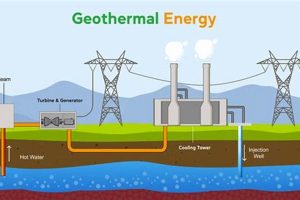
Geothermal gradient access directly influences the feasibility and economic viability of geothermal energy as a major source of renewable power. The geothermal gradient refers to the rate at which the Earth’s temperature increases with depth. Gaining access to regions with anomalously high geothermal gradients, or where heat is concentrated closer to the surface, significantly reduces the cost and technological complexity of geothermal energy extraction. Without suitable gradient access, drilling depths become prohibitively expensive, and the energy required to pump heat to the surface can outweigh the power generated, negating the potential benefits of geothermal energy.
Iceland serves as a prime example of the importance of geothermal gradient access. Its location on the Mid-Atlantic Ridge provides relatively shallow access to substantial geothermal resources. This favorable gradient allows for widespread geothermal power generation and direct-use applications, such as district heating, making Iceland a global leader in geothermal energy utilization. Conversely, regions with lower geothermal gradients require Enhanced Geothermal Systems (EGS), involving the artificial fracturing of hot, dry rocks deep underground to create permeability and facilitate heat extraction. EGS technologies are more complex and expensive than conventional geothermal systems, highlighting the critical role of natural gradient access in making geothermal energy a competitive renewable resource.
In conclusion, the ease of access to the geothermal gradient is a crucial factor determining the viability of harnessing geothermal energy as a sustainable power source. While technological advancements like EGS can expand the geographical range of geothermal exploitation, regions with naturally high geothermal gradients offer a significant advantage in terms of cost, efficiency, and overall contribution to the landscape, solidifying its standing among substantial resources.
5. Biomass feedstock availability

Biomass feedstock availability is a pivotal determinant of the sustainability and scalability of biomass energy as a major source of renewable energy. The sustainable supply of diverse biomass resources, including agricultural residues, forestry byproducts, and dedicated energy crops, is essential for ensuring the long-term viability of biomass power generation and biofuel production. Without a reliable and environmentally responsible source of biomass, the potential of biomass energy to contribute significantly to renewable energy targets is severely constrained.
- Agricultural Residue Management
Agricultural residues, such as corn stover, wheat straw, and rice husks, represent a significant, globally abundant biomass resource. Their effective utilization requires efficient collection, transportation, and pretreatment processes. Sustainability concerns necessitate careful management to avoid soil nutrient depletion and erosion. For example, removing too much residue from agricultural lands can reduce soil organic matter, impairing soil health and long-term productivity, thereby diminishing the sustainable feedstock supply.
- Forestry Byproduct Utilization
Forestry byproducts, including logging slash, sawmill residues, and pulpwood, offer a substantial biomass supply, particularly in regions with extensive forestry industries. Sustainable forest management practices are crucial to ensure that biomass extraction does not compromise forest health or biodiversity. The utilization of forestry byproducts supports forest fire prevention by removing excess fuel loads, while ensuring that logging operations adhere to strict environmental standards to prevent deforestation and habitat loss.
- Dedicated Energy Crop Cultivation
Dedicated energy crops, such as switchgrass, miscanthus, and short-rotation woody crops, are specifically cultivated for biomass production. Optimizing crop selection, cultivation practices, and land use management are vital for maximizing biomass yields while minimizing environmental impacts. The cultivation of energy crops on marginal lands, those unsuitable for food production, avoids competition with food crops and enhances the environmental sustainability of biomass energy.
- Algae and Aquatic Biomass Production
Algae and other aquatic biomass represent a promising feedstock source due to their high growth rates and potential to be cultivated on non-arable land or in wastewater. Sustainable algae cultivation requires efficient nutrient management and water usage practices to minimize environmental impact. Algae-based biofuel production can potentially offer a carbon-neutral energy source if the carbon dioxide used in cultivation is captured from industrial processes, further enhancing sustainability.
These diverse biomass resources, when managed sustainably, collectively contribute to biomass energy’s role as a substantial resource. Balancing economic viability with environmental responsibility is essential for ensuring that biomass feedstock availability supports the long-term growth of biomass energy as a cornerstone of a sustainable energy future. The careful consideration and optimization of feedstock availability, including resource management, is imperative to realize the full potential of biomass energy and to solidify its status within the landscape.
6. Environmental impact minimization
The imperative to minimize environmental impact is intrinsically linked to the successful and sustainable deployment of significant renewable energy resources. While heralded as cleaner alternatives to fossil fuels, various renewable energy technologies are not entirely devoid of environmental consequences. The extent to which these impacts are mitigated directly influences the long-term viability and social acceptance of renewable energy projects. The development and implementation of these resources require careful consideration of potential ecological disturbances, land use changes, and resource depletion. Failure to address these concerns could undermine the environmental benefits that these technologies are intended to provide.
Mitigation strategies vary depending on the specific renewable energy source. For solar energy, land use considerations are paramount, particularly for large-scale solar farms. Careful site selection, employing techniques to minimize habitat disruption, and promoting co-location of solar facilities with agricultural activities can reduce the ecological footprint. Wind energy projects necessitate thorough assessments of avian and bat mortality risks, implementing measures such as turbine siting away from migratory routes and employing deterrent technologies. Hydropower development requires stringent adherence to environmental regulations to minimize impacts on aquatic ecosystems, including fish passage and river flow management. Biomass energy production must prioritize sustainable feedstock sourcing to prevent deforestation and biodiversity loss. Geothermal energy extraction requires careful monitoring to prevent groundwater contamination and induced seismicity. Each technology, therefore, demands a tailored approach to minimize potential adverse environmental effects.
In conclusion, environmental impact minimization is not merely an ancillary consideration but an indispensable component of substantial renewable energy. Effective mitigation strategies, guided by rigorous environmental assessments and continuous monitoring, are essential for ensuring that the transition to renewable energy achieves its intended goal of a more sustainable and environmentally responsible energy future. Addressing these environmental concerns fosters public trust, enhances the social license to operate, and ultimately strengthens the long-term viability of renewable energy as a cornerstone of a sustainable energy system.
7. Technological advancements

The progression of technology is inextricably linked to the increased viability and efficacy of major sources of renewable energy. These advancements directly influence the cost-effectiveness, efficiency, and environmental impact of harnessing energy from renewable resources, determining their potential for widespread adoption. Enhanced materials science, advanced engineering designs, and sophisticated control systems have collectively broadened the application and improved the performance of solar, wind, hydropower, geothermal, and biomass energy technologies. The correlation illustrates that each significant step forward in materials, engineering, and operational understanding translates directly into either increased power generation from these resources or lowered operational costs.
Consider, for example, solar photovoltaic (PV) technology. The development of high-efficiency solar cells using materials such as perovskites and thin films has drastically increased the power output per unit area, reducing the land footprint required for solar farms and lowering the levelized cost of energy (LCOE). Wind energy has benefited from the development of larger, more powerful turbines with longer blades and advanced aerodynamic profiles, enabling them to capture more wind energy and operate efficiently in lower wind speed conditions. Similarly, the implementation of advanced control systems and grid integration technologies has improved the stability and reliability of renewable energy sources, facilitating their seamless integration into existing power grids. Technological improvements in Enhanced Geothermal Systems (EGS) are opening up new possibilities for geothermal energy production in previously inaccessible locations.
In summary, technological progress is a key enabler in the advancement of major sources of renewable energy. Continued investment in research and development is vital to drive further innovation and unlock the full potential of renewable resources. Addressing technical challenges, such as energy storage and grid modernization, will require ongoing innovation to ensure that these energy technologies can effectively contribute to a sustainable energy future. The synergy between technological advancement and renewable energy deployment underscores their importance in reaching global sustainability goals.
Frequently Asked Questions
This section addresses common queries and misconceptions regarding key energy sources.
Question 1: What distinguishes energy sources as “major” within the context of renewability?
The designation “major” is typically assigned to those sources that possess a substantial capacity to contribute to national or global energy demands. This is determined by factors such as resource availability, technological maturity, economic viability, and scalability.
Question 2: How reliable are intermittent resources like solar and wind compared to traditional baseload power plants?
Intermittency presents a challenge. However, advanced forecasting techniques, energy storage solutions (e.g., batteries, pumped hydro), and grid modernization efforts are increasingly mitigating these issues. A diversified energy portfolio further enhances reliability.
Question 3: What are the primary environmental impacts associated with renewable energy technologies?
While generally cleaner than fossil fuels, environmental impacts exist. These may include land use changes (solar farms, wind farms), avian mortality (wind turbines), aquatic ecosystem disruption (hydropower), and sustainable biomass sourcing challenges. Rigorous environmental assessments and mitigation strategies are crucial.
Question 4: Is energy technology cost-competitive with conventional sources?
The cost of several energy technologies, particularly solar and wind, has declined dramatically in recent years, making them competitive in many regions. However, cost-effectiveness can vary depending on location, resource availability, and specific financing conditions.
Question 5: How does energy contribute to energy independence and security?
By leveraging domestically available resources, nations can reduce dependence on imported fossil fuels, enhancing energy security and resilience to geopolitical instability.
Question 6: What policy measures are effective in promoting the adoption of energy technologies?
Effective policy instruments include feed-in tariffs, renewable energy standards, tax incentives, carbon pricing mechanisms, and investments in research and development. A stable and predictable policy framework is essential for fostering investor confidence and driving deployment.
In summary, informed understanding of these critical points is essential for effective decision-making and strategic planning within the energy sector.
The subsequent section will examine emerging trends in the field of energy.
Major Sources of Renewable Energy
This exploration has elucidated the salient aspects of major renewable energy sources, encompassing technological viability, resource considerations, and environmental implications. The comprehensive analysis underscores the necessity of informed deployment strategies, strategic investment, and unwavering commitment to sustainable practices for maximizing the beneficial impact of these crucial energy resources. The examination of solar, wind, hydro, geothermal, and biomass energy highlights their distinct potential and inherent challenges, emphasizing the importance of a diversified and context-specific approach to energy transition.
The imperative to transition towards sustainable energy systems necessitates continued research, innovation, and policy support. A concerted global effort, underpinned by sound scientific understanding and pragmatic implementation, is essential to harness the full potential of major renewable energy sources and secure a sustainable energy future. The stakes are significant, and the path forward demands unwavering dedication to responsible resource management and environmental stewardship.