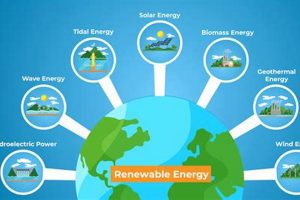
Harnessing power from the marine environment involves capturing the kinetic and potential energy inherent in waves, tides, currents, and thermal and salinity gradients. These diverse resources offer a range of technological approaches for electricity generation. For example, tidal barrages utilize rising and falling tides to drive turbines, while wave energy converters capture the motion of waves. Ocean thermal energy conversion exploits temperature differences between warm surface water and cold deep water to generate power.
This approach to energy production offers significant advantages, including predictability (in the case of tides), vast resource potential, and reduced greenhouse gas emissions compared to conventional fossil fuels. Historically, tidal mills have harnessed ocean energy for centuries, but modern technological advancements are enabling more efficient and large-scale electricity generation from these resources. This transition to cleaner energy sources is crucial for mitigating climate change and ensuring energy security.
This article will further explore the specific technologies used to capture marine energy, the environmental considerations associated with their deployment, and the future potential of this vital sector in the global energy landscape.
Tips for Developing Marine Energy Technologies
Successful implementation of marine energy projects requires careful consideration of several key factors. These tips offer guidance for navigating the complexities of this emerging field.
Tip 1: Resource Assessment: Thoroughly evaluate the specific marine energy resource available at the proposed deployment site. Factors such as wave height, tidal range, current speed, and thermal gradients are crucial for selecting appropriate technologies and optimizing system design.
Tip 2: Environmental Impact Assessment: Conduct comprehensive environmental studies to minimize potential negative impacts on marine ecosystems. Consider effects on marine life, habitats, and water quality.
Tip 3: Technological Suitability: Select technologies appropriate for the specific resource characteristics and environmental conditions. Different technologies are suited to different wave climates, tidal ranges, and water depths.
Tip 4: Grid Integration: Plan for effective integration of marine energy projects into existing power grids. This requires consideration of grid capacity, transmission infrastructure, and energy storage solutions.
Tip 5: Cost Optimization: Analyze project costs, including capital expenditures, operational expenses, and maintenance requirements. Strive to achieve cost-competitiveness with other renewable energy sources.
Tip 6: Community Engagement: Engage with local communities and stakeholders throughout the project development process. Address concerns, incorporate feedback, and ensure project acceptance.
Tip 7: Policy and Regulatory Framework: Navigate the relevant policy and regulatory landscape, including permitting requirements, environmental regulations, and incentives for renewable energy development.
By addressing these critical aspects, marine energy projects can be developed sustainably and contribute significantly to a cleaner energy future.
This exploration of key considerations highlights the multifaceted nature of marine energy development and underscores the importance of a holistic approach.
1. Resource Identification

Resource identification forms a cornerstone of ocean renewable energy development. Accurately assessing the type, magnitude, and variability of marine energy resources is essential for selecting appropriate technologies, designing efficient systems, and ensuring project viability. This process involves characterizing wave climates, tidal ranges, current speeds, thermal gradients, and salinity gradients. The specific resource characteristics dictate the technological approach, influencing choices between tidal barrages, wave energy converters, ocean current turbines, or ocean thermal energy conversion systems. For example, regions with consistent, high-energy waves are suitable for wave energy converters, while areas with substantial tidal ranges are ideal for tidal barrages. Inaccurate resource assessment can lead to technology mismatch, underperformance, and ultimately, project failure.
The practical significance of accurate resource identification extends beyond technology selection. It informs project design parameters, such as the size and capacity of devices, the layout of arrays, and the connection to the electricity grid. Furthermore, resource assessment data provides crucial input for environmental impact assessments, enabling developers to predict and mitigate potential effects on marine ecosystems. For instance, understanding the migratory patterns of marine mammals in relation to proposed tidal turbine deployments is crucial for minimizing potential impacts. Resource data also contributes to financial modeling, enabling investors to evaluate the economic viability of projects based on projected energy yields.
In conclusion, resource identification is an indispensable element of ocean renewable energy development. Its precise execution underpins effective technology selection, optimized system design, robust environmental impact assessments, and sound financial planning. This foundational step ultimately determines the long-term success and sustainability of ocean energy projects, paving the way for a cleaner energy future.
2. Energy Conversion

Energy conversion represents a pivotal process within ocean renewable energy systems, bridging the gap between raw marine energy and usable electricity. This process hinges on transferring the kinetic or potential energy inherent in ocean resourcessuch as waves, tides, currents, and thermal gradientsinto electrical energy. The specific conversion mechanism employed varies depending on the type of resource and the chosen technology. Wave energy converters, for instance, might utilize oscillating water columns or mechanical linkages to drive generators, while tidal barrages harness the potential energy difference between high and low tides to spin turbines. Ocean thermal energy conversion, on the other hand, exploits temperature differences between surface and deep waters to create a thermodynamic cycle that drives a turbine. The efficiency of this energy conversion process directly impacts the overall system performance and the economic viability of the project. Consider a tidal stream turbine: the efficiency with which the turbine blades convert the kinetic energy of moving water into rotational energy, and subsequently into electricity via a generator, determines the power output of the device.
Several factors influence the effectiveness of energy conversion in ocean renewable energy systems. Turbine design, generator efficiency, and power electronics play crucial roles in maximizing energy capture. Furthermore, the interplay between the technology and the resource characteristics is paramount. For example, the blade profile of a tidal turbine must be optimized for the specific current speeds at the deployment site. Similarly, the design of a wave energy converter must be tailored to the prevailing wave climate. Understanding these interactions is essential for optimizing energy conversion and maximizing the power output of ocean energy devices. Furthermore, advancements in material science and control systems contribute to enhanced energy conversion efficiency. Durable materials that withstand the harsh marine environment and sophisticated control systems that optimize device operation in response to changing resource conditions lead to improved performance and increased energy yields.
In summary, efficient energy conversion is fundamental to the viability and success of ocean renewable energy projects. Optimizing this process requires careful consideration of resource characteristics, technology selection, and system design. Advancements in materials, control systems, and power electronics hold significant promise for further enhancing energy conversion efficiency and unlocking the full potential of ocean energy as a sustainable and reliable power source. This focus on efficient conversion directly contributes to reducing the cost of marine energy, improving its competitiveness with other renewable energy sources, and accelerating its integration into the global energy mix.
3. Technology Selection

Technology selection constitutes a critical decision point within ocean renewable energy project development. Appropriate technology choice hinges on a comprehensive understanding of site-specific resource characteristics, environmental conditions, and project goals. This intricate process directly influences project performance, cost-effectiveness, and environmental impact. The diverse array of ocean energy technologies caters to a wide range of marine environments and resource types. Wave energy converters, for instance, are designed to capture the kinetic energy of waves, with variations in design optimized for different wave climates and water depths. Point absorber buoys, oscillating water columns, and overtopping devices represent distinct approaches to wave energy conversion, each with its own advantages and limitations. Tidal barrages and tidal fences exploit the predictable rise and fall of tides to generate electricity, while tidal stream turbines capture the kinetic energy of tidal currents. Choosing between these technologies depends on factors such as tidal range, water depth, and the presence of suitable channels or estuaries. Ocean thermal energy conversion, a less mature technology, harnesses the temperature difference between warm surface waters and cold deep waters to generate power, primarily applicable in tropical and subtropical regions.
Matching the chosen technology to the specific characteristics of the deployment site is crucial. Deploying a wave energy converter designed for high-energy waves in a region with low wave energy would result in suboptimal performance and reduced power output. Similarly, installing a tidal barrage in an area with insufficient tidal range would render the project ineffective. Environmental considerations also factor into technology selection. Tidal barrages, while effective in generating electricity, can alter water flow patterns and impact local ecosystems. Tidal stream turbines, while generally having a lower environmental footprint, can pose risks to marine life if not designed and deployed carefully. The economic viability of a project also depends heavily on appropriate technology selection. Capital costs, operational expenses, and maintenance requirements vary significantly between different technologies. Choosing a technology with high maintenance costs in a remote location could lead to financial challenges.
In conclusion, informed technology selection is essential for maximizing the potential of ocean renewable energy. Careful consideration of resource characteristics, environmental factors, and economic constraints guides effective decision-making. Matching the technology to the site ensures optimal energy capture, minimizes environmental impacts, and enhances the economic viability of ocean energy projects, ultimately contributing to a more sustainable and resilient energy future.
4. Environmental Impact

Environmental impact represents a crucial consideration within the fundamentals of ocean renewable energy. While offering a cleaner alternative to fossil fuels, marine energy technologies can still exert influence on surrounding ecosystems. Understanding these potential impacts is essential for responsible development and sustainable implementation. Interactions with marine life, alterations to habitats, and changes in water quality constitute key areas of concern. For example, tidal turbines can pose collision risks to marine mammals or fish, while wave energy converters may alter sediment transport patterns, affecting benthic communities. Changes in water flow caused by tidal barrages can modify salinity gradients and impact intertidal ecosystems. The magnitude of these impacts varies depending on the specific technology, deployment location, and scale of the project. A thorough environmental impact assessment is therefore indispensable, informing mitigation strategies and guiding responsible project design. Analyzing potential noise pollution from wave energy converters, for instance, informs mitigation measures like noise-reducing design modifications or strategic device placement.
Furthermore, the cumulative effects of multiple marine energy projects within a region warrant careful evaluation. The combined influence of several tidal stream turbine arrays, for example, could significantly alter current patterns and affect the broader marine environment. Addressing these cumulative impacts requires a regional approach to planning and management. Moreover, the lifecycle environmental impacts of ocean energy technologiesfrom material sourcing and manufacturing to decommissioning and disposalrequire consideration. Minimizing the carbon footprint associated with device production and implementing environmentally sound decommissioning practices contributes to the overall sustainability of marine energy. Real-world examples highlight the importance of environmental impact assessments. The deployment of tidal turbines in the Bay of Fundy, for instance, necessitated extensive studies on the potential effects on marine mammals, leading to the implementation of monitoring programs and mitigation strategies.
In summary, integrating environmental considerations into the fundamentals of ocean renewable energy is essential for ensuring long-term sustainability. Thorough environmental impact assessments, coupled with appropriate mitigation strategies and a commitment to lifecycle analysis, minimize potential negative effects and promote responsible ocean energy development. This proactive approach allows marine energy to contribute meaningfully to a cleaner energy future while safeguarding the health and integrity of marine ecosystems. Balancing energy production with environmental protection is paramount for achieving a truly sustainable energy transition.
5. Economic Viability

Economic viability forms a cornerstone of successful ocean renewable energy implementation. The financial feasibility of harnessing power from the sea directly influences investment decisions, policy support, and ultimately, the widespread adoption of these technologies. Analyzing costs, assessing revenue streams, and understanding market dynamics are crucial for establishing the long-term sustainability of ocean energy projects. Several factors contribute to the economic viability of ocean energy. Capital costs associated with technology development, manufacturing, and deployment represent significant initial investments. Operational expenses, including maintenance, repairs, and grid connection costs, influence ongoing profitability. Projected revenue streams, based on electricity generation and market prices, determine the financial returns of a project. The levelized cost of energy (LCOE), a metric comparing the lifetime costs of a power source to its total energy output, serves as a key indicator of economic competitiveness. Achieving a competitive LCOE is essential for attracting investment and ensuring the commercial success of ocean energy projects. For instance, the cost of deploying and maintaining wave energy converters in harsh offshore environments can significantly influence project economics.
Furthermore, government policies and financial incentives play a crucial role in shaping the economic landscape of ocean energy. Subsidies, tax breaks, and feed-in tariffs can stimulate investment and accelerate the development of this emerging sector. The availability of public funding for research and development can drive technological innovation and reduce costs over time. For example, government support for tidal energy projects in the United Kingdom has been instrumental in advancing the sector and fostering economic growth. Market dynamics, including electricity demand, competing energy sources, and carbon pricing mechanisms, also influence the economic viability of ocean energy. A growing demand for renewable energy, coupled with rising fossil fuel prices and carbon taxes, can create favorable market conditions for marine energy technologies. Conversely, low electricity prices and a lack of policy support can hinder investment and impede progress. The interplay of these economic factors determines the long-term success and sustainability of ocean renewable energy projects.
In conclusion, economic viability is inextricably linked to the successful implementation of ocean renewable energy. Careful cost analysis, strategic revenue projections, and a supportive policy environment are essential for fostering investment, driving innovation, and achieving widespread deployment. Addressing economic challenges and creating a stable financial framework will unlock the full potential of ocean energy, contributing significantly to a cleaner, more sustainable, and economically vibrant energy future. This focus on economic viability ensures that ocean energy transitions from a promising concept to a commercially viable and impactful contributor to the global energy mix.
6. Grid Integration

Grid integration represents a critical aspect of ocean renewable energy development, linking the electricity generated from marine sources to the existing power infrastructure for distribution and consumption. Successful integration ensures efficient energy delivery, supports grid stability, and maximizes the benefits of ocean energy. This process necessitates careful planning, sophisticated control systems, and coordination between ocean energy developers and grid operators. The intermittent nature of some marine energy resources, such as waves and tides, poses specific integration challenges. Tidal energy, while predictable, fluctuates with tidal cycles, while wave energy can vary significantly depending on weather conditions. These fluctuations require advanced grid management strategies, including forecasting, energy storage solutions, and demand-side management, to ensure a stable and reliable power supply. For instance, integrating wave energy into a grid might require energy storage systems, such as batteries or pumped hydro, to smooth out power fluctuations and ensure continuous supply.
Furthermore, the location of ocean energy projects often presents logistical challenges for grid integration. Offshore wave energy farms or tidal stream turbine arrays may require substantial investments in subsea cables and onshore substations to connect to the existing grid infrastructure. The distance between generation sites and consumption centers can lead to transmission losses and increased costs. Optimizing cable routes and substation placement minimizes these losses and enhances grid efficiency. Real-world examples, such as the European Marine Energy Centre (EMEC) in Orkney, Scotland, demonstrate successful grid integration of various ocean energy technologies. EMEC provides a test site for wave and tidal energy devices, facilitating their connection to the local grid and providing valuable insights into integration challenges and solutions. These real-world experiences inform best practices and contribute to the development of standardized grid integration protocols.
In conclusion, effective grid integration is fundamental to realizing the full potential of ocean renewable energy. Addressing the challenges of intermittency, remote locations, and grid stability requires sophisticated planning, advanced technologies, and close collaboration between stakeholders. Successful grid integration ensures that clean energy generated from the ocean seamlessly integrates into the power system, contributing to a more sustainable, resilient, and decarbonized energy future. Overcoming these integration challenges unlocks significant economic and environmental benefits, paving the way for widespread adoption of ocean energy as a key component of the global energy mix.
Frequently Asked Questions
This section addresses common inquiries regarding the fundamentals of harnessing electricity from the ocean, aiming to provide clear and concise information.
Question 1: What are the primary types of ocean renewable energy?
Several distinct marine resources offer potential for electricity generation. These include wave energy, derived from the motion of waves; tidal energy, utilizing the predictable rise and fall of tides; ocean current energy, capturing the kinetic energy of flowing currents; and ocean thermal energy conversion, exploiting temperature differences between surface and deep waters.
Question 2: How does ocean energy compare to other renewable energy sources?
Ocean energy offers advantages such as predictability (in the case of tides) and high energy density. However, it faces challenges related to harsh marine environments, high upfront costs, and grid integration complexities. Compared to solar and wind energy, ocean energy is less mature commercially but holds significant potential for future growth.
Question 3: What are the key environmental considerations associated with ocean energy?
Potential environmental impacts include interactions with marine life (e.g., collision risks for marine mammals with tidal turbines), alterations to habitats (e.g., changes in sediment transport due to wave energy converters), and effects on water quality (e.g., modified salinity gradients from tidal barrages). Thorough environmental impact assessments are essential for mitigating these risks.
Question 4: What are the main technological challenges facing ocean energy development?
Technological hurdles include designing durable devices that can withstand the corrosive and high-force marine environment, developing efficient energy conversion systems, and optimizing grid integration strategies for intermittent resources. Further research and development are crucial for overcoming these challenges and reducing costs.
Question 5: What is the current status of ocean energy deployment globally?
While still in its early stages of commercialization, ocean energy is witnessing growing global interest. Several pilot projects and demonstration facilities are operational, primarily in Europe and North America. Continued investment and policy support are essential for scaling up deployment and achieving wider market penetration.
Question 6: What is the future potential of ocean energy?
Ocean energy holds significant promise for contributing to a sustainable energy future. With further technological advancements and supportive policies, it has the potential to provide a substantial share of global electricity demand, reduce reliance on fossil fuels, and create economic opportunities in coastal communities.
Understanding these fundamental aspects of ocean renewable energy clarifies its potential, benefits, and challenges. Continued exploration and development are vital for unlocking its full potential and facilitating its integration into the global energy landscape.
The following sections will delve deeper into specific ocean energy technologies, explore regional case studies, and discuss future prospects for this promising sector.
Conclusion
Exploration of the fundamentals of ocean renewable energy technologies for electricity generation reveals significant potential for contributing to a sustainable energy future. Key aspects examined include resource identification, focusing on accurately assessing marine resources like waves, tides, and currents; energy conversion, emphasizing efficient transformation of these resources into electricity using diverse technologies; technology selection, highlighting the importance of matching technology to site-specific conditions and environmental considerations; environmental impact, addressing potential effects on marine ecosystems and mitigation strategies; economic viability, analyzing cost factors, revenue streams, and policy support; and grid integration, focusing on the seamless connection of ocean energy projects to existing power infrastructure. Each fundamental element plays a crucial role in the successful and sustainable development of this emerging sector.
Ocean renewable energy offers a pathway toward decarbonizing the energy sector and enhancing energy security. However, realizing this potential necessitates overcoming technological challenges, addressing environmental concerns, and establishing a supportive policy and economic framework. Continued research, development, and strategic investment are essential to unlock the full promise of ocean energy and integrate it effectively into the global energy mix. The transition to a sustainable energy future hinges on embracing innovative solutions like ocean energy and fostering collaborative efforts among researchers, industry stakeholders, and policymakers. The pursuit of a cleaner, more resilient energy landscape requires sustained commitment to advancing these fundamental principles and accelerating the deployment of ocean renewable energy technologies worldwide.