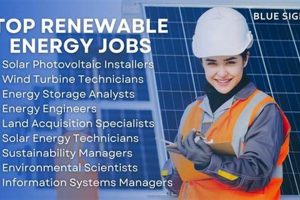
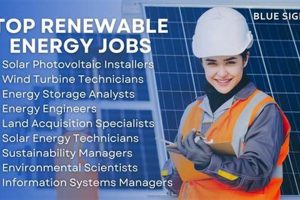
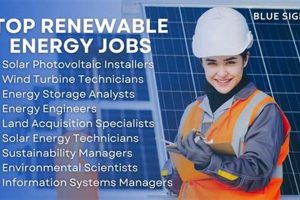
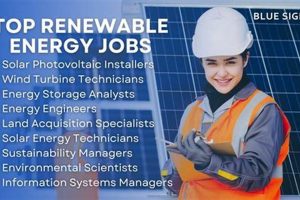
Positions for those new to the renewable energy sector typically require a bachelor’s degree in a related field such as engineering, environmental science, or business administration. These roles often involve assisting experienced professionals in areas like project development, research, data analysis, or technical operations, offering practical experience and exposure to various aspects of the industry. For instance, an assistant project developer might support the planning and execution of a wind farm project, while a junior research analyst might contribute to studies on solar panel efficiency. Such opportunities can provide a strong foundation for career advancement within this growing field.
The increasing global demand for sustainable energy solutions has created significant growth and diverse career paths within the renewable energy sector. These foundational roles are essential for building a skilled workforce capable of meeting future energy needs and addressing climate change. Historically, the industry has been driven by technological innovation and policy changes, creating an evolving landscape of employment opportunities. These early-career positions represent a vital entry point for individuals seeking to contribute to a more sustainable future and benefit from the sector’s long-term growth potential.
The following sections will explore specific career paths, required skills and qualifications, expected salaries, and future prospects within this dynamic and impactful field. Readers will gain valuable insights into the various opportunities available and how to best prepare for a career in renewable energy.
Tips for Securing Renewable Energy Positions
Navigating the initial stages of a renewable energy career requires a focused approach. The following tips offer guidance for individuals seeking entry-level positions within this competitive yet rewarding field.
Tip 1: Develop Specialized Skills: Acquire expertise in relevant software, such as PVsyst for solar design or RETScreen for clean energy project analysis. Demonstrating proficiency in these tools can significantly enhance application competitiveness.
Tip 2: Network Strategically: Attend industry conferences, career fairs, and online webinars to connect with professionals. Building relationships within the sector can lead to valuable insights and potential job opportunities. Joining professional organizations, like the American Solar Energy Society or the Wind Energy Foundation, can further expand networks.
Tip 3: Tailor Applications: Carefully review job descriptions and highlight relevant skills and experiences in resumes and cover letters. Demonstrating a clear understanding of the specific role and company increases the likelihood of securing an interview.
Tip 4: Gain Practical Experience: Seek internships, volunteer positions, or research opportunities to gain hands-on experience in the field. Practical experience complements academic knowledge and demonstrates a commitment to the industry.
Tip 5: Stay Informed: Keep abreast of industry trends, policy changes, and technological advancements. Subscribing to relevant publications, following industry leaders on social media, and participating in online forums can provide valuable knowledge and insights.
Tip 6: Showcase Passion: Express genuine enthusiasm for renewable energy and sustainability in interviews and networking interactions. Passion for the field can be a differentiating factor and demonstrate long-term commitment.
Tip 7: Consider Certifications: Pursue relevant certifications, such as the North American Board of Certified Energy Practitioners (NABCEP) certifications for solar professionals, to enhance credentials and demonstrate specialized knowledge.
By implementing these strategies, candidates can strengthen their applications, expand their networks, and ultimately increase their chances of securing a rewarding entry-level position within the renewable energy sector.
The concluding section will offer final thoughts on the importance of pursuing a career in this dynamic and impactful industry and provide additional resources for further exploration.
1. Sustainable Career Paths

Sustainable career paths represent a critical component within the broader context of entry-level renewable energy jobs. The increasing global focus on environmental sustainability has fueled significant growth within the renewable energy sector, creating a demand for skilled professionals across various disciplines. This demand translates into long-term career prospects for individuals entering the field. The inherent nature of renewable energyfocused on developing and implementing sustainable energy solutionsensures the continued relevance and growth of these career paths. For example, the ongoing expansion of solar and wind energy projects necessitates skilled technicians, engineers, and project managers, offering stable and evolving career opportunities. Furthermore, the push for energy efficiency and smart grid technologies creates additional avenues for career development within this sustainable framework.
The connection between sustainable career paths and entry-level renewable energy jobs lies in the symbiotic relationship between individual career growth and the overall advancement of the sustainable energy sector. As the industry expands, so do the opportunities for professional development and specialization. Entry-level positions serve as a crucial entry point, providing foundational experience and exposure to various aspects of the industry. These initial roles can lead to specialized career paths in areas such as solar energy system design, wind turbine maintenance, or energy policy analysis. The practical significance of this understanding lies in the ability to align individual career aspirations with the broader goals of sustainable development, contributing to both personal and societal well-being. For instance, an individual starting as a junior technician in a solar installation company can progress to become a project manager, overseeing large-scale solar farm projects, thereby contributing to the growth of renewable energy adoption.
In conclusion, the pursuit of sustainable career paths within the renewable energy sector offers a unique opportunity to combine professional growth with environmental responsibility. Entry-level jobs serve as a gateway to these long-term career prospects, providing a foundation for specialized skill development and career advancement. Recognizing this interconnectedness empowers individuals to make informed career choices that align with both personal goals and the global imperative for a sustainable future. The continued growth and evolution of the renewable energy industry ensure the ongoing relevance and demand for skilled professionals committed to building a sustainable energy future. Addressing the challenges of climate change and energy security requires a sustained commitment to workforce development and innovation within this vital sector.
2. Technical Skills

Technical proficiency forms a cornerstone for success in entry-level renewable energy positions. The industry’s reliance on specialized equipment, software, and analytical tools necessitates a foundational understanding of relevant technologies. Cause-and-effect relationships exist between possessing specific technical skills and the ability to perform job functions effectively. For instance, a wind turbine technician requires skills in hydraulic systems and electrical troubleshooting to maintain and repair turbines, directly impacting energy generation output. Similarly, proficiency in Geographic Information Systems (GIS) software is crucial for solar project developers to assess site suitability and optimize solar array layouts, influencing project feasibility and efficiency. The importance of technical skills as a component of entry-level roles stems from the need for immediate contribution to project teams and operational efficiency. These skills are not merely theoretical but translate directly into practical applications, impacting project outcomes and the overall success of renewable energy initiatives.
Further emphasizing this connection, consider the role of a data analyst in a renewable energy company. Proficiency in programming languages like Python or R, coupled with statistical analysis skills, allows for the interpretation of performance data from solar or wind farms. This analysis can identify areas for optimization, improve energy output, and contribute to cost savings. Without these technical skills, effective data analysis would be impossible, hindering the company’s ability to maximize the performance of its renewable energy assets. These real-world examples underscore the critical link between technical skills and job performance in the renewable energy sector. The practical significance of understanding this link is reflected in educational programs and training initiatives that increasingly focus on equipping aspiring professionals with the technical skills required by the industry. This focus on practical skill development enhances employability and ensures a skilled workforce capable of meeting the demands of this rapidly evolving sector.
In summary, technical skills are not simply desirable but essential for entry-level renewable energy jobs. They form the foundation upon which practical contributions are made, influencing project success, operational efficiency, and career advancement. The industry’s continued growth and increasing complexity reinforce the importance of technical proficiency, making it a key focus for both aspiring professionals and educational institutions. Addressing the skills gap within the sector requires a sustained commitment to technical training and education, ensuring a robust and skilled workforce capable of driving the transition to a sustainable energy future. This, in turn, strengthens the entire industry and accelerates the global shift towards renewable energy sources.
3. Field Experience
Practical field experience represents a critical bridge between theoretical knowledge and real-world application within entry-level renewable energy jobs. The dynamic nature of the industry, encompassing diverse technologies and complex project environments, necessitates exposure to practical operations. A direct, causal relationship exists between field experience and enhanced job readiness. For example, an individual with prior internship experience in solar panel installation possesses a practical understanding of system components, wiring techniques, and safety protocols, leading to increased efficiency and reduced errors in a full-time installer role. Similarly, field experience in conducting energy audits equips individuals with the skills to assess building energy performance, identify areas for improvement, and recommend energy-saving measures, directly impacting client outcomes and project success. The importance of field experience as a component of entry-level roles stems from employers’ increasing demand for candidates who can contribute effectively from day one. This experience translates into tangible value, reducing training time and enhancing overall team productivity.
Further illustrating this connection, consider the role of a junior environmental consultant involved in wind farm development. Prior field experience in conducting environmental impact assessments provides practical knowledge of data collection methodologies, wildlife monitoring techniques, and regulatory compliance procedures. This experience allows for more effective contributions to environmental studies, stakeholder engagement, and permitting processes, directly influencing project timelines and environmental outcomes. The absence of such field experience could hinder project progress and increase the risk of environmental non-compliance. These tangible examples underscore the practical value of field experience in shaping successful career trajectories within the renewable energy sector. The practical significance of recognizing this link lies in the prioritization of field experience opportunities by both aspiring professionals and educational institutions. Internships, research projects, and volunteer work within the industry provide invaluable exposure to real-world applications, bridging the gap between academic learning and professional practice.
In summary, field experience is not merely a desirable addition but a fundamental requirement for success in entry-level renewable energy jobs. It equips individuals with the practical skills, knowledge, and confidence to navigate the complexities of the industry, contributing effectively to project teams and achieving positive outcomes. The increasing emphasis on practical skills within the sector underscores the importance of field experience in shaping a competent and adaptable workforce. Addressing the skills gap and meeting the growing demands of the industry requires a continued focus on providing field experience opportunities, ensuring a robust pipeline of talent equipped to drive the transition to a sustainable energy future. This, in turn, strengthens the industry’s capacity to innovate, adapt, and address the complex challenges of climate change and global energy security.
4. Problem-solving abilities

Problem-solving abilities represent a critical asset within the context of entry-level renewable energy jobs. The inherent complexities of the industry, ranging from technical challenges in system design and implementation to logistical hurdles in project management, demand effective problem-solving skills. A direct, causal relationship exists between strong problem-solving abilities and successful outcomes in these roles. For instance, a field technician troubleshooting a malfunctioning solar panel must systematically diagnose the issue, considering factors such as wiring connections, inverter performance, and environmental conditions, to implement an effective solution and restore energy generation. Similarly, a project coordinator facing unexpected delays in equipment delivery must analyze alternative options, evaluate cost implications, and communicate effectively with stakeholders to minimize project disruptions and maintain progress. The importance of problem-solving abilities as a component of entry-level roles stems from the need for adaptable and resourceful individuals who can navigate unforeseen challenges and contribute to efficient project execution. These skills are not merely theoretical but are applied directly to real-world scenarios, impacting project timelines, budgets, and overall success.
Further illustrating this connection, consider the role of a data analyst working with wind turbine performance data. When encountering anomalies in the data, such as unexpected power output fluctuations, the analyst must employ problem-solving skills to identify the root cause. This may involve analyzing weather patterns, investigating sensor accuracy, or consulting with engineers to determine if mechanical issues are contributing to the observed deviations. Effective problem-solving in this context leads to accurate data interpretation, informed decision-making, and optimized turbine performance. Without these skills, data analysis could yield misleading conclusions, hindering operational efficiency and potentially leading to costly maintenance oversights. These tangible examples demonstrate the practical value of problem-solving abilities in ensuring the success of renewable energy projects. The practical significance of understanding this link lies in the targeted development of these skills through educational programs, training initiatives, and real-world experience opportunities.
In summary, problem-solving abilities are not simply desirable but essential for success in entry-level renewable energy jobs. They empower individuals to navigate the inherent complexities of the industry, contribute to effective solutions, and ensure project success. The increasing complexity of renewable energy projects, coupled with the evolving technological landscape, further reinforces the importance of problem-solving skills in shaping a competent and adaptable workforce. Addressing the skills gap and meeting the growing demands of the industry require a sustained focus on fostering problem-solving abilities through targeted training and practical experience, ensuring a robust pipeline of talent equipped to drive the transition to a sustainable energy future. This, in turn, strengthens the entire industry and enhances its capacity to address the complex challenges of climate change and global energy security.
5. Communication Proficiency
Effective communication serves as a critical link between technical expertise and collaborative success within entry-level renewable energy jobs. The multifaceted nature of the industry, involving diverse teams, complex projects, and frequent stakeholder interactions, necessitates clear and concise communication. A direct, causal relationship exists between communication proficiency and positive project outcomes. For example, a junior engineer explaining technical specifications to a construction crew must articulate complex information in a clear and accessible manner, ensuring accurate implementation and preventing costly errors. Similarly, a project developer communicating project proposals to investors must present information persuasively and address concerns effectively to secure funding and advance project development. The importance of communication proficiency as a component of entry-level roles stems from the need for seamless information flow, efficient collaboration, and strong stakeholder relationships. These communication skills translate directly into improved teamwork, reduced project risks, and enhanced overall project success.
Further illustrating this connection, consider the role of a customer service representative in a solar energy company. When addressing customer inquiries about system performance or billing issues, the representative must listen actively, understand the customer’s concerns, and provide accurate and timely information. Effective communication in this context builds trust, enhances customer satisfaction, and fosters positive brand perception. Conversely, poor communication can lead to customer frustration, escalate complaints, and damage the company’s reputation. These real-world examples underscore the practical value of communication proficiency in shaping positive outcomes within the renewable energy sector. The practical significance of understanding this link lies in the targeted development of communication skills through training programs, mentorship opportunities, and practical experience in team-based settings.
In summary, communication proficiency is not merely a desirable attribute but an essential skill for success in entry-level renewable energy jobs. It empowers individuals to convey complex information clearly, collaborate effectively within teams, and build strong relationships with stakeholders. The increasing complexity of renewable energy projects, coupled with the growing emphasis on stakeholder engagement, further reinforces the importance of communication skills in shaping a competent and adaptable workforce. Addressing the communication gap and meeting the evolving demands of the industry require a sustained focus on fostering communication proficiency through targeted training and practical experience. This, in turn, strengthens the industry’s capacity to innovate, collaborate, and effectively communicate the benefits of renewable energy to a wider audience, accelerating the global transition to a sustainable energy future.
6. Industry Knowledge

A strong foundation in industry-specific knowledge is essential for success in entry-level renewable energy jobs. This knowledge base provides context, informs decision-making, and enables effective contribution to project teams. Understanding the landscape of the renewable energy sectorincluding its key players, technological trends, regulatory frameworks, and market dynamicsempowers individuals to navigate the complexities of the industry and contribute meaningfully to its growth.
- Policy and Regulations
Familiarity with renewable energy policies, incentives, and permitting processes is crucial. Understanding feed-in tariffs, renewable portfolio standards, and tax credits, for example, allows individuals to contribute to project feasibility assessments and financial modeling. Knowledge of environmental regulations and permitting requirements is essential for ensuring project compliance and minimizing environmental impact. This knowledge directly impacts project development timelines, cost estimations, and overall project success.
- Technology Trends
Keeping abreast of advancements in renewable energy technologies, such as improvements in solar panel efficiency, battery storage capacity, and wind turbine design, is vital. This knowledge enables individuals to contribute to technology selection processes, optimize system performance, and anticipate future industry trends. Staying informed about emerging technologies, like hydrogen fuel cells or wave energy converters, further enhances professional development and adaptability within this dynamic sector.
- Market Dynamics
Understanding market trends, including energy pricing, consumer demand, and competitive landscapes, provides valuable context for decision-making. Knowledge of market drivers, such as declining costs of renewable energy technologies and increasing corporate sustainability commitments, informs strategic planning and business development efforts. Analyzing market competition and identifying opportunities for innovation further enhances an individual’s contribution to the industry’s growth.
- Key Players and Stakeholders
Recognizing the key players within the renewable energy sectorincluding utility companies, project developers, manufacturers, research institutions, and government agenciesprovides a comprehensive understanding of the industry’s ecosystem. This knowledge facilitates effective collaboration, fosters networking opportunities, and enables individuals to navigate stakeholder relationships effectively. Understanding the roles and interests of different stakeholders is crucial for successful project development and implementation.
These interconnected facets of industry knowledge collectively enhance an individual’s ability to contribute meaningfully to entry-level renewable energy jobs. This foundation not only improves job performance but also positions individuals for career advancement within this rapidly evolving sector. A strong understanding of the industry landscape empowers professionals to make informed decisions, contribute to innovative solutions, and navigate the complex challenges and opportunities that characterize the renewable energy sector. Cultivating industry knowledge is therefore an ongoing process, essential for both initial success and long-term career growth within this dynamic and impactful field.
Frequently Asked Questions
This section addresses common inquiries regarding entry-level renewable energy positions, providing clarity for those exploring career opportunities within this dynamic sector.
Question 1: What educational background is typically required for entry-level renewable energy jobs?
A bachelor’s degree in a relevant field such as engineering (electrical, mechanical, environmental), environmental science, or sustainability studies is often preferred. However, some roles may consider candidates with associate degrees or vocational certifications combined with relevant experience. Specific technical certifications can also enhance qualifications.
Question 2: What are the typical entry-level positions available in the renewable energy sector?
Common entry-level roles include field technicians, data analysts, project coordinators, research assistants, and sales representatives. These positions offer opportunities to gain practical experience in various aspects of the industry, from installation and maintenance to project development and market analysis.
Question 3: What salary expectations can one have for entry-level renewable energy positions?
Salaries vary based on factors like location, company size, and specific role. However, typical entry-level salaries range from $40,000 to $60,000 per year. With experience and specialization, earning potential increases significantly.
Question 4: Are there opportunities for career advancement within the renewable energy field?
The renewable energy sector offers substantial growth potential. Entry-level positions often serve as a springboard for career advancement into specialized roles such as project managers, senior engineers, or policy analysts. Continued learning and professional development are crucial for upward mobility.
Question 5: What are the key skills required for success in entry-level renewable energy jobs?
Technical skills relevant to specific renewable energy technologies (solar, wind, etc.), analytical and problem-solving abilities, strong communication skills, and a working knowledge of industry trends and regulations are highly valued. Adaptability and a willingness to learn are also essential in this rapidly evolving field.
Question 6: How can one gain practical experience to enhance their qualifications for entry-level roles?
Internships, co-op programs, volunteer work with renewable energy organizations, and research projects offer valuable practical experience. Networking with industry professionals and attending industry events can also create opportunities to gain insights and connect with potential employers.
Understanding these key aspects of entry-level renewable energy jobs allows prospective candidates to make informed career decisions and effectively pursue opportunities within this growing and impactful sector.
The following section explores specific resources and tools for further exploration of career paths within the renewable energy industry.
Conclusion
This exploration of entry-level renewable energy jobs has highlighted the diverse opportunities available within this rapidly expanding sector. From technical roles in installation and maintenance to analytical positions in project development and data analysis, the industry offers a range of career paths for individuals with varying skill sets and educational backgrounds. The importance of technical proficiency, field experience, problem-solving abilities, communication skills, and industry knowledge has been emphasized as crucial components for success in these roles. The analysis also underscored the significant growth potential and career advancement opportunities within the renewable energy sector, making it an attractive field for those seeking long-term career prospects.
The transition to a sustainable energy future presents both a global challenge and a unique opportunity. Entry-level positions within the renewable energy industry represent a critical entry point for individuals seeking to contribute to this transformative process. As the world grapples with the impacts of climate change and the increasing demand for clean energy solutions, the need for a skilled and passionate workforce within the renewable energy sector will only intensify. Embracing these opportunities not only offers promising career trajectories but also empowers individuals to play a vital role in shaping a more sustainable future for generations to come. The future of energy is renewable, and the time to join this dynamic and impactful industry is now.