The expansion of sustainable power sources like solar, wind, hydro, and biomass within the People’s Republic of China constitutes a significant shift in the global energy landscape. For example, the country’s massive investments in solar panel manufacturing have driven down costs worldwide, making solar power more accessible globally.
This transition holds immense significance for both China and the world. It addresses critical environmental challenges, including air pollution and greenhouse gas emissions, while simultaneously fostering technological innovation and creating new economic opportunities. Historically, China’s rapid economic development relied heavily on coal-fired power plants. However, recognizing the long-term unsustainability of this model, the nation has embarked on an ambitious path towards a cleaner energy future.
Further exploration will delve into specific technologies, policy initiatives, challenges, and the future trajectory of this transformative process within China’s energy sector. This includes analyzing the role of government subsidies, technological advancements, grid integration challenges, and the impact on global energy markets.
Tips for Understanding the Expansion of Sustainable Energy in China
Gaining a deeper understanding of the complexities surrounding the development of clean energy in China requires considering various perspectives and factors. The following tips provide a framework for navigating this dynamic landscape.
Tip 1: Consider the geopolitical context. China’s pursuit of energy independence and its role in global climate negotiations significantly influence its energy policies.
Tip 2: Analyze the role of government support. Subsidies, tax incentives, and research funding are crucial drivers of renewable energy development. Evaluating the effectiveness and long-term sustainability of these policies is essential.
Tip 3: Examine technological advancements. China plays a leading role in the manufacturing and deployment of renewable energy technologies. Monitoring innovations in areas like solar panel efficiency, battery storage, and smart grids is key to understanding future trends.
Tip 4: Understand the challenges of grid integration. Integrating intermittent renewable energy sources like solar and wind power into the existing electricity grid presents significant technical hurdles. Exploring solutions such as grid modernization and energy storage is critical.
Tip 5: Assess the environmental impact. While renewable energy offers significant environmental benefits, its deployment can also create challenges, such as land use conflicts and the disposal of solar panels. A comprehensive analysis should consider both the positive and negative environmental impacts.
Tip 6: Evaluate the economic implications. The transition to renewable energy creates new industries, jobs, and investment opportunities. Understanding the economic benefits and costs associated with this transition is crucial.
Tip 7: Monitor international collaborations. China’s engagement in international partnerships on renewable energy research, technology transfer, and project development plays a vital role in accelerating global progress.
By considering these various facets, one can gain a more nuanced understanding of the complexities and opportunities presented by the expansion of sustainable energy resources in China. This multifaceted perspective is essential for informed decision-making and effective policy development.
These insights provide a foundation for a comprehensive analysis of the current state and future prospects of renewable energy in China, which will be explored in the concluding section.
1. Capacity Expansion

Capacity expansion is a cornerstone of China’s renewable energy growth, representing the tangible increase in the nation’s ability to generate power from sustainable sources. This expansion is not merely about adding more megawatts; it reflects a strategic commitment to transforming the energy landscape and reducing reliance on fossil fuels. Understanding the multifaceted nature of this expansion is crucial for grasping the full scope of China’s energy transition.
- Scale of Deployment
China’s capacity additions in renewable energy have been staggering, often exceeding the combined deployments of several developed nations. This massive scale is evident in sprawling solar farms in the Gobi Desert and vast wind turbine installations across coastal regions. These projects contribute significantly to national energy security and create numerous employment opportunities.
- Technological Diversification
Capacity expansion isn’t limited to a single technology. China is actively developing a diverse portfolio of renewable energy sources, including solar, wind, hydro, biomass, and geothermal. This diversification mitigates risks associated with over-reliance on any single technology and allows for optimized energy production based on regional resource availability. For instance, hydropower projects are concentrated in regions with abundant water resources, while solar farms are strategically placed in areas with high solar irradiance.
- Manufacturing Prowess
China’s dominance in the manufacturing of renewable energy technologies, particularly solar photovoltaic panels and wind turbines, plays a crucial role in enabling rapid capacity expansion. This domestic manufacturing capacity reduces reliance on imports, lowers costs, and stimulates technological innovation. The scale of production allows for economies of scale, making renewable energy more competitive with traditional fossil fuels.
- Grid Integration Challenges
The rapid pace of capacity expansion presents significant challenges for grid integration. The intermittent nature of renewable energy sources requires sophisticated grid management solutions to ensure stability and reliability. China is investing heavily in smart grid technologies and energy storage solutions to address these challenges and maximize the utilization of renewable energy.
These interconnected facets of capacity expansion underscore China’s commitment to a sustainable energy future. The scale of deployment, coupled with technological diversification and manufacturing prowess, positions China as a global leader in the renewable energy transition. However, addressing grid integration challenges remains crucial for realizing the full potential of this ambitious undertaking and ensuring a smooth transition to a cleaner and more secure energy system.
2. Technological Innovation

Technological innovation is an integral driver of renewable energy expansion in China. Advancements in key areas, from photovoltaic cell efficiency to energy storage solutions, are not only accelerating the adoption of sustainable energy but also reshaping the global landscape of the renewable energy industry. Exploring these advancements provides critical insights into the dynamics of China’s energy transition.
- Photovoltaic (PV) Technology Advancements
China’s leadership in PV technology has led to significant improvements in solar panel efficiency and cost reductions. Research and development efforts focus on novel materials, manufacturing processes, and cell architectures. Examples include advancements in perovskite solar cells and heterojunction technology, which promise higher efficiencies and lower production costs compared to traditional silicon-based panels. These innovations contribute directly to the increasing competitiveness of solar power and its widespread deployment across China.
- Wind Turbine Technology
Innovations in wind turbine design and manufacturing are crucial for harnessing wind energy more effectively. China is actively developing larger and more efficient turbines, optimized for diverse wind conditions. For example, advancements in blade design, generator technology, and control systems are improving energy capture rates and reducing maintenance costs. These advancements are particularly important for expanding offshore wind power, which holds significant potential for China’s coastal regions.
- Energy Storage Solutions
Addressing the intermittency of renewable energy sources like solar and wind requires efficient and cost-effective energy storage solutions. China is investing heavily in battery storage technologies, including lithium-ion batteries, pumped hydro storage, and advanced flow batteries. These technologies enable grid stability and allow for greater utilization of renewable energy. Examples include large-scale battery storage projects integrated with solar and wind farms, providing a more reliable power supply to the grid.
- Smart Grid Technologies
The integration of renewable energy into the existing electricity grid requires sophisticated grid management systems. China is at the forefront of developing smart grid technologies, including advanced sensors, communication networks, and data analytics. These technologies enable real-time monitoring and control of power flow, optimizing grid stability and facilitating the seamless integration of renewable energy sources. Examples include pilot projects implementing smart grids in urban areas and industrial parks, demonstrating the potential for enhanced grid efficiency and reliability.
These intertwined technological advancements underpin China’s remarkable progress in renewable energy growth. By driving down costs, improving efficiency, and addressing key integration challenges, these innovations are not only transforming China’s energy sector but also influencing the global trajectory of renewable energy development. The continued pursuit of technological breakthroughs will be essential for achieving China’s ambitious clean energy targets and ensuring a sustainable energy future.
3. Investment and financing

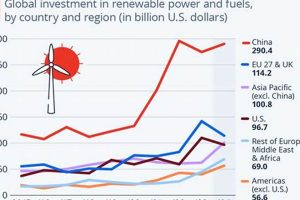
The unprecedented growth of renewable energy in China is inextricably linked to substantial investment and innovative financing mechanisms. These financial flows, both domestic and international, are the lifeblood of project development, technological advancement, and capacity expansion. Understanding the dynamics of investment and financing is crucial for comprehending the scale and speed of China’s energy transition.
Massive capital infusions are required to finance the construction of large-scale renewable energy projects, such as sprawling solar farms and extensive wind power installations. Government policies, including subsidies, tax incentives, and feed-in tariffs, play a vital role in attracting private investment. State-owned banks and policy banks provide preferential loans and financing options for renewable energy projects, further stimulating growth. Furthermore, the development of green bonds and other innovative financial instruments provides additional avenues for channeling capital into the renewable energy sector. For instance, the China Green Finance Committee has played a significant role in promoting green finance and standardizing green bond issuance. This has facilitated the mobilization of substantial private capital for sustainable energy projects. International collaborations and joint ventures also contribute to financing renewable energy development in China, bringing in foreign expertise and capital.
The availability of capital and the effectiveness of financing mechanisms directly influence the pace and scale of renewable energy deployment. Challenges remain, including ensuring transparency in investment decisions, managing financial risks associated with large-scale projects, and attracting sufficient investment for emerging technologies like energy storage and smart grids. Addressing these challenges is essential for sustaining the momentum of renewable energy growth and achieving China’s ambitious clean energy targets. The continued flow of investment, coupled with innovative financing solutions, will be critical for realizing a sustainable energy future for China and contributing to global efforts to mitigate climate change.
4. Policy Support

Policy support is the bedrock upon which China’s renewable energy growth is built. Government interventions, ranging from direct subsidies to regulatory frameworks, shape the trajectory of the sector and influence investment decisions, technological advancements, and market dynamics. Understanding the complexities of these policies is essential for comprehending the rapid expansion of renewable energy in China.
- Renewable Portfolio Standards (RPS)
RPS mandates require electricity providers to source a specific percentage of their electricity from renewable sources. These standards create a guaranteed market for renewable energy, incentivizing investment and driving capacity expansion. China’s RPS targets have progressively increased over time, signaling a strong commitment to renewable energy development. This policy has been instrumental in driving the growth of both onshore and offshore wind power.
- Feed-in Tariffs (FITs)
FITs guarantee a fixed price for renewable energy fed into the grid, providing price stability and encouraging investment in renewable energy projects. While initially crucial for stimulating growth, China has gradually transitioned away from FITs toward competitive auctions as the renewable energy sector matures. This shift aims to improve cost-effectiveness and promote market-based competition.
- Technology-Specific Incentives
China has implemented various technology-specific incentives to promote the development of particular renewable energy technologies. For example, subsidies for solar panel manufacturing have helped establish China as a global leader in the solar industry. Similarly, research and development grants support the advancement of energy storage technologies and smart grid solutions. These targeted interventions aim to nurture specific sectors within the broader renewable energy landscape.
- Environmental Regulations
Stringent environmental regulations, such as emissions trading schemes and air quality standards, play a crucial role in driving the adoption of renewable energy. By internalizing the environmental costs of fossil fuels, these regulations make renewable energy sources more economically competitive. These policies are particularly relevant in addressing China’s air pollution challenges and promoting a transition to cleaner energy sources.
These policy instruments, working in concert, have created a favorable environment for renewable energy growth in China. The evolving policy landscape reflects a dynamic approach, adapting to the changing needs of the sector and striving to balance growth with cost-effectiveness and market efficiency. Continued policy support, aligned with technological advancements and market forces, will be essential for achieving China’s long-term renewable energy goals and contributing to global efforts to combat climate change.
5. Grid Integration

Grid integration is paramount to the success of China’s renewable energy growth. The ability to seamlessly and reliably incorporate intermittent renewable energy sources, such as solar and wind power, into the existing electricity grid is crucial for maximizing their impact and ensuring a stable energy supply. This intricate process involves not only technical advancements but also policy adjustments and market mechanisms. Exploring the multifaceted challenges and solutions associated with grid integration provides crucial insights into the complexities of China’s energy transition.
- Transmission Infrastructure Development
Expanding and upgrading transmission infrastructure is essential for transporting renewable energy generated in remote areas, such as deserts and coastal regions, to population centers. China is investing heavily in ultra-high-voltage (UHV) transmission lines to facilitate long-distance power delivery. For example, the Zhundong-Wannan UHVDC transmission line, spanning over 3,000 kilometers, carries wind power generated in Xinjiang to eastern China. These investments are critical for integrating large-scale renewable energy projects into the national grid.
- Smart Grid Technologies
Smart grid technologies, including advanced sensors, communication networks, and data analytics, play a vital role in managing the intermittency of renewable energy sources. Real-time monitoring and control of power flow enable grid operators to optimize energy distribution and maintain grid stability. Pilot projects implementing smart grids in urban areas and industrial parks demonstrate the potential for enhanced grid efficiency and reliability. These technologies are crucial for managing the fluctuating power output from solar and wind farms and ensuring a stable electricity supply.
- Energy Storage Solutions
Energy storage technologies, such as pumped hydro storage, batteries, and compressed air energy storage, are essential for smoothing out the fluctuations inherent in renewable energy generation. Storing excess energy during periods of high generation and releasing it during periods of low generation enhances grid stability and maximizes the utilization of renewable energy. China is actively deploying various energy storage solutions, including large-scale battery storage projects integrated with solar and wind farms. These solutions address the intermittency challenges associated with renewable energy and enhance grid reliability.
- Demand-Side Management
Demand-side management strategies involve influencing electricity consumption patterns to better match renewable energy generation. These strategies can include time-of-use pricing, demand response programs, and smart home technologies. By incentivizing consumers to shift their energy usage to times of high renewable energy generation, demand-side management reduces the strain on the grid and improves the integration of renewable energy sources. These programs are increasingly important as the penetration of renewable energy increases.
These interconnected facets of grid integration are crucial for unlocking the full potential of China’s renewable energy growth. Addressing the technical and logistical challenges associated with integrating intermittent renewable energy sources is essential for ensuring a reliable and sustainable energy future. Continued investment in transmission infrastructure, smart grid technologies, energy storage solutions, and demand-side management strategies will be critical for achieving China’s ambitious renewable energy targets and contributing to global efforts to mitigate climate change. Successfully integrating renewable energy into the grid not only enhances energy security but also facilitates the transition to a cleaner and more sustainable energy system.
Frequently Asked Questions about Renewable Energy Expansion in China
This section addresses common inquiries regarding the complexities of renewable energy development within China, providing concise and informative responses.
Question 1: What are the primary drivers of renewable energy growth in China?
Several factors contribute, including concerns about air pollution and energy security, declining costs of renewable energy technologies, supportive government policies, and a growing awareness of climate change.
Question 2: How does China’s renewable energy capacity compare globally?
China leads the world in installed renewable energy capacity, particularly in solar and wind power. Its capacity significantly surpasses that of other nations, reflecting substantial investments and policy support.
Question 3: What are the main challenges facing renewable energy development in China?
Key challenges include grid integration of intermittent renewable sources, ensuring sufficient transmission infrastructure, financing large-scale projects, and managing the environmental impact of renewable energy development.
Question 4: What role does the government play in supporting renewable energy growth?
The Chinese government plays a crucial role through policies such as feed-in tariffs, renewable portfolio standards, subsidies for renewable energy technologies, and investment in research and development.
Question 5: How does renewable energy development impact China’s economy?
The expansion of renewable energy creates jobs, stimulates economic growth, reduces reliance on fossil fuel imports, and fosters technological innovation in related industries.
Question 6: What is the future outlook for renewable energy in China?
The outlook remains positive, with continued policy support and declining technology costs expected to drive further growth. However, addressing grid integration challenges and ensuring sustainable financing will be crucial for long-term success.
Understanding these key aspects of China’s renewable energy landscape provides a foundation for informed analysis and policy discussions. These FAQs offer a concise overview of the driving forces, challenges, and opportunities associated with renewable energy development in China.
The following section will offer a conclusion, summarizing the key findings and offering perspectives on the future trajectory of renewable energy development in China.
The Trajectory of Renewable Energy Expansion in China
The examination of renewable energy expansion within China reveals a complex interplay of technological innovation, policy support, investment dynamics, and grid integration challenges. The nation’s significant progress in deploying renewable energy capacity, particularly in solar and wind power, positions it as a global leader in the transition to a sustainable energy future. However, the continued success of this transformative process hinges on addressing key obstacles, such as grid stability and the efficient integration of intermittent renewable sources. Furthermore, ensuring sustainable financing mechanisms and fostering ongoing technological advancements are crucial for maintaining momentum and achieving long-term objectives.
The trajectory of renewable energy expansion in China holds profound implications not only for the nation’s own energy security and environmental sustainability but also for the global effort to mitigate climate change. Continued progress in this sector requires ongoing policy adjustments, technological breakthroughs, and international collaboration. The future of energy hinges on the ability to effectively harness sustainable resources, and China’s experience offers valuable lessons and opportunities for the global community. The sustained commitment to innovation and strategic planning will be essential for navigating the complexities of this transformative process and realizing a future powered by clean and sustainable energy.